Sample Bonus Template For Achieving Sales Target In Florida
Description
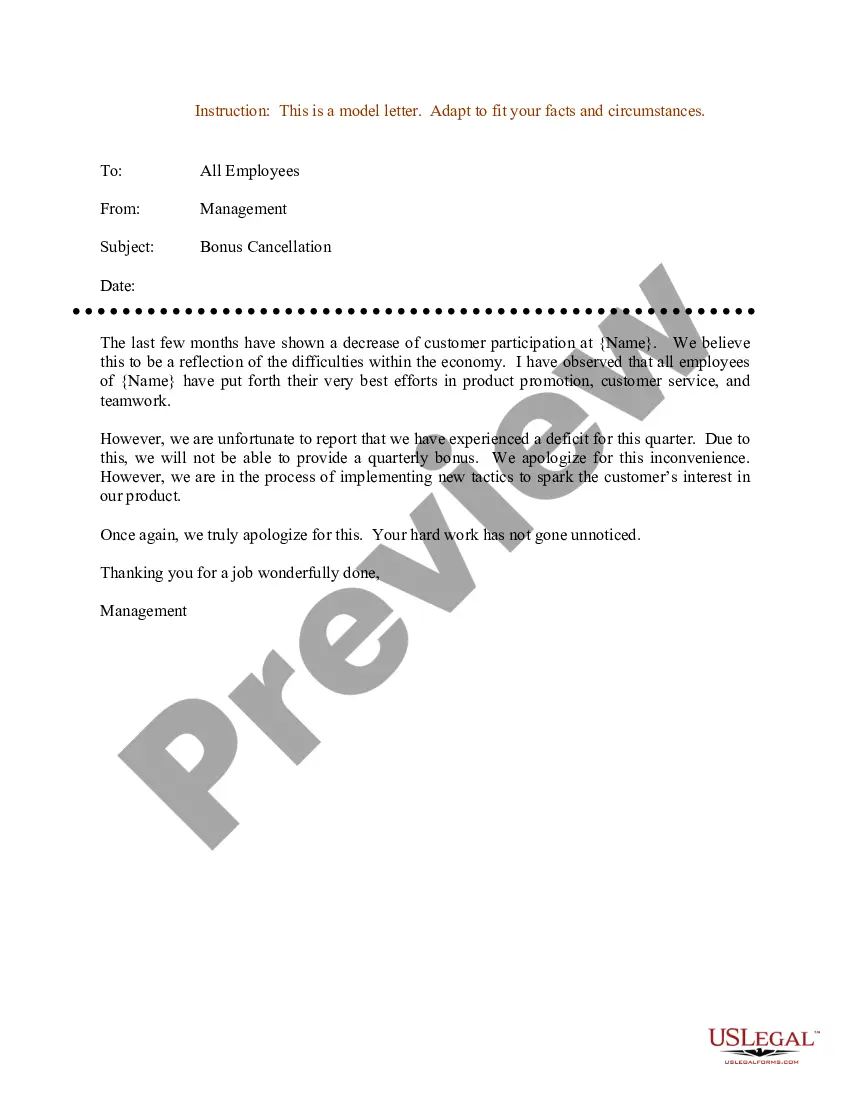
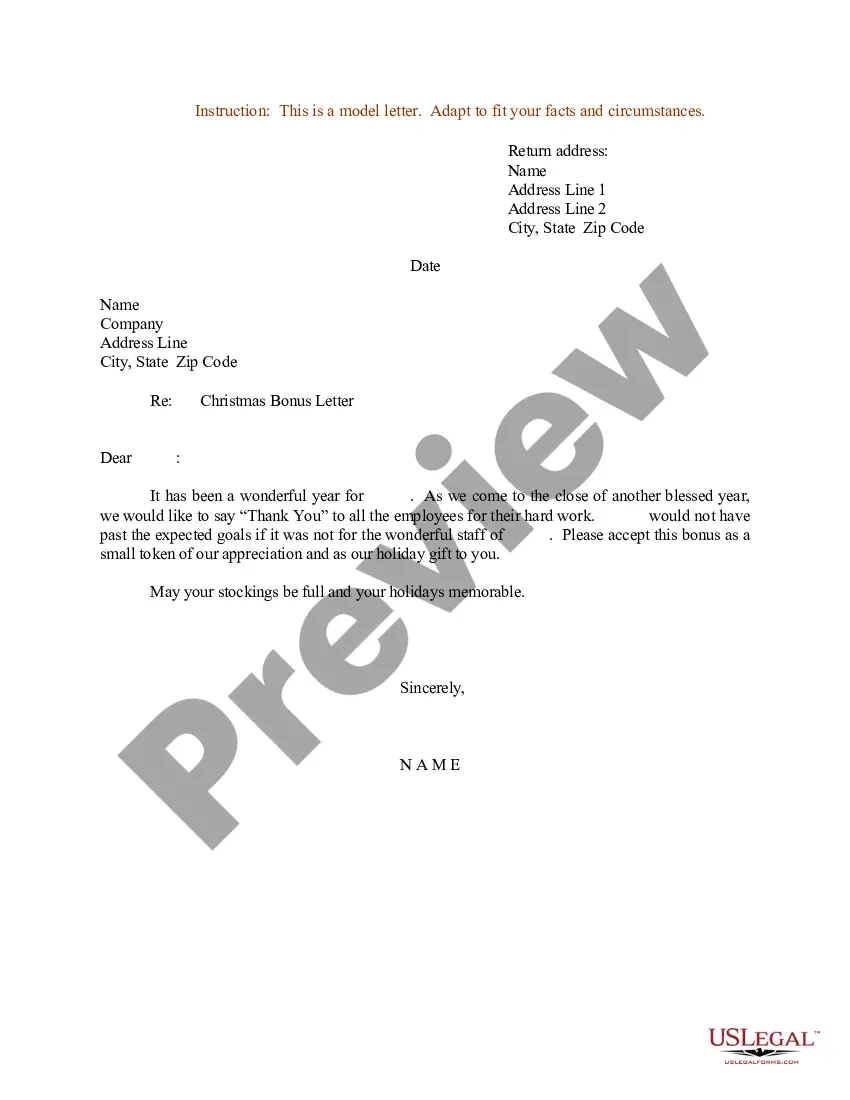
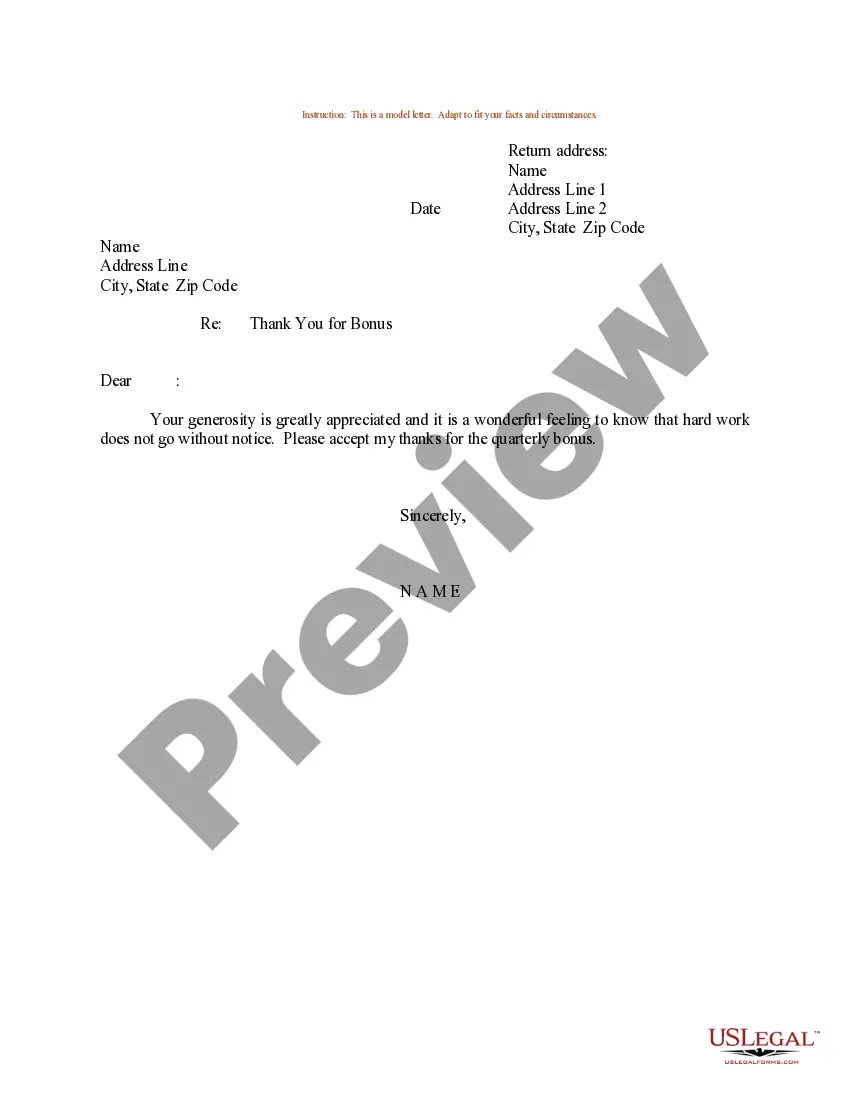
Get your form ready online
Our built-in tools help you complete, sign, share, and store your documents in one place.
Make edits, fill in missing information, and update formatting in US Legal Forms—just like you would in MS Word.
Download a copy, print it, send it by email, or mail it via USPS—whatever works best for your next step.
Sign and collect signatures with our SignNow integration. Send to multiple recipients, set reminders, and more. Go Premium to unlock E-Sign.
If this form requires notarization, complete it online through a secure video call—no need to meet a notary in person or wait for an appointment.
We protect your documents and personal data by following strict security and privacy standards.

Make edits, fill in missing information, and update formatting in US Legal Forms—just like you would in MS Word.

Download a copy, print it, send it by email, or mail it via USPS—whatever works best for your next step.

Sign and collect signatures with our SignNow integration. Send to multiple recipients, set reminders, and more. Go Premium to unlock E-Sign.

If this form requires notarization, complete it online through a secure video call—no need to meet a notary in person or wait for an appointment.

We protect your documents and personal data by following strict security and privacy standards.
Looking for another form?








Form popularity
FAQ
Use positive language to express the company's values, such as ““We wish to reward you for your excellent customer service,”” or ““We appreciate your innovative ideas and want to reward your hard work.”” Explain how the bonus is an affirmation of the company's values and how it will help employees continue to thrive.
Reward good performance: Bonuses can be given to recognize and reward employees for exceptional performance or for meeting certain performance targets. Show appreciation/Boost morale: Bonuses can be given as a way for companies to show appreciation to their employees and boost morale.
In your letter, include the ways your current position makes you well-suited to the new job. Offer specific ways you've made an impact and why you're uniquely qualified to take on the responsibilities required. Find a trusted referral from within the organization to endorse you for the role or promotion.
Some common examples of performance bonuses include: Commission-based bonus: Common in sales roles, employees earn a percentage of sales they generate. For instance, a car salesperson might earn a commission for each car sold.
If you're asking for a bonus for a specific project, provide facts and figures about the outcome of the project and how it exceeded the stakeholders' requirements. If you're asking for a bonus for more general reasons, offer details about why you deserve it.
I would say have a basic, then reward by time at company, reward by commission (this will include individual performance. Then a bonus if the company has done well. Do not change the format once you have decided.
The typical bonus amount can range from 1% to 15% of an employee's salary, usually depending on a number of factors such as industry, company performance, and individual or team accomplishments. The average bonus for employees continues to rise over time. In 2020, the average employee bonus was only 8.1%.
The sales bonus amount: To calculate the sales bonus amount, multiply the employee's total sales by the sales bonus percentage. For example, if an employee has made $10,000 in sales and the sales bonus percentage is 10%, the sales bonus amount would be $1,000.
For example, a 5% commission on a $1,000 sale would be $50. A bonus, on the other hand, is a fixed reward for achieving specific goals, unrelated to the amount of sales. For instance, a salesperson might receive a $200 bonus for signing up 10 new customers, regardless of the total sales value.
A common structure is tiered bonuses. Here, employees can achieve different "levels" of bonuses based on their performance metrics. For instance, reaching 80% of a target might secure a smaller bonus, while achieving 120% may earn a significantly larger one.

