Bonus Letter Sample With Performance In Cuyahoga
Description
Get your form ready online
Our built-in tools help you complete, sign, share, and store your documents in one place.
Make edits, fill in missing information, and update formatting in US Legal Forms—just like you would in MS Word.
Download a copy, print it, send it by email, or mail it via USPS—whatever works best for your next step.
Sign and collect signatures with our SignNow integration. Send to multiple recipients, set reminders, and more. Go Premium to unlock E-Sign.
If this form requires notarization, complete it online through a secure video call—no need to meet a notary in person or wait for an appointment.
We protect your documents and personal data by following strict security and privacy standards.

Make edits, fill in missing information, and update formatting in US Legal Forms—just like you would in MS Word.

Download a copy, print it, send it by email, or mail it via USPS—whatever works best for your next step.

Sign and collect signatures with our SignNow integration. Send to multiple recipients, set reminders, and more. Go Premium to unlock E-Sign.

If this form requires notarization, complete it online through a secure video call—no need to meet a notary in person or wait for an appointment.

We protect your documents and personal data by following strict security and privacy standards.
Looking for another form?








Form popularity
FAQ
Be honest and don't lie and say bonuses are coming back. Tell them what your needs are and communicate with upper management to see what can be improved to ensure they potentially can get these back. Basically if you believe in what you're doing, then keep doing it and others will too.
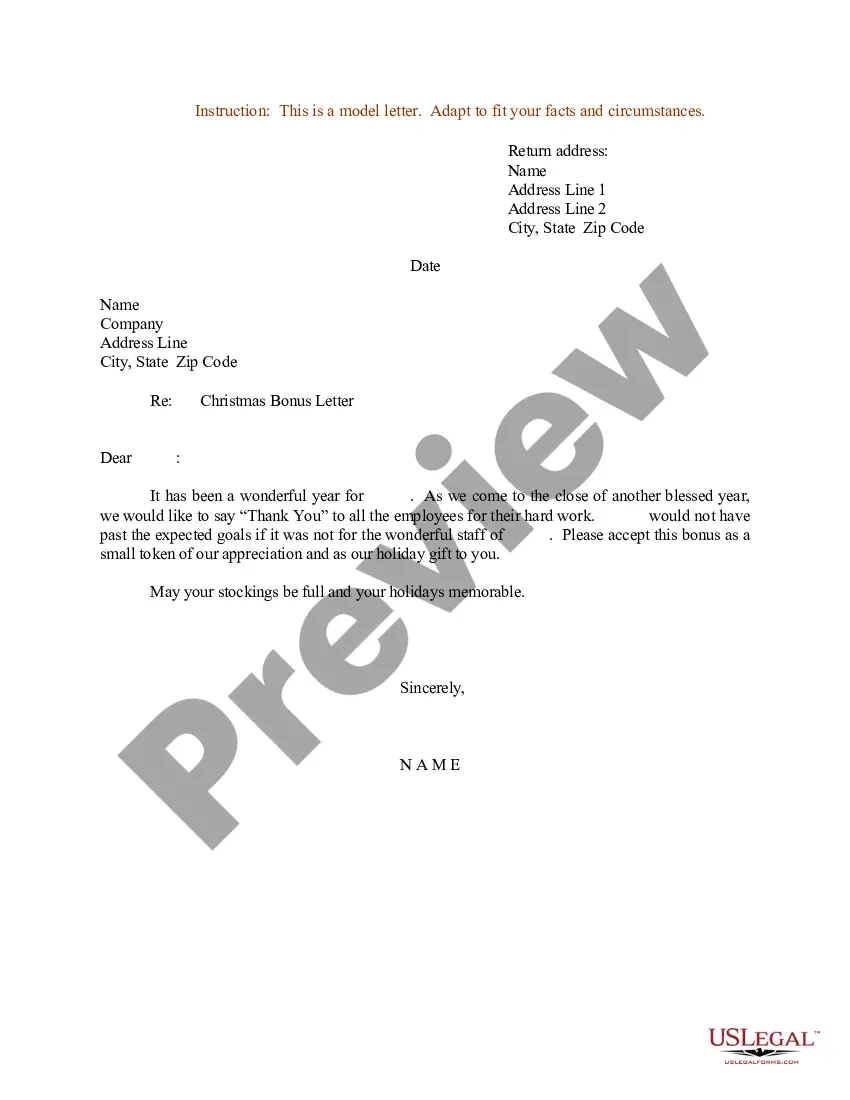
Announce the bonus After you address your recipient, try to immediately explain why you're writing them a letter. Notify them that they're receiving a bonus and give a brief reason why. For example, if this bonus is for a particular achievement you can mention the specific action or project.
Here are some steps to follow when negotiating your sign-on bonus: Understand your skill set and the value you can offer a company. Provide logical reasons for a higher sign-on bonus. Understand the long-term effects of a sign-on bonus. Understand the amount for which you're willing to settle.
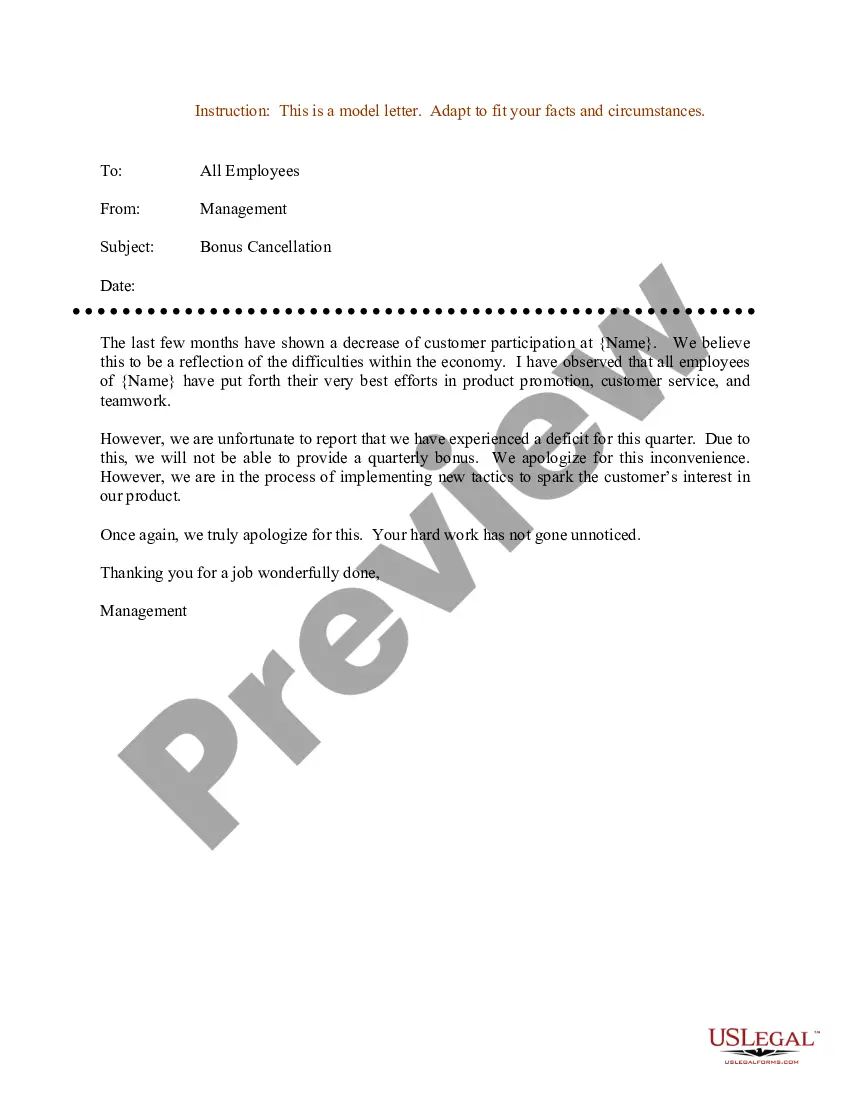
Dear Employee Name, We are pleased to present you with your year award in the amount of $__. This bonus award reflects your excellent performance, the contributions you made and the goals achieved on behalf of Company Name during the past year.
If you're asking for a bonus for a specific project, provide facts and figures about the outcome of the project and how it exceeded the stakeholders' requirements. If you're asking for a bonus for more general reasons, offer details about why you deserve it.
Example: Employees may receive a goal-based bonus after completing a project or reaching their quota within a set timeline, such as a quarter. Benefits: Goal-based bonuses prompt employees to work towards set goals, allowing them to focus on their objectives and positively contribute to the organization.
Bonuses are a common way of rewarding and motivating employees, but not all bonuses are created equal. Different types of bonuses have different pros and cons, depending on the goals, culture, and budget of the organization.
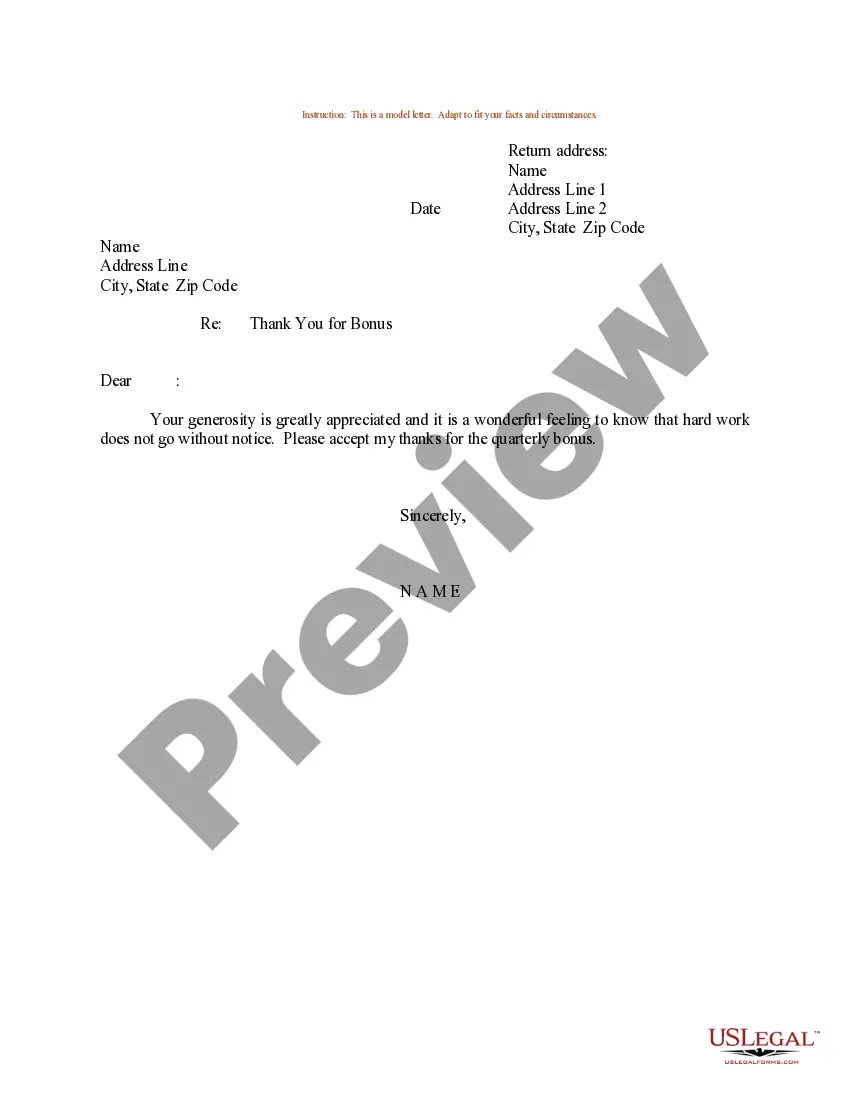
Thank you so much for my performance bonus. I really appreciate your generosity and having my hard work acknowledged. I feel so fortunate to work for a company that encourages its employees to keep meeting new goals and gives them the support and tools to do so.
A performance bonus is a form of supplemental compensation that companies use to reward employees when they meet performance goals or agreed-upon objectives. It's typically awarded around the time of a performance review, although an organization may choose to distribute it whenever they want to incentivize employees.

