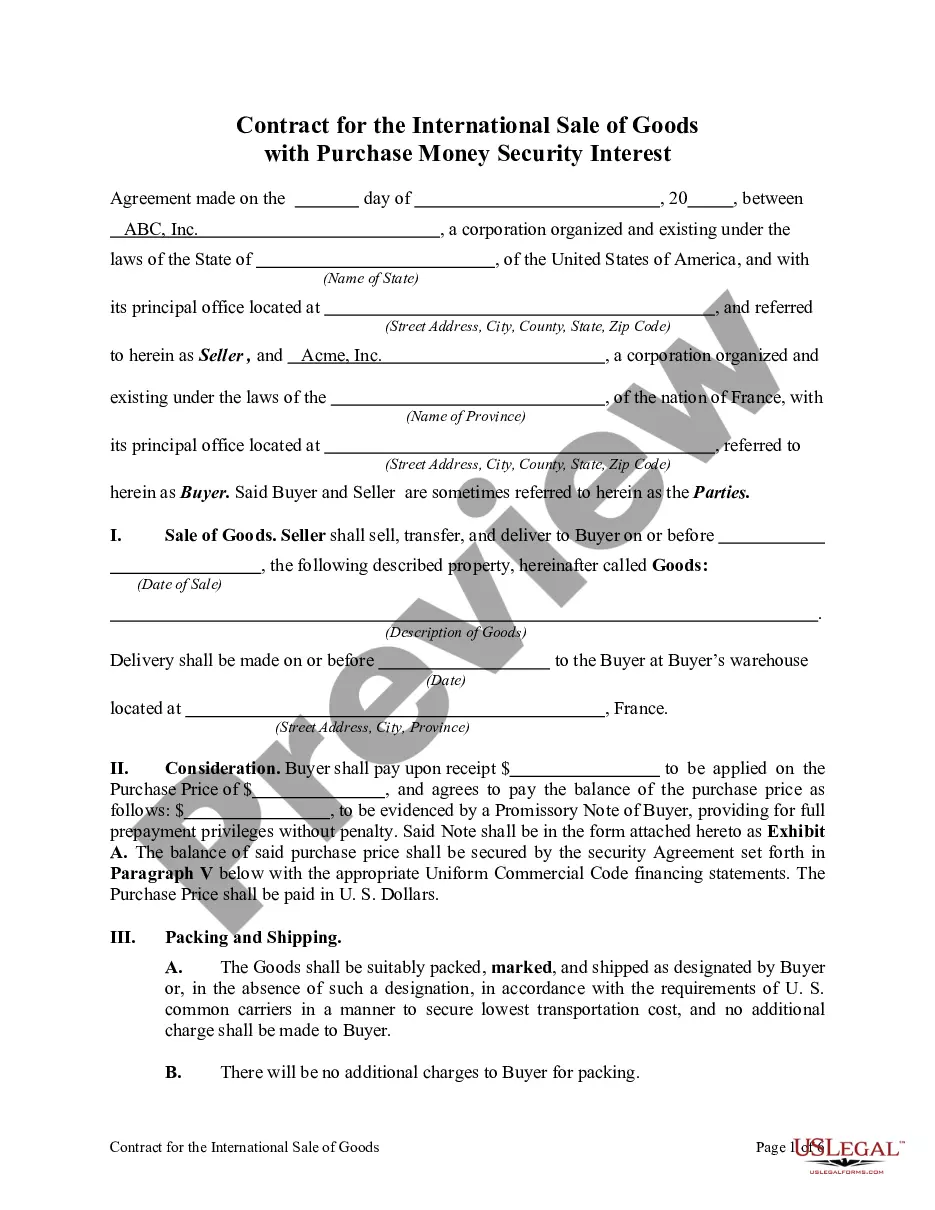
International Sales Contract Sample For Commercial Property In Pima
Description


Get your form ready online
Our built-in tools help you complete, sign, share, and store your documents in one place.
Make edits, fill in missing information, and update formatting in US Legal Forms—just like you would in MS Word.
Download a copy, print it, send it by email, or mail it via USPS—whatever works best for your next step.
Sign and collect signatures with our SignNow integration. Send to multiple recipients, set reminders, and more. Go Premium to unlock E-Sign.
If this form requires notarization, complete it online through a secure video call—no need to meet a notary in person or wait for an appointment.
We protect your documents and personal data by following strict security and privacy standards.

Make edits, fill in missing information, and update formatting in US Legal Forms—just like you would in MS Word.

Download a copy, print it, send it by email, or mail it via USPS—whatever works best for your next step.

Sign and collect signatures with our SignNow integration. Send to multiple recipients, set reminders, and more. Go Premium to unlock E-Sign.

If this form requires notarization, complete it online through a secure video call—no need to meet a notary in person or wait for an appointment.

We protect your documents and personal data by following strict security and privacy standards.
Looking for another form?


Form popularity
FAQ
Top ten tips in drafting and negotiating an international contract Avoiding retaliation claims. The language of the contract. Clear contract prose. Common law versus civil law. Jurisdictional issues. Terms of art. Personnel. In negotiations, expect the unexpected.
In an international business contract, it's essential to define the jurisdiction that will govern the contract and the laws that will apply in the event of a dispute. Your dispute resolution section should also detail the agreed-upon dispute resolution mechanism.
How to write a business contract Determine why you need a contract. Define all applicable parties. Include all essential elements of a contract. Select the appropriate governing law and jurisdiction. Write everything in plain language. Use repeatable language and formats when possible. Use tables, lists, and other tools.
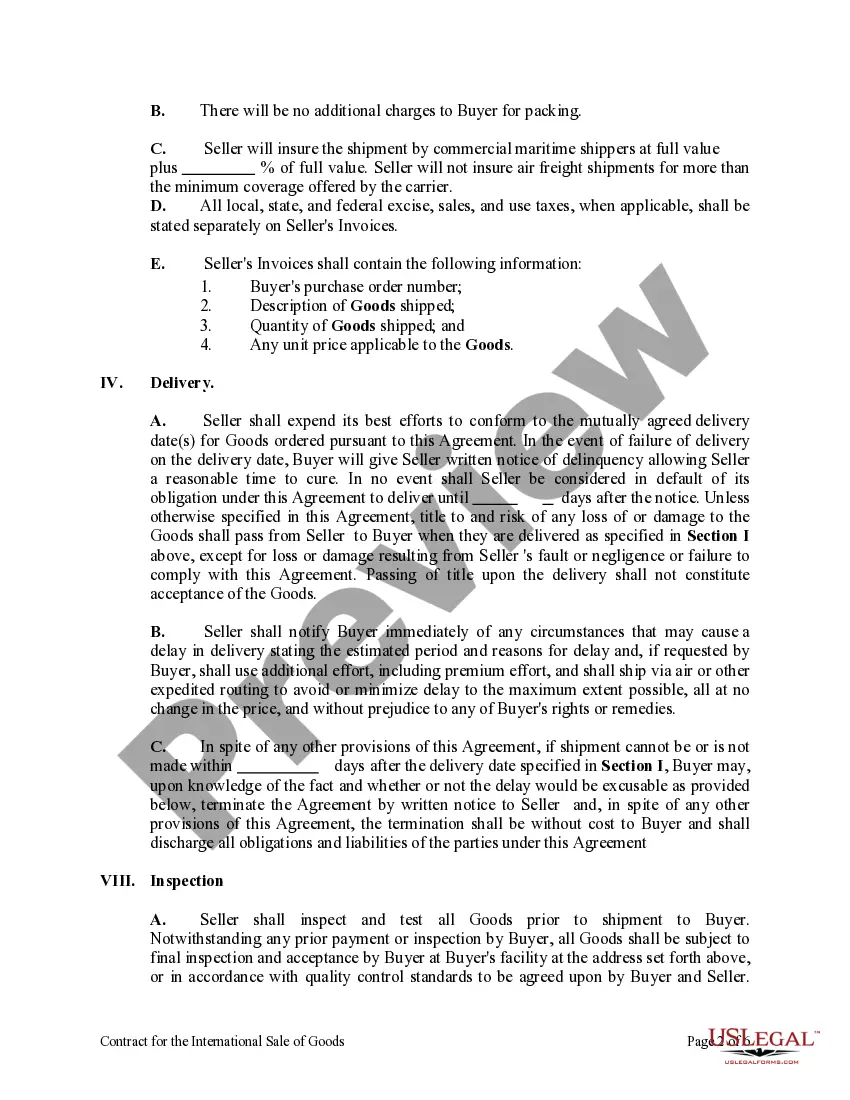
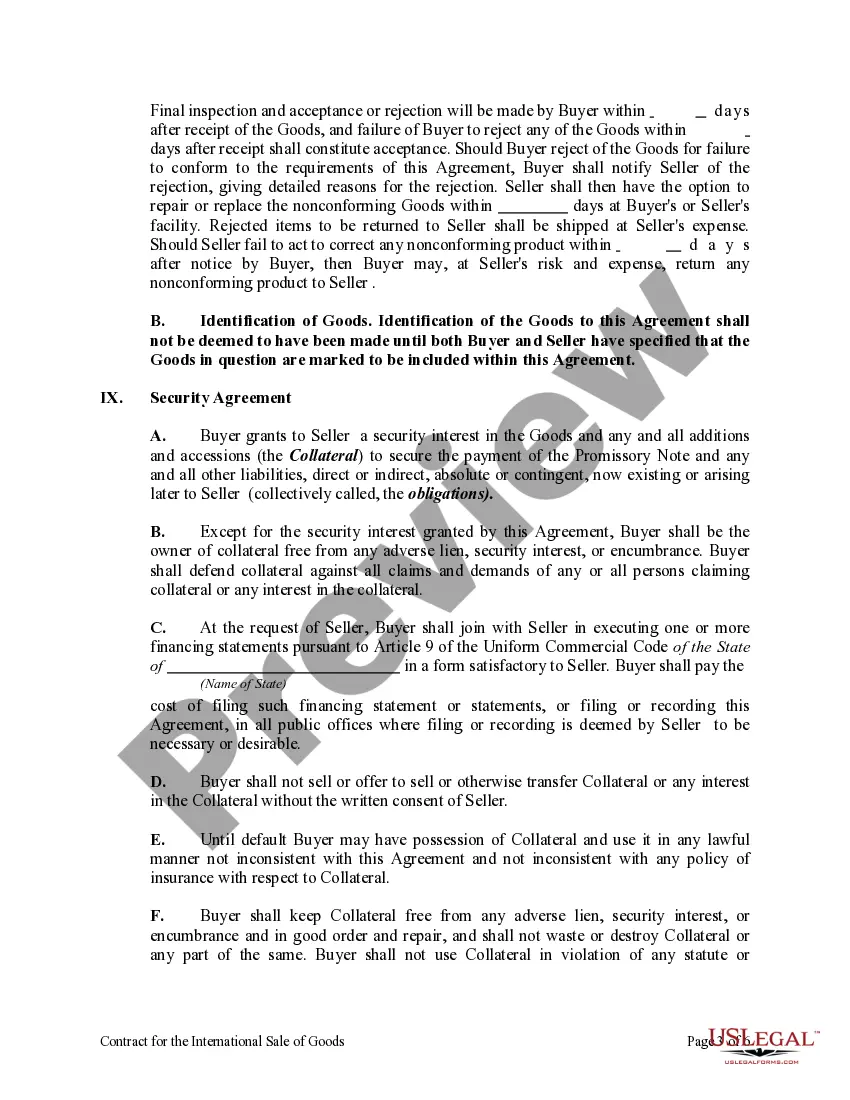
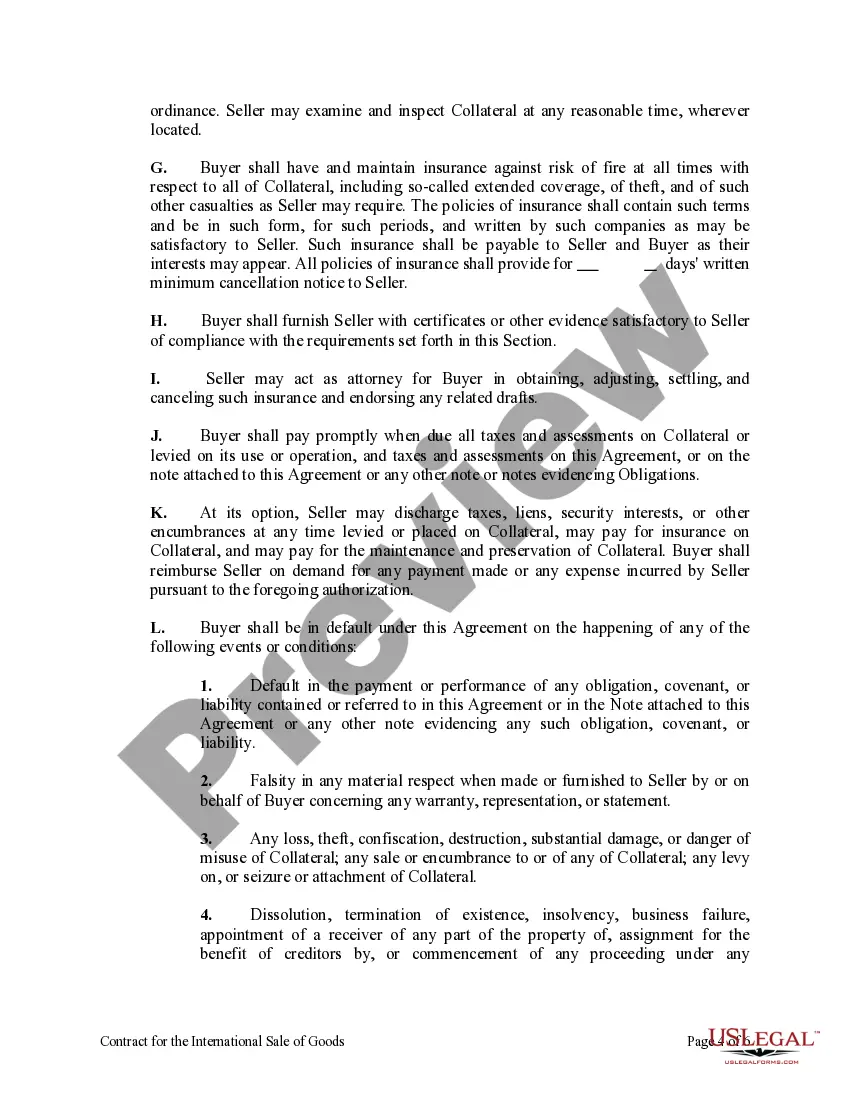
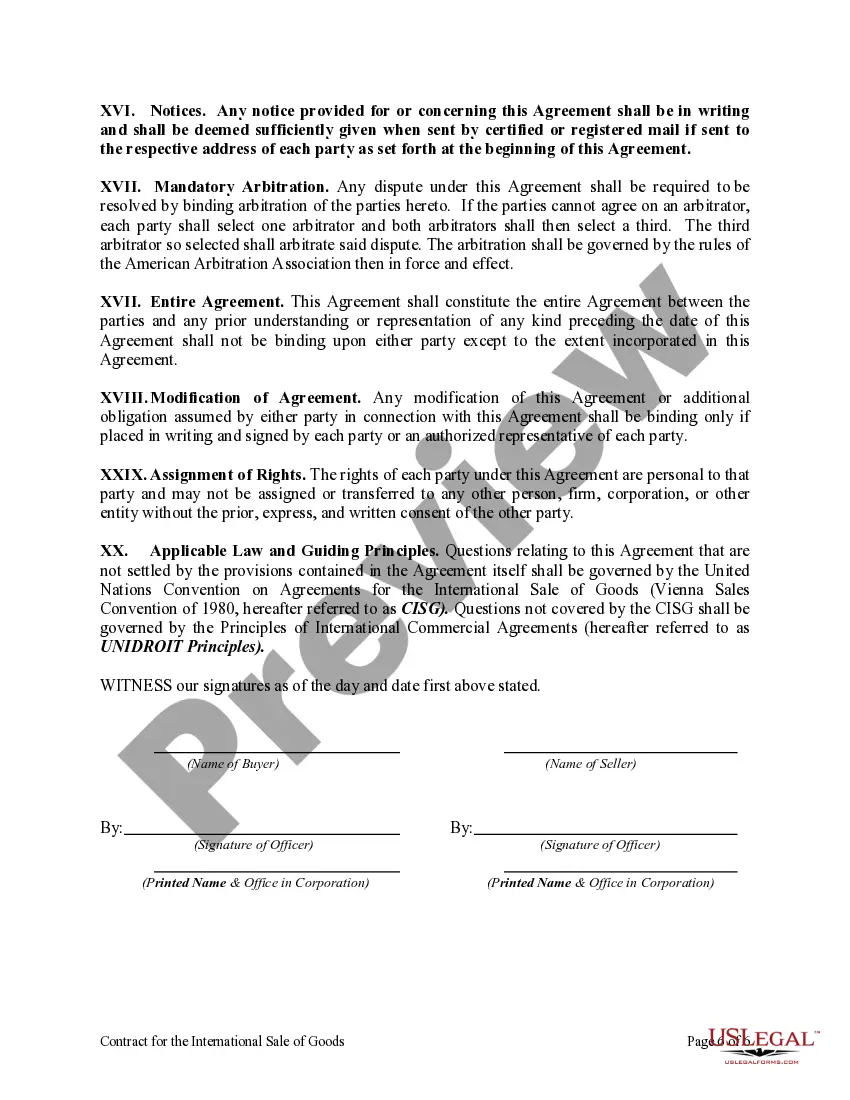
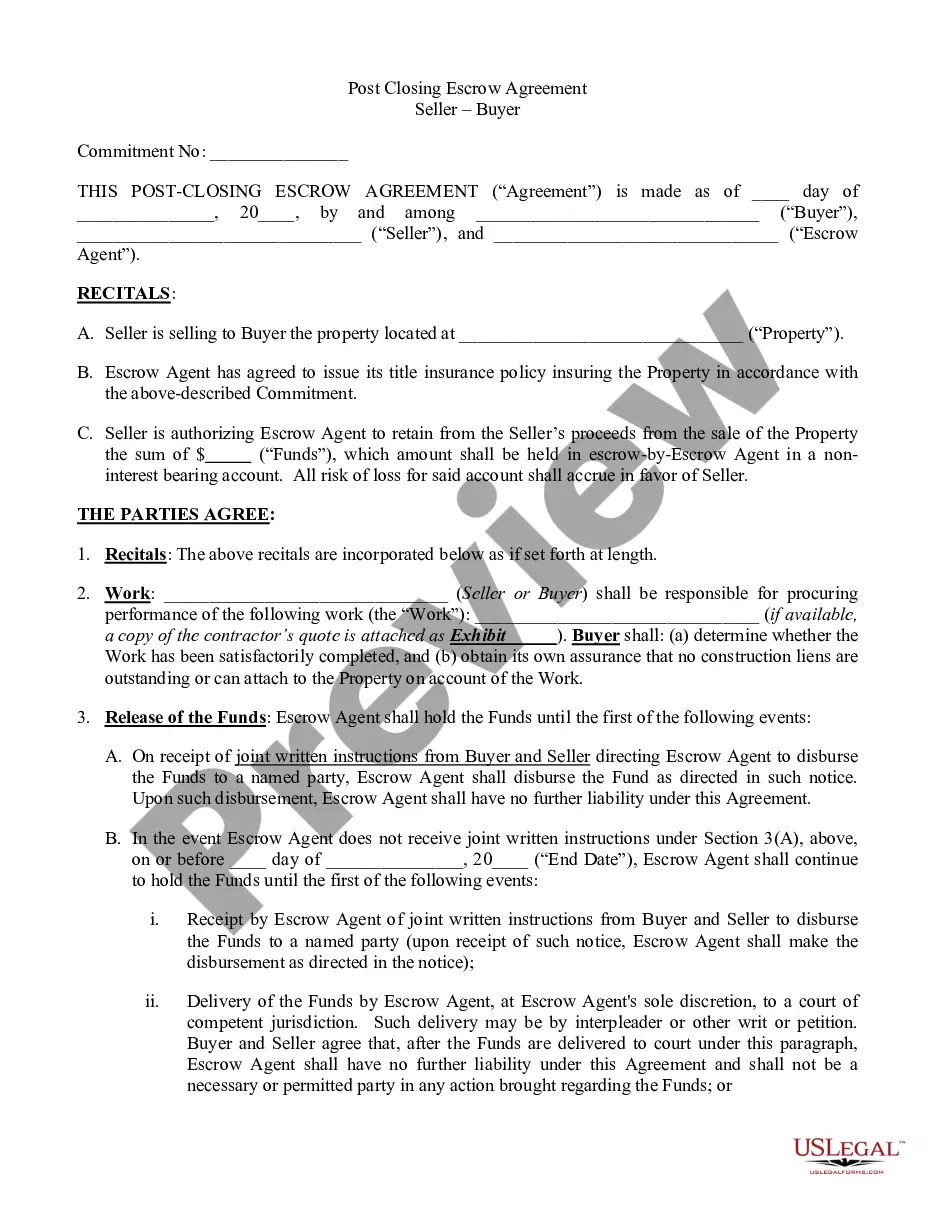
International sale contracts refer to contracts for the sale of goods involving sea transit and various forms of contractual documents common in the import and export trades.
Contracts are typically brought into existence through offer and acceptance. An offer is a proposal by one party to enter into a contract on certain terms. The terms must be sufficiently detailed and clear so that if they are accepted then a contract can be formed without the need for further bargaining.
As is known, contract is a legal transaction that requires at least two persons and two corresponding declarations of intent. First one of these corresponding declarations is called offer, it has to receive the offeree in order to conclude an effective contract and has to include some special criteria.
In order to validly form a contract under the CISG, there has to be two declarations of intent – acceptance and offer. This traditional approach is parallel to Swiss and Turkish laws of obligations. The offeror should have a definite proposal and the intention to be bound by that proposal.
Contents Identifying the Parties Involved. Identify all relevant governments, organizations, and businesses involved in the agreement. Determine the roles and responsibilities of all parties involved. Establishing Objectives. Establish the overall goal of the agreement. Identify the objectives of each party involved.
How to write a business contract Determine why you need a contract. Define all applicable parties. Include all essential elements of a contract. Select the appropriate governing law and jurisdiction. Write everything in plain language. Use repeatable language and formats when possible. Use tables, lists, and other tools.
The United Nations Convention on Contracts for the International Sale of Goods (“CISG”) regulates the formation of contracts under Part II, Articles 14 to 24. Articles 11, 13 and 29 also provide insight for formation of contracts.
