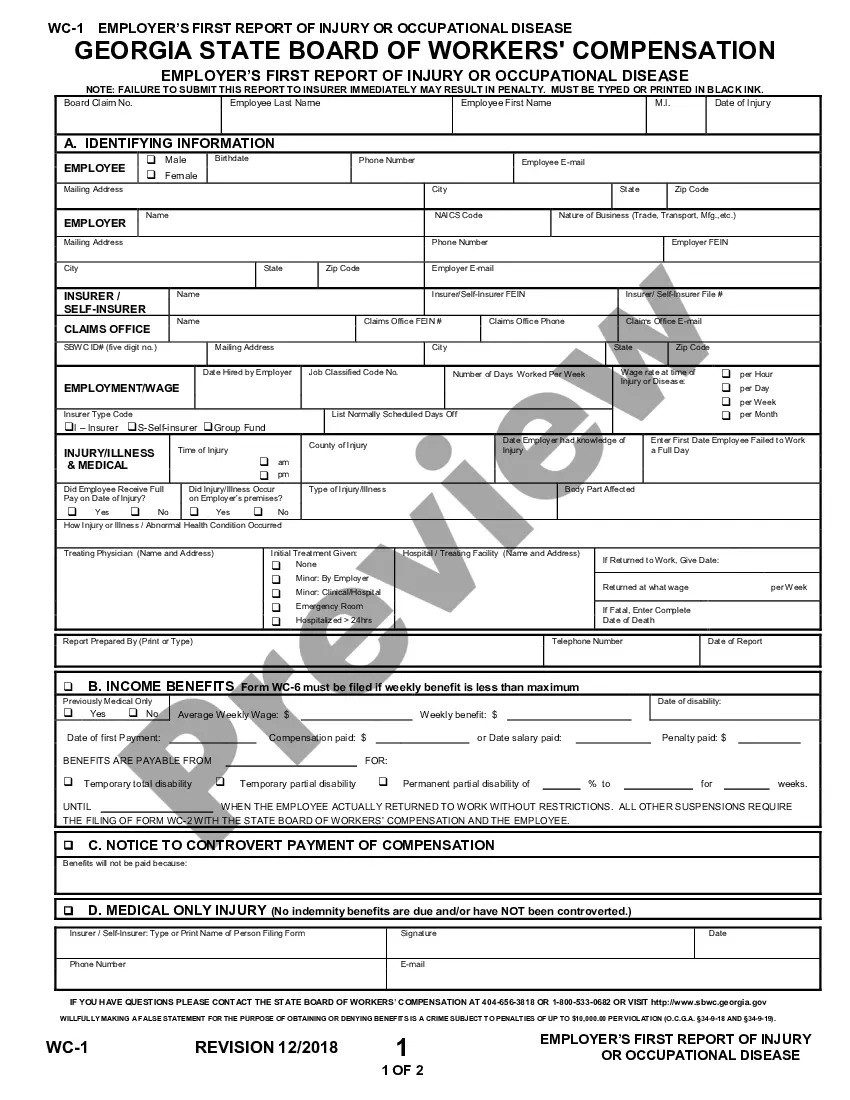
Workplace Discrimination For Pregnancy In San Jose
Description




Get your form ready online
Our built-in tools help you complete, sign, share, and store your documents in one place.
Make edits, fill in missing information, and update formatting in US Legal Forms—just like you would in MS Word.
Download a copy, print it, send it by email, or mail it via USPS—whatever works best for your next step.
Sign and collect signatures with our SignNow integration. Send to multiple recipients, set reminders, and more. Go Premium to unlock E-Sign.
If this form requires notarization, complete it online through a secure video call—no need to meet a notary in person or wait for an appointment.
We protect your documents and personal data by following strict security and privacy standards.

Make edits, fill in missing information, and update formatting in US Legal Forms—just like you would in MS Word.

Download a copy, print it, send it by email, or mail it via USPS—whatever works best for your next step.

Sign and collect signatures with our SignNow integration. Send to multiple recipients, set reminders, and more. Go Premium to unlock E-Sign.

If this form requires notarization, complete it online through a secure video call—no need to meet a notary in person or wait for an appointment.

We protect your documents and personal data by following strict security and privacy standards.
Looking for another form?





Form popularity
FAQ
A: Most workplace discrimination claims have a statute of limitations of three years. This means that if a person was discriminated against due to their pregnancy, they must file a claim within three years after the discrimination occurred.
The Pregnancy Discrimination Act (PDA) prohibits employers with a minimum of 15 employees from: Refusing to hire a woman because of pregnancy. Firing or forcing a woman to leave her position because of pregnancy.
Compare your work, conduct and treatment to that of those outside of your protected class as much as possible. Provide proof that others of similar qualifications have been given better opportunities, projects that are more favorable and superior treatment.
If at any time you think that you have been subjected to pregnancy (or related) discrimination, contact the Civil Rights Center at 202-693-6500 within 45 days of the alleged discriminatory event in order to preserve your right to file an EEO complaint.
Proving pregnancy discrimination requires more than a victim's claim. There must be evidence that the employer acted against the individual exclusively based on their pregnancy. That evidence must be clear, inarguable, and documented.
Proving pregnancy discrimination requires more than a victim's claim. There must be evidence that the employer acted against the individual exclusively based on their pregnancy. That evidence must be clear, inarguable, and documented.
Therefore, pregnant women can work 40 hours a week if the working conditions are safe for them to do so. If a pregnant employee begins to work over 40 hours a week and is subject to a lot of stress, it could be harmful to their health and the health of their unborn child.
The Pregnancy Discrimination Act (PDA) in the United States prohibits discrimination based on pregnancy, childbirth, or related medical conditions. This means that if you need to take time off due to pregnancy-related health issues, you are typically protected from being fired for doing so.
To successfully win a pregnancy discrimination claim, an employee must provide evidence showing that her pregnancy was a substantial motivating reason for an adverse employment (such as a demotion, a write up and, of course, a termination) and that other employees in similar situations were treated differently.