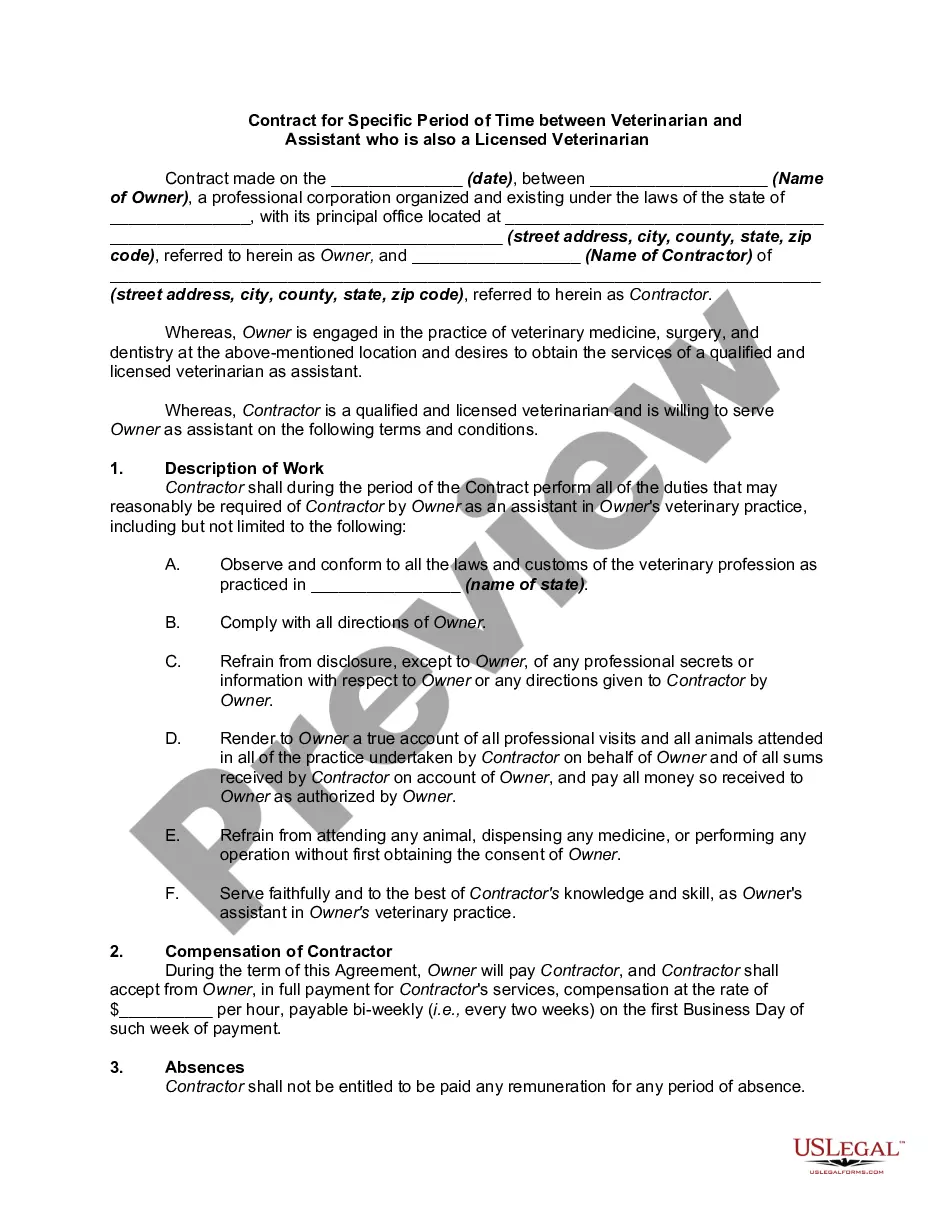
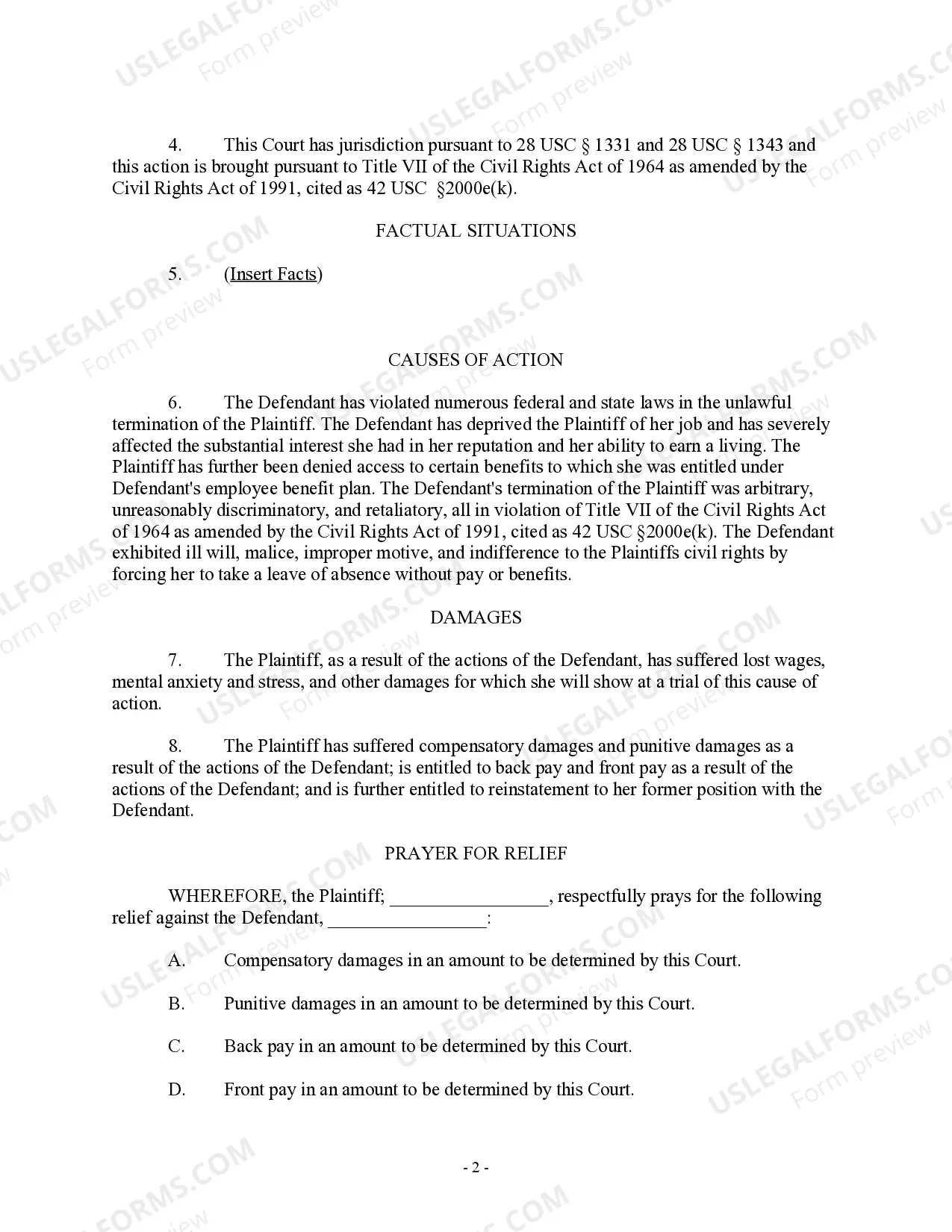
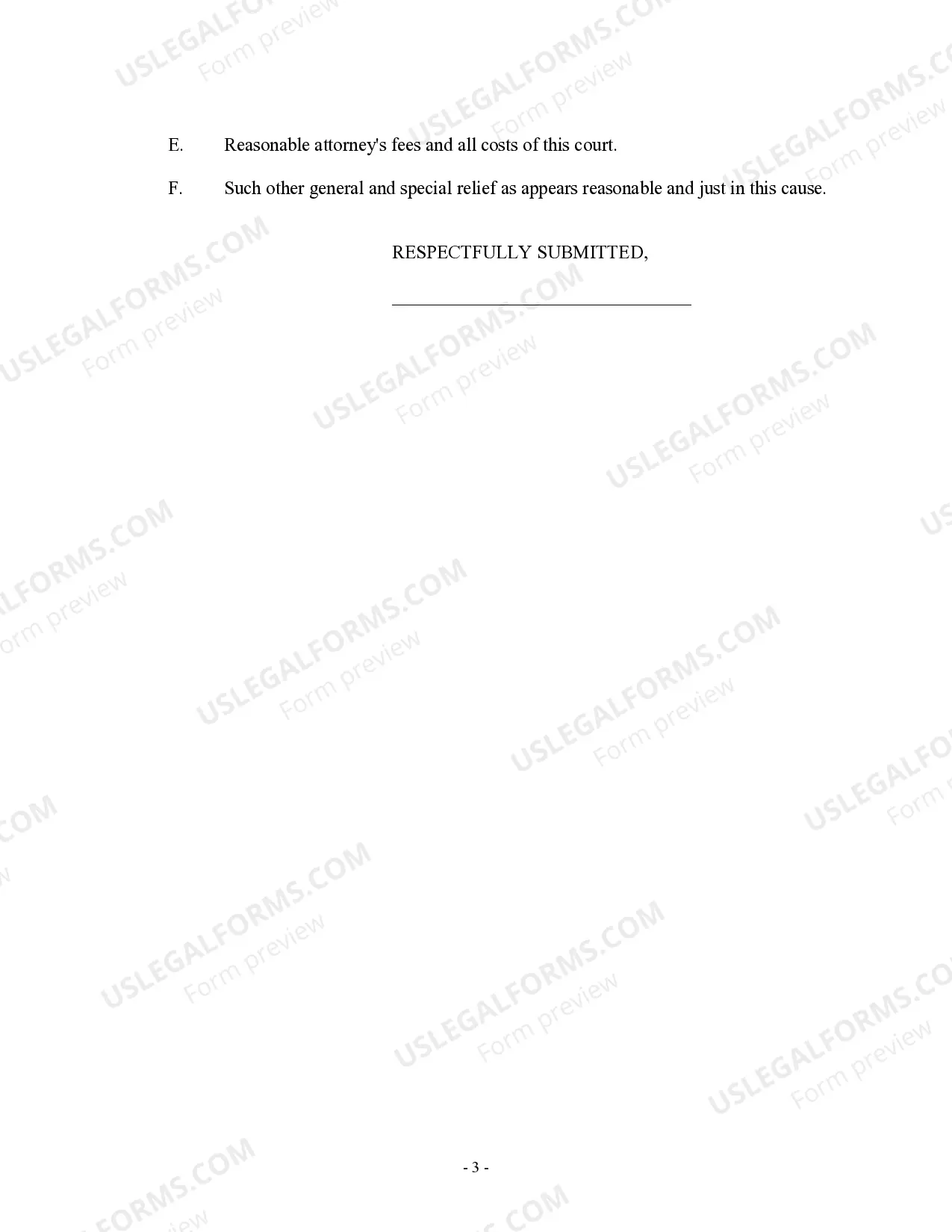
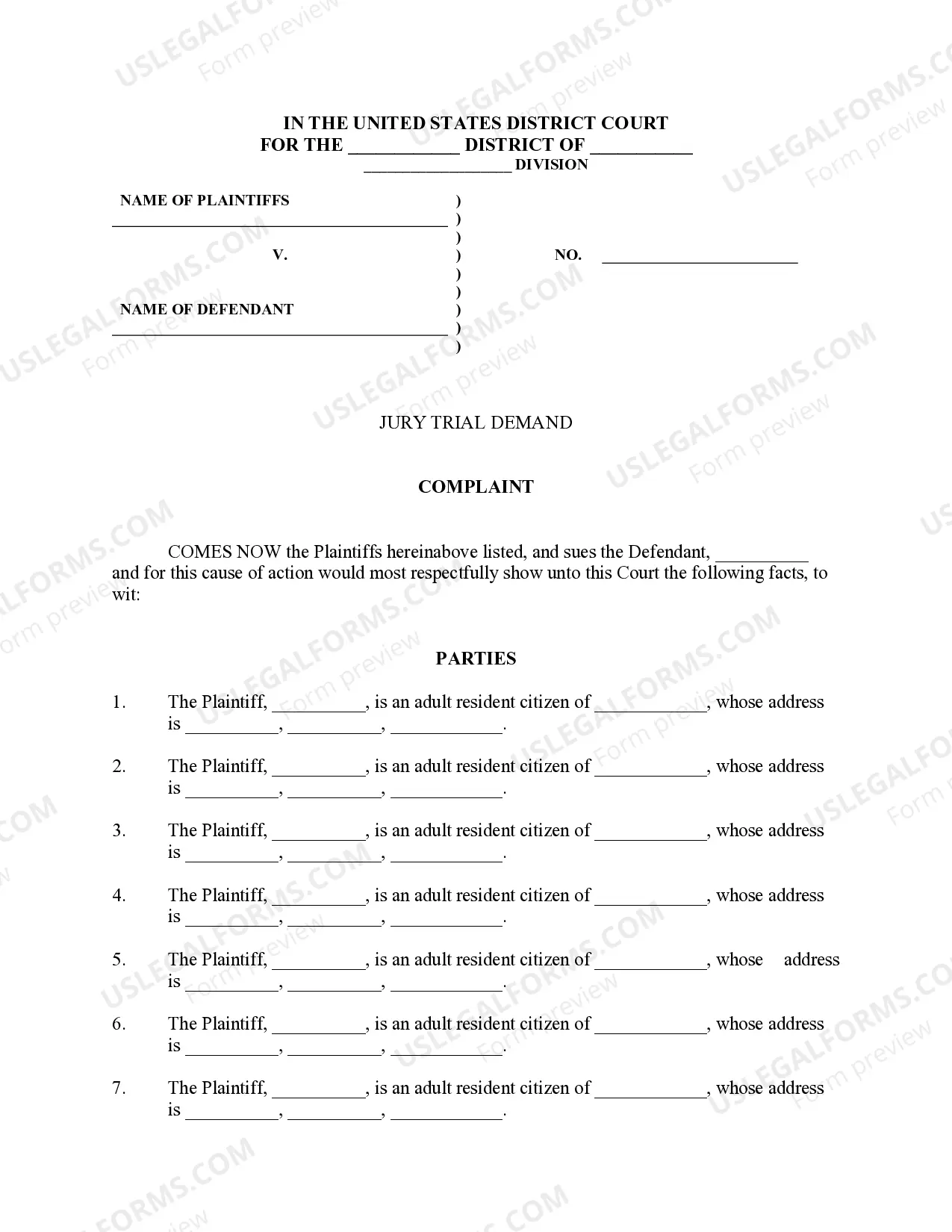
This is a multi-state form covering the subject matter of the title.
Wrongful Termination Court For Retaliation In Palm Beach
Category:
State:
Multi-State
County:
Palm Beach
Control #:
US-000291
Format:
Word;
Rich Text
Instant download
Description
Free preview




Get your form ready online
Our built-in tools help you complete, sign, share, and store your documents in one place.
Built-in online Word editor
Make edits, fill in missing information, and update formatting in US Legal Forms—just like you would in MS Word.
Export easily
Download a copy, print it, send it by email, or mail it via USPS—whatever works best for your next step.
E-sign your document
Sign and collect signatures with our SignNow integration. Send to multiple recipients, set reminders, and more. Go Premium to unlock E-Sign.
Notarize online 24/7
If this form requires notarization, complete it online through a secure video call—no need to meet a notary in person or wait for an appointment.
Store your document securely
We protect your documents and personal data by following strict security and privacy standards.

Make edits, fill in missing information, and update formatting in US Legal Forms—just like you would in MS Word.

Download a copy, print it, send it by email, or mail it via USPS—whatever works best for your next step.

Sign and collect signatures with our SignNow integration. Send to multiple recipients, set reminders, and more. Go Premium to unlock E-Sign.

If this form requires notarization, complete it online through a secure video call—no need to meet a notary in person or wait for an appointment.

We protect your documents and personal data by following strict security and privacy standards.
Looking for another form?




Form popularity
FAQ
Retaliation occurs when an employer (through a manager, supervisor, administrator or directly) fires an employee or takes any other type of adverse action against an employee for engaging in protected activity.
Yes, it can be worth suing in certain situations when you have a strong case and believe that you have been wronged. Suing may be worth it to seek justice, hold the responsible party accountable, and obtain compensation for damages, lost wages, or emotional distress caused by workplace retaliation.
You must prove that your firing violated California labor laws or public policy. Documentation and witness statements are essential in establishing this. Causation. You must show a direct link between your termination and the illegal reason, such as discrimination or retaliation.
Although the specific evidence can vary from case to case, your attorney can help you prove that: You've faced or witnessed some form of illegal harassment or discrimination. You took part in a protected activity. In response, your employer took adverse action against you (demotion, termination, etc.).
Generally, you can sue for emotional distress in Florida if you can prove that someone else's negligent actions caused your pain and suffering. However, these claims often prove challenging because it's difficult to prove you're experiencing emotional distress.
If your employer is retaliating against you based on discriminatory practices, you can file a claim with either the Florida Commission on Human Relations (FCHR) or the Equal Employment Opportunity Commission (EEOC).
Gathering Evidence to Prove Retaliation This could mean filing a discrimination complaint, reporting illegal conduct, or participating in an investigation. Following your engagement in a protected activity, it's crucial to show that you experienced an adverse action.
Timing is also a concern, as you must demonstrate that the action(s) taken against you occurred shortly after your protected activity. For instance, if you have a good work history but receive a negative review a few days after making a harassment complaint, that would provide solid grounds for a retaliation case.
When you have a lawyer for a wrongful termination case the likelihood of receiving compensation is 64% and the likelihood of receiving compensation without a lawyer is 30%.