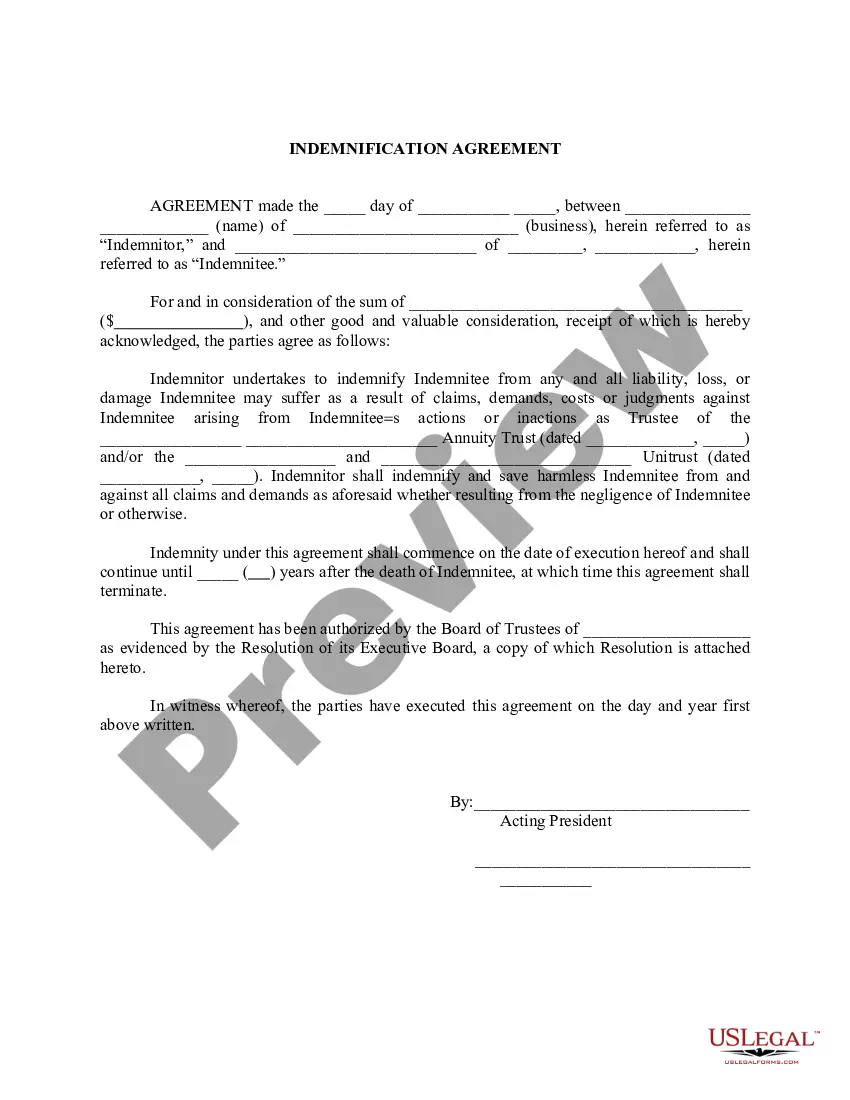
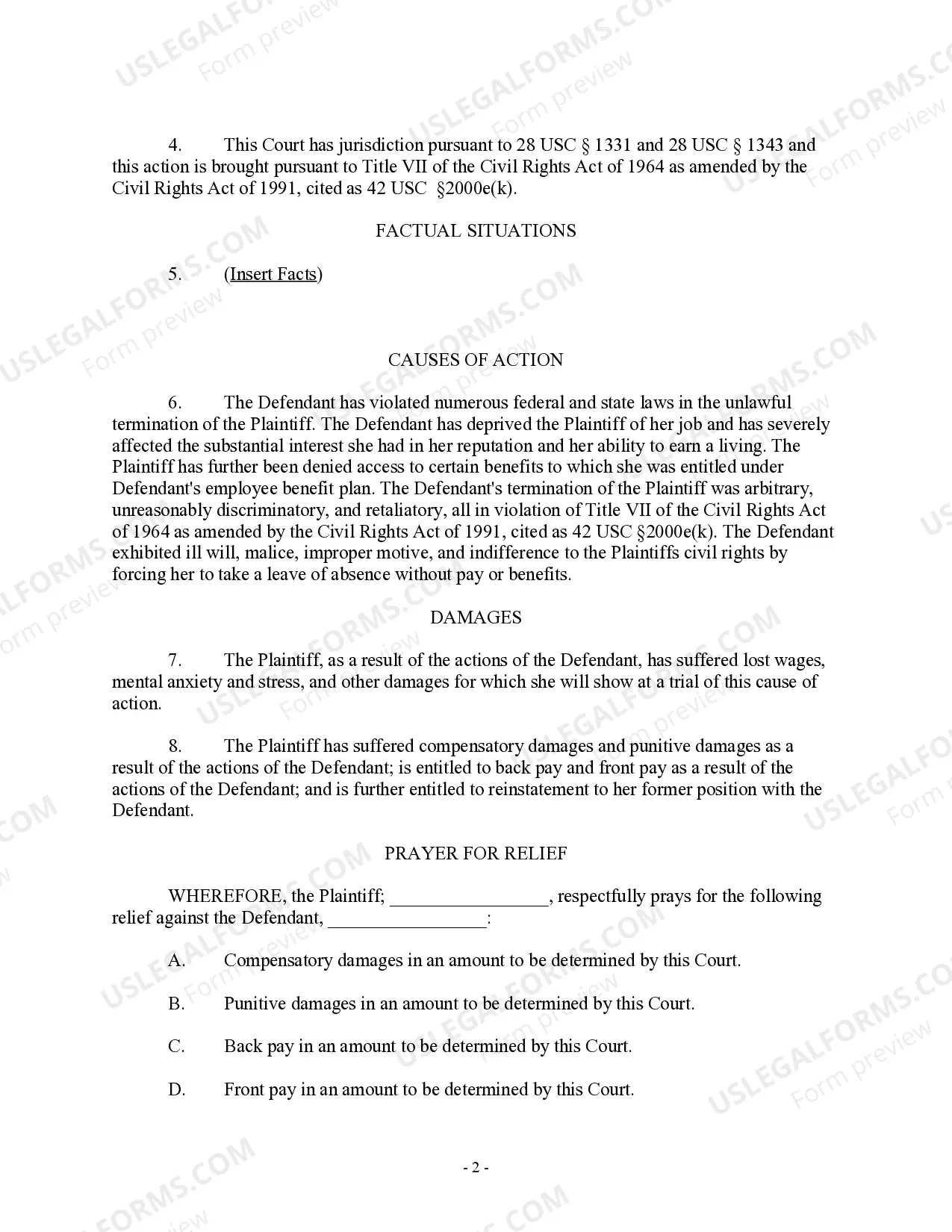
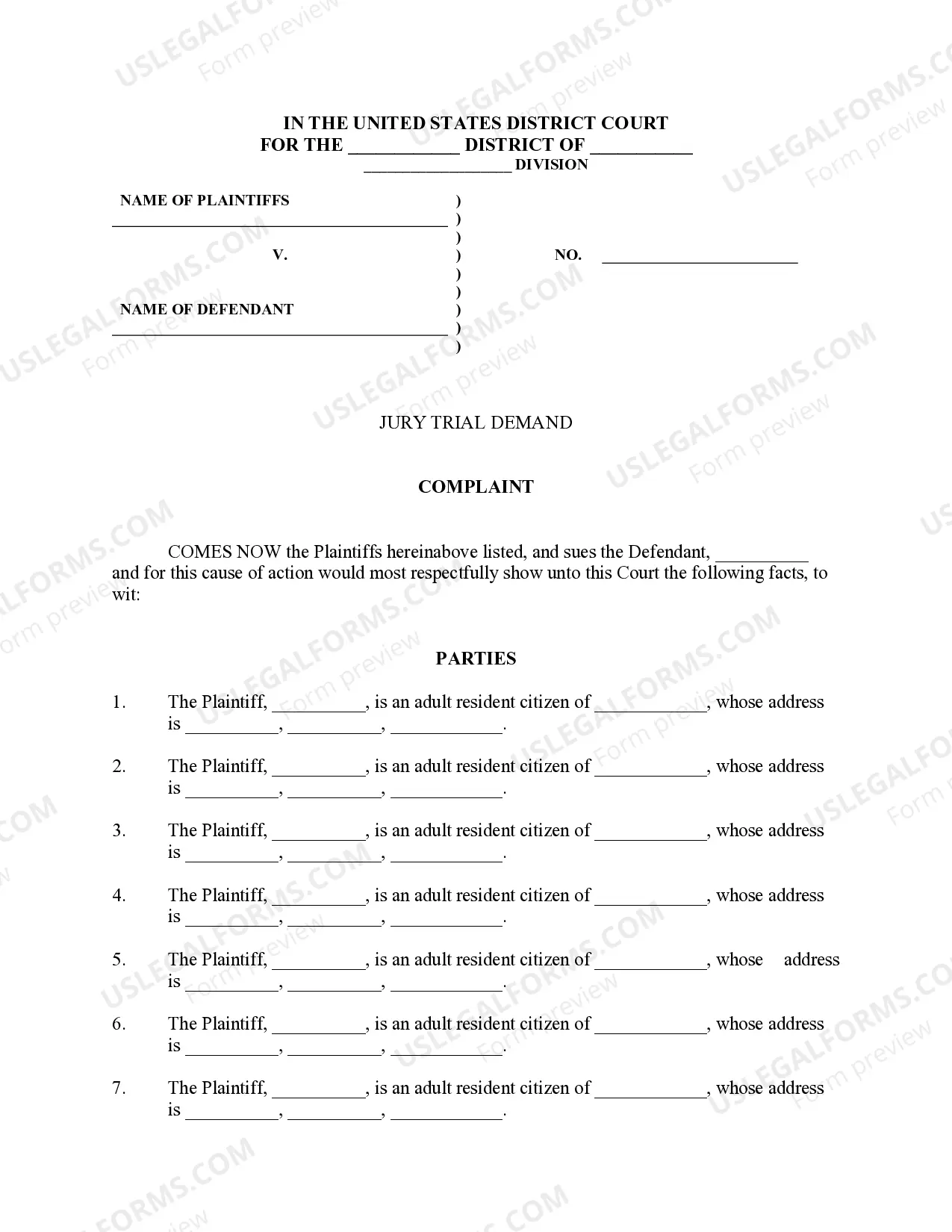
This is a multi-state form covering the subject matter of the title.
Wrongful Termination Court For False Accusations In Harris
State:
Multi-State
Category:
County:
Harris
Control #:
US-000291
Format:
Word;
Rich Text
99 downloads
Description
Free preview




Get your form ready online
Our built-in tools help you complete, sign, share, and store your documents in one place.
Built-in online Word editor
Make edits, fill in missing information, and update formatting in US Legal Forms—just like you would in MS Word.
Export easily
Download a copy, print it, send it by email, or mail it via USPS—whatever works best for your next step.
E-sign your document
Sign and collect signatures with our SignNow integration. Send to multiple recipients, set reminders, and more. Go Premium to unlock E-Sign.
Notarize online 24/7
If this form requires notarization, complete it online through a secure video call—no need to meet a notary in person or wait for an appointment.
Store your document securely
We protect your documents and personal data by following strict security and privacy standards.

Make edits, fill in missing information, and update formatting in US Legal Forms—just like you would in MS Word.

Download a copy, print it, send it by email, or mail it via USPS—whatever works best for your next step.

Sign and collect signatures with our SignNow integration. Send to multiple recipients, set reminders, and more. Go Premium to unlock E-Sign.

If this form requires notarization, complete it online through a secure video call—no need to meet a notary in person or wait for an appointment.

We protect your documents and personal data by following strict security and privacy standards.
Looking for another form?




Form popularity
FAQ
There is no better way to counter false allegations than through documentation. Thorough documentation leaves no room for error or disagreement and will be the lynchpin in your case. It's important to save all emails, text messages, and voicemails as evidence.
The burden of proof requires a party to produce evidence to establish the truth of facts needed to satisfy all the required legal elements of the dispute. The burden of proof is usually on the person who brings a claim in a dispute.
What Is the Burden of Proof for False Accusations? In both criminal and family court, the burden of proof lies with the accuser.
You can sue an employer for firing you under false accusations if the termination violates your employment contract, discriminates against protected classes, or is considered retaliatory under labor laws. Document the accusations and seek legal counsel to determine if wrongful termination laws apply in your case.
If convicted, penalties for false accusations could result in fines of up to $1,000, up to six months in county jail, or both. Additionally, individuals may face civil lawsuits for defamation or malicious prosecution if the false accusations harm another person's reputation or lead to wrongful legal actions.
Be calm and slowly respond to their every move. Do not immediately countersue or counteraccuse. Lean back and collect all the facts you can. Talk with an attorney and construct a plan for defense. Attempt to collect and offer as many FACTS as you can to support your case.