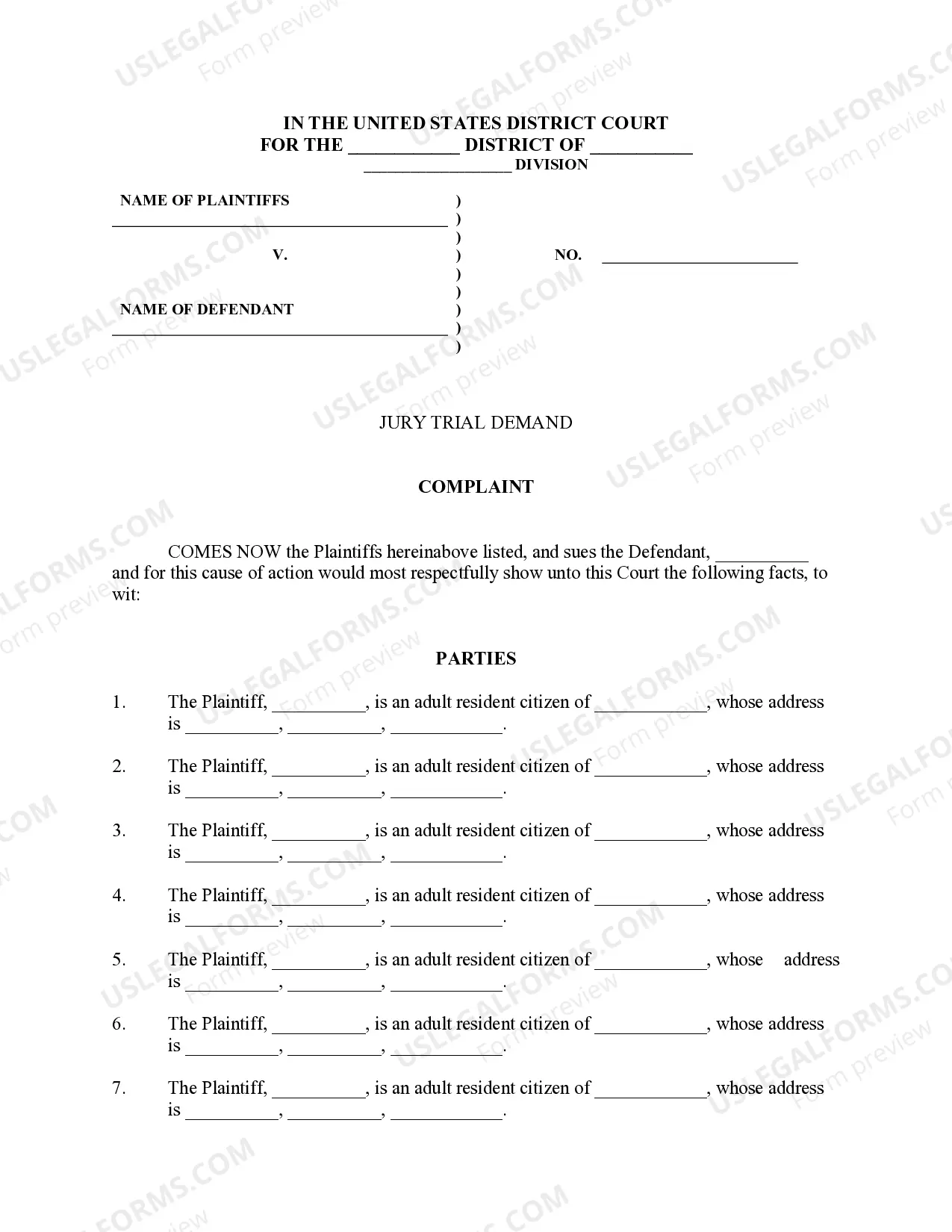
This is a multi-state form covering the subject matter of the title.
Demand For Trial Authorizations In Cuyahoga
State:
Multi-State
Category:
County:
Cuyahoga
Control #:
US-000291
Format:
Word;
Rich Text
99 downloads
Description
Free preview





Get your form ready online
Our built-in tools help you complete, sign, share, and store your documents in one place.
Built-in online Word editor
Make edits, fill in missing information, and update formatting in US Legal Forms—just like you would in MS Word.
Export easily
Download a copy, print it, send it by email, or mail it via USPS—whatever works best for your next step.
E-sign your document
Sign and collect signatures with our SignNow integration. Send to multiple recipients, set reminders, and more. Go Premium to unlock E-Sign.
Notarize online 24/7
If this form requires notarization, complete it online through a secure video call—no need to meet a notary in person or wait for an appointment.
Store your document securely
We protect your documents and personal data by following strict security and privacy standards.

Make edits, fill in missing information, and update formatting in US Legal Forms—just like you would in MS Word.

Download a copy, print it, send it by email, or mail it via USPS—whatever works best for your next step.

Sign and collect signatures with our SignNow integration. Send to multiple recipients, set reminders, and more. Go Premium to unlock E-Sign.

If this form requires notarization, complete it online through a secure video call—no need to meet a notary in person or wait for an appointment.

We protect your documents and personal data by following strict security and privacy standards.
Looking for another form?









Form popularity
FAQ
The arraignment judge checks that the defendant knows the charges they face. The court assigns the defendant an attorney if they don't have one. Defendants enter a plea to the charges.
If the court denies the motion to dismiss, the defendant(s) must serve their answer within 14 days after notice of the court's action (Ohio Civ. R. 12(A)).
Prac. R. 12.08(B), any motion for reconsideration must be filed within ten days after the Supreme Court's judgment entry or order is filed with the Clerk of the Supreme Court. An amicus curiae may not file a motion for reconsideration.
A motion to dismiss is a written request by a defendant asking the Court to dispose of some or all the claims raised in the Complaint before the case can move forward in the litigation process. The Defendant has 21 days to file an Answer, or otherwise respond to the Complaint.
11.0 HEARING AND SUBMISSION OF MOTIONS If the motion requires consideration of facts not appearing of record, the movant shall serve and file copies of all affidavits, depositions, photographs or documentary evidence which the movant desires to submit in support of the motion.
The person who brings or files the demurrer or motion can also file a reply before the hearing date, responding to what is in the opposition.
If the court denies the motion to dismiss, the defendant(s) must serve their answer within 14 days after notice of the court's action (Ohio Civ. R. 12(A)).
So what happens at an arraignment? During the arraignment, also referred to as the first appearance, the defendant is informed of the charges they are facing and their constitutional rights. The defendant typically enters a plea of guilty, not guilty, or no contest during this proceeding.
Yes, you can absolutely go to jail at an arraignment in California. An arraignment is the first court appearance after an arrest.