Deceptive Practices In Business In Wake
Description




Get your form ready online
Our built-in tools help you complete, sign, share, and store your documents in one place.
Make edits, fill in missing information, and update formatting in US Legal Forms—just like you would in MS Word.
Download a copy, print it, send it by email, or mail it via USPS—whatever works best for your next step.
Sign and collect signatures with our SignNow integration. Send to multiple recipients, set reminders, and more. Go Premium to unlock E-Sign.
If this form requires notarization, complete it online through a secure video call—no need to meet a notary in person or wait for an appointment.
We protect your documents and personal data by following strict security and privacy standards.

Make edits, fill in missing information, and update formatting in US Legal Forms—just like you would in MS Word.

Download a copy, print it, send it by email, or mail it via USPS—whatever works best for your next step.

Sign and collect signatures with our SignNow integration. Send to multiple recipients, set reminders, and more. Go Premium to unlock E-Sign.

If this form requires notarization, complete it online through a secure video call—no need to meet a notary in person or wait for an appointment.

We protect your documents and personal data by following strict security and privacy standards.
Looking for another form?










Form popularity
FAQ
The essence of an unfair competition claim under New York law is that the defendant misappropriated the fruit of plaintiff's labors and expenditures by obtaining access to plaintiff's business idea either through fraud or deception, or an abuse of a fiduciary or confidential relationship.
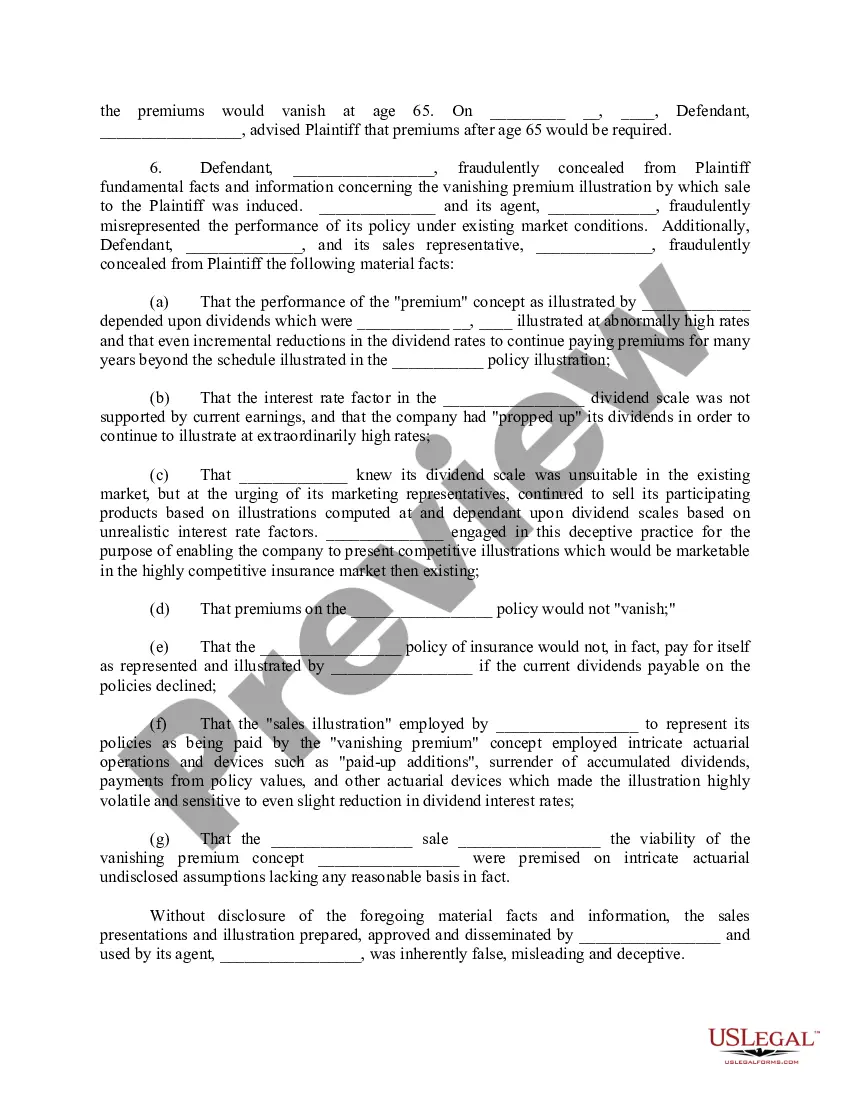
Deceptive acts and practices unlawful. (a) Deceptive acts or practices in the conduct of any business, trade or commerce or in the furnishing of any service in this state are hereby declared unlawful.
Law § 349. Section 349 - Deceptive acts and practices unlawful (a) Deceptive acts or practices in the conduct of any business, trade or commerce or in the furnishing of any service in this state are hereby declared unlawful.
General Business Law § 349 New York's consumer protection statute, General Business Law Section 349, makes it unlawful to engage in deceptive acts or practices in the conduct of any business, trade, or commerce or in the furnishing of any service in the state.
Types of Unfair Trade Practices ① Refusal to Deal. ② Discriminatory Treatment. ③ Exclusion of a Competitor. ④ Unfair Solicitation of Customers. ⑤ Coercion of Transaction. ⑥ Abuse of Superior Bargaining Position. ⑦ Imposing Binding Conditional Trade. ⑧ Obstruction of Business Activities.
The principal prohibition in the UDTPA is concise but powerful, stating “Unfair methods of competition in or affecting commerce, and unfair or deceptive acts or practices in or affecting commerce, are declared unlawful.” G.S. § 75-1.1.
After a complaint is filed, it is reviewed by an attorney general representative who determines whether: The complaint is appropriate for mediation by the office. If it should be referred to another governmental entity that may be more suited to assist with the consumer's complaint.
File a complaint with your local consumer protection office or the state agency that regulates the company. Notify the Better Business Bureau (BBB) in your area about your problem. The BBB tries to resolve your complaints against companies.
Department of Consumer Affairs. File a complaint online at .dca.ca or call 800.952. 5210 to have a complaint form mailed to you. California Attorney General's Office.
To file a complaint, just go to ftc/complaint, and answer the questions. Or call That's all there is to it. If you've been ripped off or scammed, complain to the Federal Trade Commission. It can help put the bad guys out of business.