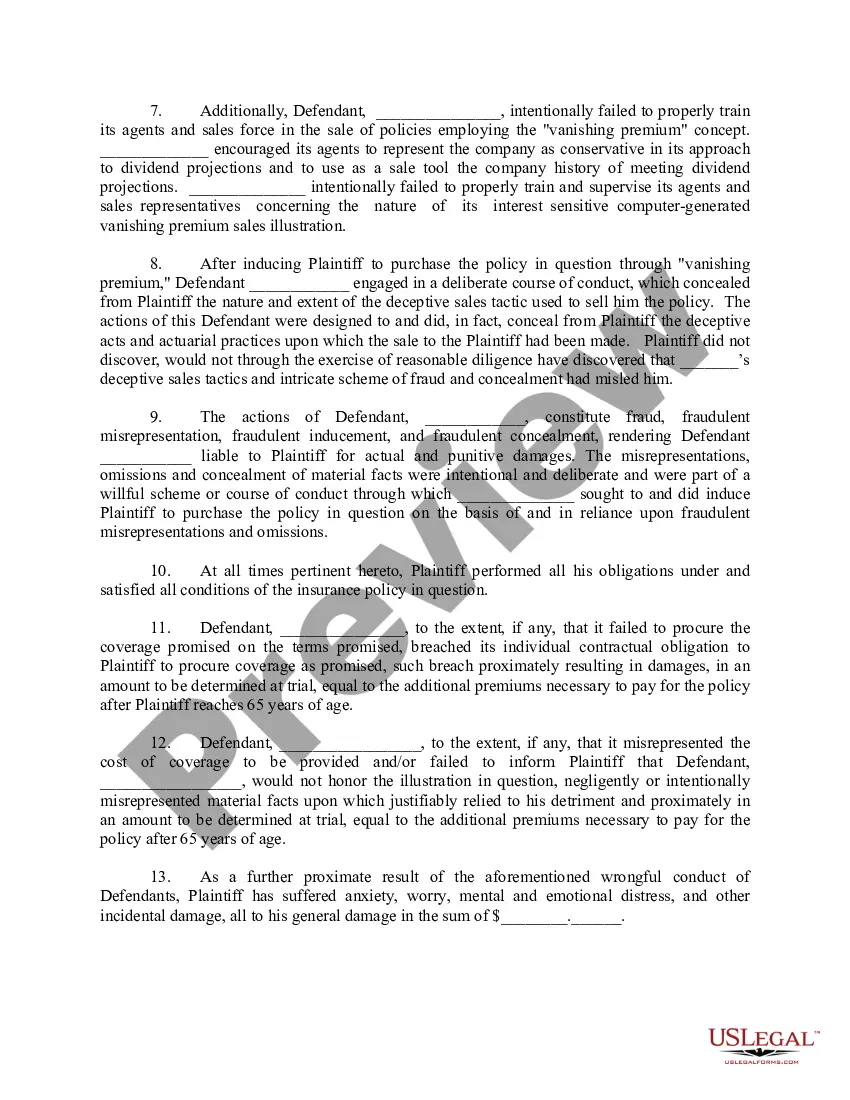
Deceptive Practices In Sales In Pima
Description



Get your form ready online
Our built-in tools help you complete, sign, share, and store your documents in one place.
Make edits, fill in missing information, and update formatting in US Legal Forms—just like you would in MS Word.
Download a copy, print it, send it by email, or mail it via USPS—whatever works best for your next step.
Sign and collect signatures with our SignNow integration. Send to multiple recipients, set reminders, and more. Go Premium to unlock E-Sign.
If this form requires notarization, complete it online through a secure video call—no need to meet a notary in person or wait for an appointment.
We protect your documents and personal data by following strict security and privacy standards.

Make edits, fill in missing information, and update formatting in US Legal Forms—just like you would in MS Word.

Download a copy, print it, send it by email, or mail it via USPS—whatever works best for your next step.

Sign and collect signatures with our SignNow integration. Send to multiple recipients, set reminders, and more. Go Premium to unlock E-Sign.

If this form requires notarization, complete it online through a secure video call—no need to meet a notary in person or wait for an appointment.

We protect your documents and personal data by following strict security and privacy standards.
Looking for another form?






Form popularity
FAQ
File a complaint with your local consumer protection office or the state agency that regulates the company. Notify the Better Business Bureau (BBB) in your area about your problem. The BBB tries to resolve your complaints against companies.
After a complaint is filed, it is reviewed by an attorney general representative who determines whether: The complaint is appropriate for mediation by the office. If it should be referred to another governmental entity that may be more suited to assist with the consumer's complaint.
The plaintiff files a document (complaint) with the clerk of the court stating the reasons why the plaintiff is suing the defendant, and what action the plaintiff wants the court to take. A copy of the complaint and a summons are delivered to (served on) the defendant.
The Arizona Consumer Fraud Act (ACFA) is a package of Arizona state laws that give protections to consumers in almost any kind of transaction related to the sale or advertisement of merchandise.
Consumer injury. Unjustified consumer injury is the primary focus of the FTC Act, and the most important of the three S&H criteria. Violation of public policy. Unethical or unscrupulous conduct.
Door-to-door solicitations are legal in Arizona.
Arizona has not adopted the Uniform Deceptive Trade Practices Act. Arizona Deceptive Trade Practices Laws are stated in Title 44 of Arizona Revised Statutes. Under A.R.S. § 44-1522, false advertising is an unlawful practice, and ing to § 13-2203 false advertising is also a class 1 misdemeanor.
44-1521 et seq., makes it unlawful for a seller to engage in any deception, deceptive or unfair act or practice, false statement, false pretense, false promise, misrepresentation, or concealment or omission of any material fact, by a seller or advertiser in connection with the sale or advertisement of any merchandise.
The act, use or employment by any person of any deception, deceptive or unfair act or practice, fraud, false pretense, false promise, misrepresentation, or concealment, suppression or omission of any material fact with intent that others rely on such concealment, suppression or omission, in connection with the sale or ...
The ACFA is a law that contains broad regulations on the conduct that a business can or cannot engage in. The law broadly prohibits businesses from using deceptive or unfair practices, fraud, misrepresentation, and omission of material fact during the sale or advertisement of goods and services.