Patent Infringement In The Philippines In Dallas
Description

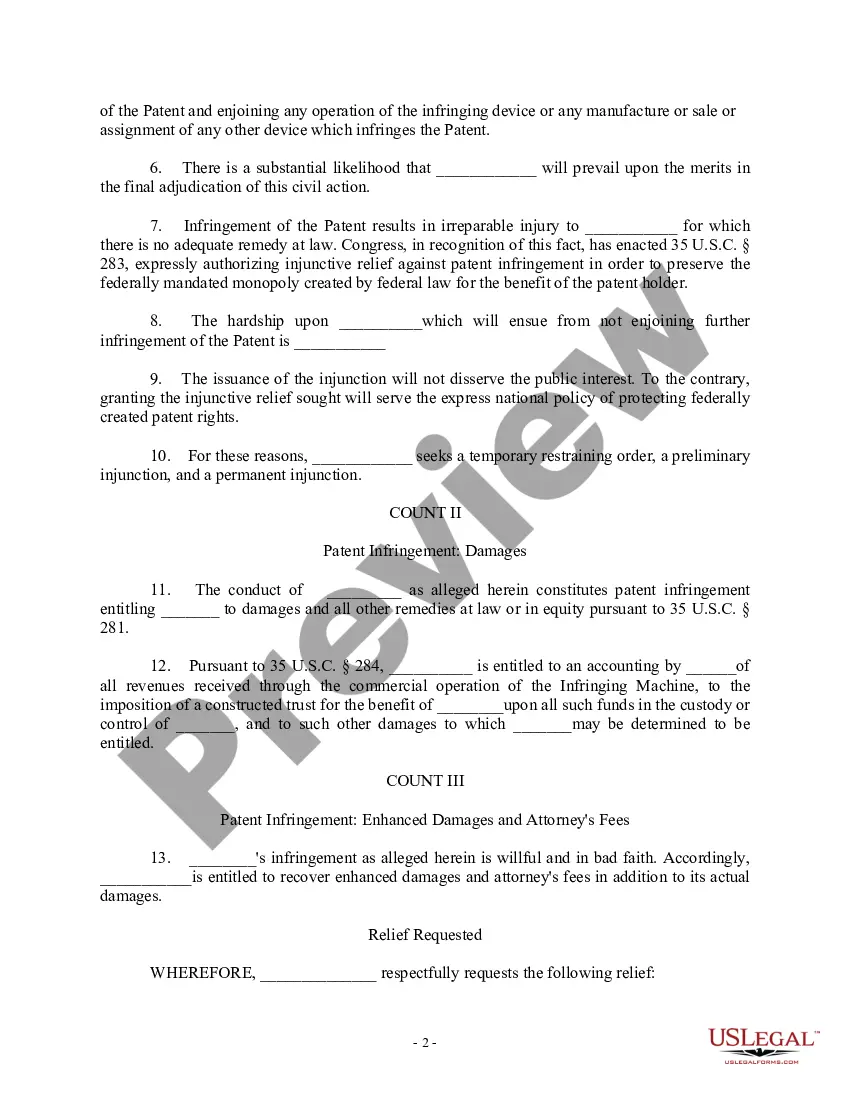
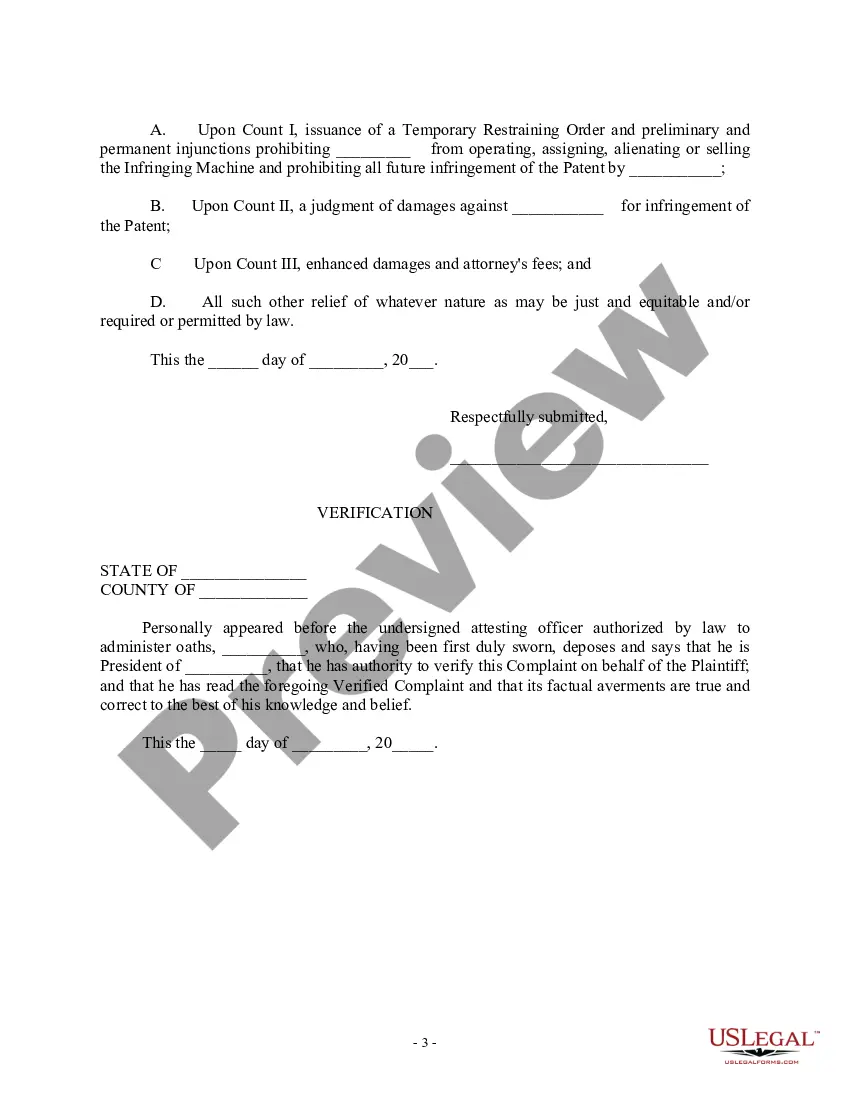
Get your form ready online
Our built-in tools help you complete, sign, share, and store your documents in one place.
Make edits, fill in missing information, and update formatting in US Legal Forms—just like you would in MS Word.
Download a copy, print it, send it by email, or mail it via USPS—whatever works best for your next step.
Sign and collect signatures with our SignNow integration. Send to multiple recipients, set reminders, and more. Go Premium to unlock E-Sign.
If this form requires notarization, complete it online through a secure video call—no need to meet a notary in person or wait for an appointment.
We protect your documents and personal data by following strict security and privacy standards.

Make edits, fill in missing information, and update formatting in US Legal Forms—just like you would in MS Word.

Download a copy, print it, send it by email, or mail it via USPS—whatever works best for your next step.

Sign and collect signatures with our SignNow integration. Send to multiple recipients, set reminders, and more. Go Premium to unlock E-Sign.

If this form requires notarization, complete it online through a secure video call—no need to meet a notary in person or wait for an appointment.

We protect your documents and personal data by following strict security and privacy standards.
Looking for another form?






Form popularity
FAQ
A civil action for patent infringement may be field to recover damages sustained by the patent owner. If the damages sustained cannot be ascertained with reasonable certainty, the court may award by way of damages a sum equivalent to reasonable royalty.
Getting Started in Litigation Your attorney will file a formal complaint in federal court, explaining how the defendant has infringed on your patent. Together with your attorney, you will need to compile evidence of your ownership of the patent and the infringement.
A U.S. patent holder can block importation and sale of an infringing machine, manufacture or composition of matter in the U.S. and can sue for damages. Suit can be brought against foreign companies in U.S. federal court, so long as the patent holder can serve the infringer.
Patent infringement lawsuits can vary in duration but generally take one to three years to resolve.
This probably will require hiring a patent attorney. You should make sure to find an attorney who has handled patent infringement cases previously and who is familiar with your industry. Your attorney will file a formal complaint in federal court, explaining how the defendant has infringed on your patent.
A patent holder must sue the unauthorized party in federal district court. The patent holder can sue in any federal court where the infringed product is found. Patent lawsuits are time-consuming. Depending on where you live, these suits can take years to get to trial.
The administrative suit is filed at the Bureau of Legal Affairs at the Intellectual Property Office of the Philippines. A civil infringement lawsuit is filed in the appropriate court located at the place where the defendant resides/is located, or where the plaintiff resides/is located, at the option of the plaintiff.
Getting Started in Litigation Your attorney will file a formal complaint in federal court, explaining how the defendant has infringed on your patent. Together with your attorney, you will need to compile evidence of your ownership of the patent and the infringement.
The IPR Center encourages victims to visit its website at .IPRCenter to obtain more information about the IPR Center and to report violations of intellectual property rights online or by emailing IPRCenter@dhs. You can also report IP crime by clicking on The IRP Center's “Report IP Theft” button.
What factors are involved in “willful infringement” of a patent? The courts often enter awards of increased damages where the infringer acted in wanton disregard of the patentee's patent rights, that is, where the infringement is “willful.” Courts consider the “totality of the circumstances” in determining willfulness.