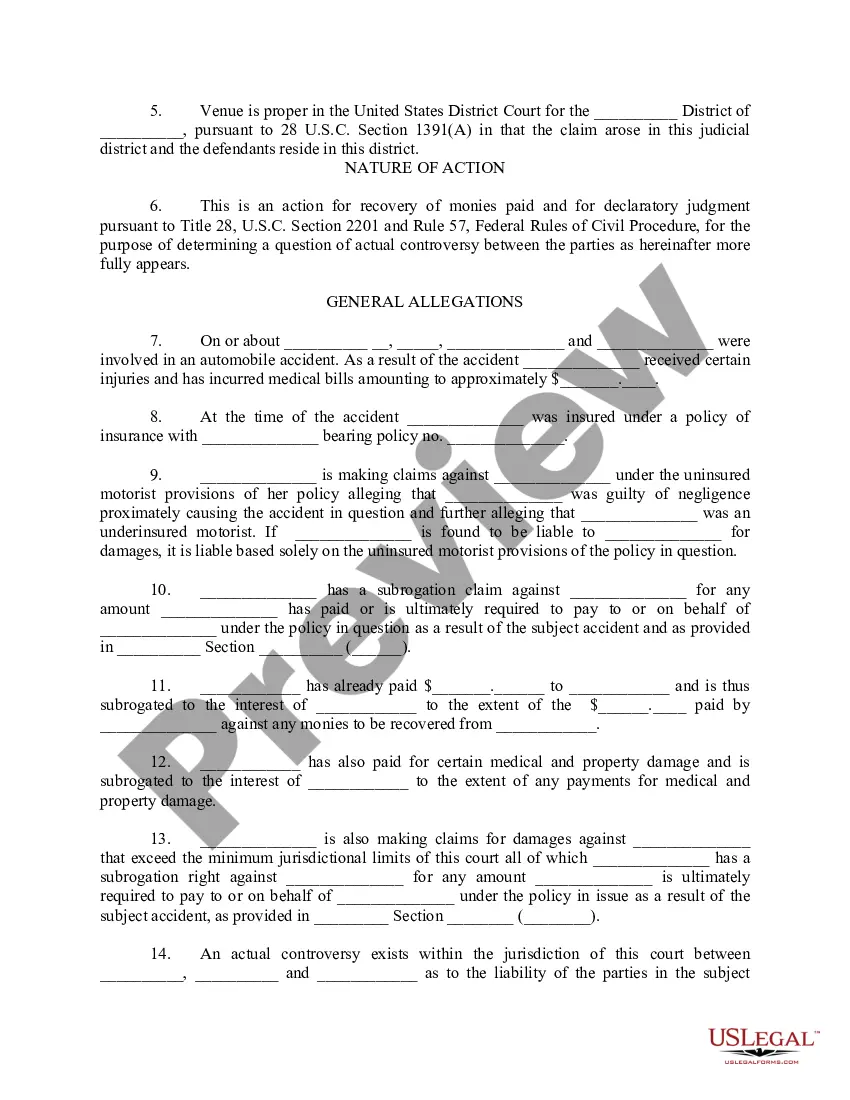
Complaint Responsibility File Formal In Collin
Description





Get your form ready online
Our built-in tools help you complete, sign, share, and store your documents in one place.
Make edits, fill in missing information, and update formatting in US Legal Forms—just like you would in MS Word.
Download a copy, print it, send it by email, or mail it via USPS—whatever works best for your next step.
Sign and collect signatures with our SignNow integration. Send to multiple recipients, set reminders, and more. Go Premium to unlock E-Sign.
If this form requires notarization, complete it online through a secure video call—no need to meet a notary in person or wait for an appointment.
We protect your documents and personal data by following strict security and privacy standards.

Make edits, fill in missing information, and update formatting in US Legal Forms—just like you would in MS Word.

Download a copy, print it, send it by email, or mail it via USPS—whatever works best for your next step.

Sign and collect signatures with our SignNow integration. Send to multiple recipients, set reminders, and more. Go Premium to unlock E-Sign.

If this form requires notarization, complete it online through a secure video call—no need to meet a notary in person or wait for an appointment.

We protect your documents and personal data by following strict security and privacy standards.
Looking for another form?








Form popularity
FAQ
Formal complaint means a signed document or electronic submission by a complainant, alleging a violation and requesting its investigation.
Tips for writing a successful complaint letter the subject of your complaint. your original expectation about the subject. what went wrong. details of any attempts by the other party to put right the problem, and why they did not work. why the fault or error or action affects you so greatly. what compensation you seek.
Complain to the organisation as soon as possible. It is easier to remember the details. And there might be a time limit to make your complaint. If you are not satisfied with the organisation's first response to your complaint, you might be able to take your complaint to a second stage.
The agency will notify you in writing that it has received your formal complaint. This letter will include the date on which the complaint was filed. Agency reviews the complaint. The Agency either accepts the claim for investigation or dismisses the claim on procedural grounds.
The person who will read it probably didn't cause the problem, but may be very helpful in resolving it. Give the basics. Tell your story. Explain how you want to resolve the problem. Describe your next steps. Send your complaint letter. Your Mailing Address Your City, State, Zip Code Your email address
Formal complaint means a signed document or electronic submission by a complainant, alleging a violation and requesting its investigation.
In general terms, there are four types of complaints – productive, venting, chronic, and malicious – and four varieties of complainers – aggressive, expressive, passive, and constructive.
Dear name of your employer / HR manager/ line manager, I am writing to raise a formal grievance. I have a problem with / complaint about give details. Optional I have evidence in the form of give details. I would be grateful if you could let me know when I can meet you to talk about my grievance.
Informal procedures emphasise resolution rather than factual proof or substantiation of a complaint. Formal procedures focus on proving whether a complaint is substantiated.
