Replevin Auto In Contra Costa
Description








Get your form ready online
Our built-in tools help you complete, sign, share, and store your documents in one place.
Make edits, fill in missing information, and update formatting in US Legal Forms—just like you would in MS Word.
Download a copy, print it, send it by email, or mail it via USPS—whatever works best for your next step.
Sign and collect signatures with our SignNow integration. Send to multiple recipients, set reminders, and more. Go Premium to unlock E-Sign.
If this form requires notarization, complete it online through a secure video call—no need to meet a notary in person or wait for an appointment.
We protect your documents and personal data by following strict security and privacy standards.
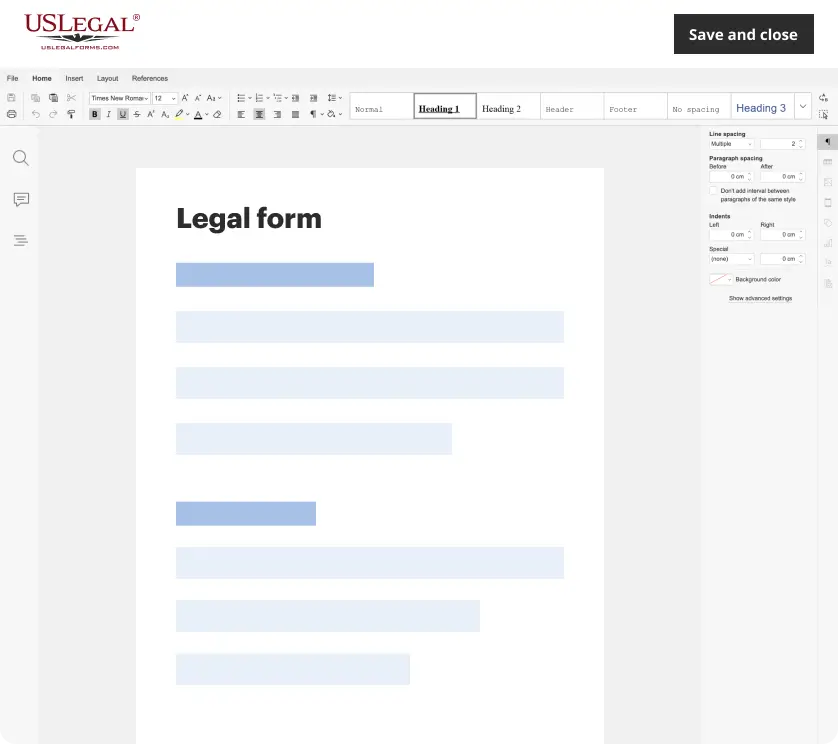
Make edits, fill in missing information, and update formatting in US Legal Forms—just like you would in MS Word.
Download a copy, print it, send it by email, or mail it via USPS—whatever works best for your next step.
Sign and collect signatures with our SignNow integration. Send to multiple recipients, set reminders, and more. Go Premium to unlock E-Sign.
If this form requires notarization, complete it online through a secure video call—no need to meet a notary in person or wait for an appointment.
We protect your documents and personal data by following strict security and privacy standards.
Looking for another form?






Form popularity
FAQ
Contact us at 925-655-2710 or Toll Free at 877-646-8314. You may submit a complaint form online. You may also submit a complaint form by printing and submitting by fax, mail or drop off to the office.
If you would like to file a complaint with the California Attorney General, here is how: By Phone: 916-322-3360. Toll-Free Phone Number: 1-800-952-5225. By Mail: Download, fill out, and mail this form to P.O Box 944255, Sacramento 94244. By FAX: Download, fill out, and fax this form: (916) 323-5341.
The Superior Court of Contra Costa implemented its E-filing system in 2022. They selected Odyssey Case Manager from Tyler Technologies, a software solution in use by 29 of the 58 courts in the state.
All Probate, Guardianship and Conservatorship documents are filed and heard in the Wakefield Taylor Courthouse in Martinez.
Contact us at 925-655-2710 or Toll Free at 877-646-8314. You may submit a complaint form online. You may also submit a complaint form by printing and submitting by fax, mail or drop off to the office.
Congressman Mark DeSaulnier (DE-SOWN-YAY) proudly represents California's 10th Congressional District, which includes much of Contra Costa County and a part of Alameda County.
The timeline for regaining possession of a repossessed car can vary depending on your specific circumstances and location. In California, you may have the right to "redeem" or "reinstate" your vehicle, which involves paying off the remaining contract balance, fees, and complying with legal requirements.
Ideally, you should start these negotiations before the repossession process. If you negotiate after repossession, however, you may be able to use any questionable actions by the lender during that process to help bolster your bargaining position.
What Happens If the Repo Agent Doesn't Find Your Car? But if you make it hard for the repo agent to get it, then the creditor may use another method to get the car back, called "replevin." Replevin can be just as costly as a repossession, if not more so.
The process of starting a replevin action usually begins with filing a complaint. It also requires filing an affidavit in the county or district court where the property is. The affidavit: States that the plaintiff claims rightful ownership or entitlement to possession of the property.
