Types Of Torts In Nursing In Middlesex
Description





Get your form ready online
Our built-in tools help you complete, sign, share, and store your documents in one place.
Make edits, fill in missing information, and update formatting in US Legal Forms—just like you would in MS Word.
Download a copy, print it, send it by email, or mail it via USPS—whatever works best for your next step.
Sign and collect signatures with our SignNow integration. Send to multiple recipients, set reminders, and more. Go Premium to unlock E-Sign.
If this form requires notarization, complete it online through a secure video call—no need to meet a notary in person or wait for an appointment.
We protect your documents and personal data by following strict security and privacy standards.

Make edits, fill in missing information, and update formatting in US Legal Forms—just like you would in MS Word.

Download a copy, print it, send it by email, or mail it via USPS—whatever works best for your next step.

Sign and collect signatures with our SignNow integration. Send to multiple recipients, set reminders, and more. Go Premium to unlock E-Sign.

If this form requires notarization, complete it online through a secure video call—no need to meet a notary in person or wait for an appointment.

We protect your documents and personal data by following strict security and privacy standards.
Looking for another form?






Form popularity
FAQ
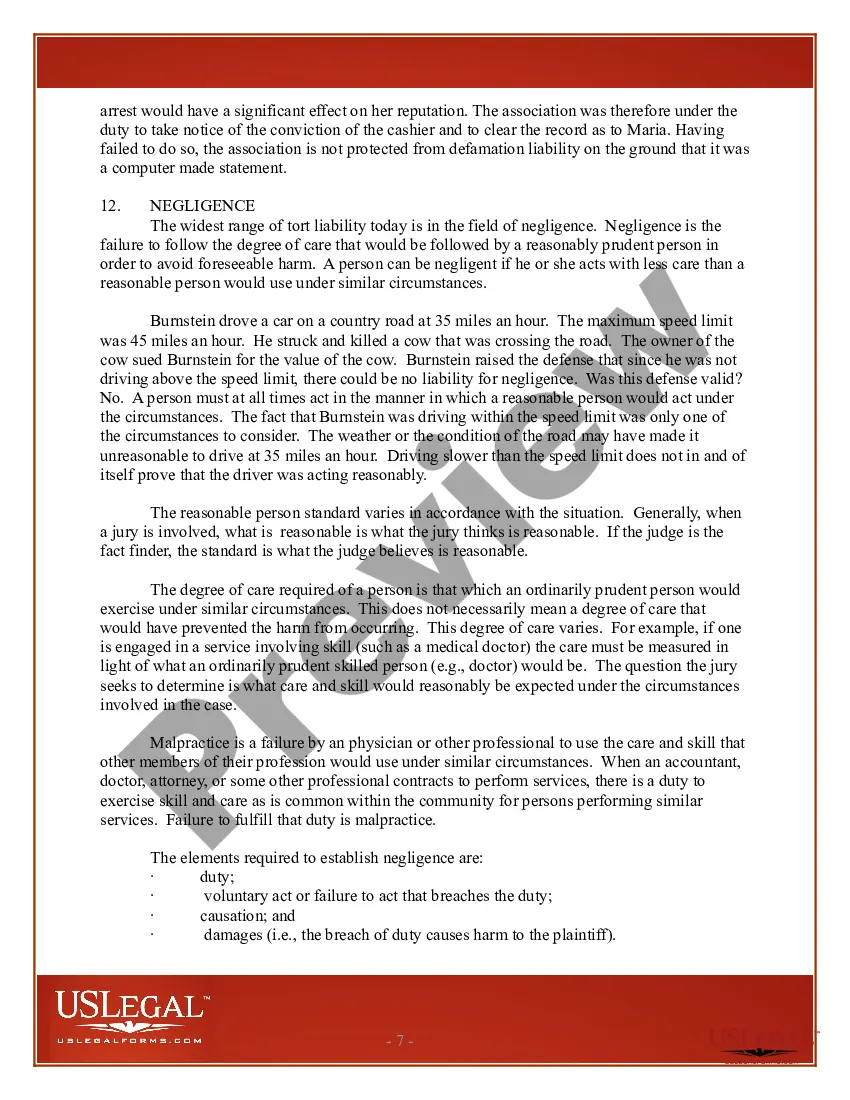
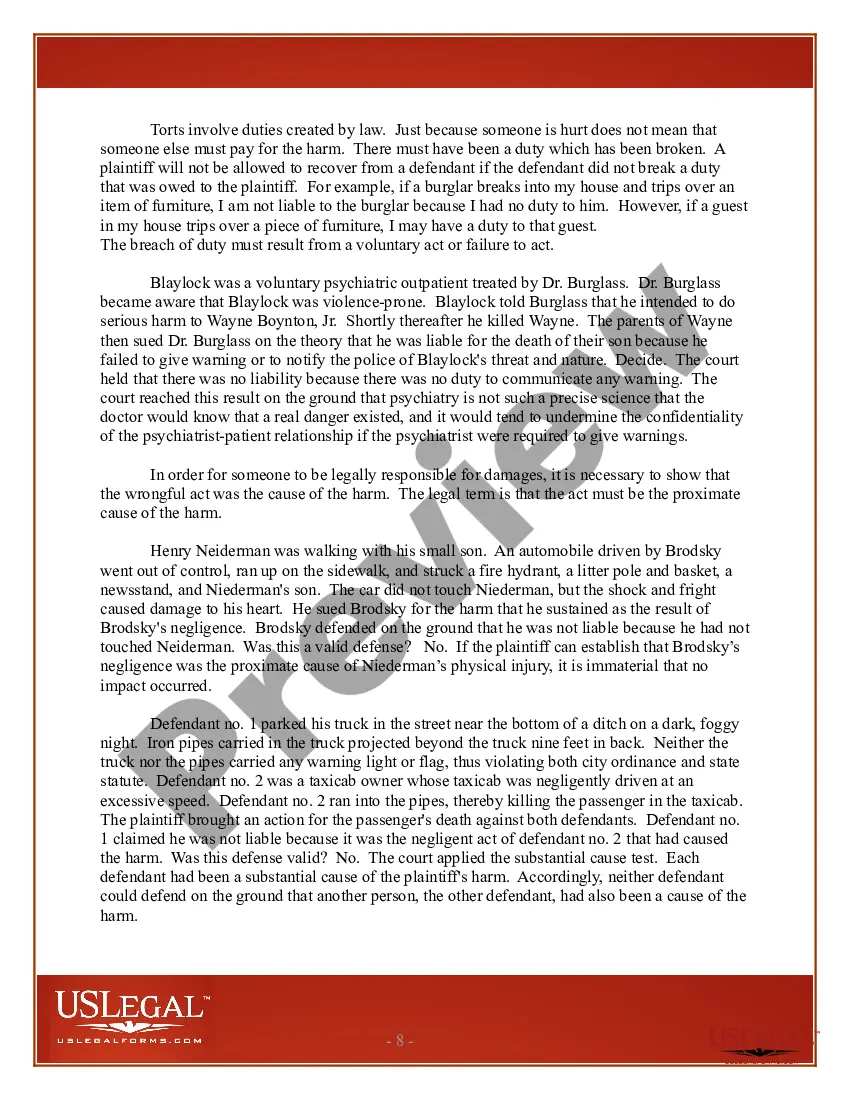
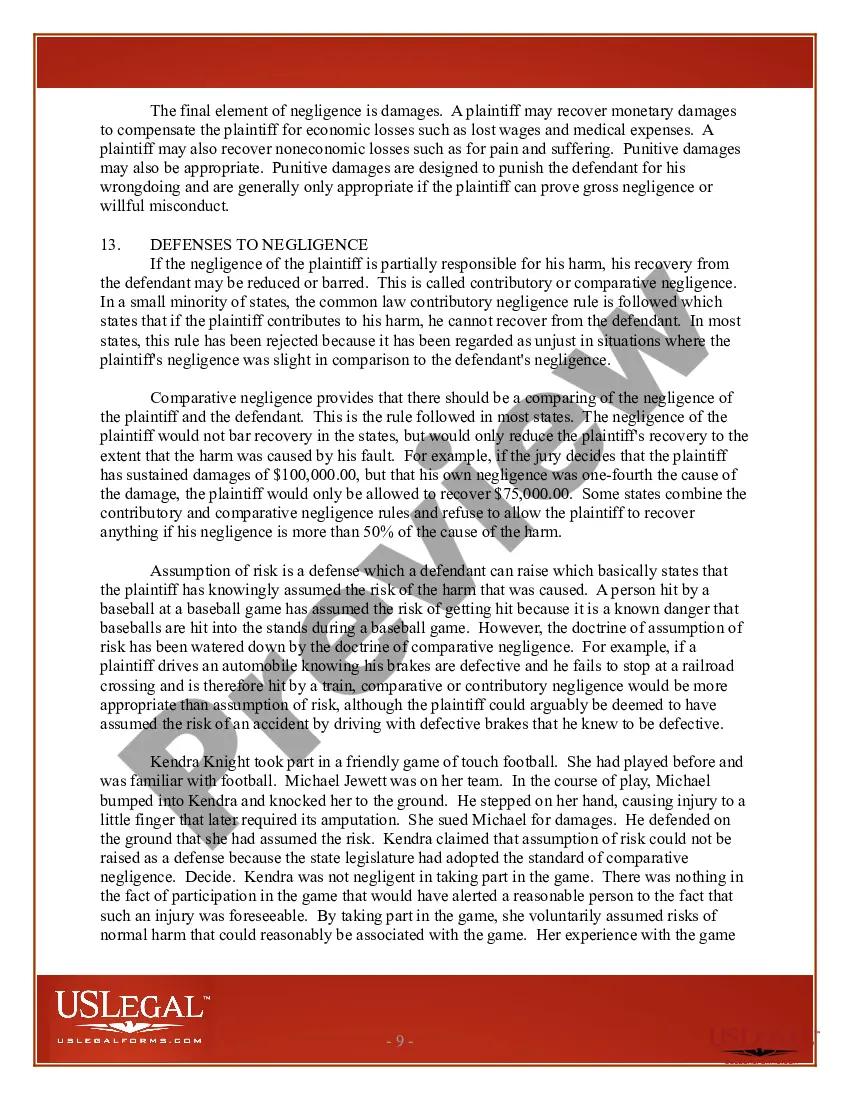
For example, a janitor has a duty to put up a wet floor sign after mopping. If he or she fails to put up the sign and someone falls and injures themselves, a negligence tort case may be filed.
Negligence: The Predominant Tort in Medical Malpractice. Negligence forms the bedrock of the majority of medical malpractice cases, setting a significant legal standard for the healthcare profession.
Examples of intentional torts include assault, battery, false imprisonment, slander, libel, and breach of privacy or client confidentiality. Unintentional torts occur when the defendant's actions or inactions were unreasonably unsafe.
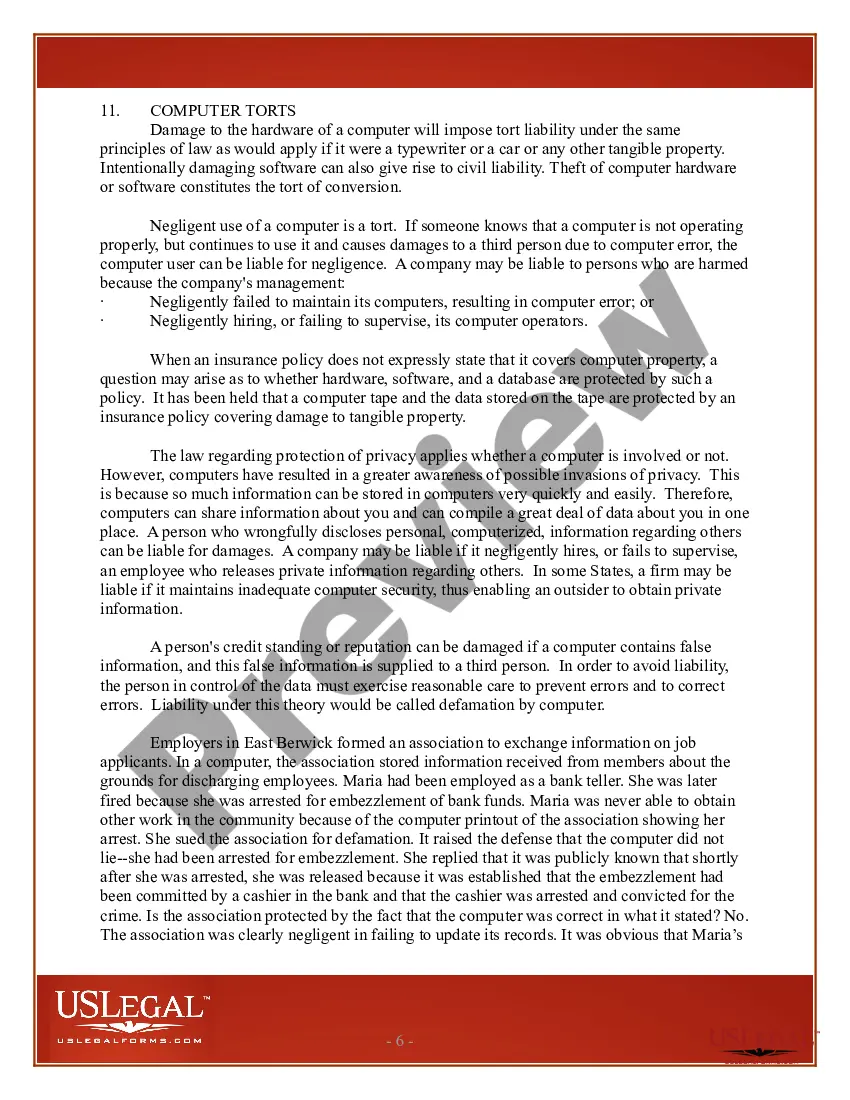
Torts fall into three general categories: Intentional torts (e.g., intentionally hitting a person); Negligent torts (e.g., causing an accident by failing to obey traffic rules); and. Strict liability torts (e.g., liability for making and selling defective products - see Products Liability).
Intentional Torts Assault. Battery is defined as the harmful touching of someone without their consent. False imprisonment is the unlawful physical restraint of a patient. Invasion of privacy which occurs with improper disclosure of medical treatment information and violations protected under HIPAA.
A tort is a civil wrong committed upon an individual or as typically termed in healthcare, medical malpractice which falls under the legal doctrine of negligence.
Torts fall into three general categories: Intentional torts (e.g., intentionally hitting a person); Negligent torts (e.g., causing an accident by failing to obey traffic rules); and. Strict liability torts (e.g., liability for making and selling defective products - see Products Liability).
Examples of intentional torts include assault, battery, false imprisonment, slander, libel, and breach of privacy or client confidentiality. Unintentional torts occur when the defendant's actions or inactions were unreasonably unsafe.
The most common intentional tort is battery. The legal standard for a battery is "an intentional, unconsented touching." (Batteries such as shootings, stabbings, and beatings are also criminal law violations.)
What is a tort in nursing? Torts are wrongful acts that cause someone to suffer harm—in nursing, this can be an action or inaction by a nurse that causes a patient harm.