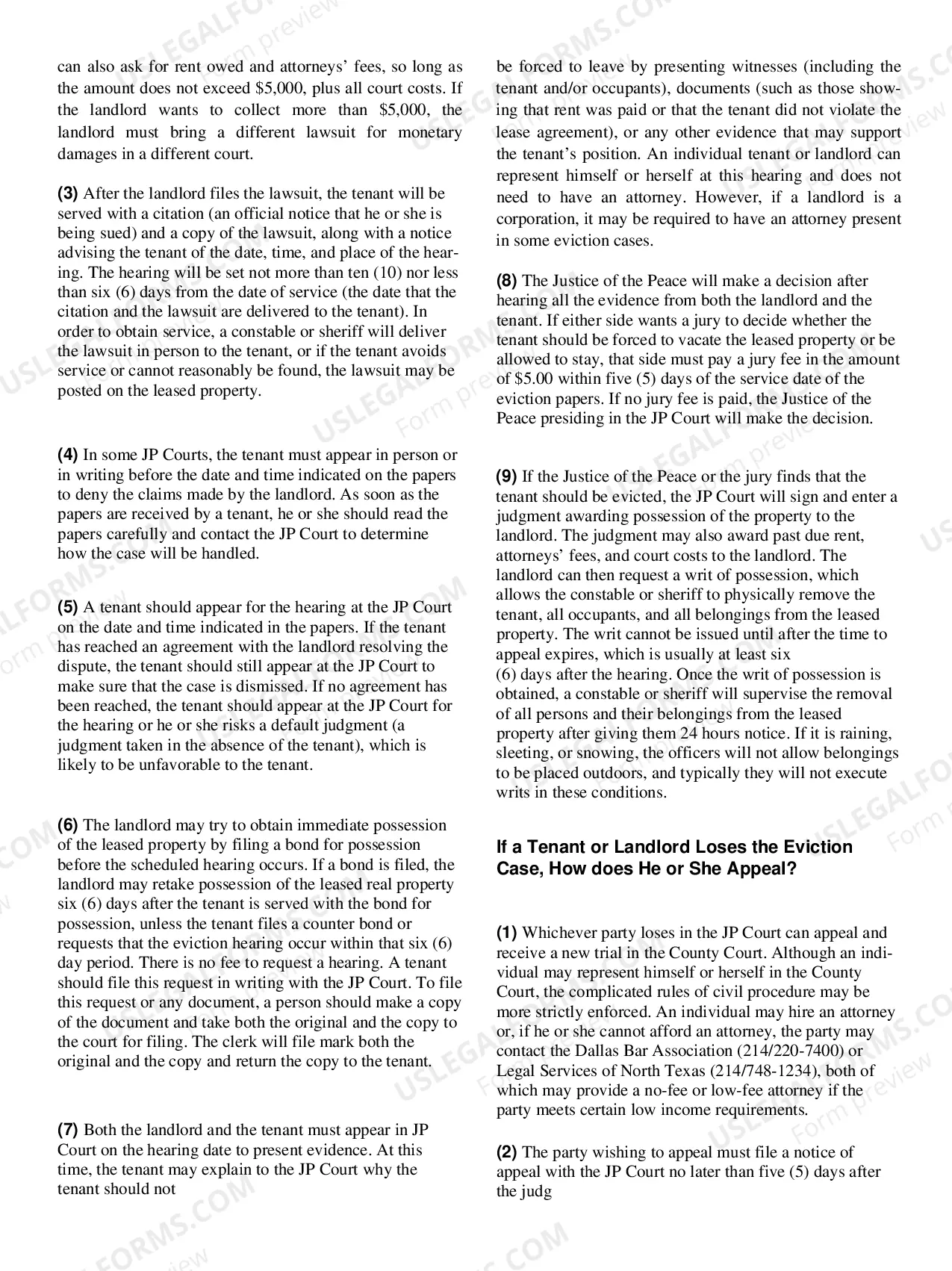
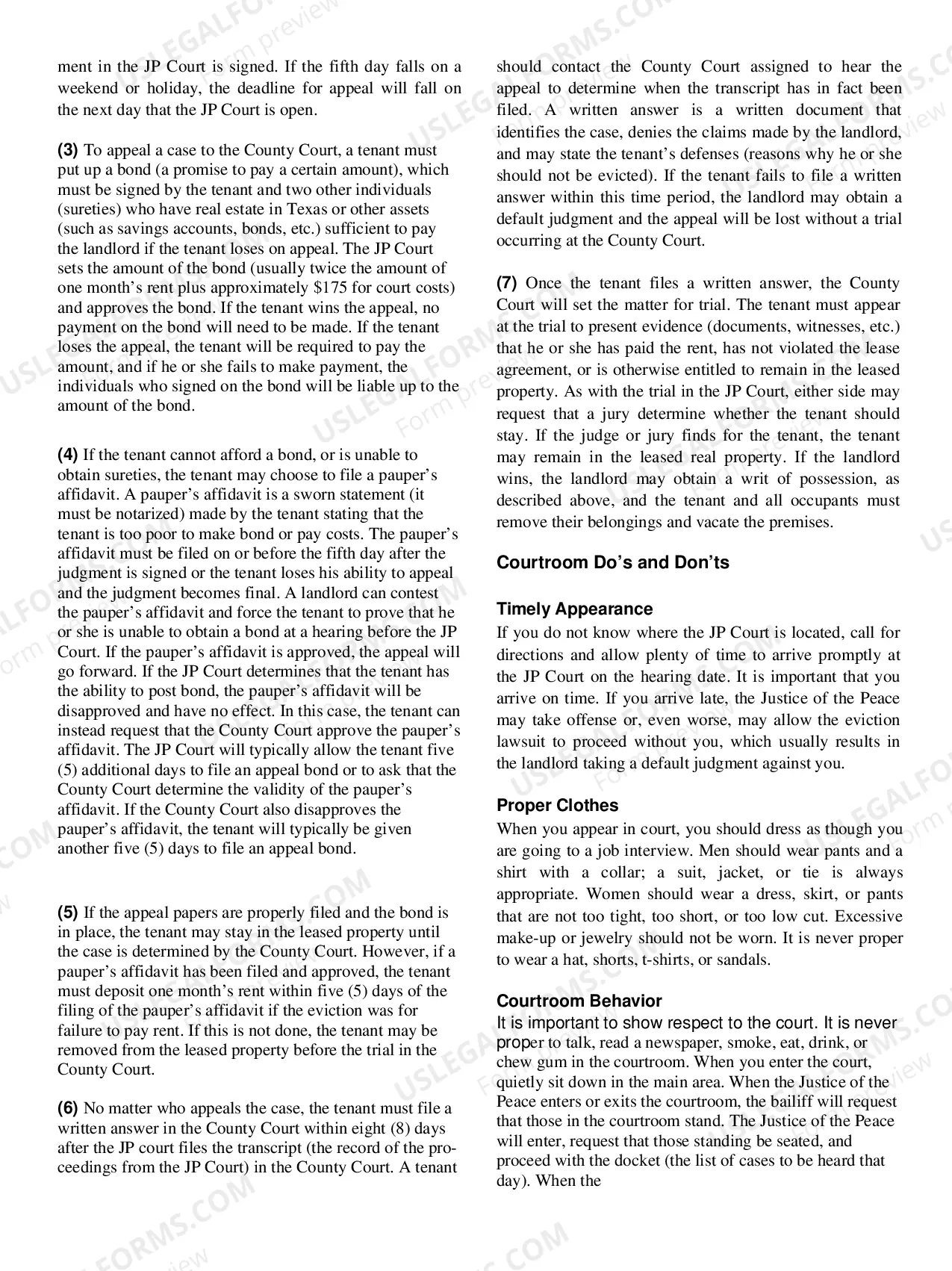
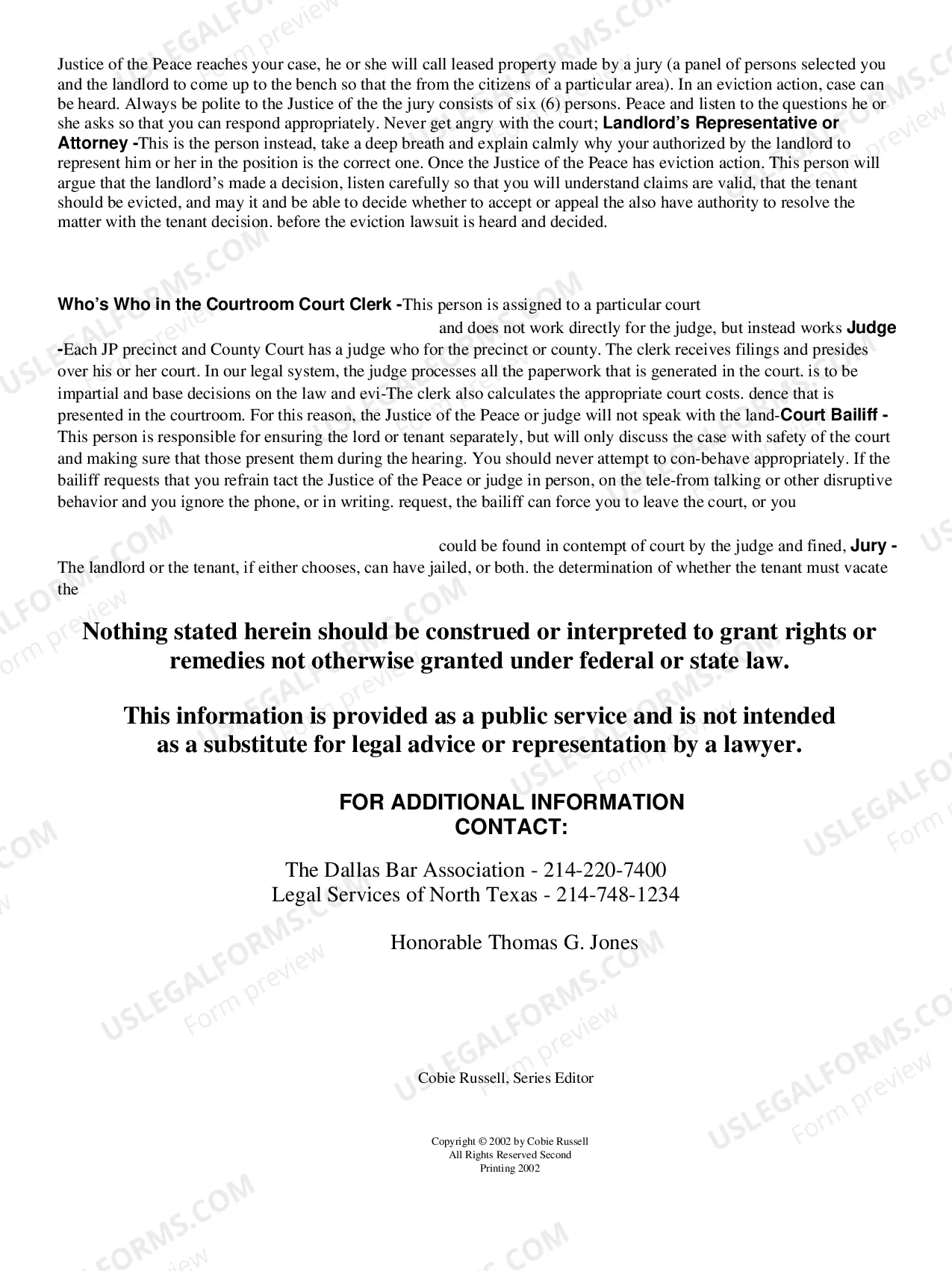
Dallas County Eviction Guide - This is an informational guide about the eviction process from the Dallas County Courts. Much of the information it contains is applicable to evictions in any Texas justice court.
Dallas Eviction Process For Landlords
Instant download
This website is not affiliated with any governmental entity
Public form
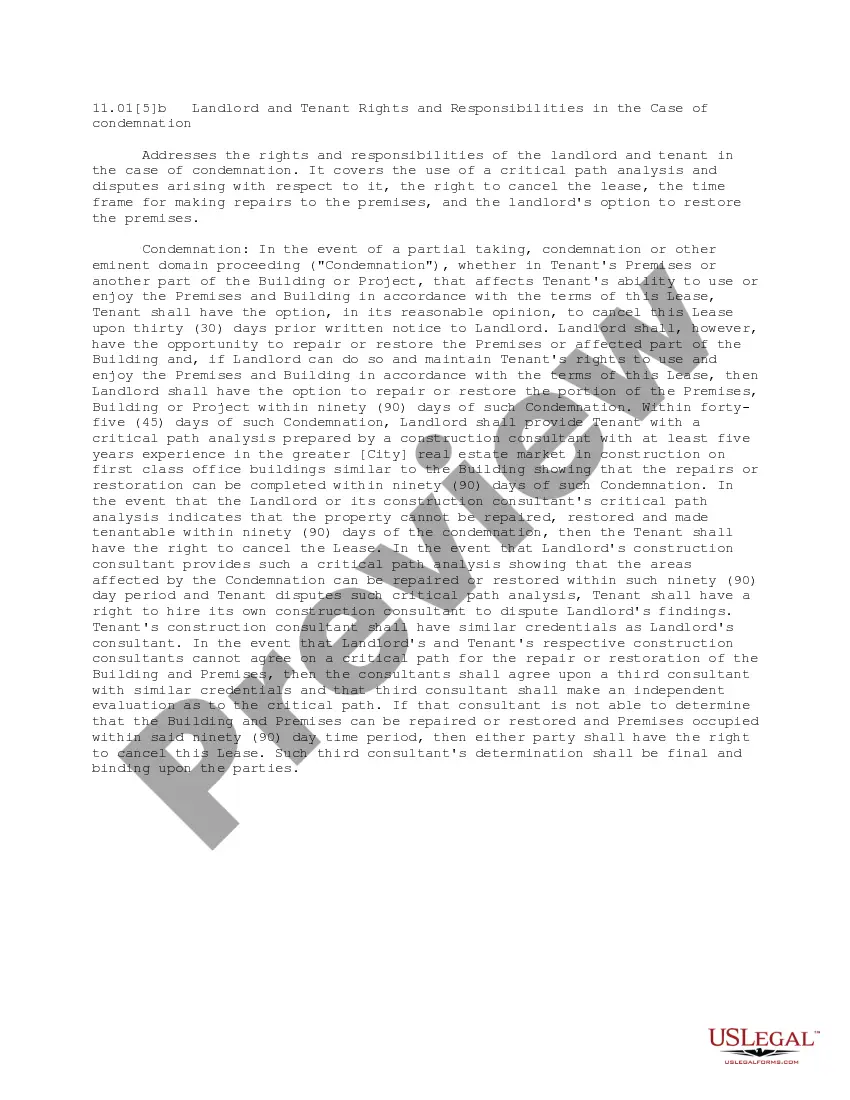
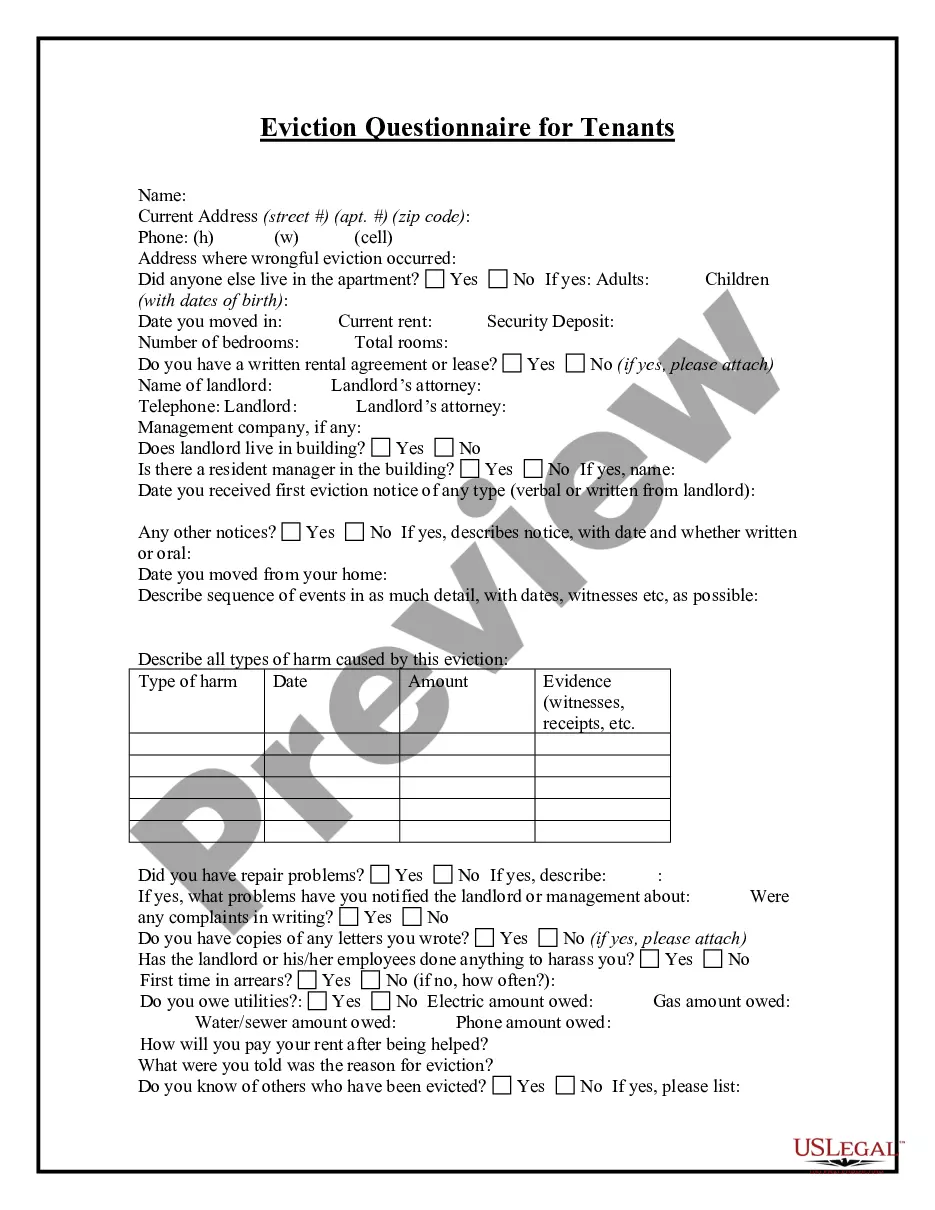
Description
Free preview

Get your form ready online
Our built-in tools help you complete, sign, share, and store your documents in one place.
Built-in online Word editor
Make edits, fill in missing information, and update formatting in US Legal Forms—just like you would in MS Word.
Export easily
Download a copy, print it, send it by email, or mail it via USPS—whatever works best for your next step.
E-sign your document
Sign and collect signatures with our SignNow integration. Send to multiple recipients, set reminders, and more. Go Premium to unlock E-Sign.
Notarize online 24/7
If this form requires notarization, complete it online through a secure video call—no need to meet a notary in person or wait for an appointment.
Store your document securely
We protect your documents and personal data by following strict security and privacy standards.

Make edits, fill in missing information, and update formatting in US Legal Forms—just like you would in MS Word.

Download a copy, print it, send it by email, or mail it via USPS—whatever works best for your next step.

Sign and collect signatures with our SignNow integration. Send to multiple recipients, set reminders, and more. Go Premium to unlock E-Sign.

If this form requires notarization, complete it online through a secure video call—no need to meet a notary in person or wait for an appointment.

We protect your documents and personal data by following strict security and privacy standards.
Looking for another form?






Form popularity
FAQ
In Texas, a landlord files eviction paperwork at the local justice court in the precinct where the rental property is located. This process is part of the Dallas eviction process for landlords, ensuring that all legal requirements are met. Once you complete the necessary forms, you'll submit them to the court clerk, who will provide guidance on court fees and further steps. It's crucial to have your paperwork accurately prepared to avoid delays.
The Dallas eviction process for landlords typically takes about three to six weeks from the initial filing to the final judgment. First, landlords must give proper notice to the tenant, which ranges from three to thirty days depending on the lease conditions. After filing the eviction suit, the court will schedule a hearing, usually occurring within ten to twenty-one days. Once the judge makes a decision, the landlord can proceed with the eviction process, which may require additional time for the sheriff to enforce the order.
To evict a tenant in Texas, start with delivering a written eviction notice. If the tenant does not comply, the next step involves filing an eviction complaint in court. After a court hearing, if the ruling is in favor of the landlord, further actions will be taken for enforcement. Familiarizing yourself with the Dallas eviction process for landlords is vital for a smooth eviction experience.
If your landlord wants you to leave, the steps for eviction in Texas begin with receiving a formal eviction notice. Following this, if no resolution occurs, your landlord may file a lawsuit. You will be notified of the court date, where you can present your case. Understanding these steps is essential in navigating the Dallas eviction process for landlords effectively.
The eviction process in Dallas, Texas, begins with a written notice to the tenant, detailing the reason for eviction. If the tenant does not vacate, the landlord may then file an eviction lawsuit in the local court. Once the court rules in favor of the landlord, a constable will enforce the eviction. Utilizing resources like US Legal Forms can guide you through each step of the Dallas eviction process for landlords.
In Texas, tenants typically have 30 days after receiving an eviction notice before further action can occur. However, this can vary depending on the reason for eviction and the type of notice issued. Always check the specifics of the notice you provide, especially in the context of the Dallas eviction process for landlords. Understanding these timeframes helps both parties prepare for the next steps.
To write an eviction notice in Texas, begin by stating the reason for eviction. Clearly include details such as the date, property address, and tenant's name. Use straightforward language to ensure tenants understand the situation. It's crucial to follow Texas law regarding notice periods, especially when considering the Dallas eviction process for landlords.
Evicting a tenant in Dallas can take several weeks, usually between three to four weeks, depending on court schedules and tenant responses. Understanding the Dallas eviction process for landlords is crucial for effective planning. It involves filing in the appropriate court, attending hearings, and potentially dealing with delays. Using legal resources can aid landlords in navigating this timeline.
The timeline for legally evicting someone in Texas can vary, but it generally takes about three to six weeks after filing an eviction lawsuit. Factors impacting this duration include the court schedule and whether the tenant contests the eviction. The Dallas eviction process for landlords is designed to ensure all legal considerations are met. Adequate preparation can help expedite the process.
No, a landlord cannot evict a tenant without going through the court system in Texas. This is a crucial part of the Dallas eviction process for landlords. It protects tenants from unlawful removals while allowing landlords to resolve disputes legally. Engaging with legal platforms can help landlords understand the necessary steps.
