Tx Squatters Rights Without Lease
Description
Get your form ready online
Our built-in tools help you complete, sign, share, and store your documents in one place.
Make edits, fill in missing information, and update formatting in US Legal Forms—just like you would in MS Word.
Download a copy, print it, send it by email, or mail it via USPS—whatever works best for your next step.
Sign and collect signatures with our SignNow integration. Send to multiple recipients, set reminders, and more. Go Premium to unlock E-Sign.
If this form requires notarization, complete it online through a secure video call—no need to meet a notary in person or wait for an appointment.
We protect your documents and personal data by following strict security and privacy standards.

Make edits, fill in missing information, and update formatting in US Legal Forms—just like you would in MS Word.

Download a copy, print it, send it by email, or mail it via USPS—whatever works best for your next step.

Sign and collect signatures with our SignNow integration. Send to multiple recipients, set reminders, and more. Go Premium to unlock E-Sign.

If this form requires notarization, complete it online through a secure video call—no need to meet a notary in person or wait for an appointment.

We protect your documents and personal data by following strict security and privacy standards.
Looking for another form?


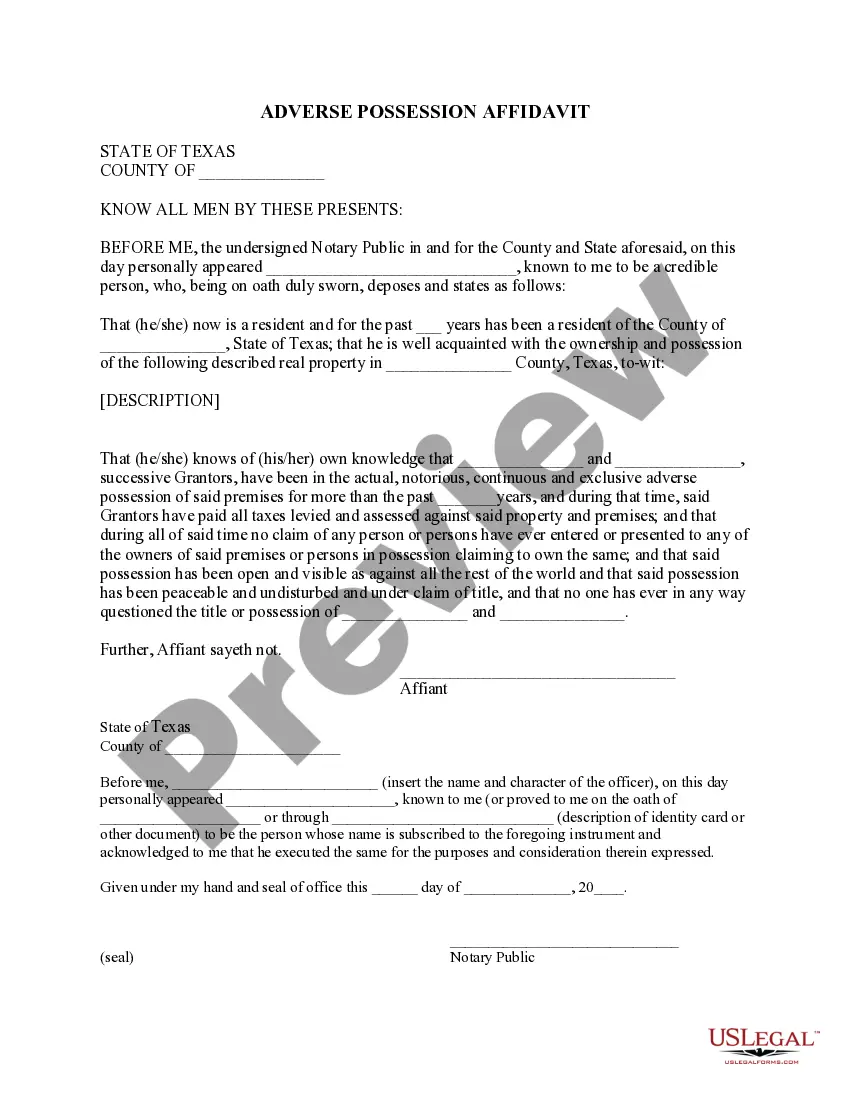
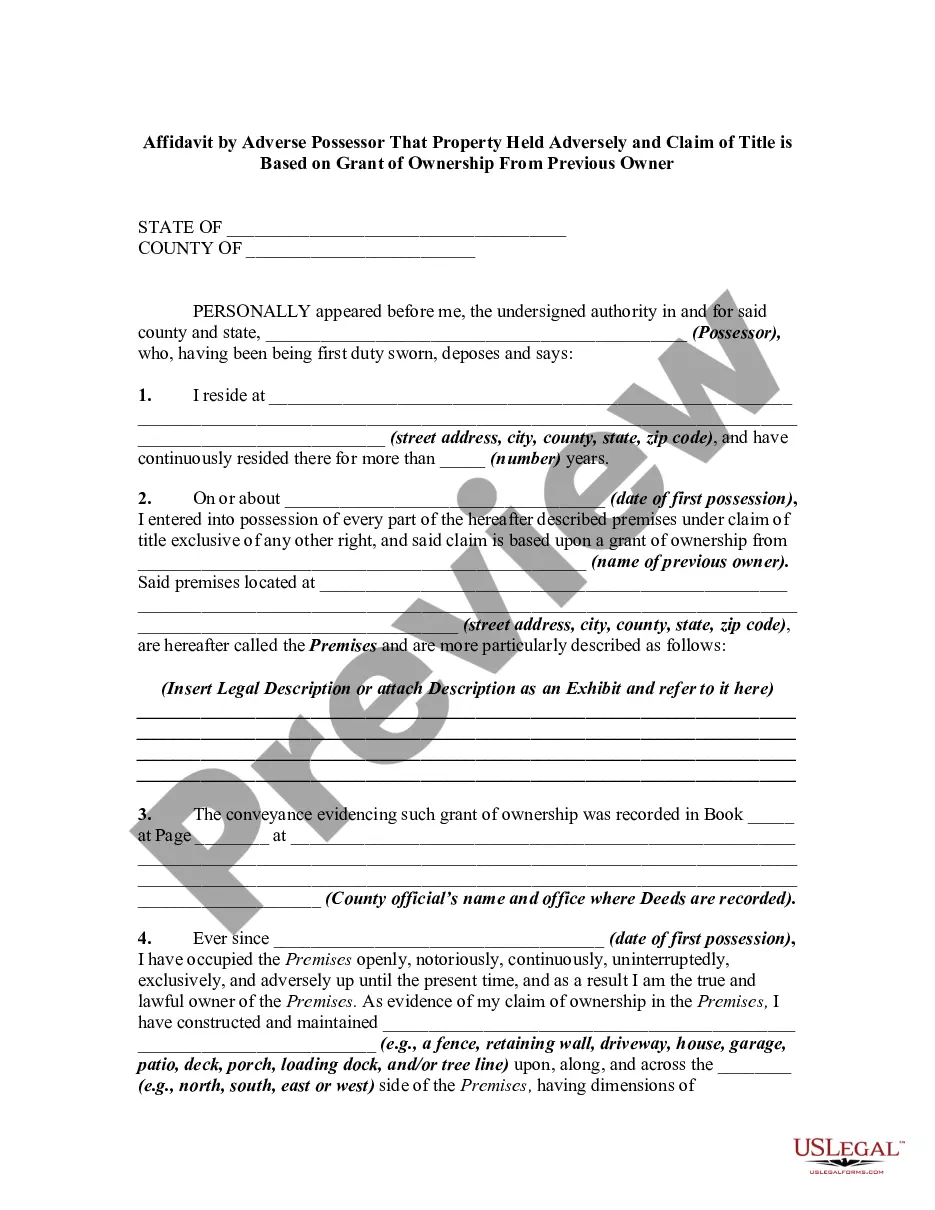
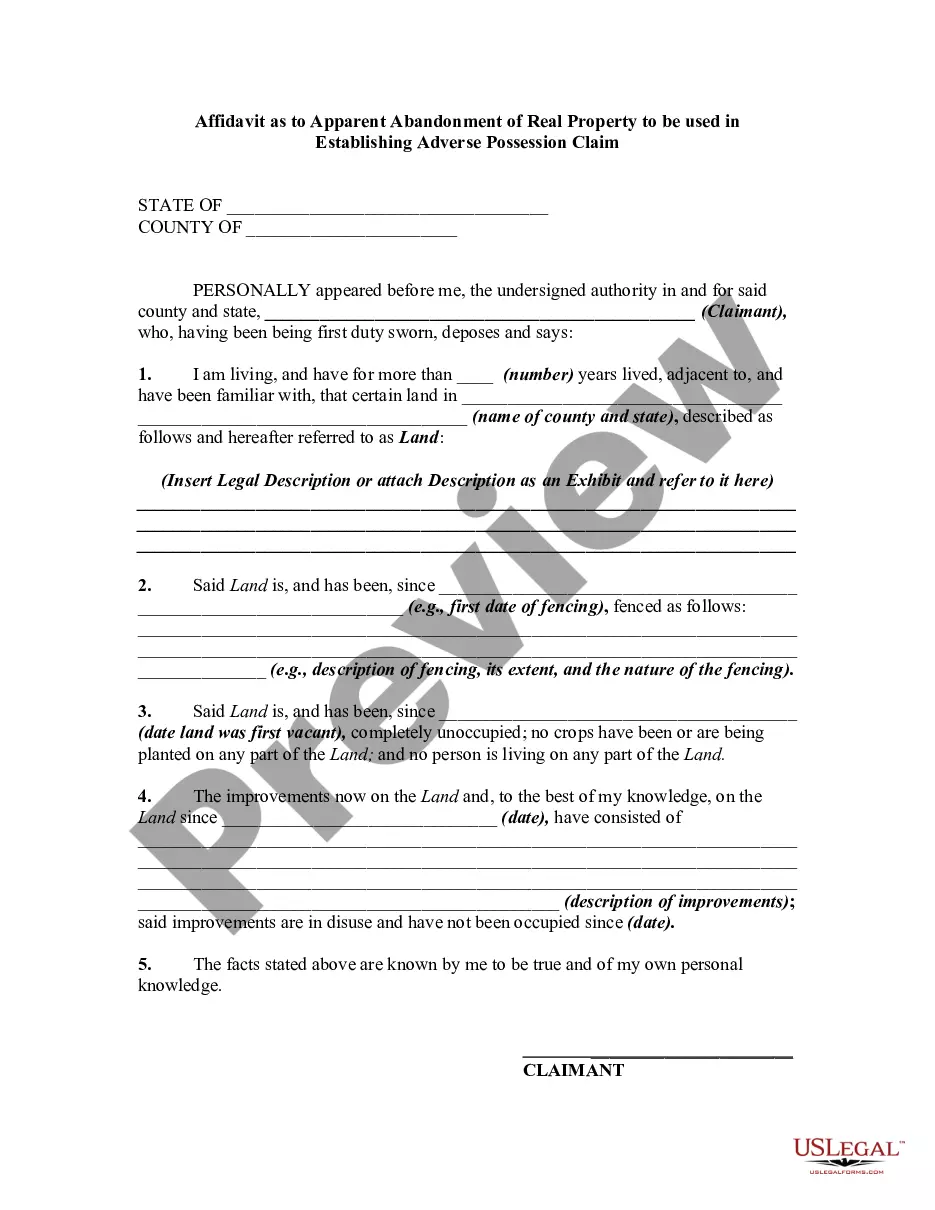
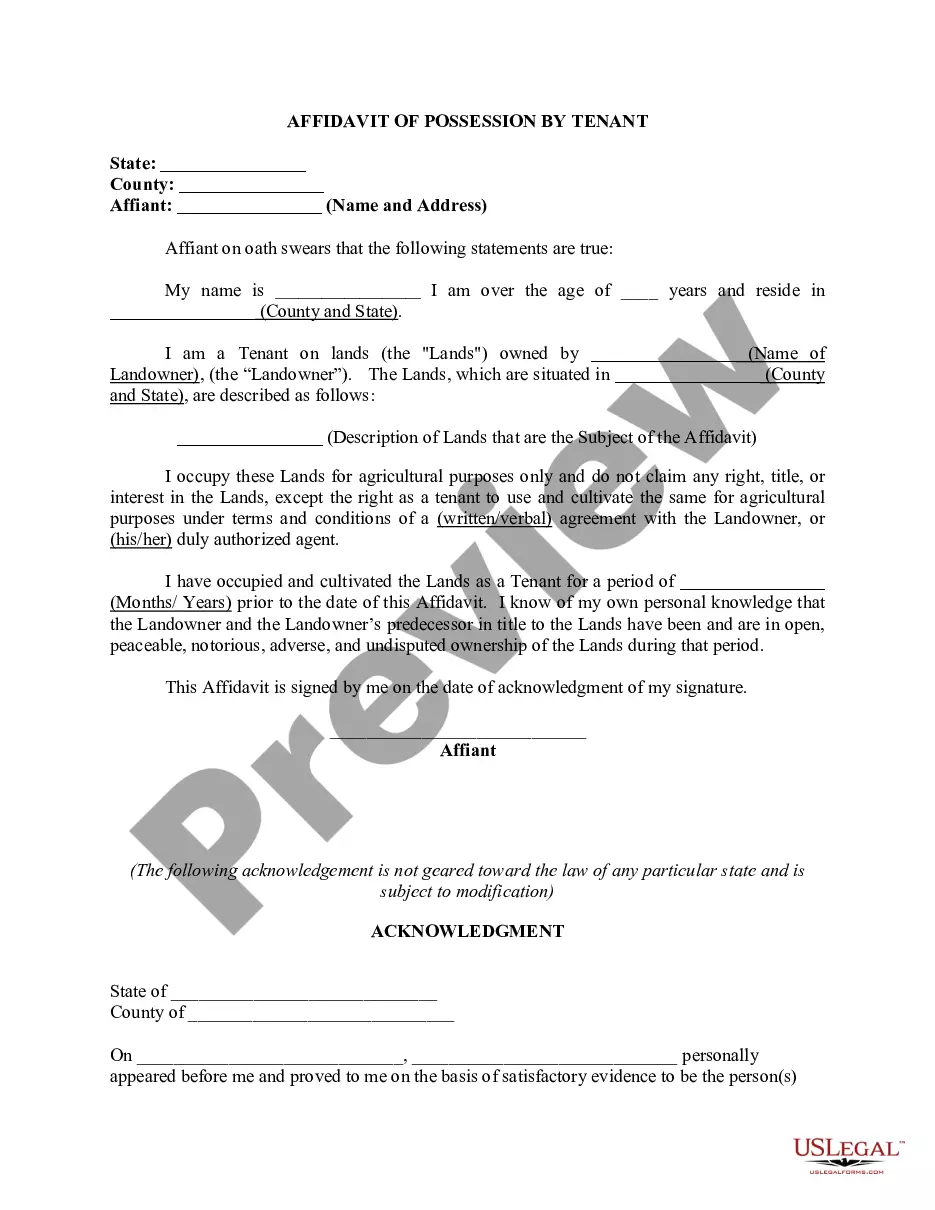
How to fill out Texas Adverse Possession Affidavit - Squatters Rights?
Engaging with legal documents and processes can be a lengthy addition to your routine.
Tx Squatters Rights Without Lease and similar forms often require you to locate them and comprehend how to fill them out accurately.
Therefore, whether you are managing financial, legal, or personal issues, having a thorough and useful online directory of forms at your disposal will significantly help.
US Legal Forms is the top online platform for legal templates, featuring over 85,000 state-specific forms and a variety of resources to help you complete your documents promptly.
Is this your initial experience with US Legal Forms? Sign up and create a free account in a matter of minutes, and you will gain access to the form directory and Tx Squatters Rights Without Lease. After that, follow the steps outlined below to fill out your form: Ensure you have found the correct form using the Preview feature and examining the form details. Select Buy Now when you are prepared, and choose the monthly subscription plan that best fits your needs. Click Download then complete, sign, and print the form. US Legal Forms has twenty-five years of experience assisting clients with their legal documents. Find the form you need today and simplify any process effortlessly.
- Browse the selection of relevant documents available at your fingertips with just one click.
- US Legal Forms provides state- and county-specific forms available for download at any time.
- Protect your document management processes with a superior service that enables you to create any form in minutes without additional or hidden fees.
- Simply Log In to your account, find Tx Squatters Rights Without Lease and obtain it instantly in the My documents section.
- You can also retrieve previously saved forms.
Form popularity
FAQ
Evicting someone from your house without a lease in Texas involves understanding Tx squatters rights without lease. First, you must provide a formal eviction notice, which informs the person they need to leave. If they refuse to vacate, you may need to file an eviction lawsuit in your local court. Utilizing resources from US Legal Forms can help you navigate this process effectively and ensure that you follow all legal requirements.
In Texas, squatters must provide evidence of their occupation to support their claim. This may include utility bills, photographs, or any documents that show their continuous presence at the property. Additionally, maintaining a public presence, such as paying property taxes, can further solidify their claim. For detailed information on Tx squatters rights without lease, visiting USLegalForms can offer valuable resources and templates.
Yes, you can remove someone from your property in Texas even if you do not have a lease. However, you must follow the legal eviction process, which may involve providing a formal notice to vacate and potentially filing an eviction lawsuit. It is important to note that taking matters into your own hands can lead to legal complications. To navigate the complexities of Tx squatters rights without lease, consult with legal resources or platforms like USLegalForms for assistance.
To claim squatter's rights in Texas, you must occupy a property without the owner's permission for a specified period, typically ten years. During this time, you need to demonstrate continuous, open, and notorious possession of the property. It is advisable to gather evidence of your residency, such as utility bills or mail, to strengthen your claim. For more comprehensive guidance on Tx squatters rights without lease, consider using resources like USLegalForms.
If the individual is a trespasser, the police may remove them from your property. However, if the squatter has established residency through adverse possession or permission from a prior owner or tenant, you will need to pursue legal action to evict them.
Under Texas law, a squatter can make an adverse possession claim after possessing a property continuously for at least 10 years. After the 10-year period has passed, the squatter is no longer considered a criminal trespasser. They can then file an adverse possession claim.
Unfortunately, it is illegal in Texas to forcibly remove a squatter from your property. To do so legally, you must file an eviction against the squatter in the same manner you would evict a tenant for non-payment of rent.
What can I do if someone is ?squatting? in my property? Unfortunately, it is illegal in Texas to forcibly remove a squatter from your property. To do so legally, you must file an eviction against the squatter in the same manner you would evict a tenant for non-payment of rent.
An at-will tenant must be given at least 3 days' notice to vacate, ing to Texas Property Code Section 94.005(b). If the tenant does not move out in the time specified in the notice to vacate, the next step is to file an eviction suit in justice court.