Texas Squatters Rights For Landlords
Description
Get your form ready online
Our built-in tools help you complete, sign, share, and store your documents in one place.
Make edits, fill in missing information, and update formatting in US Legal Forms—just like you would in MS Word.
Download a copy, print it, send it by email, or mail it via USPS—whatever works best for your next step.
Sign and collect signatures with our SignNow integration. Send to multiple recipients, set reminders, and more. Go Premium to unlock E-Sign.
If this form requires notarization, complete it online through a secure video call—no need to meet a notary in person or wait for an appointment.
We protect your documents and personal data by following strict security and privacy standards.

Make edits, fill in missing information, and update formatting in US Legal Forms—just like you would in MS Word.

Download a copy, print it, send it by email, or mail it via USPS—whatever works best for your next step.

Sign and collect signatures with our SignNow integration. Send to multiple recipients, set reminders, and more. Go Premium to unlock E-Sign.

If this form requires notarization, complete it online through a secure video call—no need to meet a notary in person or wait for an appointment.

We protect your documents and personal data by following strict security and privacy standards.
Looking for another form?
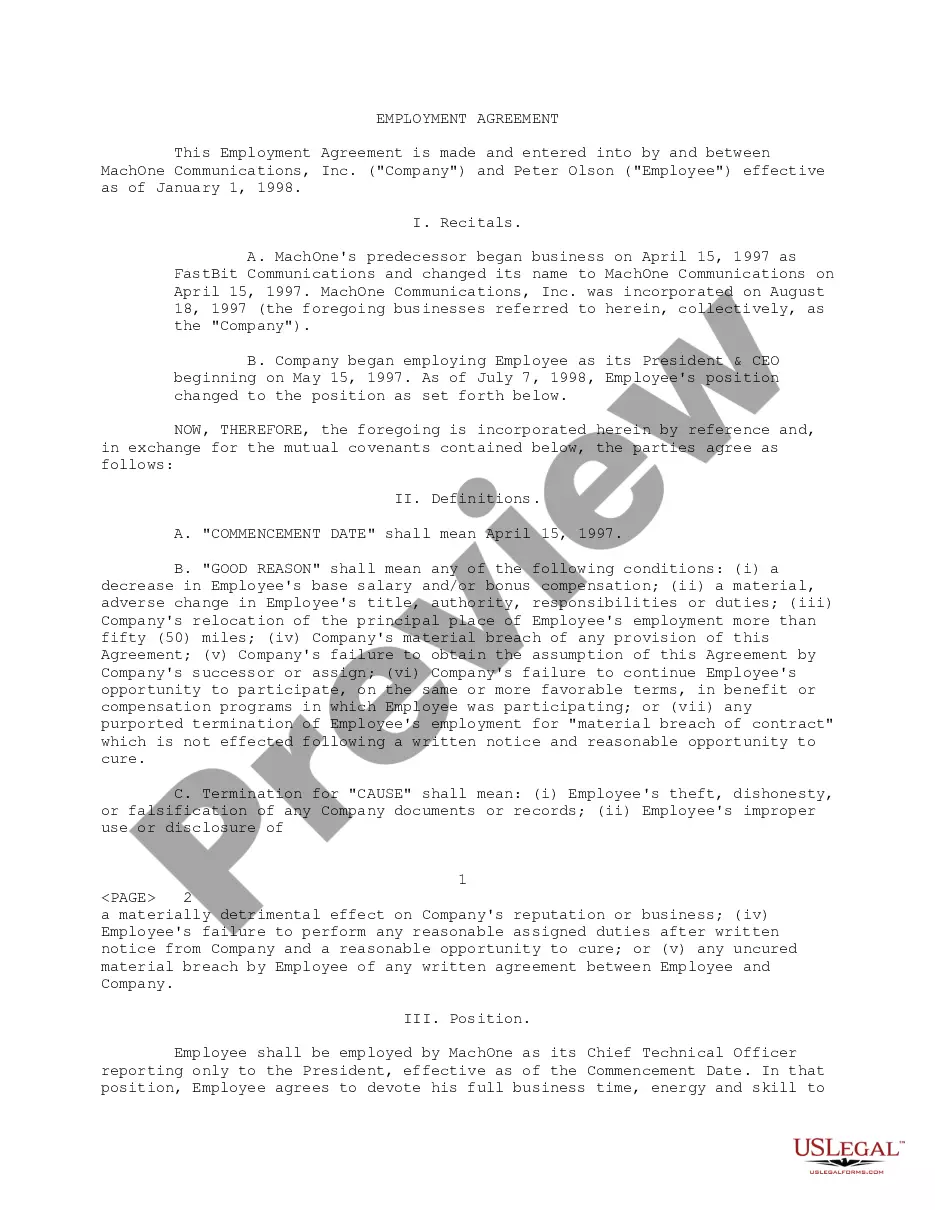






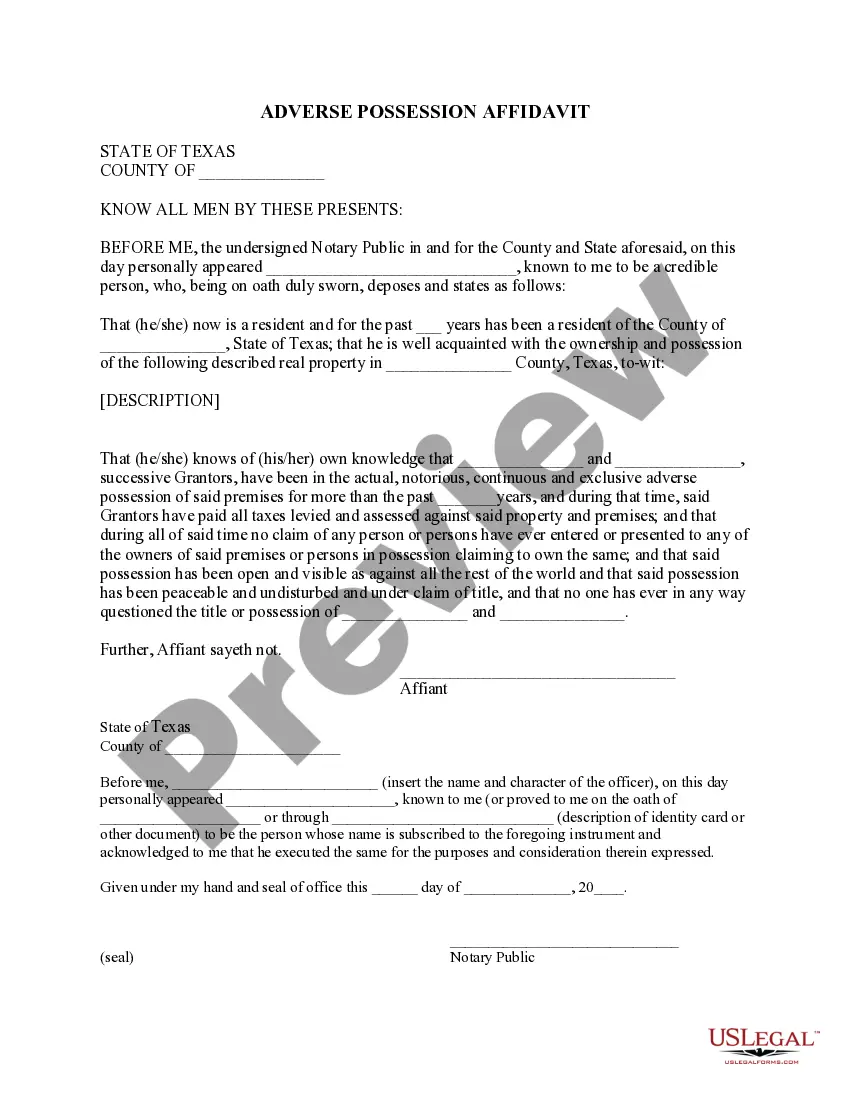
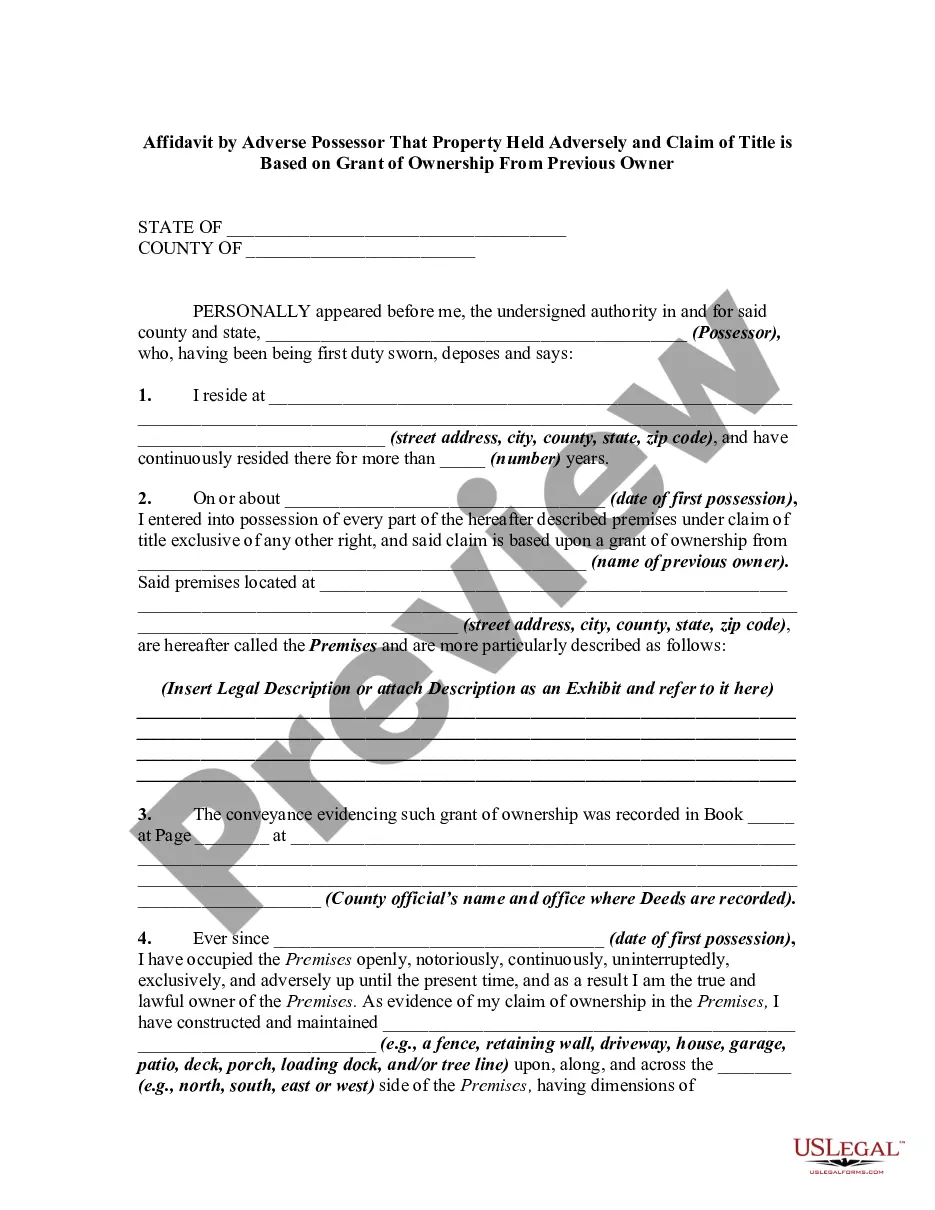
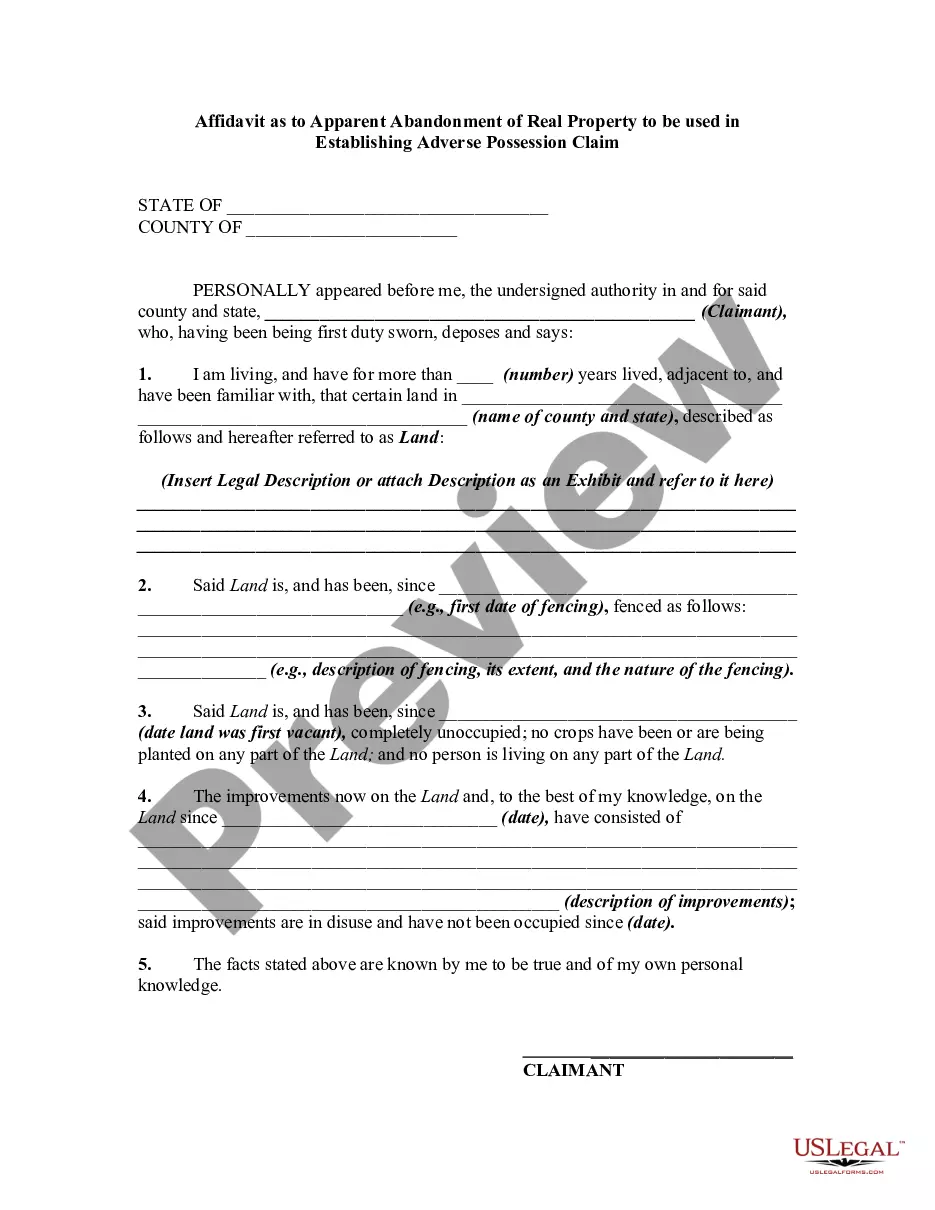
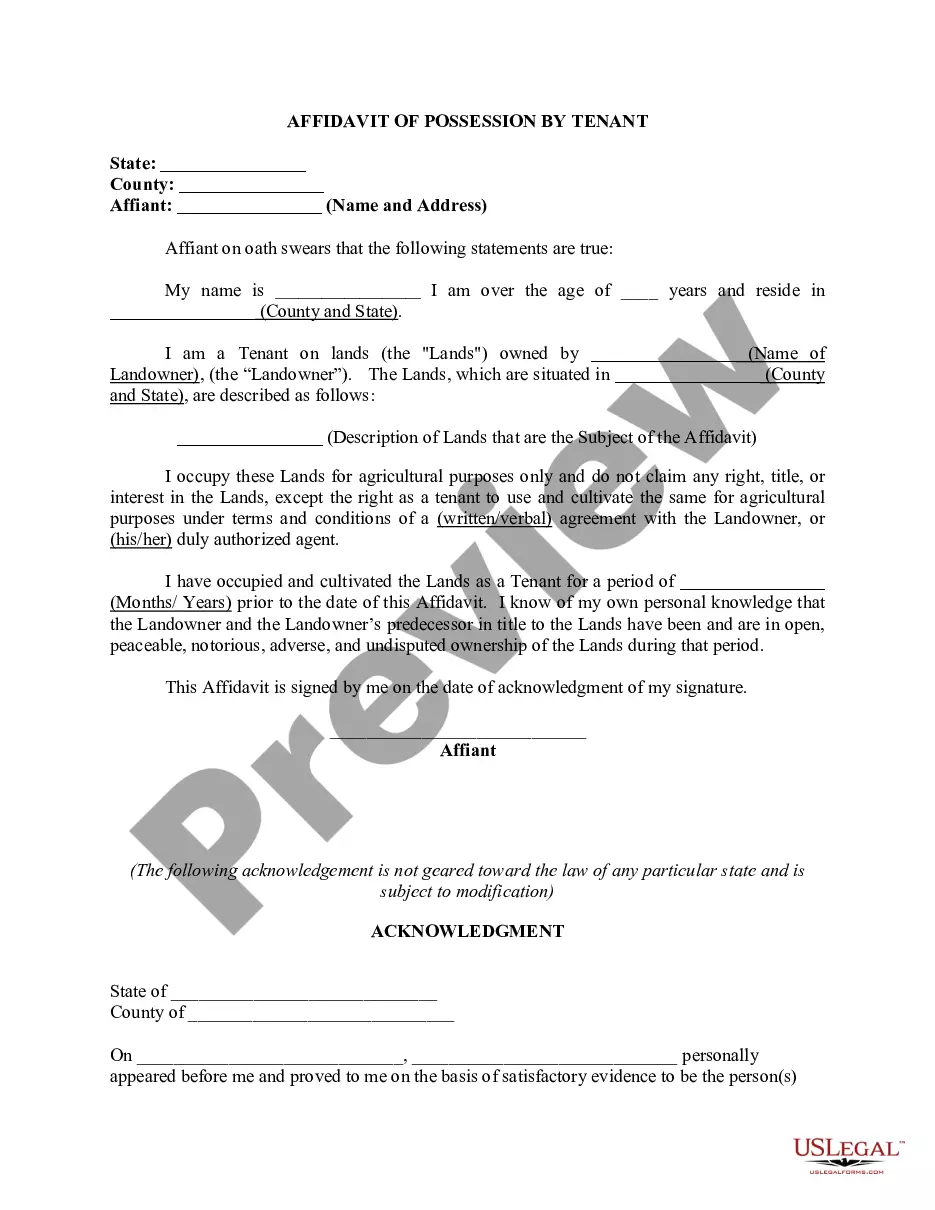
How to fill out Texas Adverse Possession Affidavit - Squatters Rights?
- If you are a returning user, log in to your account and download the required form template directly by clicking the Download button. Be sure your subscription is up to date; if not, renew it based on your payment plan.
- For first-time users, start by checking the Preview mode and form descriptions to ensure you select the appropriate form for your needs, compliant with local jurisdiction.
- If necessary, utilize the Search tab to find alternative templates if the initial one doesn’t meet your criteria.
- Once you find the right document, click on the Buy Now button and select your preferred subscription plan. You will need to create an account to access the full library.
- Complete your purchase by providing credit card information or using your PayPal account for transaction processing.
- Finally, download the acquired form and save it on your device. You can access it anytime from the My Forms section of your profile.
Using US Legal Forms can significantly streamline the process of managing your property and enforce your rights as a landlord. With access to over 85,000 fillable legal forms and packages, you are equipped to handle any situation.
Don't wait to secure your rights – start using US Legal Forms today to find the perfect legal documents for your needs!
Form popularity
FAQ
To file for squatters rights in Texas, landlords should first understand the legal process involved. Begin by gathering evidence of ownership and any relevant documentation, such as property deeds and lease agreements. Next, file a lawsuit in the appropriate court to address any squatting issues and seek eviction if necessary. Using platforms like US Legal Forms can simplify this process by providing templates and guidance tailored to Texas squatters rights for landlords.
In Texas, squatters bear certain rights, especially if they have occupied the property for a substantial duration. They can claim legal rights to the property through adverse possession if they meet specific criteria. For landlords, it is crucial to understand these rights to act promptly in asserting their ownership and preventing potential legal issues related to Texas squatters rights.
Forcibly removing a squatter in Texas is not straightforward and can lead to legal complications. Landlords must follow proper legal eviction procedures to remove a squatter, as attempting to remove them forcefully may result in criminal charges. Knowing the ins and outs of Texas squatters rights for landlords can help you navigate this process and protect your property.
In Texas, a squatter can potentially take ownership of a property through adverse possession under specific conditions. This process requires the squatter to occupy the property openly, continuously, and without permission for a certain period, typically ten years. For landlords, understanding Texas squatters rights is essential to prevent potential claims of ownership and to manage their properties effectively.
The minimum time required for a squatter to claim rights in Texas typically aligns with the five-year threshold for adverse possession claims. However, every situation is unique, and important legal considerations can arise. As such, landlords should familiarize themselves with Texas squatters rights and consider utilizing platforms like USLegalForms to understand their legal options and prepare necessary documents.
While Texas law generally requires five years of occupancy for squatters rights, there may be other factors at play, such as usage claims and local ordinances. It's important to note that even short-term unauthorized occupancy can lead to complex legal issues for landlords. Staying informed about Texas squatters rights for landlords can help you effectively manage any potential squatter situations.
In Texas, to potentially claim a house through squatters rights, an individual typically must occupy the property for at least five years. During this time, they must meet specific legal requirements, such as open and notorious possession. Landlords should be proactive to avoid this situation by regularly checking their properties and understanding squatters rights laws.
Yes, landlords can remove a squatter in Texas, but the process must follow legal procedures. Landlords cannot take matters into their own hands; they need to file an eviction notice in court. Understanding Texas squatters rights for landlords can help in navigating this process by providing guidance on the legal steps that need to be taken.
To claim squatters rights in Texas, an occupant must demonstrate exclusive possession of the property, show that their use has been open and notorious, and meet a specific duration of residency, typically five years. Moreover, they must maintain and treat the property as their own without the owner's permission. For landlords, understanding these requirements is key to legally addressing unauthorized occupants effectively.
The timeframe to be considered a squatter in Texas is not fixed but generally concerns the duration of unauthorized occupancy. If someone takes residence in a property without consent, they may establish squatter status after a short period, especially if they claim to have established a connection to the property. Understanding Texas squatters rights for landlords can aid in identifying proper legal steps to take during this time.