Texas Grantors Resident For Tax
Description
Get your form ready online
Our built-in tools help you complete, sign, share, and store your documents in one place.
Make edits, fill in missing information, and update formatting in US Legal Forms—just like you would in MS Word.
Download a copy, print it, send it by email, or mail it via USPS—whatever works best for your next step.
Sign and collect signatures with our SignNow integration. Send to multiple recipients, set reminders, and more. Go Premium to unlock E-Sign.
If this form requires notarization, complete it online through a secure video call—no need to meet a notary in person or wait for an appointment.
We protect your documents and personal data by following strict security and privacy standards.

Make edits, fill in missing information, and update formatting in US Legal Forms—just like you would in MS Word.

Download a copy, print it, send it by email, or mail it via USPS—whatever works best for your next step.

Sign and collect signatures with our SignNow integration. Send to multiple recipients, set reminders, and more. Go Premium to unlock E-Sign.

If this form requires notarization, complete it online through a secure video call—no need to meet a notary in person or wait for an appointment.

We protect your documents and personal data by following strict security and privacy standards.
Looking for another form?









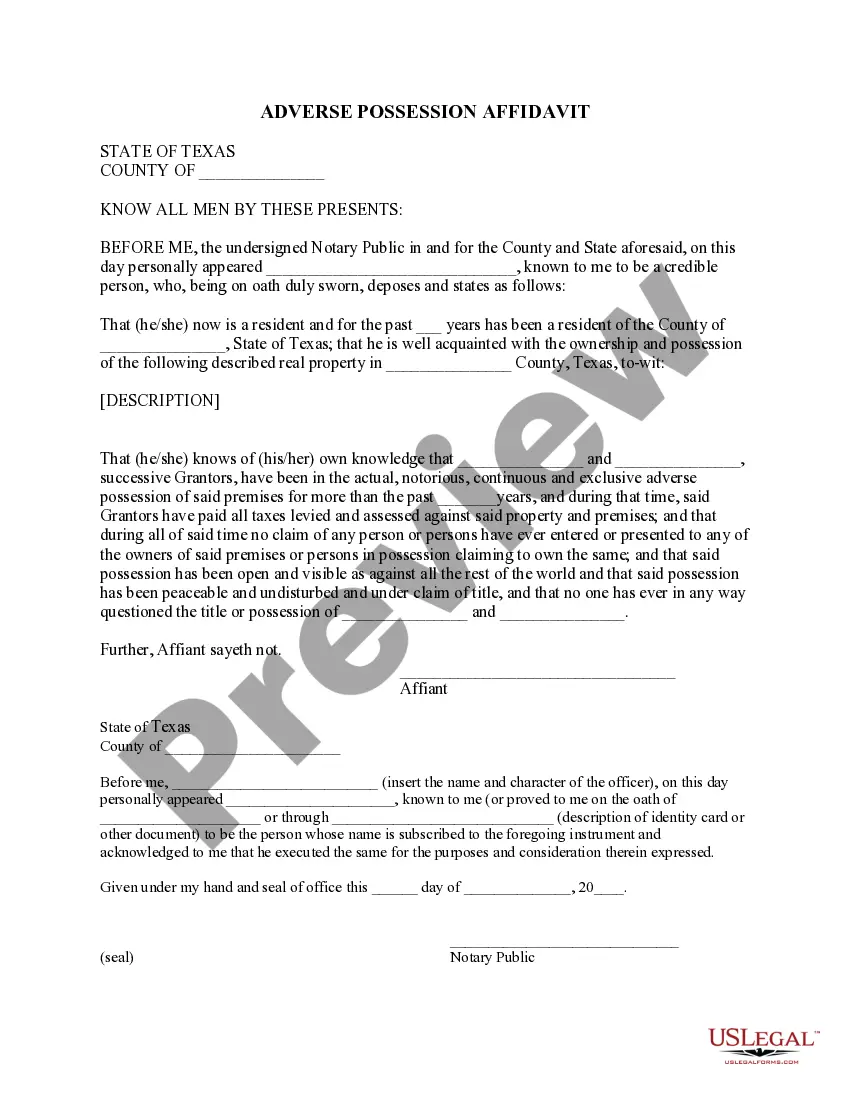
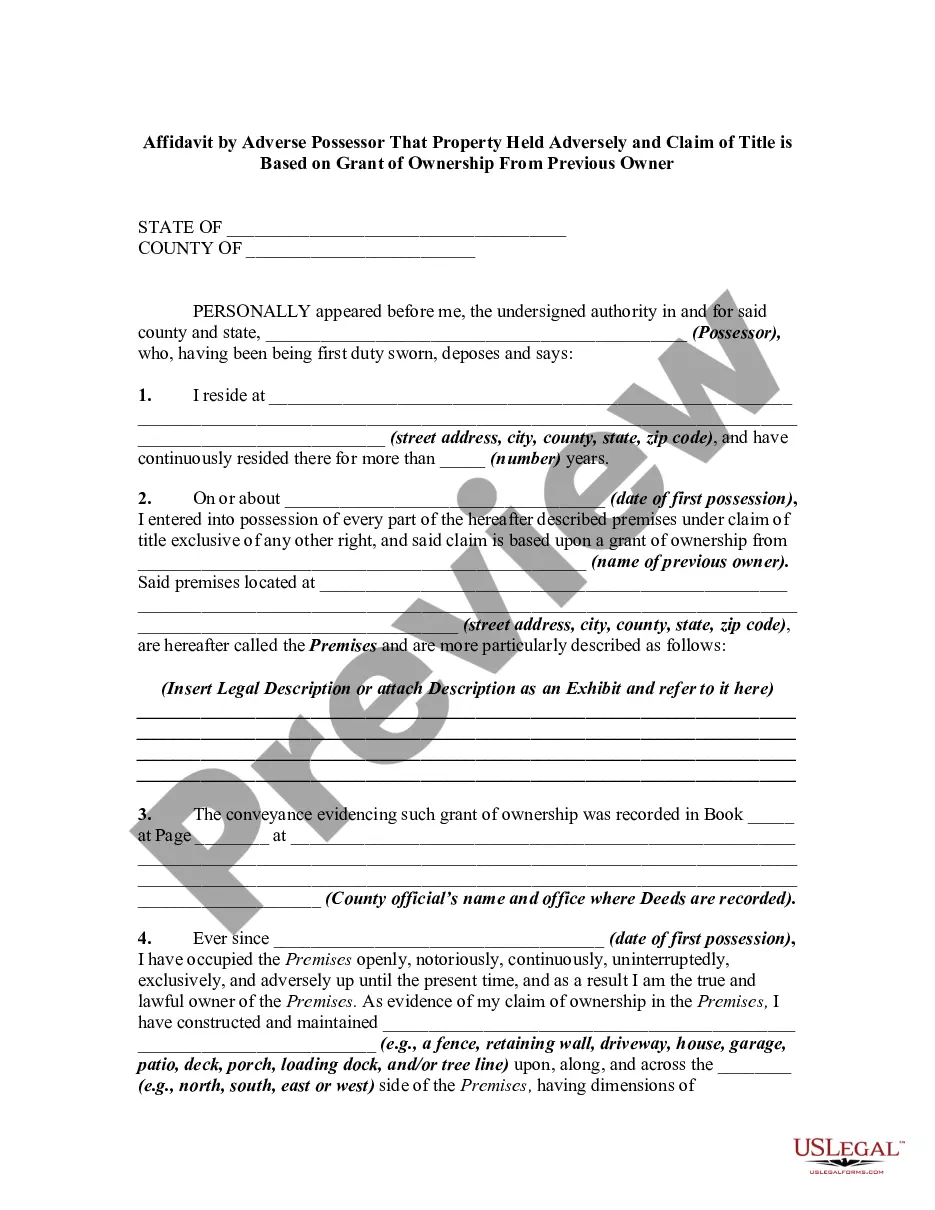
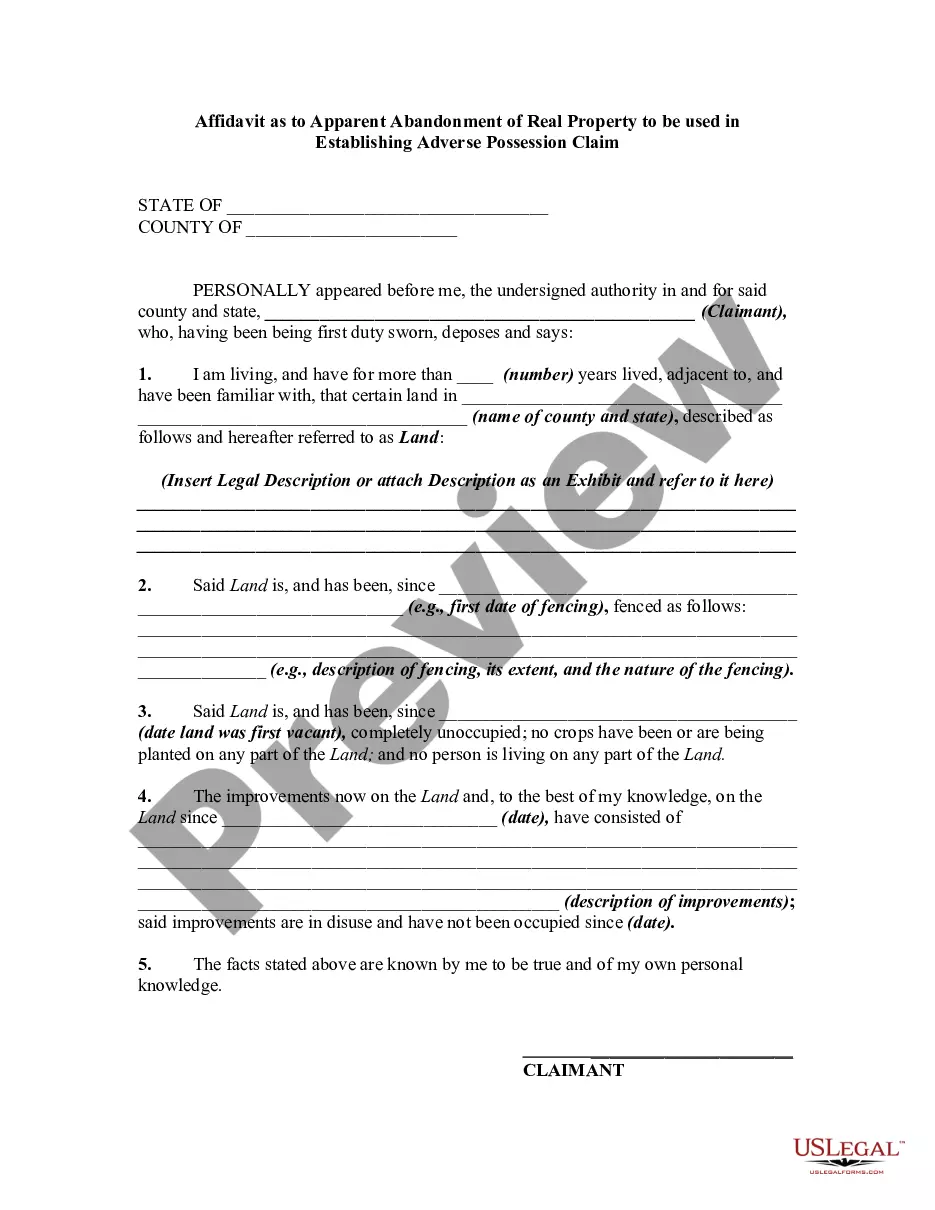
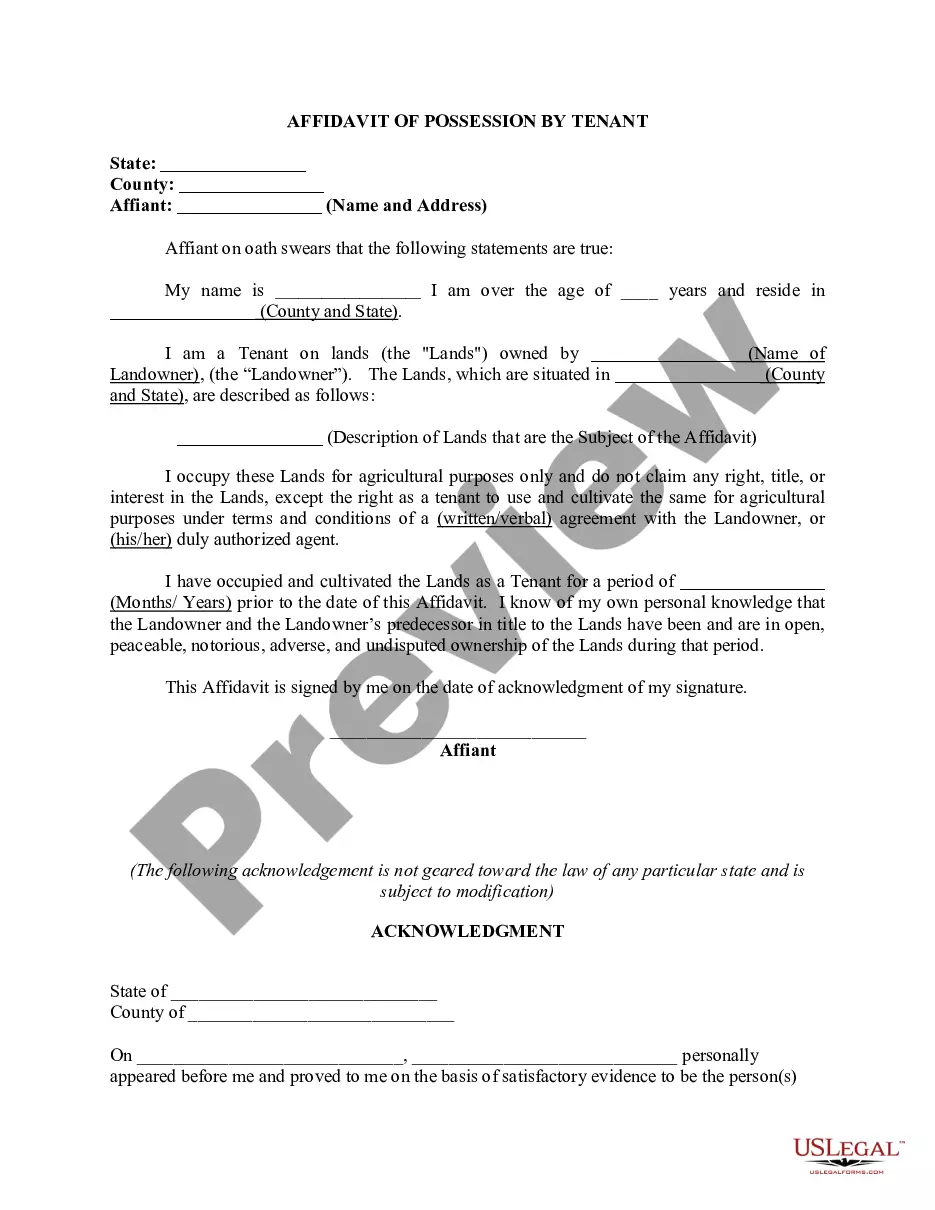
How to fill out Texas Adverse Possession Affidavit - Squatters Rights?
- Log into your US Legal Forms account if you are a returning user. Ensure your subscription is active for hassle-free access.
- For new users, start by examining the form previews and descriptions to verify they meet your requirements and local jurisdiction standards.
- If adjustments are needed, utilize the Search tab to find the perfect document that suits your needs.
- Select the form and click on the Buy Now button. Choose a subscription plan that aligns with your needs and create an account for full access.
- Complete your purchase by entering your payment details via credit card or PayPal.
- After purchasing, download your form directly to your device. You can always revisit it later in the My Documents section of your profile.
By following these straightforward steps, you can efficiently obtain the necessary legal documents without stress. US Legal Forms not only saves time but ensures accuracy and compliance with legal standards.
Take control of your legal needs today and experience the benefits of US Legal Forms—your shortcut to hassle-free legal documentation!
Form popularity
FAQ
You generally need to reside in Texas for at least 12 continuous months to establish residency for tax purposes. This duration allows you to demonstrate your commitment to living in the state. By doing this, you position yourself as a Texas grantors resident for tax, enabling you to take advantage of various benefits, including home exemptions and favorable tax treatments.
Your primary residence for tax purposes is where you physically live and which you consider home. To determine this, consider factors like where you spend most of your time, address on official documents, and where you intend to return after short absences. Understanding these aspects is crucial for being recognized as a Texas grantors resident for tax and potentially qualifying for applicable exemptions.
To qualify as a Texas resident for tax purposes, you must maintain a home in Texas where you officially reside. Documenting your Texas address, paying Texas taxes, and having ties such as a Texas driver's license can support your claim. By establishing yourself as a Texas grantors resident for tax, you can access beneficial tax treatment and exemptions.
Typically, you need to establish a physical presence in Texas for at least 12 months to be considered a resident for tax purposes. This duration allows you to benefit from various state tax advantages, including exemptions available to Texas grantors resident for tax. During this time, it's essential to demonstrate your intention to make Texas your permanent home.
To qualify for the Texas homestead exemption, you must be a Texas grantors resident for tax purposes and use the home as your primary residence. Additionally, you must own the property and not have claimed a homestead exemption on another property in Texas or elsewhere. This exemption reduces the amount of property taxes you owe, making it an important benefit for eligible homeowners.
Becoming a Texas resident for tax purposes can vary based on circumstances. Generally, you can be considered a Texas grantors resident for tax once you establish a physical presence and demonstrate the intention to remain in Texas. This process usually takes a few months, depending on how quickly you integrate your affairs, such as getting a local driver's license or filing local taxes, paving the way for your residency status.
Texas franchise tax is triggered when a business operates in Texas and meets specific revenue thresholds. Generally, if your business holds a gross revenue of over a certain limit annually, you must file for this tax. As a Texas grantors resident for tax, understanding your obligations can help you comply and avoid penalties, ensuring you take advantage of any applicable exemptions.
To establish residency in a home in Texas, a person must demonstrate a physical presence in the state and the intent to make it their permanent residence. This can include factors such as obtaining a Texas driver's license, registering to vote in Texas, and living in the home for a significant duration. Additionally, for Texas grantors resident for tax purposes, having a primary place of business or consistently filing taxes in Texas can reinforce the claim of residency.
To qualify as a Texas resident for taxes, you must establish your primary residence in the state and demonstrate your intent to stay long-term. This typically involves having a fixed address, registering for local services, and possibly filing taxes in Texas. Understanding these requirements is essential for anyone aiming to be recognized as a Texas grantors resident for tax.
To prove Texas residency, you should gather documents that demonstrate your physical presence in the state. Utility bills, bank statements, and your Texas driver’s license can serve as credible proof. As a Texas grantors resident for tax, maintaining these records will support your residency claims.