Amendment No. 4 to Managed Network Agreement (with exhibits) between Sprint Communications Co, LP and Bridge Data Co.
About this form
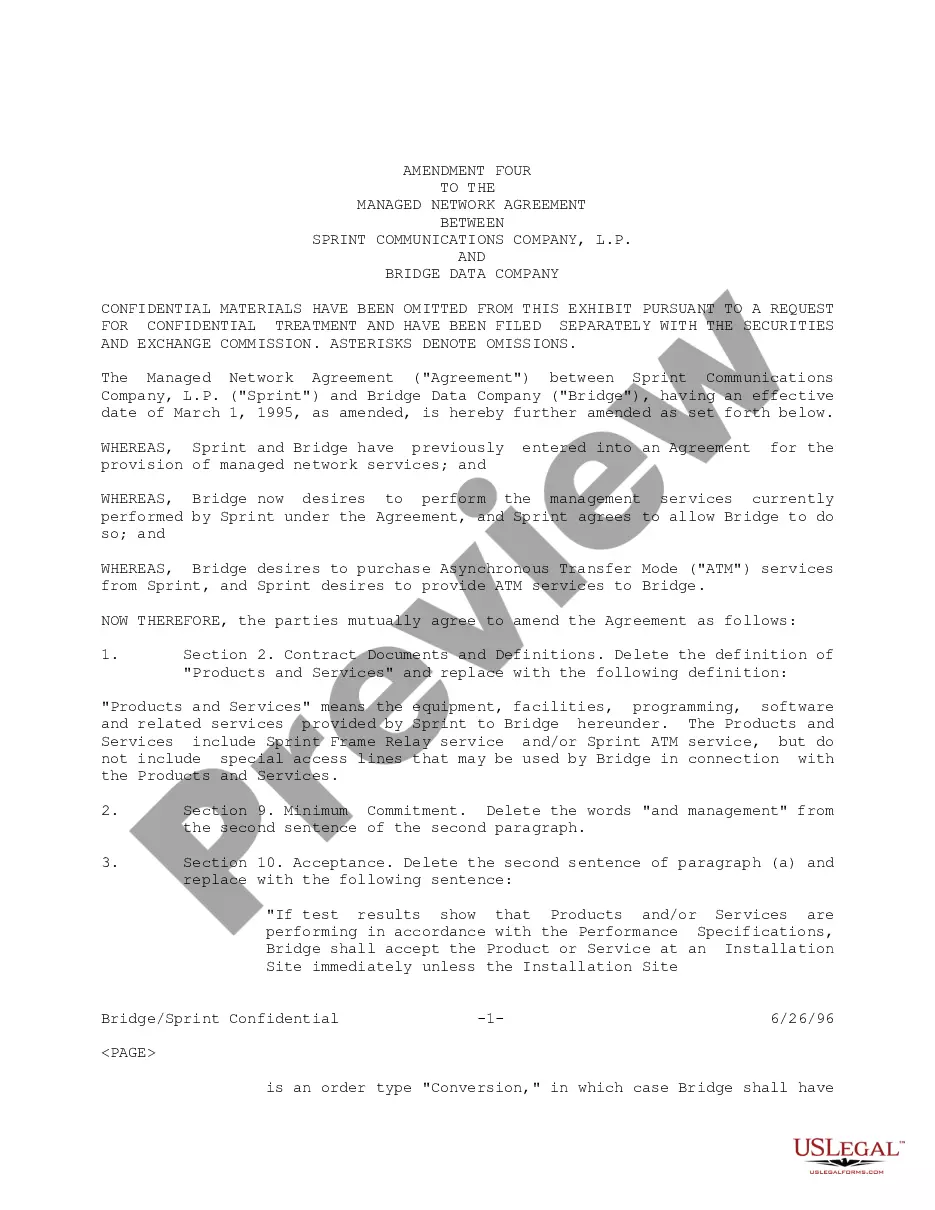
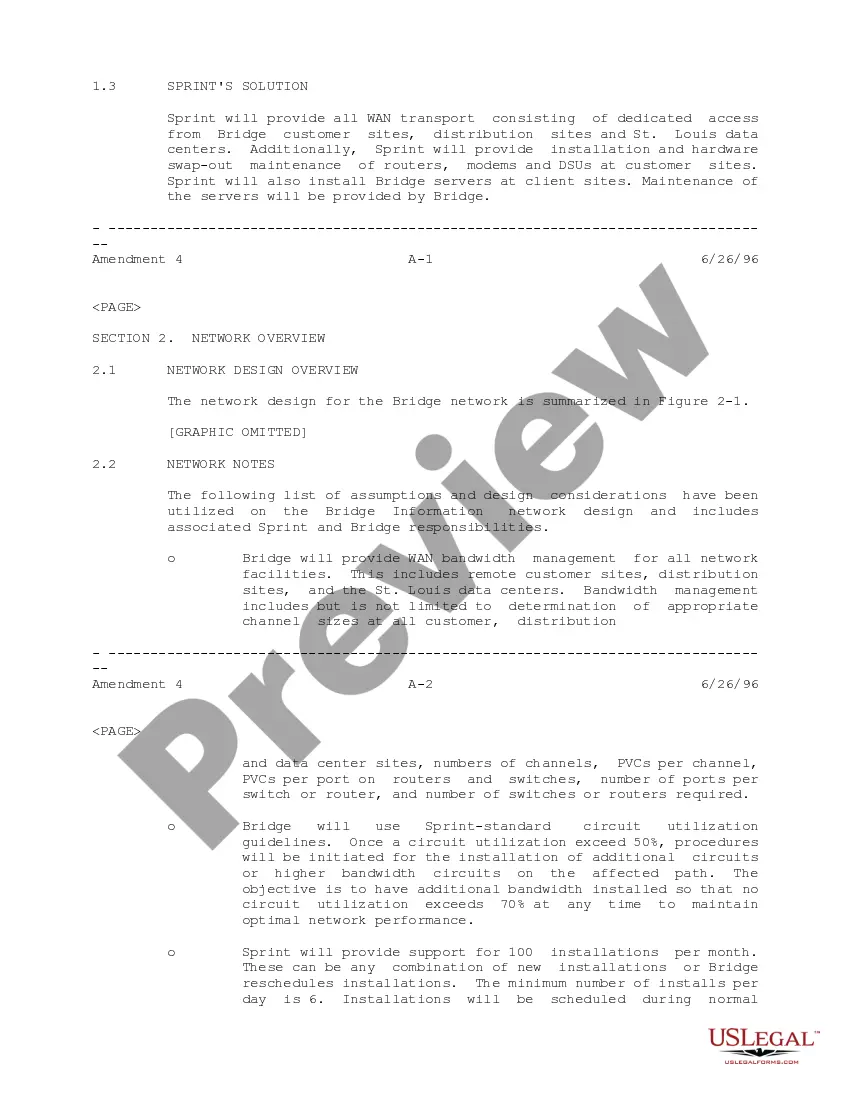
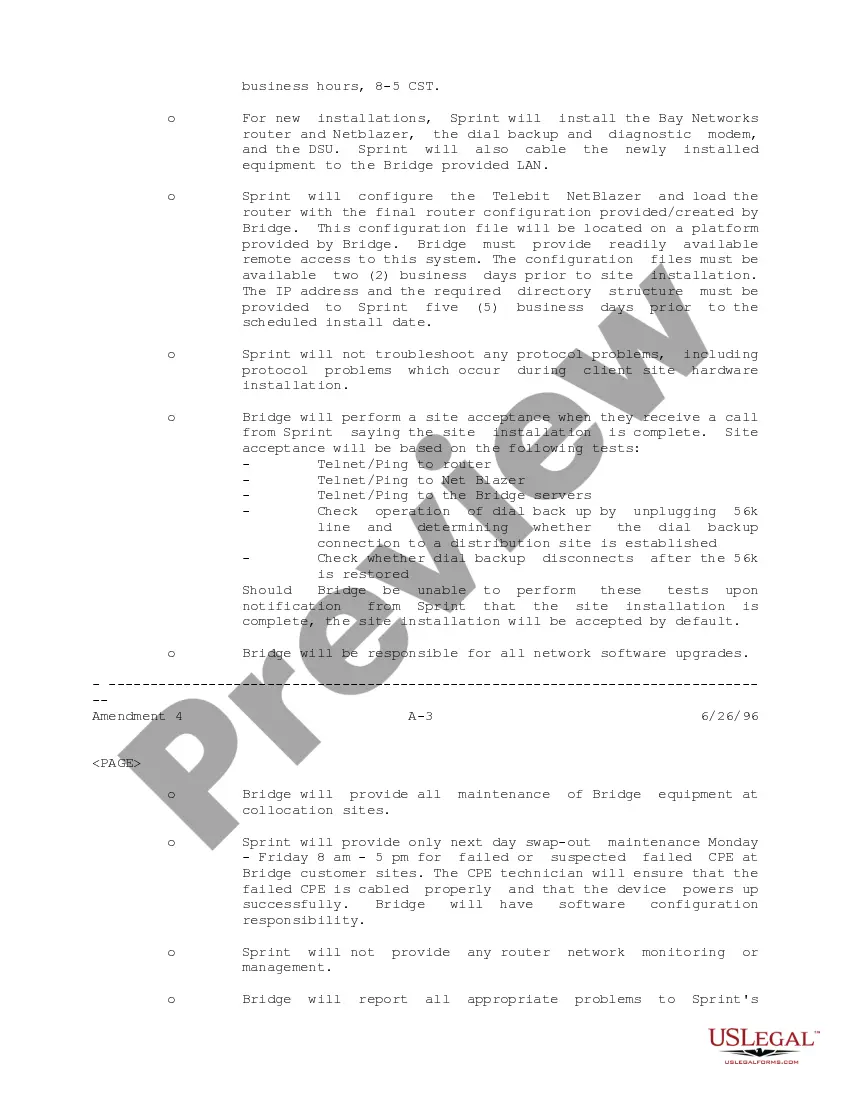
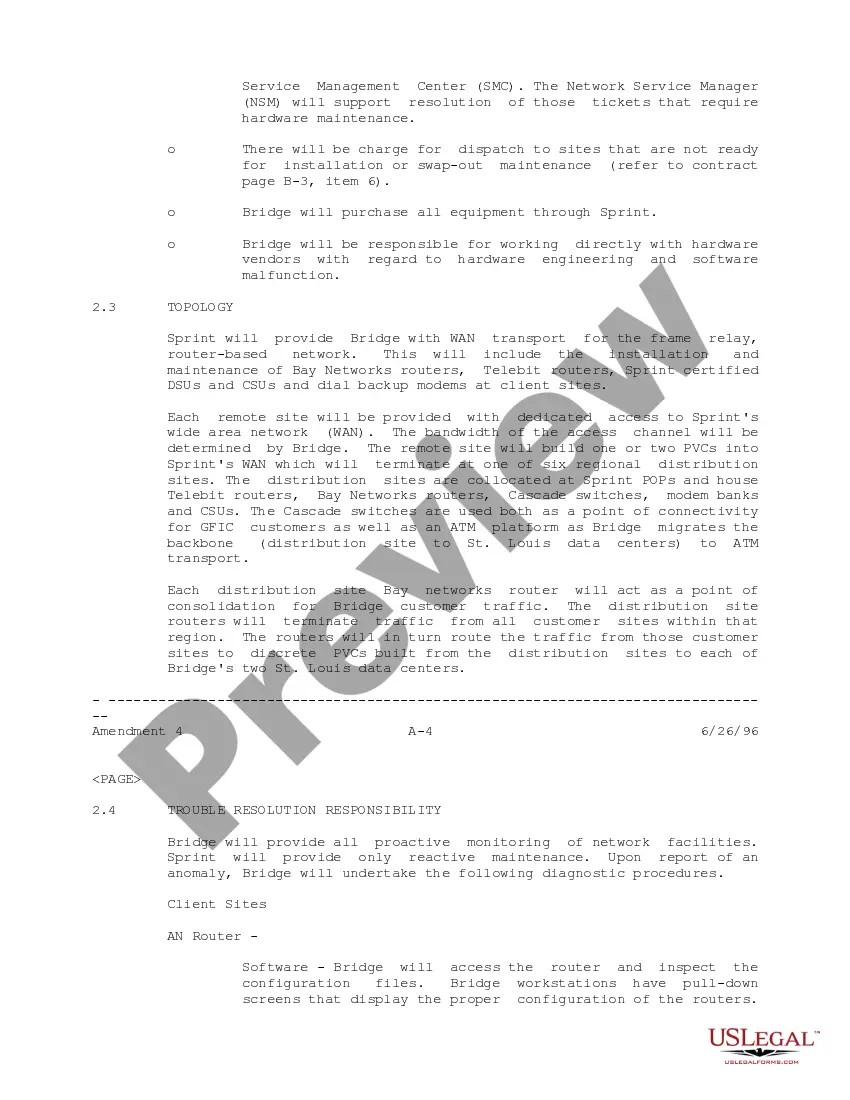
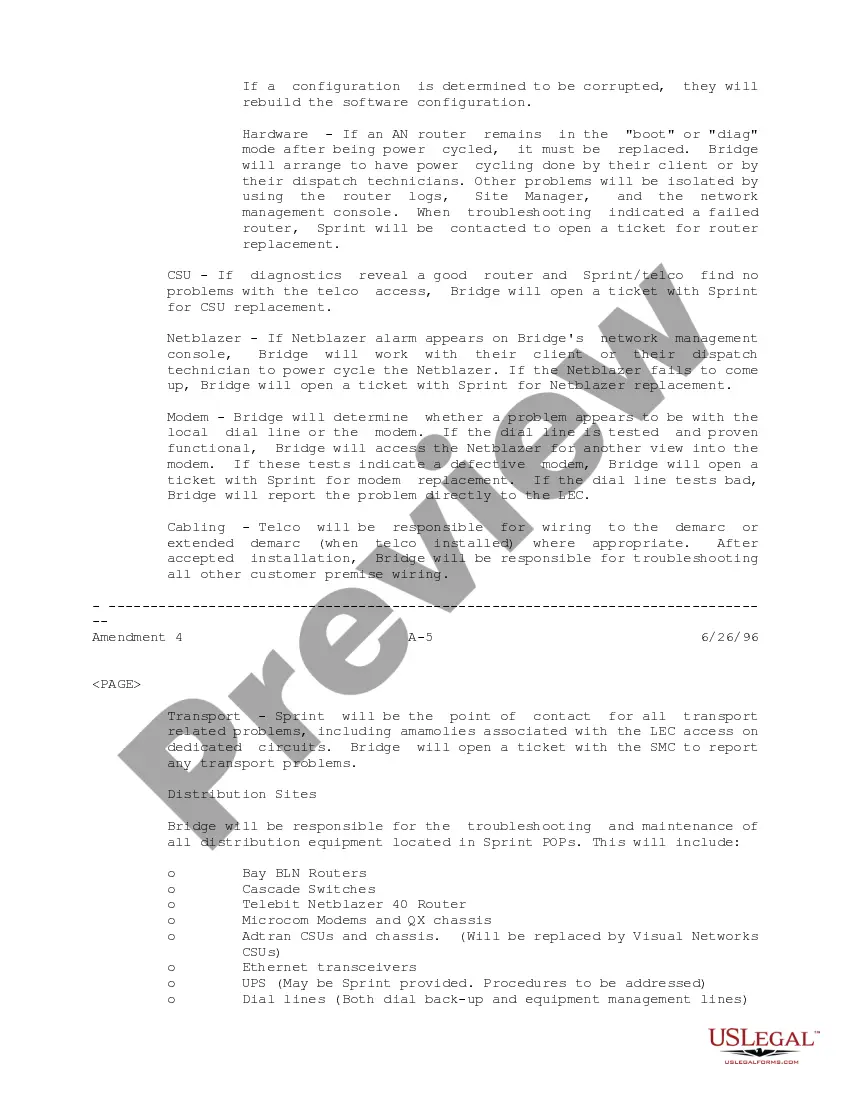
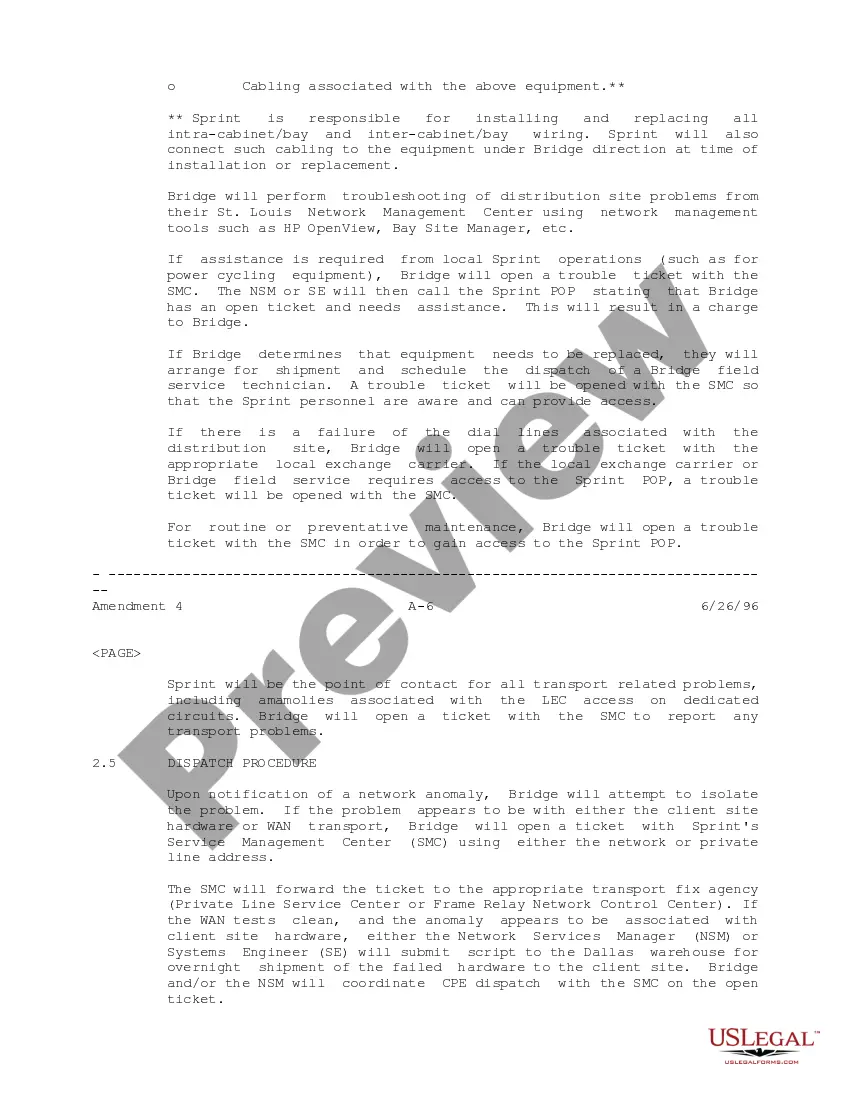
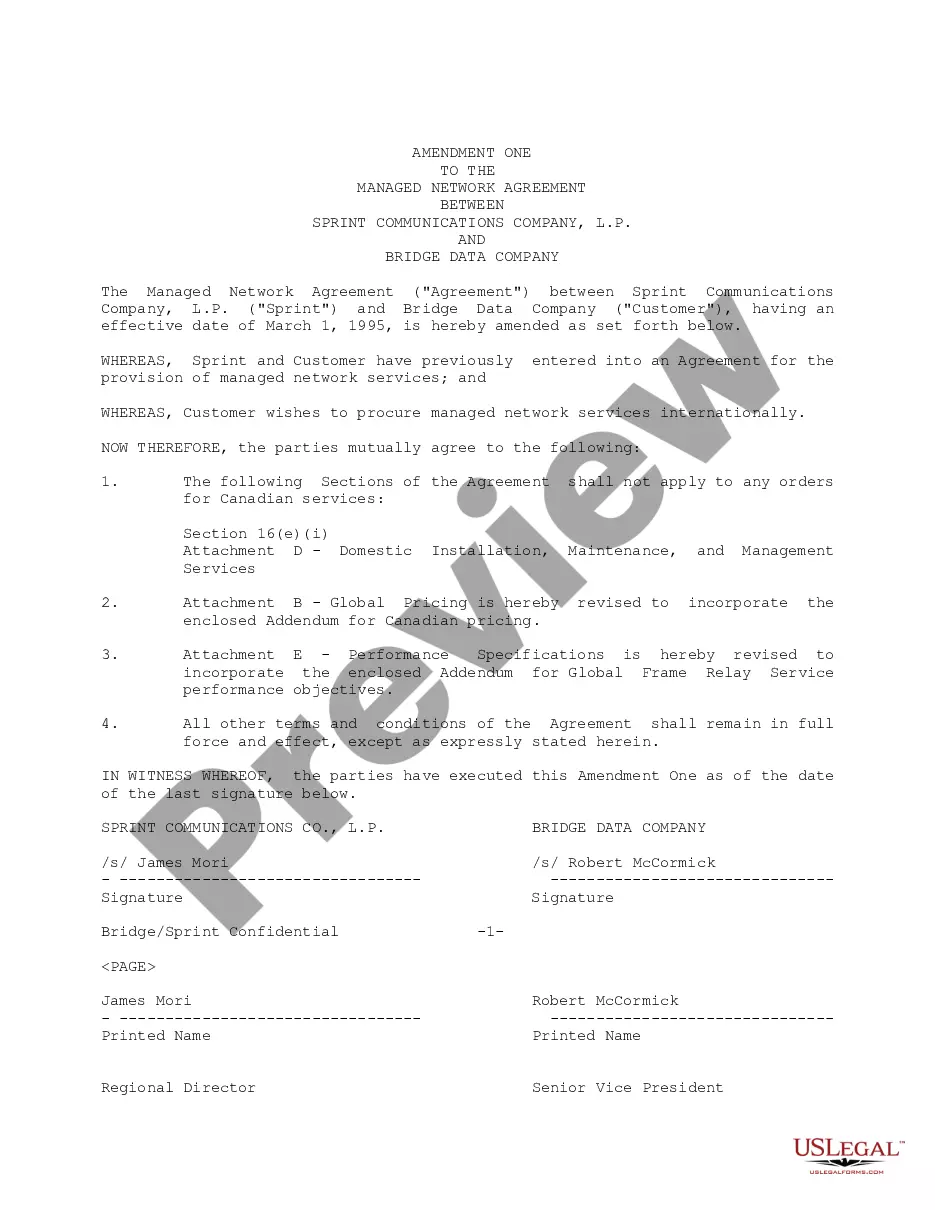
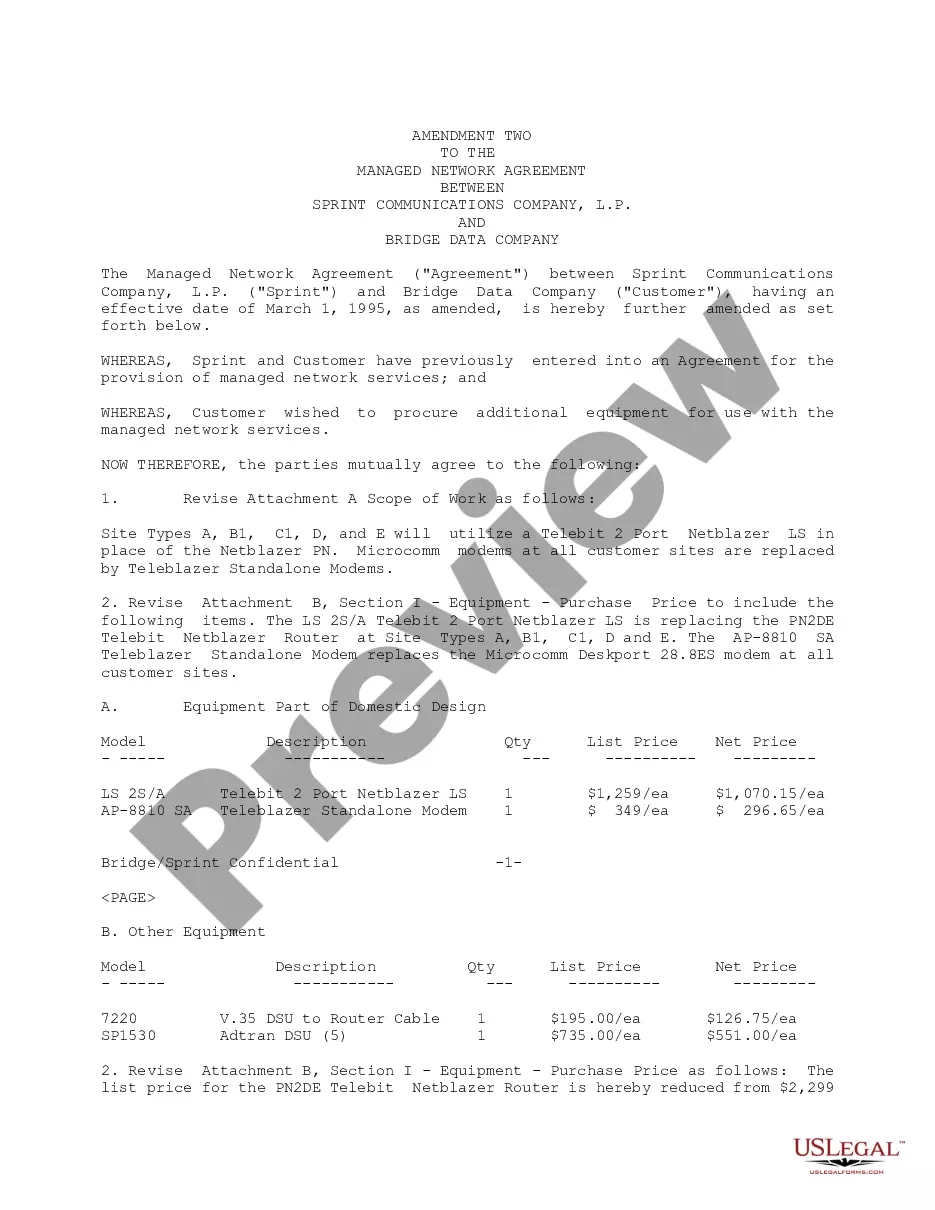
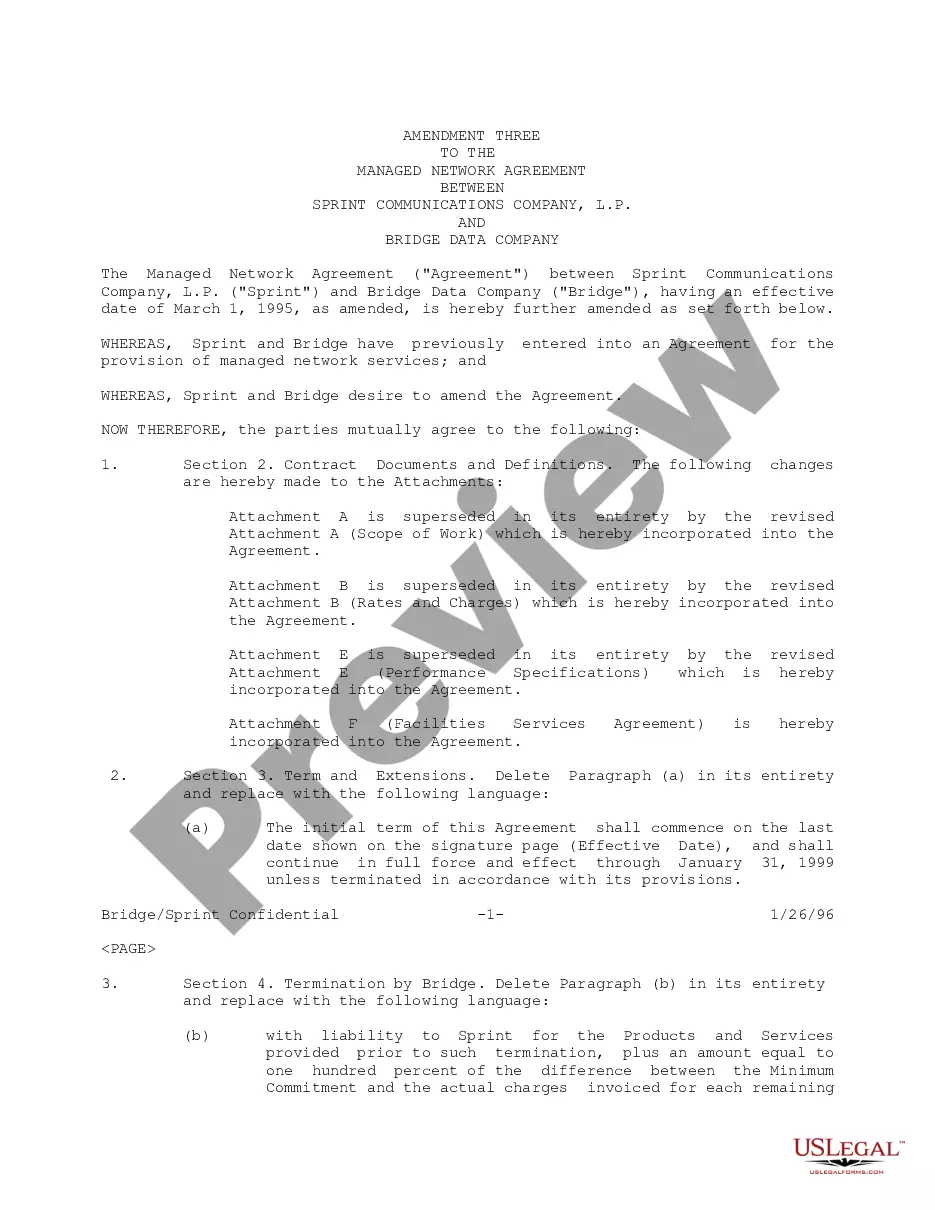
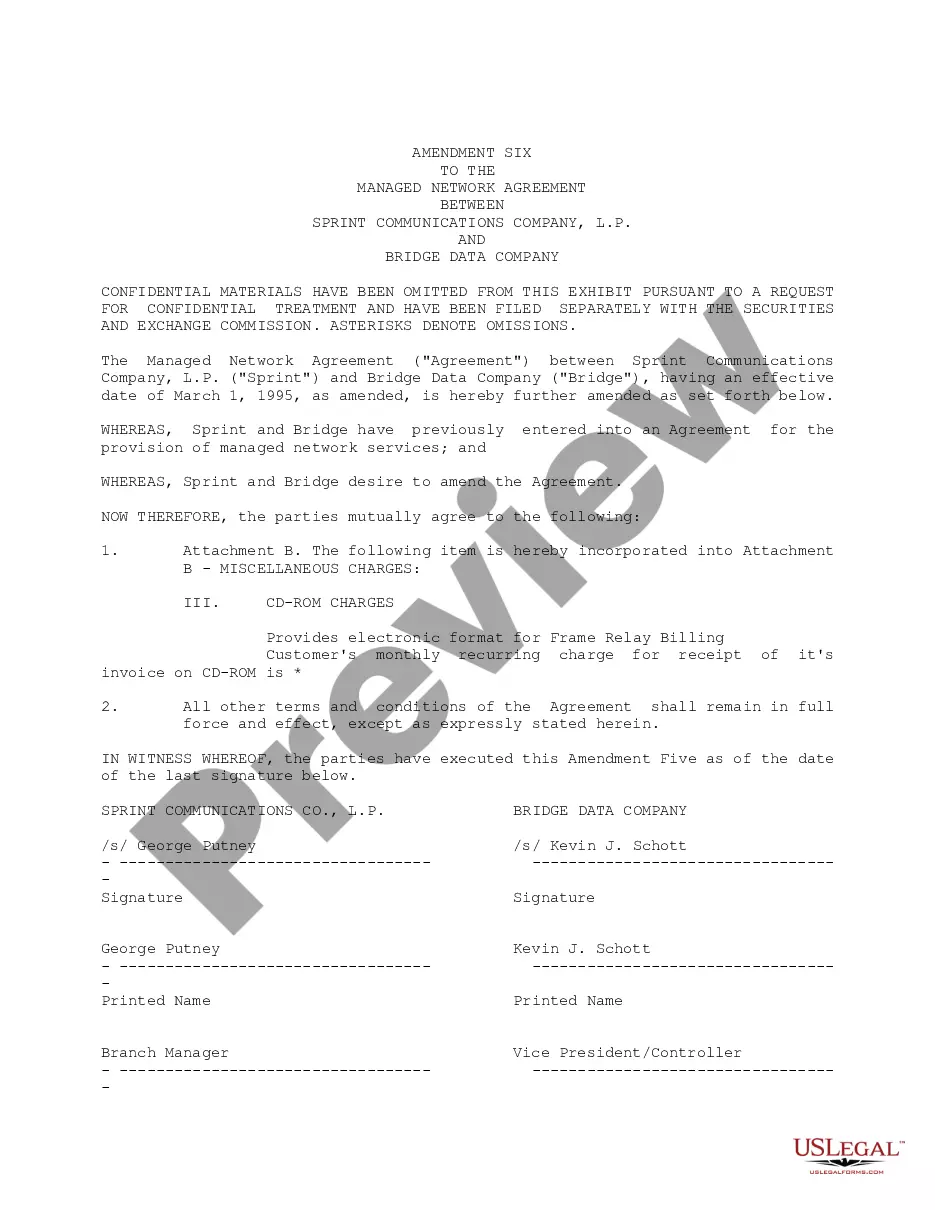
The Amendment No. 4 to Managed Network Agreement is a legal document that modifies an existing agreement between Sprint Communications Company, L.P. and Bridge Data Company. This amendment specifically addresses updates related to the provision and purchase of managed network products and services. It comprises crucial changes that enable Bridge to manage certain services previously handled by Sprint and outlines the associated pricing structure. Unlike a new agreement, this amendment preserves the original contract's terms while modifying specific sections to reflect the latest operational needs and understanding between the parties.
Key parts of this document
- Amendment Overview: Provides a summary of the purpose and effective changes to the original Managed Network Agreement.
- Definitions: Contains updated definitions for key terms relevant to the agreement.
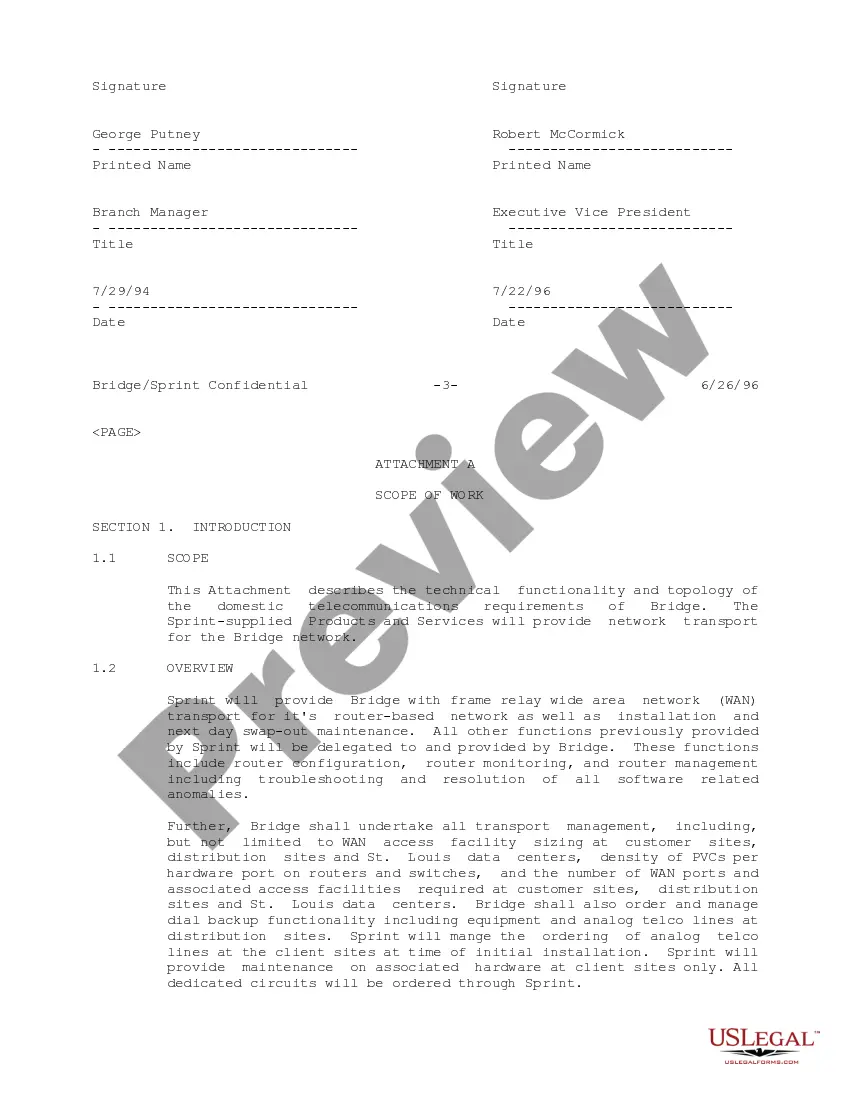
- Scope of Work: Details the responsibilities of both Sprint and Bridge regarding managed services.
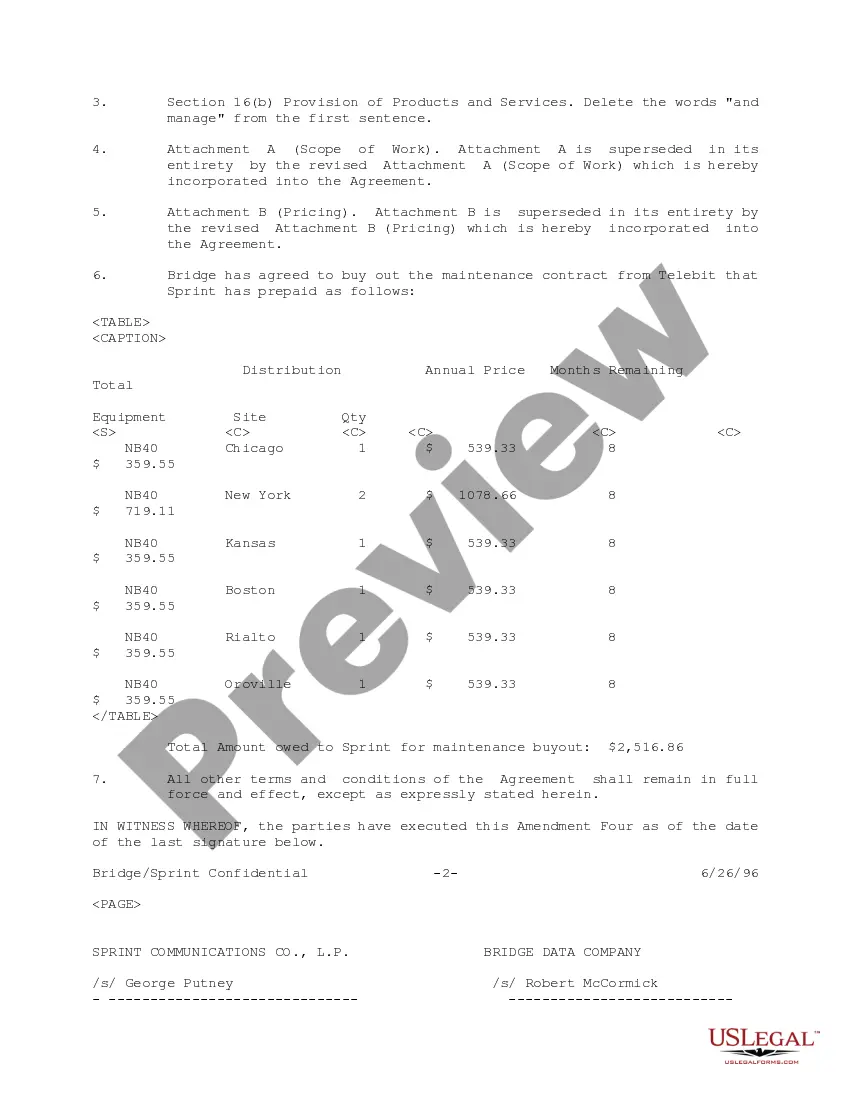
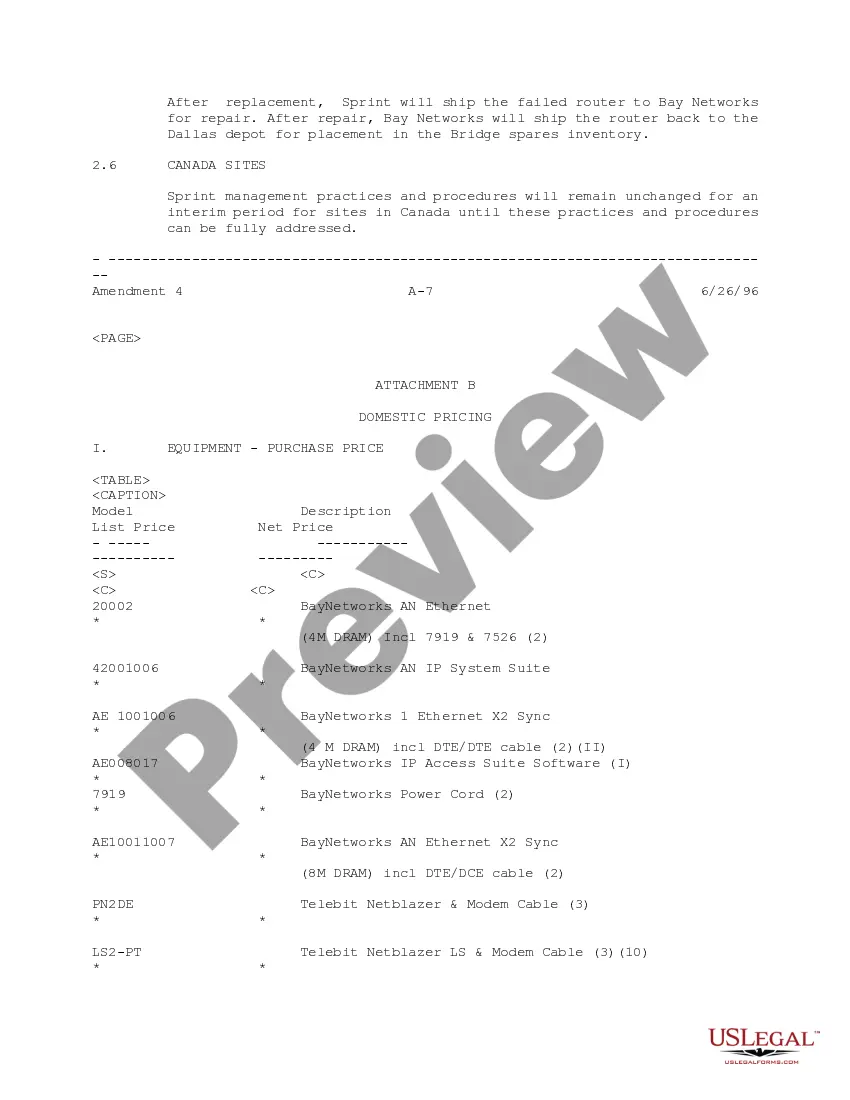
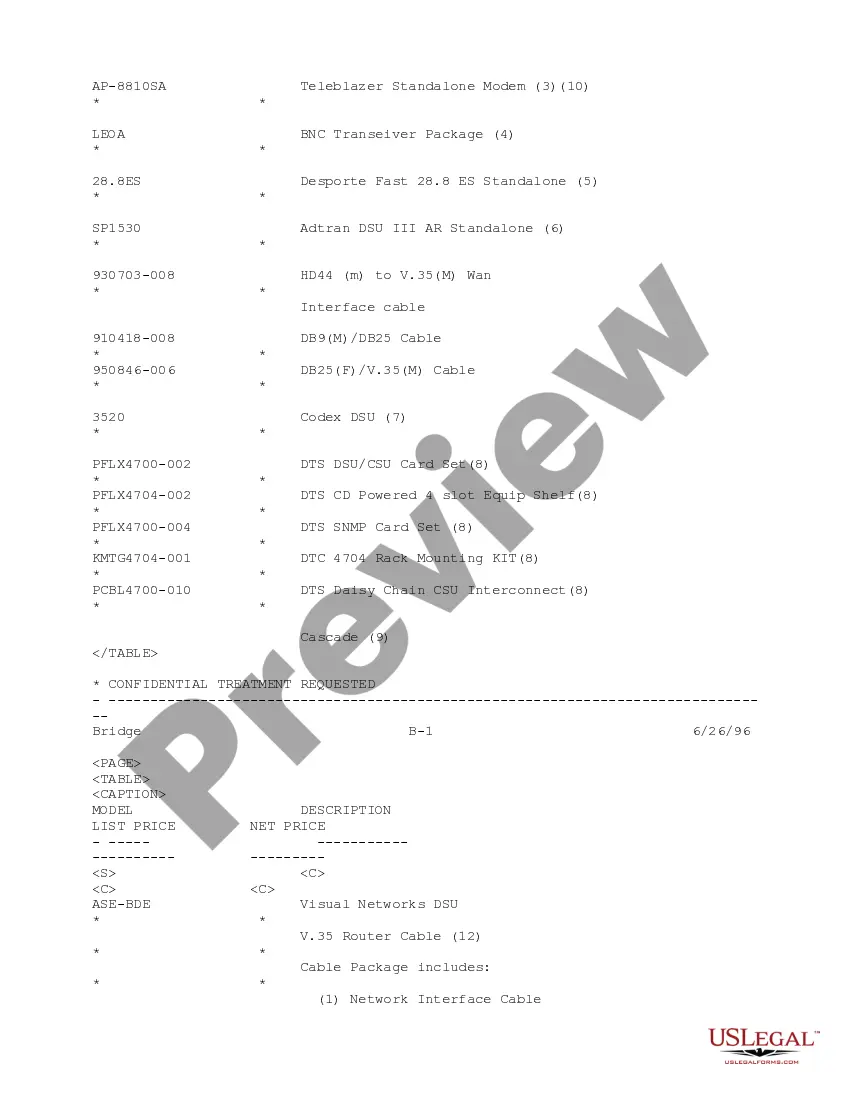
- Pricing Structure: Outlines the revised pricing for various services and products involved in the agreement.
- Signatures: Includes sections for both parties to sign and date the agreement, ensuring legal validity.

When to use this document
This amendment form should be used when there is a need to make formal changes to an existing Managed Network Agreement between Sprint Communications Company and Bridge Data Company. It is particularly relevant in situations where either party wishes to modify operational responsibilities, pricing, or scope of services. This form is crucial during contract renewal discussions or when expanding the scope of services provided under the original agreement.
Who this form is for
- Businesses entering into amendments to their existing Managed Network Agreements.
- Legal professionals drafting or reviewing amendments to contractual agreements.
- Administrative personnel responsible for contract management and compliance.
- Representatives of Sprint Communications Co. and Bridge Data Co. involved in their respective negotiations.
Instructions for completing this form
- Identify the parties involved: Ensure the names and addresses of Sprint Communications Co. and Bridge Data Company are correctly stated.
- Review the amendment sections: Read through the changes noted in the agreement to understand the modifications clearly.
- Update definitions: Make sure any definitions relevant to new services or terms are included in the specified section.
- Fill in the pricing structure: Confirm that the revised pricing for products and services is accurately reflected in the appropriate sections.
- Sign and date: Have authorized representatives from both parties sign and date the document to finalize the amendment officially.
Notarization guidance
This form does not typically require notarization unless specified by local law. However, both parties should confirm whether notarization is needed based on their jurisdictional requirements.
Get your form ready online
Our built-in tools help you complete, sign, share, and store your documents in one place.
Make edits, fill in missing information, and update formatting in US Legal Forms—just like you would in MS Word.
Download a copy, print it, send it by email, or mail it via USPS—whatever works best for your next step.
Sign and collect signatures with our SignNow integration. Send to multiple recipients, set reminders, and more. Go Premium to unlock E-Sign.
If this form requires notarization, complete it online through a secure video call—no need to meet a notary in person or wait for an appointment.
We protect your documents and personal data by following strict security and privacy standards.

Make edits, fill in missing information, and update formatting in US Legal Forms—just like you would in MS Word.

Download a copy, print it, send it by email, or mail it via USPS—whatever works best for your next step.

Sign and collect signatures with our SignNow integration. Send to multiple recipients, set reminders, and more. Go Premium to unlock E-Sign.

If this form requires notarization, complete it online through a secure video call—no need to meet a notary in person or wait for an appointment.

We protect your documents and personal data by following strict security and privacy standards.
Common mistakes to avoid
- Neglecting to read all sections of the original agreement before making amendments.
- Forgetting to have all necessary parties sign the document to make it legally binding.
- Failing to update relevant definitions or pricing that may have changed since the original agreement.
- Not keeping a copy of the signed amendment for future reference.
Why complete this form online
- Convenient access to a legally vetted document template.
- Editable sections that allow for tailored modifications suited to specific business needs.
- Easy downloading and storage options for recordkeeping.
- Time-saving, as the form can be completed and finalized quickly without physical paperwork.
Looking for another form?

Form popularity
FAQ
Limited Partnership (LP) The limited partnership is made up of two types of partners: general partners and limited partners. This business structure can be seen as a cross between a general partnership and a corporation, where limited liability protection exists for some partners. In the case of a limited partnership -
Limited partnerships are generally used by hedge funds and investment partnerships as they offer the ability to raise capital without giving up control. Limited partners invest in an LP and have little to no control over the management of the entity, but their liability is limited to their personal investment.
A limited partnership (LP) is where two or more people own a business, but there are two classes of partners: general partners (who own and operate the business), and limited partners (who invest their money or property in the business, do not have the right to make decisions regarding the operation of the business,
A private equity firm is called a general partner (GP) and its investors that commit capital are called limited partners (LPs).A general partner may manage one or a few funds that may have different investment restrictions such as geography, industry or typical size of each investment.
In limited partnerships (LPs), at least one of the owners is considered a "general" partner who makes business decisions and is personally liable for business debts.The limited liability partnership (LLP) is a similar business structure but it has no general partners.
A limited partnership (LP) exists when two or more partners go into business together, but the limited partners are only liable up to the amount of their investment. An LP is defined as having limited partners and a general partner, which has unlimited liability.
The General Partner (GP): Private equity firms operate under the guidance of a GP. GPs aggregate and manage investment opportunities, and source capital from the LPs. They typically own 1% of shares in a fund, have full liability and are responsible for executing and operating the investment.
In general, a partnership is a business agreement between two or more people who are called partners.Typically, the terms general partner and limited partner in all types of partnerships will refer to liability, with general partners pledging their own personal assets while limited partners having limited liabilities.
An LLC is a Limited Liability Company.Similar to the LLC, the LLP is a hybrid of both the corporation and partnership, to give the greatest advantages for taxation and liability protection. The LLP is not a separate entity for income tax purposes and profits and losses are passed through to the partners.