Squatters Rights For Renters
Description
Get your form ready online
Our built-in tools help you complete, sign, share, and store your documents in one place.
Make edits, fill in missing information, and update formatting in US Legal Forms—just like you would in MS Word.
Download a copy, print it, send it by email, or mail it via USPS—whatever works best for your next step.
Sign and collect signatures with our SignNow integration. Send to multiple recipients, set reminders, and more. Go Premium to unlock E-Sign.
If this form requires notarization, complete it online through a secure video call—no need to meet a notary in person or wait for an appointment.
We protect your documents and personal data by following strict security and privacy standards.

Make edits, fill in missing information, and update formatting in US Legal Forms—just like you would in MS Word.

Download a copy, print it, send it by email, or mail it via USPS—whatever works best for your next step.

Sign and collect signatures with our SignNow integration. Send to multiple recipients, set reminders, and more. Go Premium to unlock E-Sign.

If this form requires notarization, complete it online through a secure video call—no need to meet a notary in person or wait for an appointment.

We protect your documents and personal data by following strict security and privacy standards.
Looking for another form?




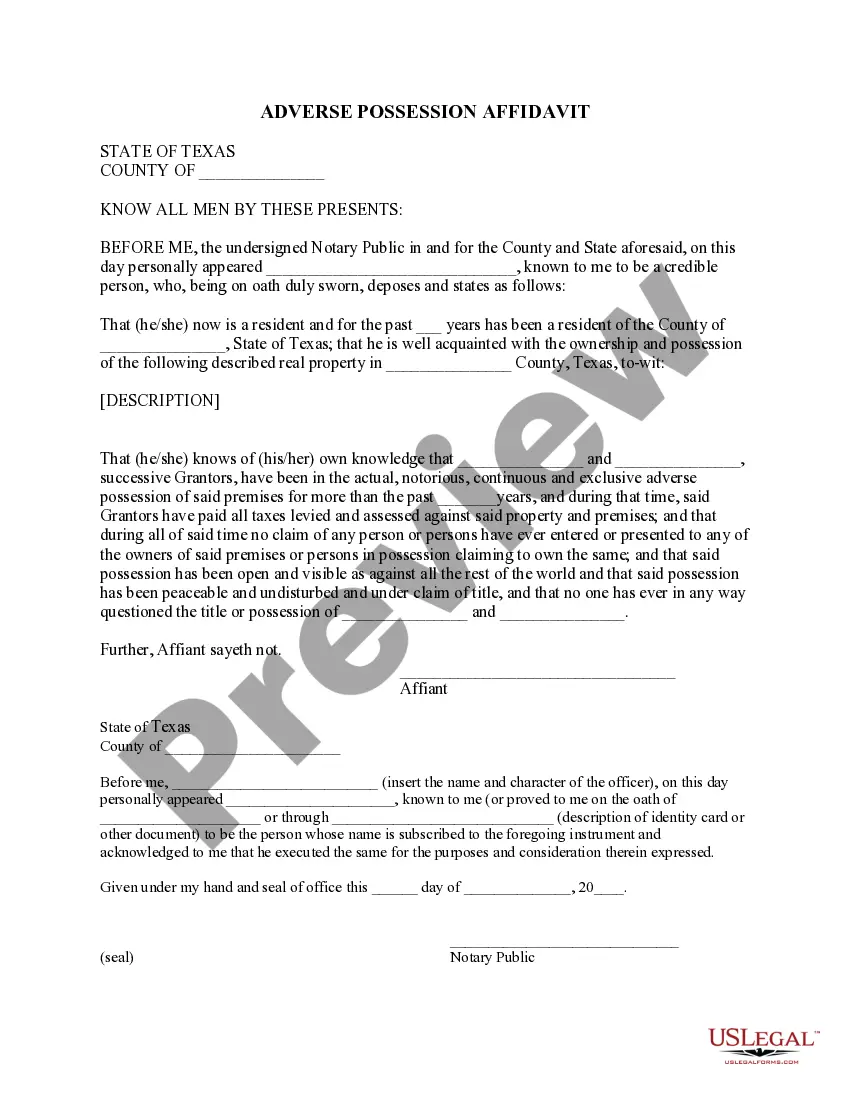
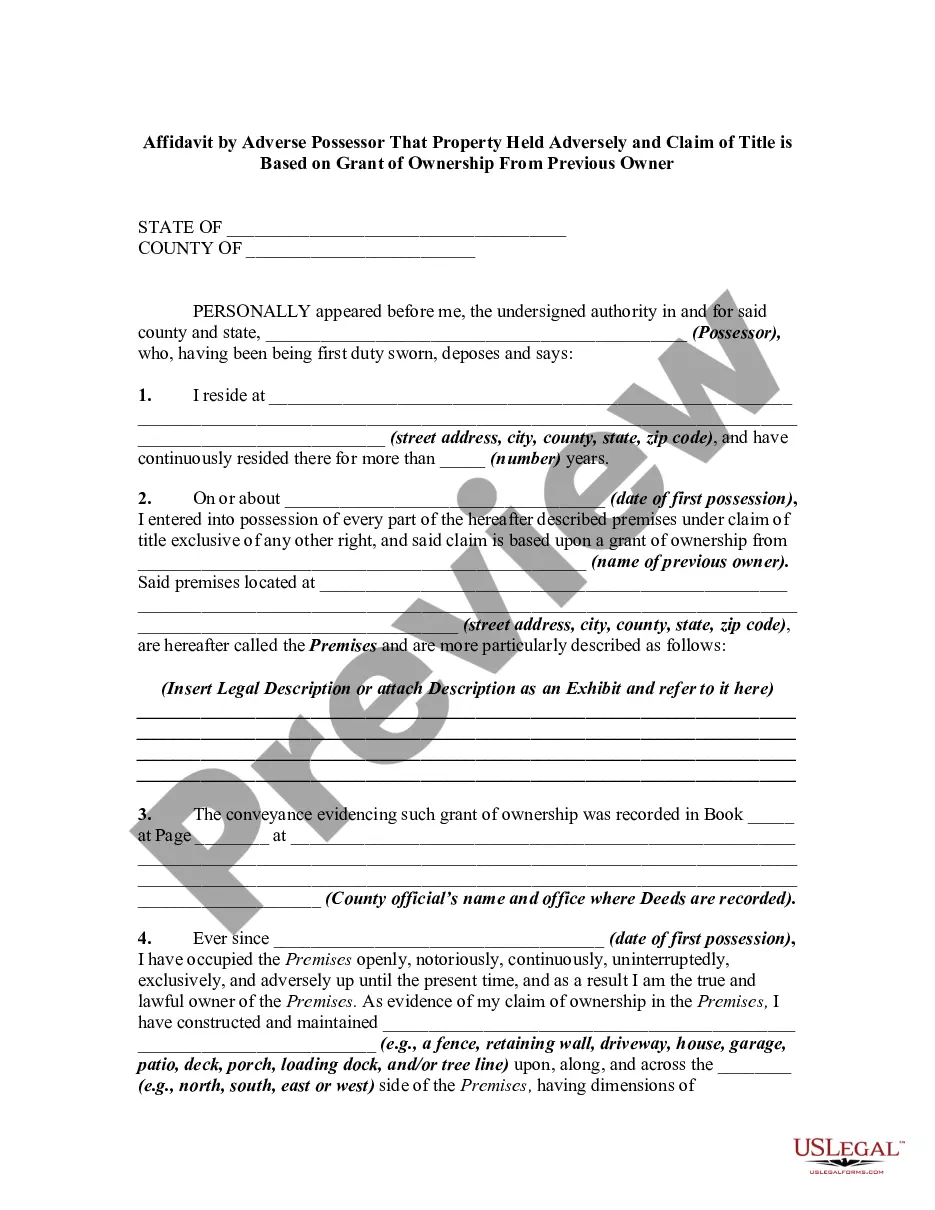
How to fill out Texas Adverse Possession Affidavit - Squatters Rights?
- Log in to your US Legal Forms account if you're a returning user. Ensure your subscription is active; renew it if necessary.
- For first-time users, begin by reviewing the form descriptions and their previews to find one that meets your local jurisdiction needs.
- If the desired template is unavailable, utilize the search feature to locate additional options that may be applicable.
- Once you've selected your document, click 'Buy Now' and choose your preferred subscription plan. Create an account to access all forms.
- Complete your purchase by entering your payment details or using PayPal to secure your subscription.
- Download your selected form and save it on your device. You can also access it later through the 'My Forms' section of your profile.
US Legal Forms provides a robust collection of legal documents, surpassing competitors in variety for the same cost. With over 85,000 fillable and editable templates, users can quickly find what they need.
Take control of your rental situation today! Visit US Legal Forms to ensure you have the necessary documentation to protect your rights. Start your journey now!
Form popularity
FAQ
While the most common timeframe for squatters to establish rights in Pennsylvania is 21 years, some situations may allow for shorter periods under specific conditions, such as color of title or continuous use. However, these exceptions are not the norm and can be complex. It's crucial to review detailed legal information on squatters rights for renters, especially if you are unsure about your circumstances. Leveraging platforms like USLegalForms can help navigate these legal intricacies effectively.
In Pennsylvania, squatter's rights can be recognized after a residence period of 21 years. This means that if an individual openly occupies a property without the owner's permission for this duration, they may have a legal claim to that property. However, the application of these rights can differ based on specific situations. Understanding squatters rights for renters is critical for both landlords and squatters alike.
Yes, squatting can be a significant issue in Pennsylvania, particularly in urban areas with vacant homes. Landlords and property owners may find their properties at risk of illegal occupation. This situation can lead to lengthy eviction processes that involve understanding squatters rights for renters. Utilizing legal resources can help property owners address and manage these challenges more effectively.
In Pennsylvania, squatters can potentially claim rights after occupying a property for a period of time. Typically, this duration is at least 21 years, but the specifics can vary based on individual circumstances and property types. It's essential to understand that squatters must establish continuous and open use to claim these rights. If you're facing potential squatter issues, consulting resources on squatters rights for renters can provide clarity.
Yes, Michigan does have laws regarding squatters rights, allowing individuals to gain rights through adverse possession after occupying a property for 15 years. It's essential to be aware of these laws if you own or rent a property in the state. By recognizing squatters rights for renters, you can take the necessary steps to safeguard your property. For detailed legal resources, USLegalForms offers valuable insights and help.
The shortest squatters rights often require continuous possession of a property for just one to two years, depending on state laws. However, this duration varies significantly across states, so it's important to research local regulations. Understanding squatters rights for renters can help you protect your property more effectively. Consider consulting USLegalForms for tailored solutions and documentation.
In Utah, squatters may claim rights if they occupy a property for a certain period, typically seven years, under adverse possession laws. However, specific conditions must be met, such as open and notorious use of the property. It's crucial to address squatters rights for renters promptly to avoid complications down the line. For detailed information, consider using USLegalForms to get expert guidance.
To remove a squatter from your property in Utah, you must start by providing a formal written notice to vacate. If the squatter does not leave, you may need to file an unlawful detainer action in court. This process can be complex, so using resources like USLegalForms can simplify the paperwork and guide you step-by-step. Remember, understanding squatters rights for renters helps you navigate this situation effectively.
Yes, you can kick out a squatter in New Jersey, but it must be done legally through the eviction process. First, provide proper notices and, if necessary, file with the local court. Understand that even if you own the property, squatters rights for renters can complicate the matter. Consulting professionals familiar with local laws can greatly enhance your capability to resolve the situation efficiently.
In New Jersey, the 30-day squatters rights refer to the ability of an individual who has occupied a property for 30 days to potentially assert their rights. This timeframe may allow them to claim certain protections as a resident. However, this does not mean they automatically gain ownership of the property. Knowing these nuances in squatters rights for renters can empower property owners to take timely action.