Grantors Towit Successive For Each Item
Description
Get your form ready online
Our built-in tools help you complete, sign, share, and store your documents in one place.
Make edits, fill in missing information, and update formatting in US Legal Forms—just like you would in MS Word.
Download a copy, print it, send it by email, or mail it via USPS—whatever works best for your next step.
Sign and collect signatures with our SignNow integration. Send to multiple recipients, set reminders, and more. Go Premium to unlock E-Sign.
If this form requires notarization, complete it online through a secure video call—no need to meet a notary in person or wait for an appointment.
We protect your documents and personal data by following strict security and privacy standards.

Make edits, fill in missing information, and update formatting in US Legal Forms—just like you would in MS Word.

Download a copy, print it, send it by email, or mail it via USPS—whatever works best for your next step.

Sign and collect signatures with our SignNow integration. Send to multiple recipients, set reminders, and more. Go Premium to unlock E-Sign.

If this form requires notarization, complete it online through a secure video call—no need to meet a notary in person or wait for an appointment.

We protect your documents and personal data by following strict security and privacy standards.
Looking for another form?










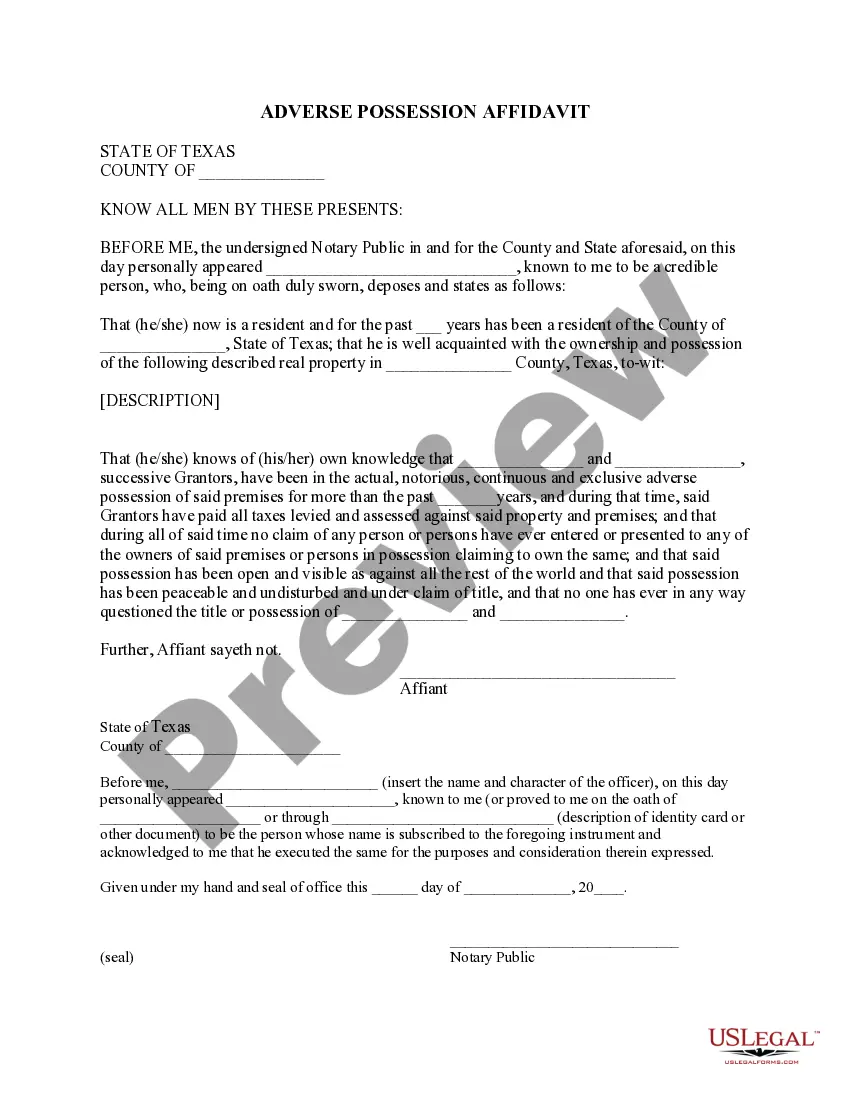
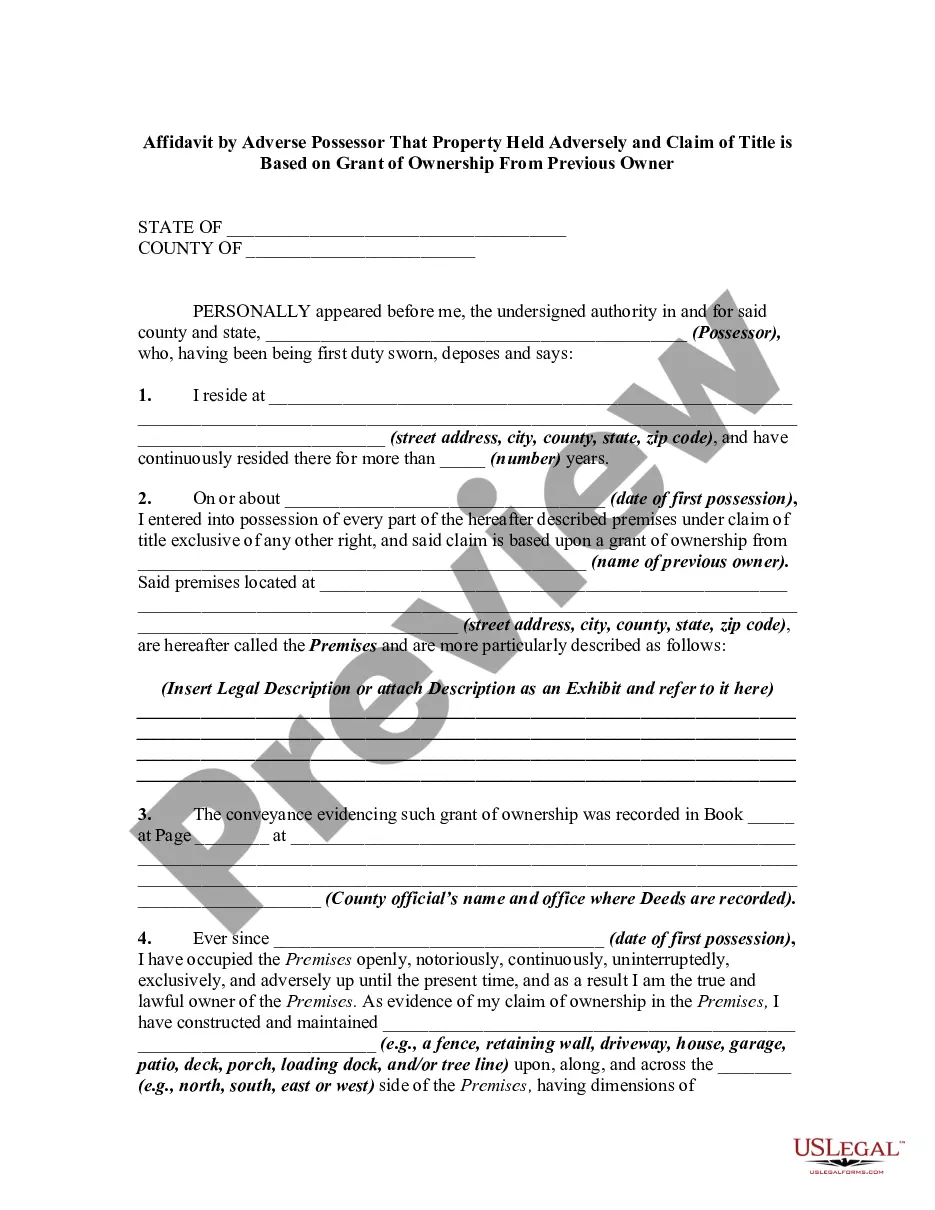
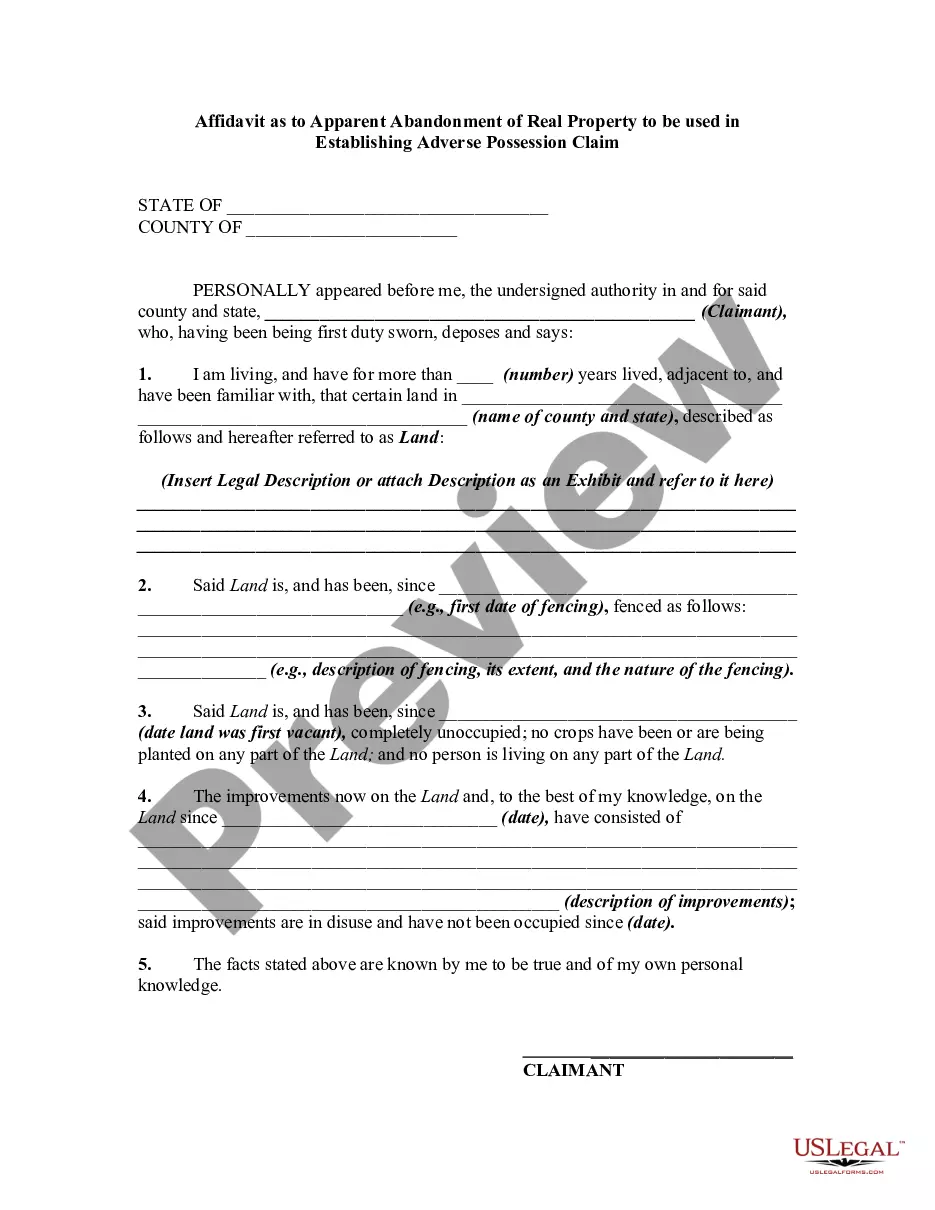
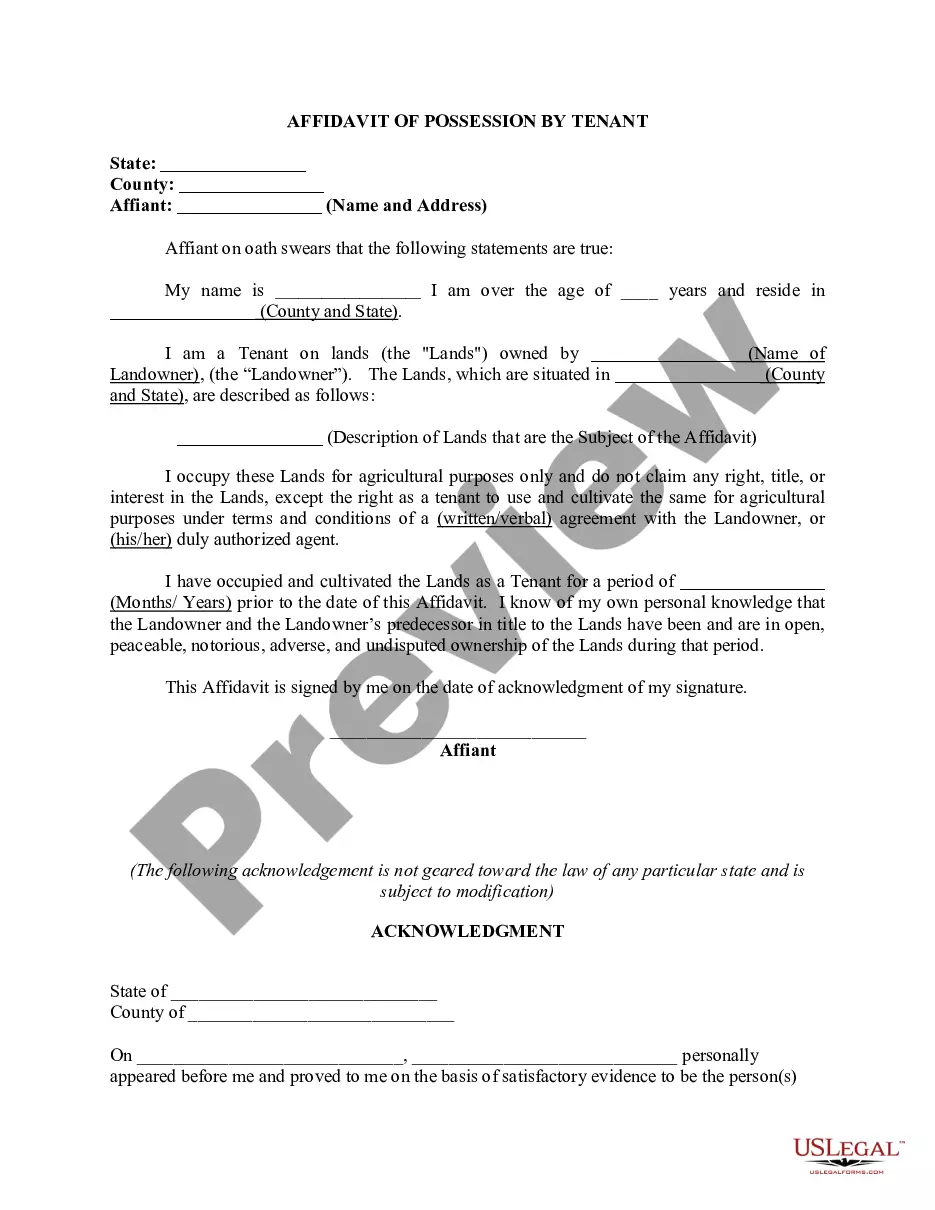
How to fill out Texas Adverse Possession Affidavit - Squatters Rights?
- If you're a returning user, log in to your account and download your desired form template by clicking the Download button. Ensure your subscription is active; if not, renew as per your payment plan.
- For first-time users, start by checking the Preview mode and form description to confirm the selected document meets your local jurisdiction requirements.
- If adjustments are needed, utilize the Search tab to explore alternative templates until you find the perfect fit.
- Once satisfied, click on the Buy Now button and choose your preferred subscription plan, ensuring to create an account for full access to the library.
- Complete your purchase by entering your credit card information or using your PayPal account.
- Finally, download the form and save it to your device. You can easily access it later from the My Forms section of your profile.
US Legal Forms not only offers an extensive range of legal documents but also provides access to premium experts who can assist you with the completion of your forms, ensuring accuracy and legal soundness.
Elevate your legal documentation process today. Start exploring the vast legal form library at US Legal Forms and experience seamless document creation!
Form popularity
FAQ
Absolutely, multiple grantors can establish a single trust. This arrangement allows for shared responsibilities and unified control over the trust's assets. However, it also requires a well-defined agreement on how the grantors will manage the trust. Embracing the concept of grantors towit successive helps in making a cohesive plan that serves both parties effectively.
One of the most common mistakes parents make when setting up a trust fund is not clearly communicating their intentions. This lack of clarity can lead to family disputes and mismanagement of assets. It is vital to outline the terms and beneficiaries clearly, ensuring everyone understands the purpose. By understanding grantors towit successive, parents can avoid these pitfalls and ensure their wishes are honored.
Yes, there can be multiple grantors in a trust. Many families choose to establish a trust with both parents as grantors, allowing them to manage assets and distribute benefits together. This setup can offer flexibility and alignment in decision-making. Understanding how grantors towit successive can enhance the trust's effectiveness is crucial for proper estate planning.
When one of the two grantors passes away, the trust may shift in status depending on its terms. If the trust was set up to be irrevocable after the first grantor's death, then it does indeed become irrevocable. This situation emphasizes the importance of clearly defining the type of trust you establish. It is essential to consult legal advice to navigate these intricacies involving grantors towit successive.
In Minnesota, easements function as rights granted to one party to use another's property for specific purposes, such as access or utilities. Usually, easements are established through written agreements between grantors and grantees. Keeping the principles of grantors towit successive in mind can help clarify the terms of use and maintenance. For further assistance, consider resources available at US Legal Forms for navigating Minnesota’s easement laws.
In an easement agreement, the grantor is the landowner who allows access to their property, whereas the grantee is the individual or organization that gains that right. This relationship is foundational for understanding property rights and responsibilities. Knowing these distinctions among grantors towit successive can help you navigate legal agreements with confidence. Legal services like those offered at US Legal Forms can assist in crafting these documents.
The easement holder is the individual or entity that has the right to use the property, while the easement owner is typically the property owner who grants that right. In many cases, the grantor remains the easement owner, but they may or may not be the easement holder. Clarifying these roles among grantors towit successive is important in property discussions. Reviewing legal documents can help prevent misunderstandings.
The grantor on an easement is the property owner who grants permission for another party to use their land for a specific purpose. This party is often referred to as the easement holder. Understanding the roles of grantors towit successive is vital for anyone involved in property rights. If you have questions about easement agreements, platforms like US Legal Forms can provide essential resources.
A revocable trust can have multiple grantors, which is commonly seen in joint revocable trusts. This flexibility allows both individuals to contribute assets and manage the trust together. When considering a trust with grantors towit successive, ensure that you understand how this arrangement affects management and distribution. Seeking expert advice can ensure you set it up correctly.
Yes, a grantor trust can indeed have multiple grantors. This often occurs in situations where spouses or partners contribute assets to a joint trust. When there are grantors towit successive, it allows for shared control and management of the trust. Consulting with a knowledgeable estate planner can help navigate the best structure for your needs.