Texas Estates Code Application For Independent Administration
Description
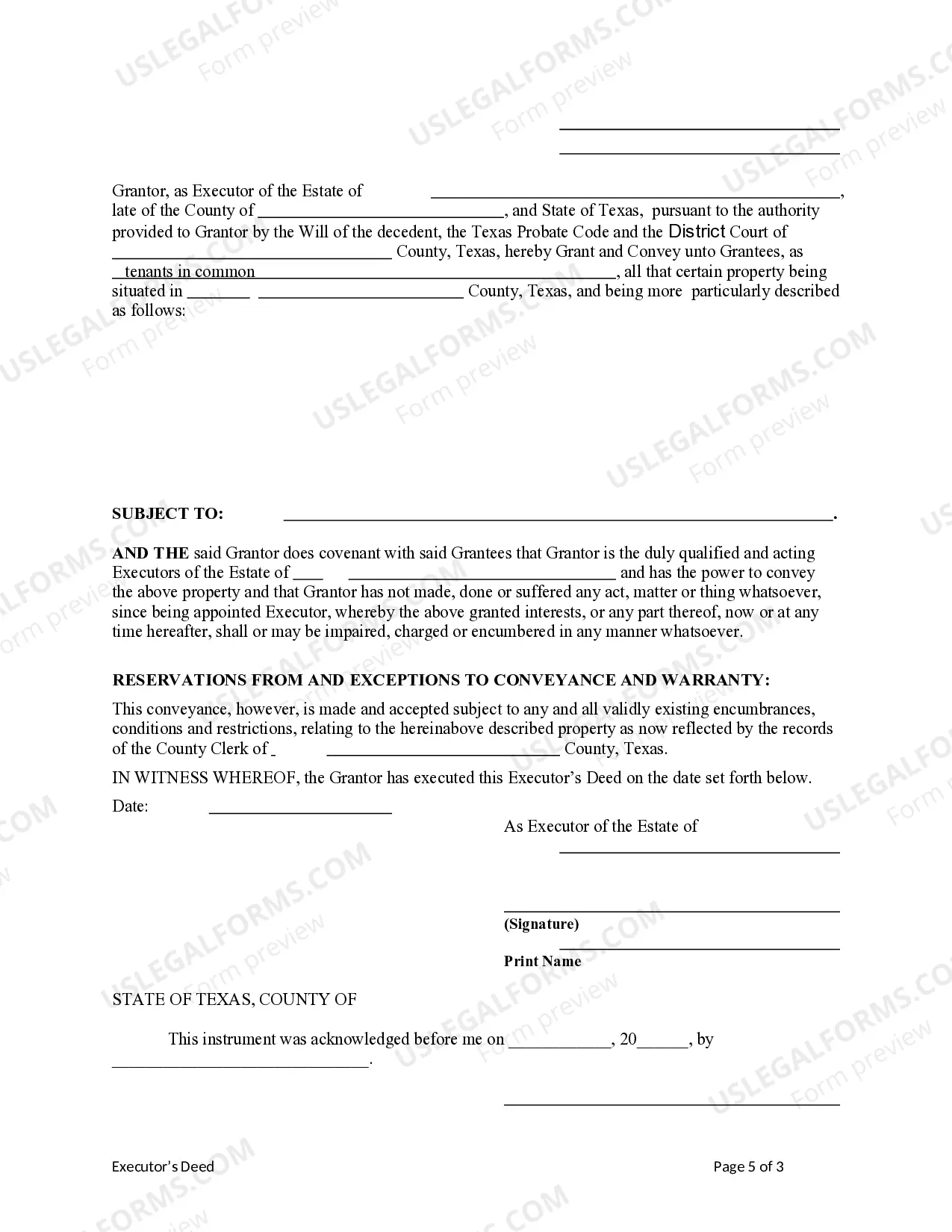
Get your form ready online
Our built-in tools help you complete, sign, share, and store your documents in one place.
Make edits, fill in missing information, and update formatting in US Legal Forms—just like you would in MS Word.
Download a copy, print it, send it by email, or mail it via USPS—whatever works best for your next step.
Sign and collect signatures with our SignNow integration. Send to multiple recipients, set reminders, and more. Go Premium to unlock E-Sign.
If this form requires notarization, complete it online through a secure video call—no need to meet a notary in person or wait for an appointment.
We protect your documents and personal data by following strict security and privacy standards.

Make edits, fill in missing information, and update formatting in US Legal Forms—just like you would in MS Word.

Download a copy, print it, send it by email, or mail it via USPS—whatever works best for your next step.

Sign and collect signatures with our SignNow integration. Send to multiple recipients, set reminders, and more. Go Premium to unlock E-Sign.

If this form requires notarization, complete it online through a secure video call—no need to meet a notary in person or wait for an appointment.

We protect your documents and personal data by following strict security and privacy standards.
Looking for another form?








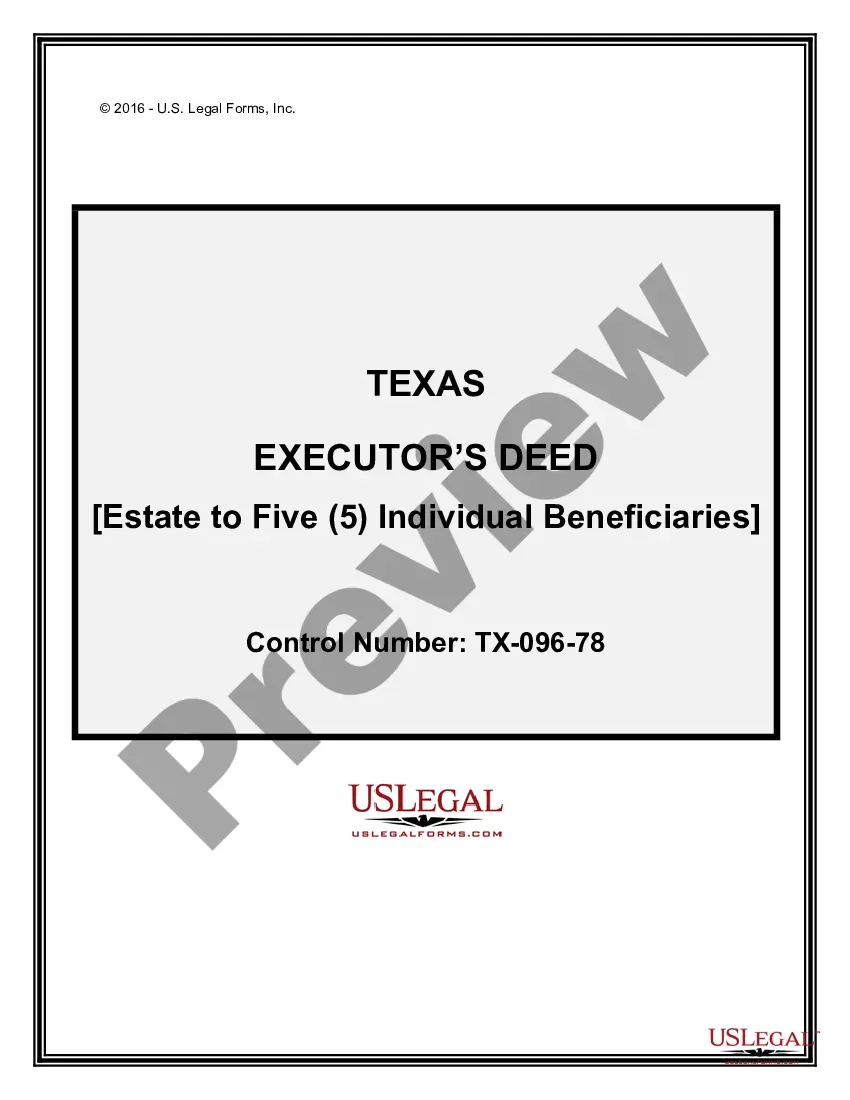
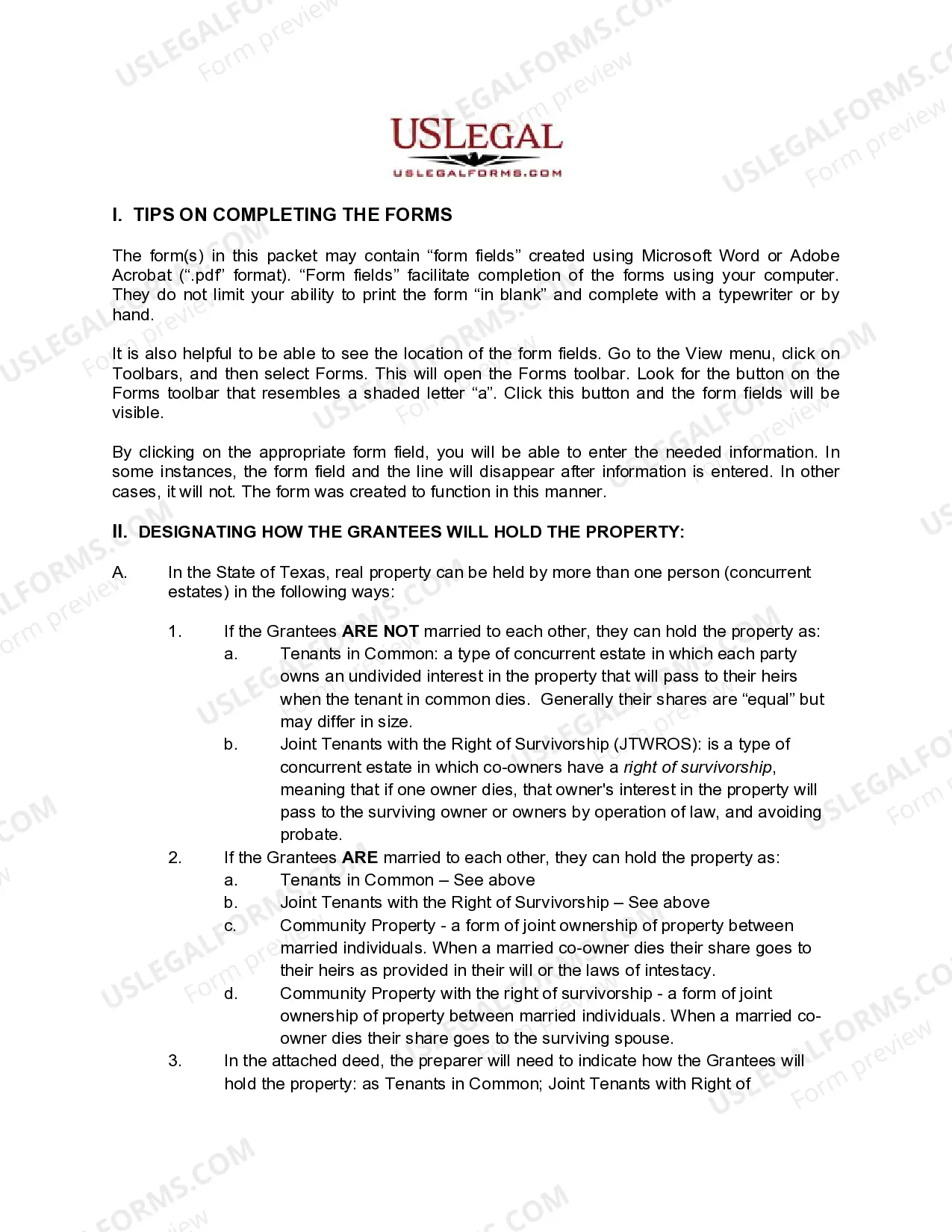
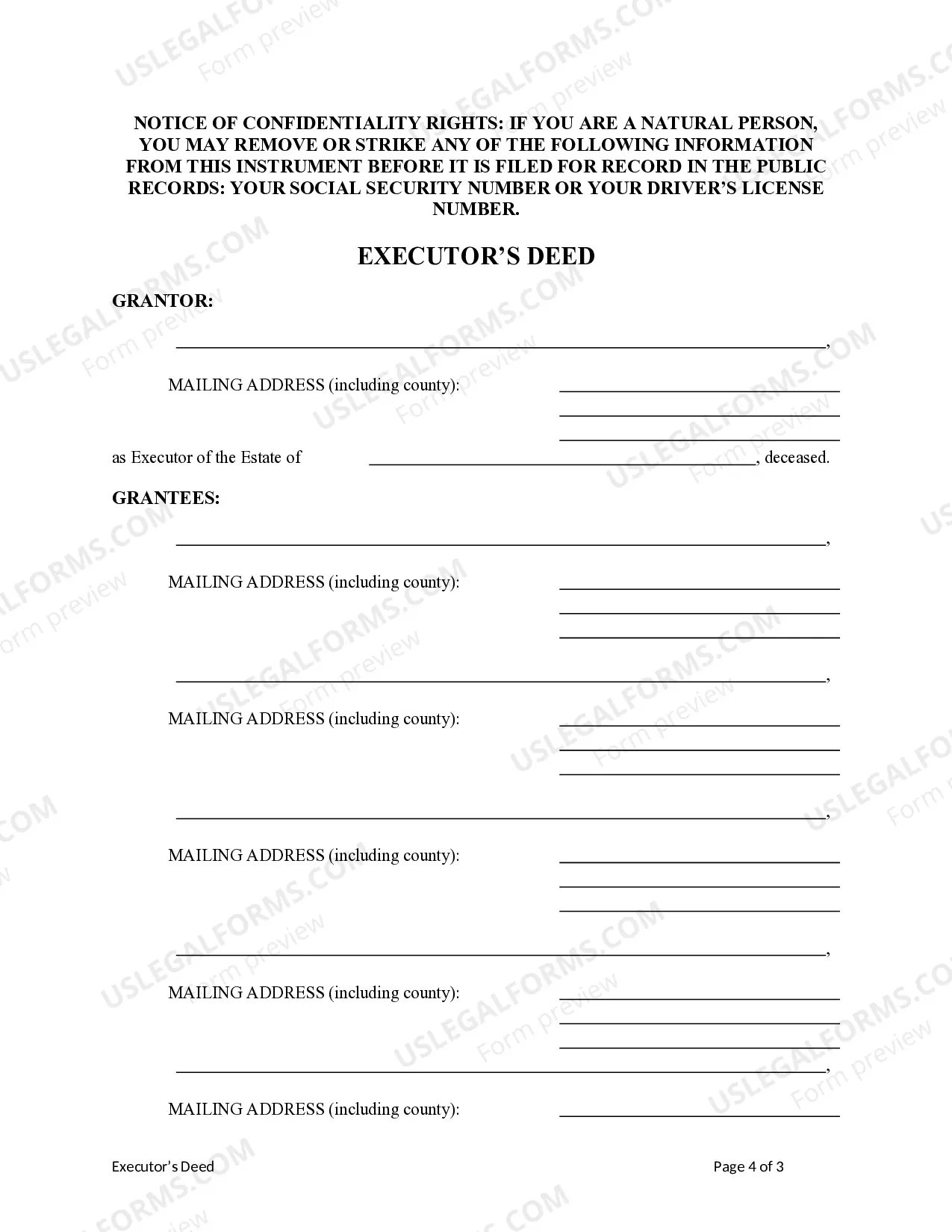
How to fill out Texas Executor's Deed - Estate To Five Beneficiaries?
It's clear that you cannot instantly transform into a legal authority, nor can you swiftly learn how to efficiently compile the Texas Estates Code Application For Independent Administration without possessing a distinct set of abilities.
Assembling legal documents is an extensive process necessitating specific education and expertise. So why not entrust the creation of the Texas Estates Code Application For Independent Administration to the professionals.
With US Legal Forms, a vast repository of legal documents, you can discover everything from court filings to templates for office correspondence. We recognize how vital it is to comply with federal and local regulations. Hence, all forms on our platform are tailored to specific locations and updated.
You can access your documents again from the My documents section at any time. If you are a returning customer, you can simply Log In, and find and download the template from that same section.
No matter the intent of your forms—whether financial, legal, or personal—our platform has you covered. Give US Legal Forms a try today!
- Begin by searching for the document you require using the search bar at the top of the page.
- Inspect it (if this feature is available) and review the accompanying description to determine if the Texas Estates Code Application For Independent Administration meets your needs.
- Restart your search if you seek any other template.
- Create a complimentary account and select a subscription plan to acquire the template.
- Click Buy now. Once your payment is processed, you can download the Texas Estates Code Application For Independent Administration, fill it out, print it, and send it to the appropriate individuals or entities.
Form popularity
FAQ
Becoming an administrator of an estate in Texas involves filing a petition with the probate court. You must show your eligibility, often based on your relationship to the deceased. Following the Texas estates code application for independent administration can simplify this process and clarify your responsibilities as the administrator.
Sec. 402.002. INDEPENDENT EXECUTORS MAY ACT WITHOUT COURT APPROVAL. Unless this title specifically provides otherwise, any action that a personal representative subject to court supervision may take with or without a court order may be taken by an independent executor without a court order.
Qualifications of an Independent Executor or Administrator There are no particular educational qualifications or certifications required to serve as an Independent Executor or Administrator of an estate. However, the following persons are disqualified from serving: An incapacitated person. A convicted felon.
Application for Independent Administration The Application will include, among other things, the decedent's identity, domicile, and date of death, along with a list of all known heirs and the relationship of each heir to the decedent.
An independent administrator is not closely supervised by the court and does not need preapproval for transactions such as selling property. With this freedom comes a high level of responsibility. It is very important to work closely with an attorney to avoid costly mistakes or breach of fiduciary duty.
Reduced court supervision: In an independent administration, the personal representative appointed to administer the estate is not supervised by the probate court, which means there is less court involvement and oversight. This can make the probate process faster, simpler, and less expensive.