Texas Deed Form With Child
Description

Get your form ready online
Our built-in tools help you complete, sign, share, and store your documents in one place.
Make edits, fill in missing information, and update formatting in US Legal Forms—just like you would in MS Word.
Download a copy, print it, send it by email, or mail it via USPS—whatever works best for your next step.
Sign and collect signatures with our SignNow integration. Send to multiple recipients, set reminders, and more. Go Premium to unlock E-Sign.
If this form requires notarization, complete it online through a secure video call—no need to meet a notary in person or wait for an appointment.
We protect your documents and personal data by following strict security and privacy standards.

Make edits, fill in missing information, and update formatting in US Legal Forms—just like you would in MS Word.

Download a copy, print it, send it by email, or mail it via USPS—whatever works best for your next step.

Sign and collect signatures with our SignNow integration. Send to multiple recipients, set reminders, and more. Go Premium to unlock E-Sign.

If this form requires notarization, complete it online through a secure video call—no need to meet a notary in person or wait for an appointment.

We protect your documents and personal data by following strict security and privacy standards.
Looking for another form?









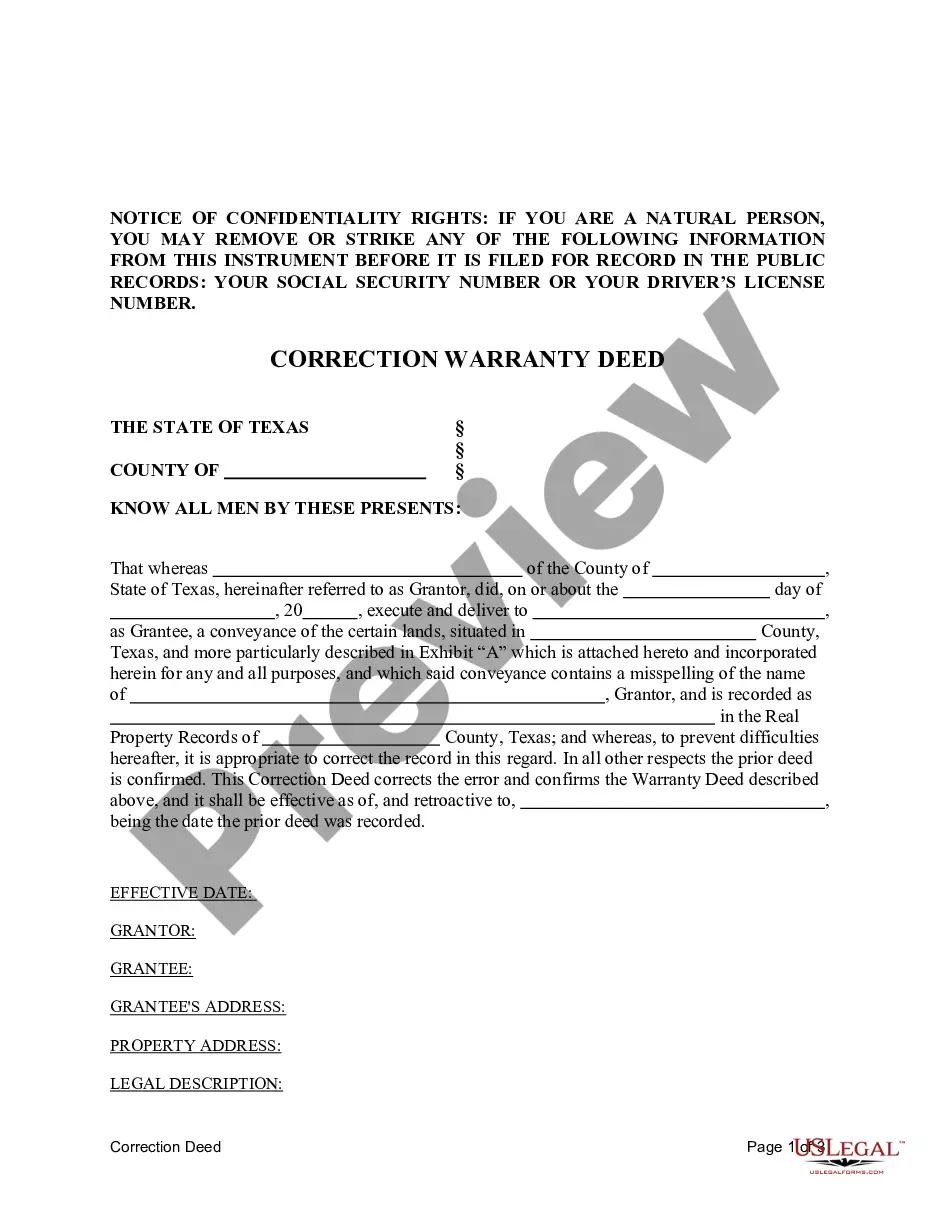
How to fill out Texas Correction Warranty Deed?
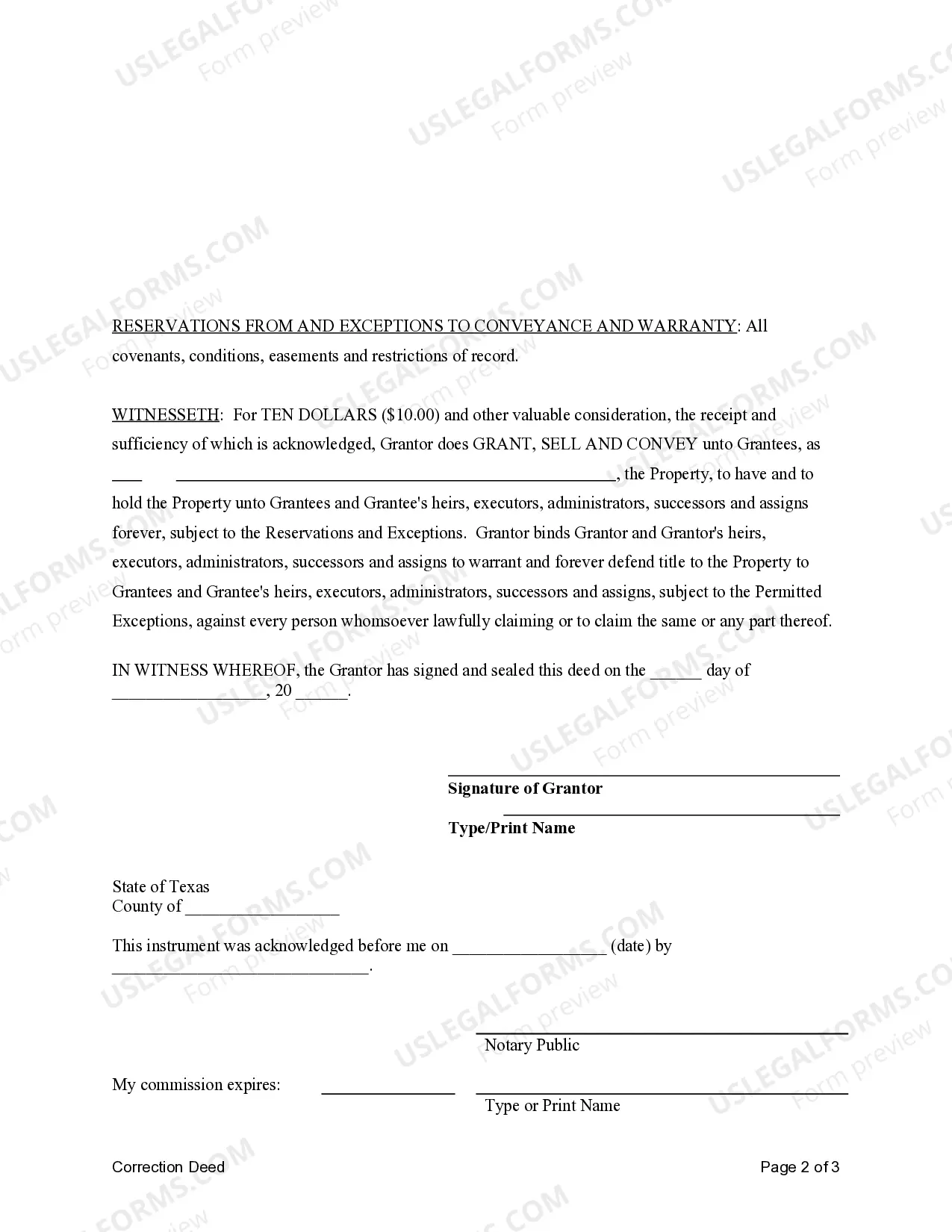
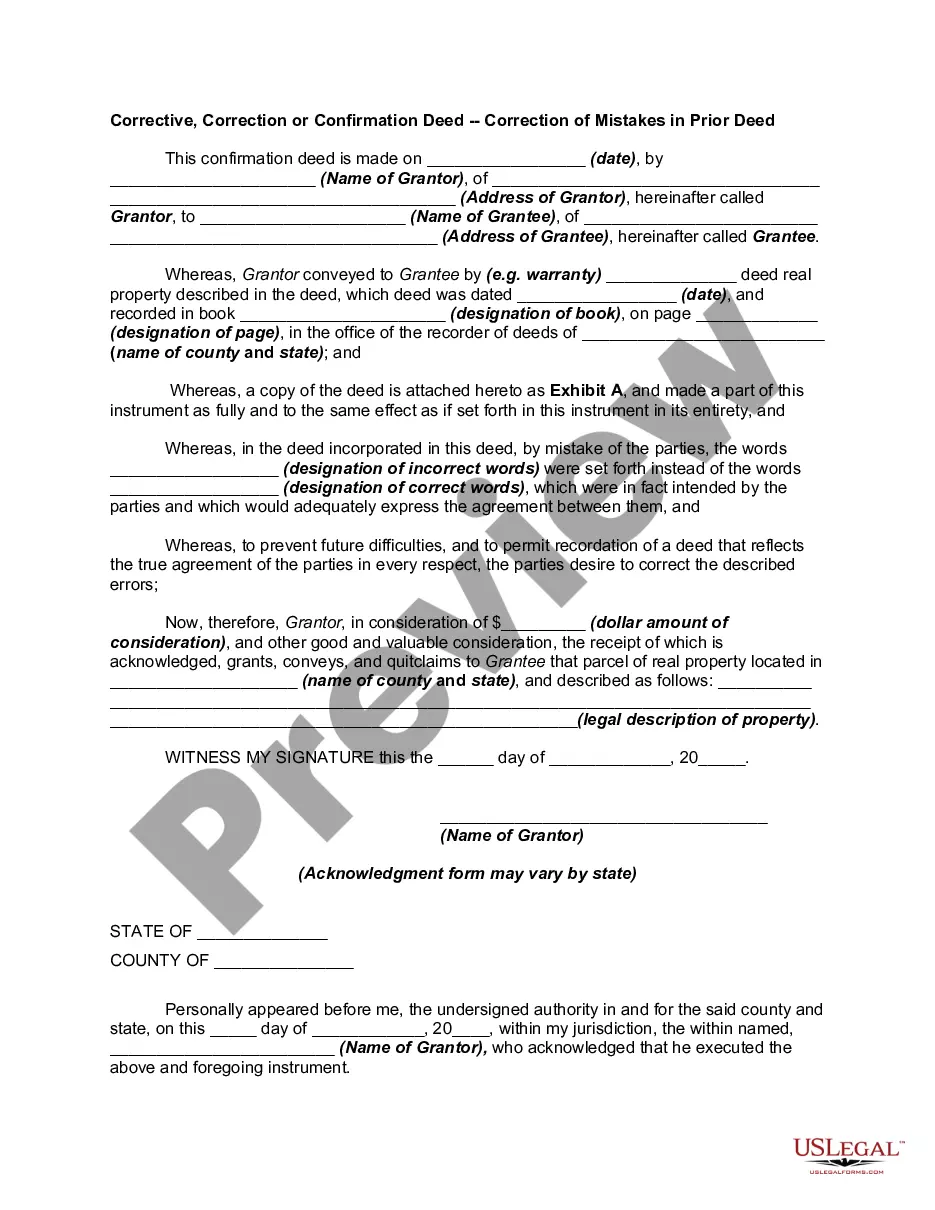
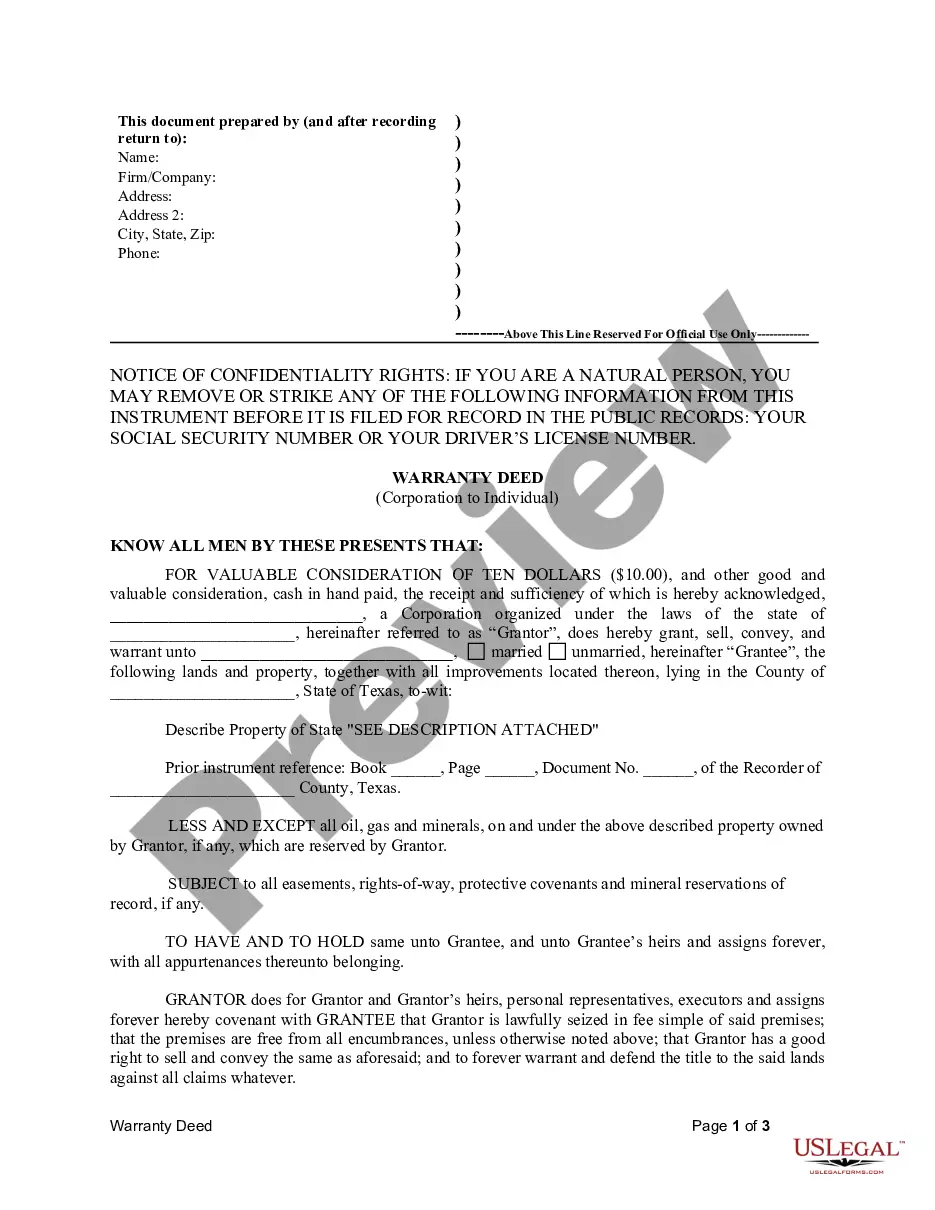
The Texas Deed Form With Child displayed on this page is a versatile legal document created by expert attorneys in accordance with federal and state legislation and regulations.
For over 25 years, US Legal Forms has supplied individuals, enterprises, and legal professionals with over 85,000 authenticated, state-specific documents for every business and personal situation. It is the quickest, most straightforward, and most dependable method to acquire the documents you require, as the service ensures bank-grade data security and anti-malware safeguards.
Register for US Legal Forms to access verified legal templates for all of life's circumstances at your convenience.
- Search for the document you need and review it.
- Browse through the file you searched and preview it or check the form description to ensure it meets your requirements. If it does not, use the search bar to find the appropriate one. Click Buy Now once you have located the template you require.
- Subscribe and Log In.
- Choose the pricing plan that fits you and create an account. Utilize PayPal or a credit card for a swift payment. If you already possess an account, Log In and verify your subscription to continue.
- Obtain the fillable template.
- Choose the format you desire for your Texas Deed Form With Child (PDF, DOCX, RTF) and download the sample onto your device.
- Fill out and sign the document.
- Print the template to complete it manually. Alternatively, use an online multi-functional PDF editor to efficiently and accurately fill out and sign your form with a valid signature.
- Re-download your documents as needed.
- Utilize the same document again whenever necessary. Access the My documents tab in your profile to redownload any previously acquired forms.
Form popularity
FAQ
To deed your house to your children, you will need to fill out a Texas deed form with child. This involves creating a new deed that specifies your children as the new owners. After signing the deed and having it notarized, you must file it with the appropriate county office. Consider discussing this decision with a legal expert to ensure it aligns with your estate planning goals.
Putting your name on your parents' house deed can have benefits and drawbacks. It may simplify the transfer of property ownership in the future, but it can also expose the property to your creditors. Additionally, it might impact your parents' estate planning. Consulting with a legal professional is advisable before deciding to use a Texas deed form with child.
You can request a property deed in Texas by contacting your county's clerk office. Many counties provide online services where you can search for property deeds and request copies. Alternatively, you can visit the office in person or submit a written request. Be sure to have relevant information, such as the property address, to expedite the process.
To add your child's name to your house deed, you will need to complete a Texas deed form with child. This process typically involves drafting a new deed that names both you and your child as owners. You must then sign the deed and have it notarized before filing it with your local county clerk's office. Ensure you follow local requirements to avoid any legal issues.
Adding a name to a deed can lead to complications such as loss of control over the property. If the co-owner experiences financial issues, creditors may pursue the property. Additionally, it may affect eligibility for government benefits and create potential tax implications. It's wise to consider these factors carefully before completing a Texas deed form with child.
Yes, you can add your child's name to the deed of your house in Texas. However, this action requires a Texas deed form with child, which outlines the specifics of ownership. It is important to think about the long-term consequences, such as how this may affect your child's financial situation or inheritance. Using a service like US Legal Forms can help you navigate this process efficiently.
Deciding to put your child on your house deed depends on your specific situation. While it can provide your child with an ownership stake, it’s essential to consider the potential tax implications and future legal complications. A Texas deed form with child can simplify this process, but it’s wise to consult with a legal professional. This ensures that you understand all aspects of adding your child to the deed.
To transfer ownership of property from parent to child in Texas, you can utilize a Texas deed form with child. This form allows you to officially document the transfer, ensuring clarity in ownership rights. After filling out the form, remember to record it with the county clerk to make it effective. US Legal Forms offers user-friendly resources to help you navigate this process seamlessly.
The best way to transfer property from parent to child is by using a Texas deed form with child. This legal document ensures a smooth transfer of ownership while minimizing potential tax implications. It's essential to properly complete the deed and have it notarized for validity. Consider using platforms like US Legal Forms to access the right templates and guidance for this process.