Deed Correction Form With 2 Points
Description
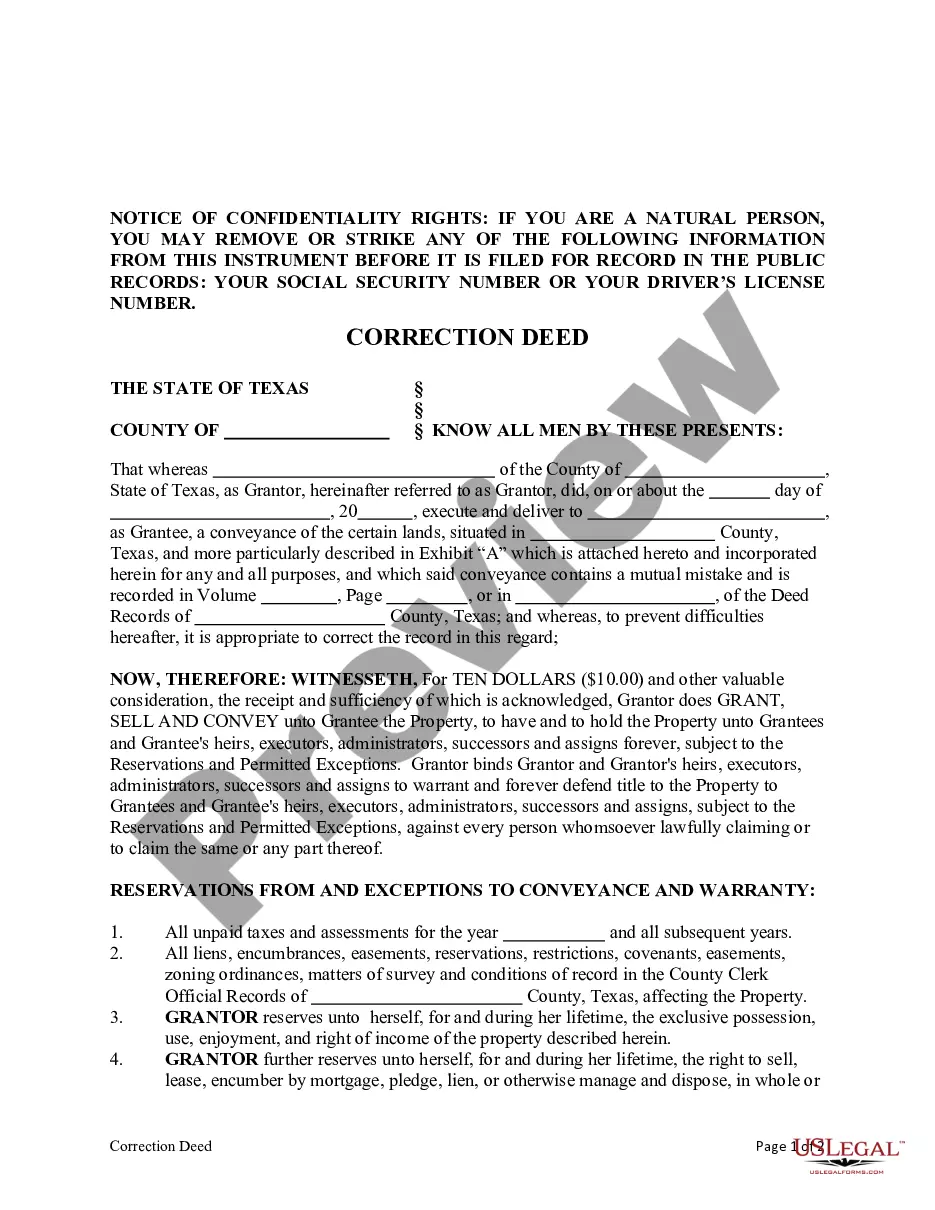
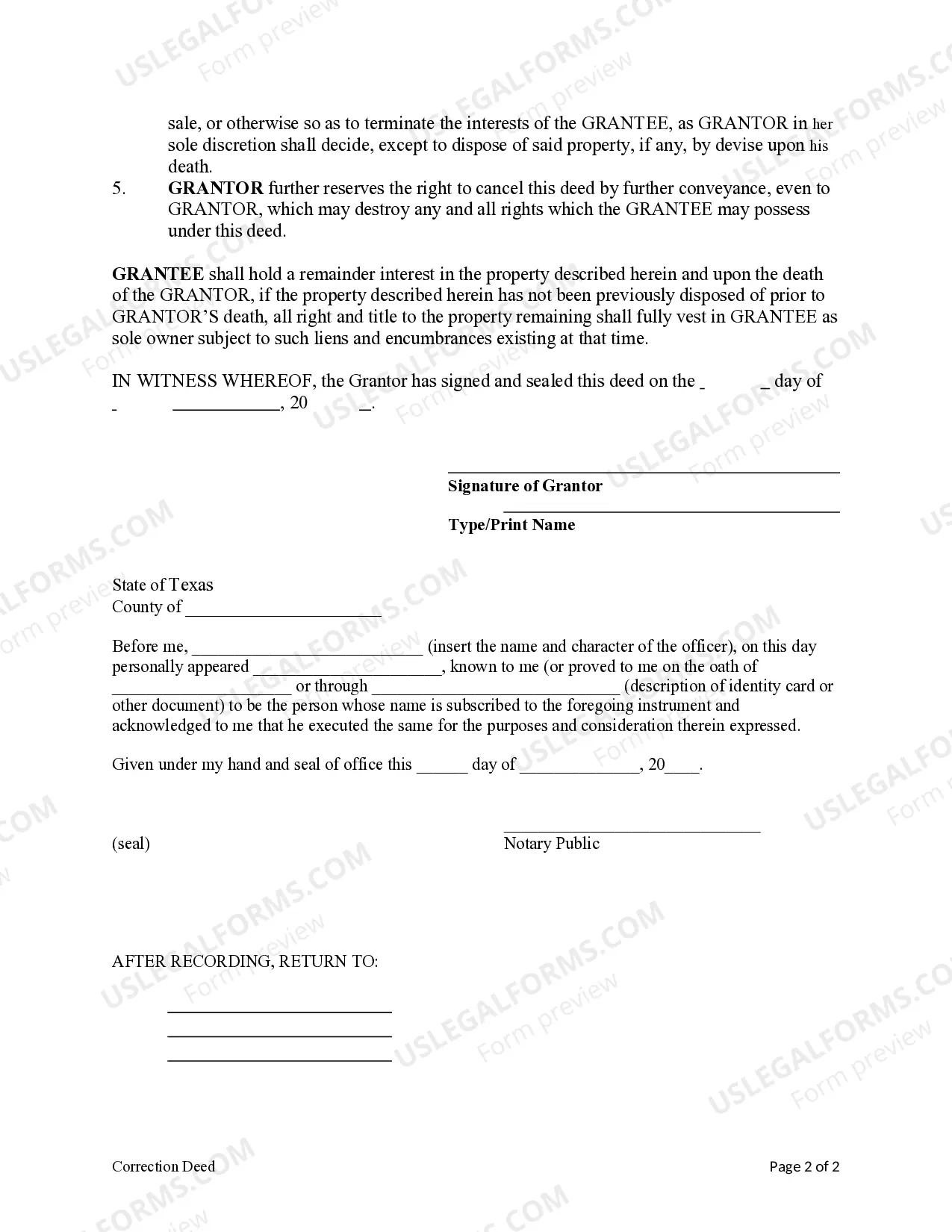
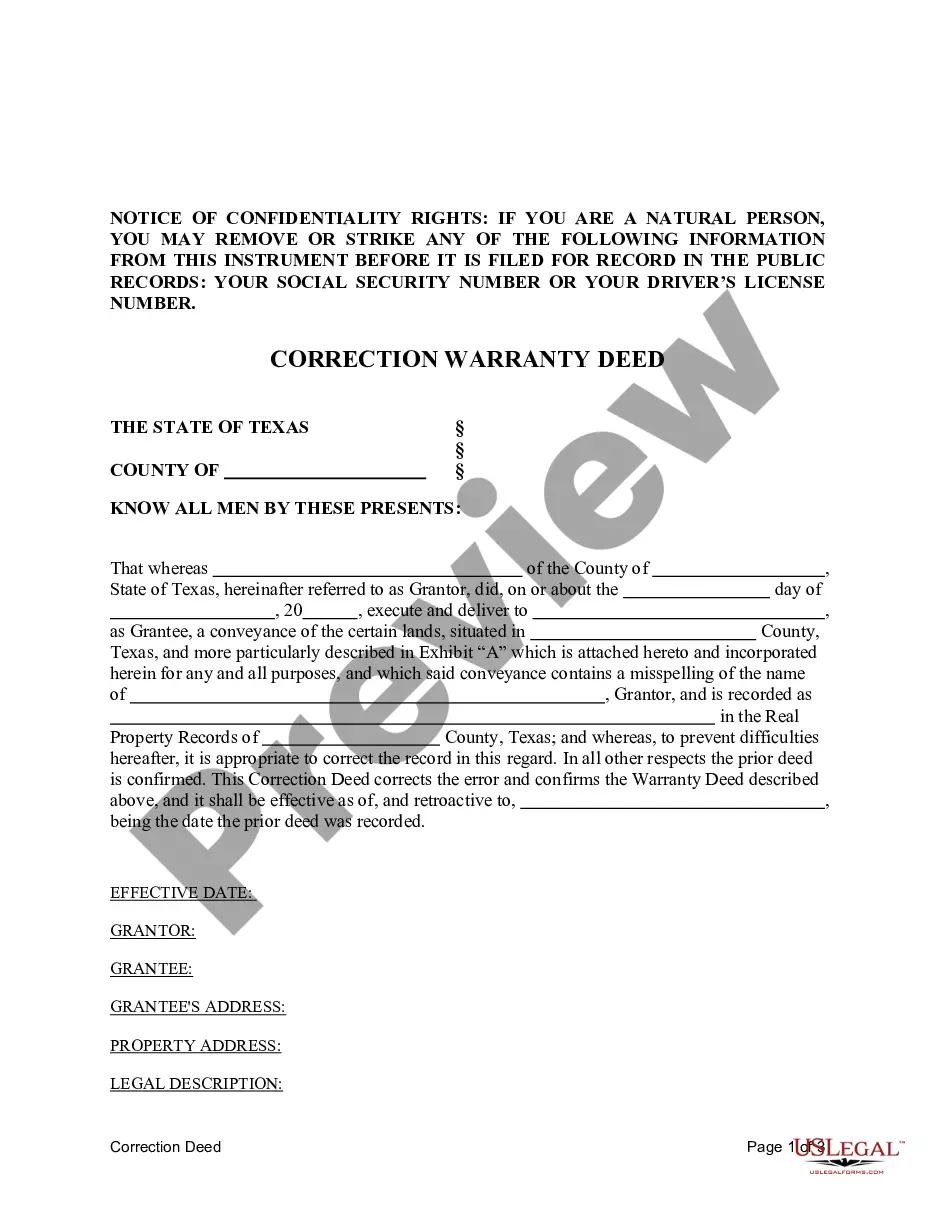
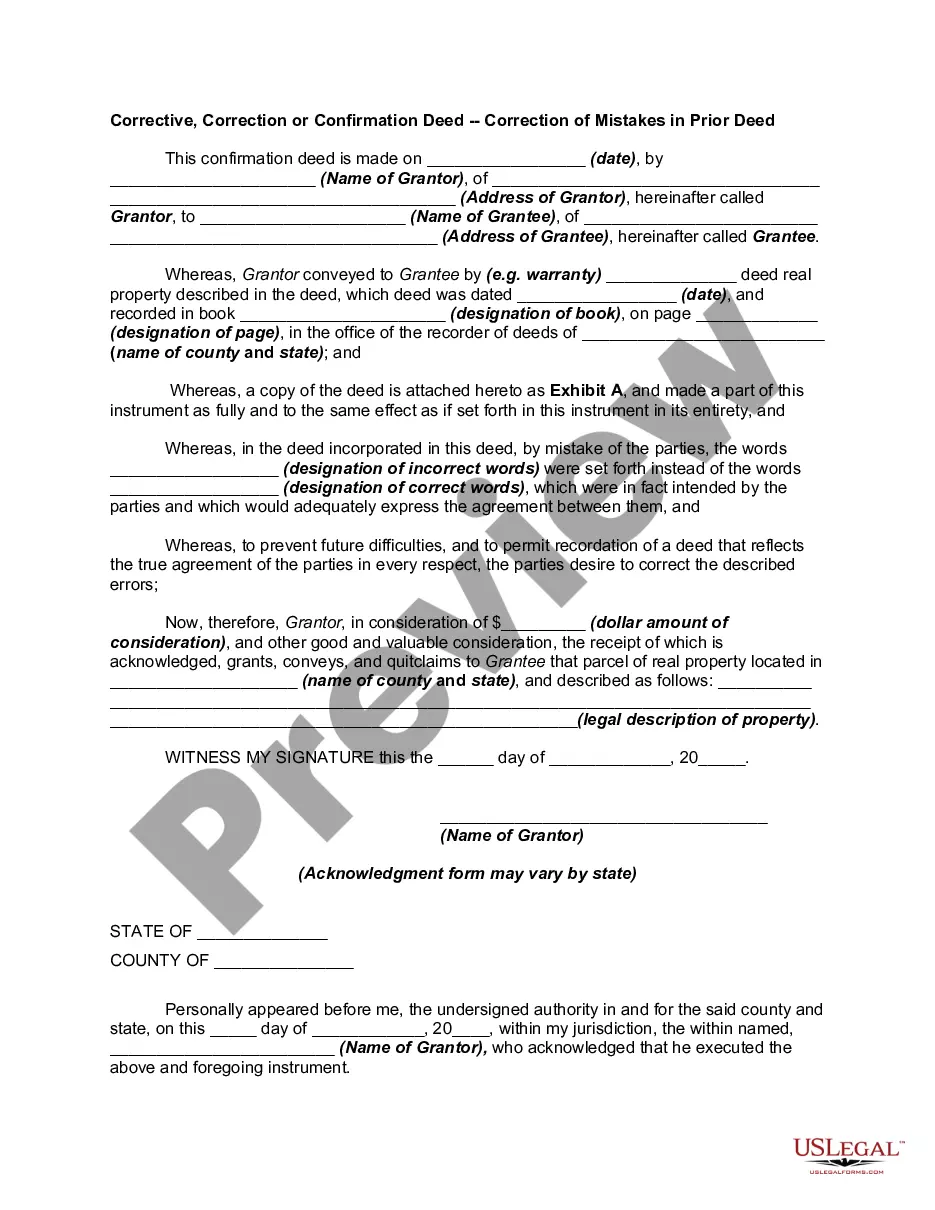

Get your form ready online
Our built-in tools help you complete, sign, share, and store your documents in one place.
Make edits, fill in missing information, and update formatting in US Legal Forms—just like you would in MS Word.
Download a copy, print it, send it by email, or mail it via USPS—whatever works best for your next step.
Sign and collect signatures with our SignNow integration. Send to multiple recipients, set reminders, and more. Go Premium to unlock E-Sign.
If this form requires notarization, complete it online through a secure video call—no need to meet a notary in person or wait for an appointment.
We protect your documents and personal data by following strict security and privacy standards.

Make edits, fill in missing information, and update formatting in US Legal Forms—just like you would in MS Word.

Download a copy, print it, send it by email, or mail it via USPS—whatever works best for your next step.

Sign and collect signatures with our SignNow integration. Send to multiple recipients, set reminders, and more. Go Premium to unlock E-Sign.

If this form requires notarization, complete it online through a secure video call—no need to meet a notary in person or wait for an appointment.

We protect your documents and personal data by following strict security and privacy standards.
Looking for another form?

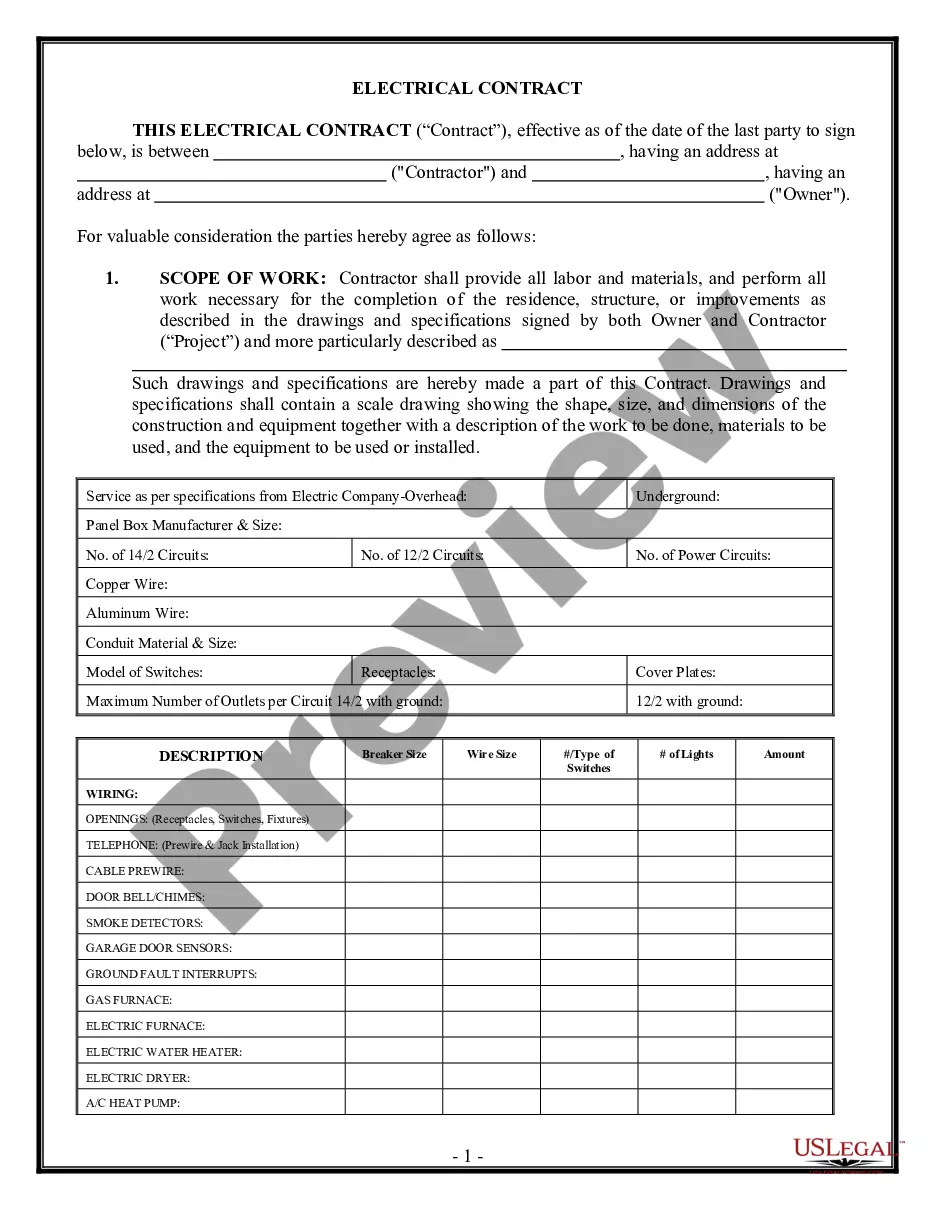
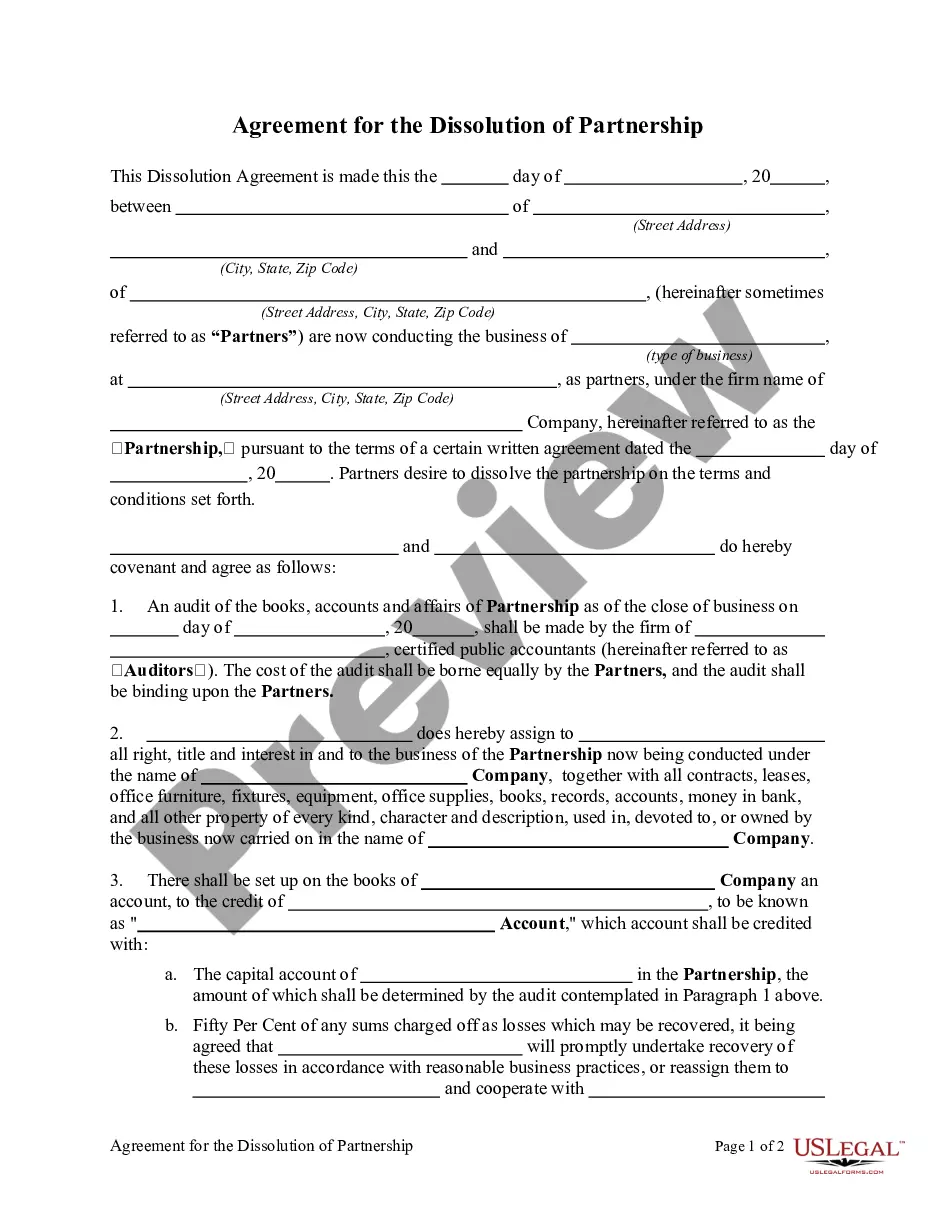
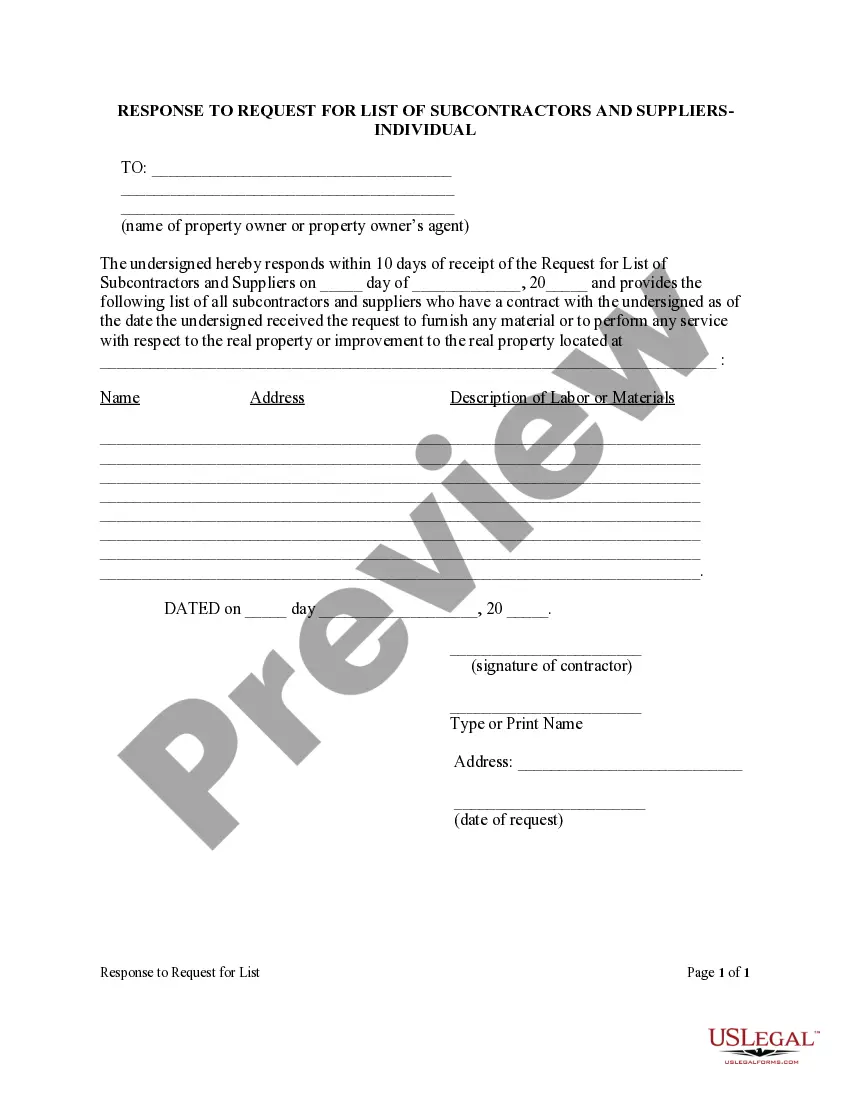
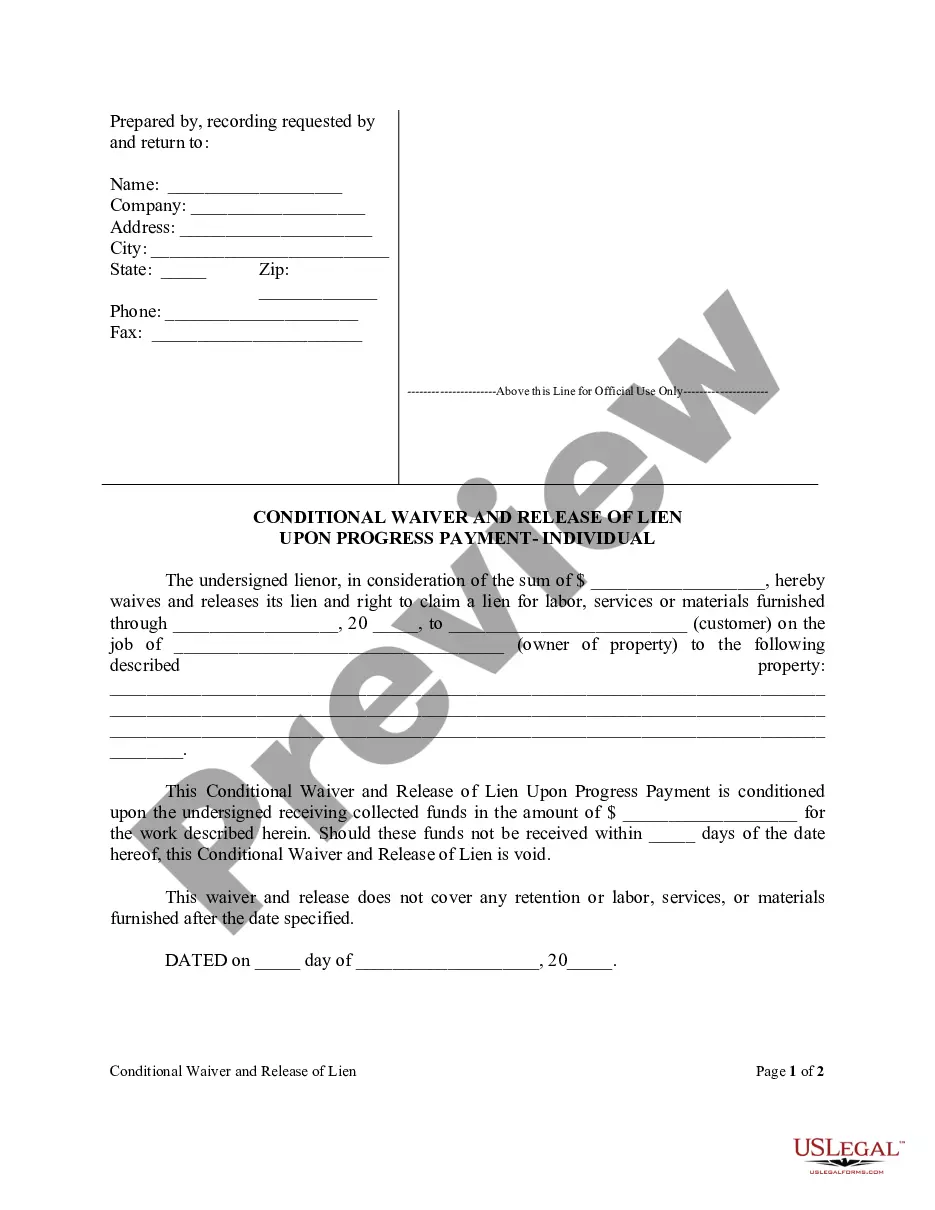


How to fill out Texas Correction Deed - Prior Deed From An Individual To An Individual?
The Deed Correction Form With 2 Points you observe on this page is a versatile official template prepared by expert attorneys in accordance with federal and state regulations.
For over 25 years, US Legal Forms has supplied individuals, companies, and legal practitioners with more than 85,000 authenticated, state-specific documents for any business and personal situation. It’s the quickest, most straightforward, and most reliable method to acquire the paperwork you require, as the service ensures the utmost level of data security and anti-malware safeguards.
Re-download the document whenever necessary. Access the My documents tab in your profile to retrieve any previously purchased forms. Enroll in US Legal Forms to have verified legal templates for every life circumstance at your fingertips.
- Search for the document you require and examine it.
- Look through the sample you found and preview it or review the form description to confirm it meets your requirements. If it does not, utilize the search option to locate the correct one. Click Buy Now once you have identified the template you need.
- Choose a pricing plan that fits you and create an account. Use PayPal or a credit card to make a swift payment. If you already possess an account, Log In and verify your subscription to continue.
- Select the format you prefer for your Deed Correction Form With 2 Points (PDF, Word, RTF) and download the sample to your device.
- Print the template to complete it manually. Alternatively, use an online multifunctional PDF editor to quickly and accurately fill out and sign your form with an eSignature.
Form popularity
FAQ
Yes, a correction deed must be notarized to be legally valid. Notarization serves as a verification step, confirming the identities of those signing the document. When you use a deed correction form, make sure to take this crucial step to protect your interests and ensure that the corrections are recognized by the authorities.
A corrective deed is often used to correct errors in previously recorded deeds. This type of deed allows you to amend mistakes such as misspelled names or incorrect property descriptions. Utilizing a deed correction form streamlines the process and ensures that the corrections are official and legally binding.
To correct a mistake on your deed in Florida, you should prepare a corrective deed that outlines the specific errors. Fill out the deed correction form with the correct information and ensure it is signed by the appropriate parties. After notarization, file the corrected deed with your local county clerk's office. This helps clarify ownership and prevents future disputes.
A corrective deed in New Jersey is a legal document used to amend a previously recorded deed that contains errors. This can include mistakes in names, property descriptions, or other critical details. By filing a corrective deed, you can ensure that the public record accurately reflects the ownership and details of the property. It's an essential step to safeguard your property rights.
To make a correction on a legal document, you typically need to create a formal amendment or a corrective deed. Start by identifying the specific error and then prepare the deed correction form to reflect the accurate information. After completing the form, sign it and have it notarized to ensure legal standing. This process helps maintain the integrity of the legal document.
Completing a deed involves several steps. First, you need to gather all necessary information, such as the names of the parties and a description of the property. Once you have this information, you can fill out the deed correction form accurately. Finally, be sure to sign the document and have it notarized before recording it with your local county office.
Yes, an Affidavit of correction typically needs to be notarized to ensure its legality. Notarization helps confirm the identities of the parties involved and adds an extra layer of authenticity. When preparing your deed correction form, make sure to have it notarized to avoid any potential issues in the future.
To update your title deed, you will need to complete and file a deed correction form. First, gather any necessary documentation that supports your changes, such as marriage certificates or court orders. Then, submit the completed form to your local county recorder’s office. Utilizing US Legal Forms can simplify this process, providing you with the correct templates and guidance to ensure your title deed reflects the most accurate and current information.
To fix an error in the title history, you typically use a deed correction form. This form allows you to clarify or amend inaccuracies in the title documents. By properly completing a deed correction form, you ensure that your property records reflect the correct information. This process can help prevent future disputes and provide peace of mind regarding your ownership.