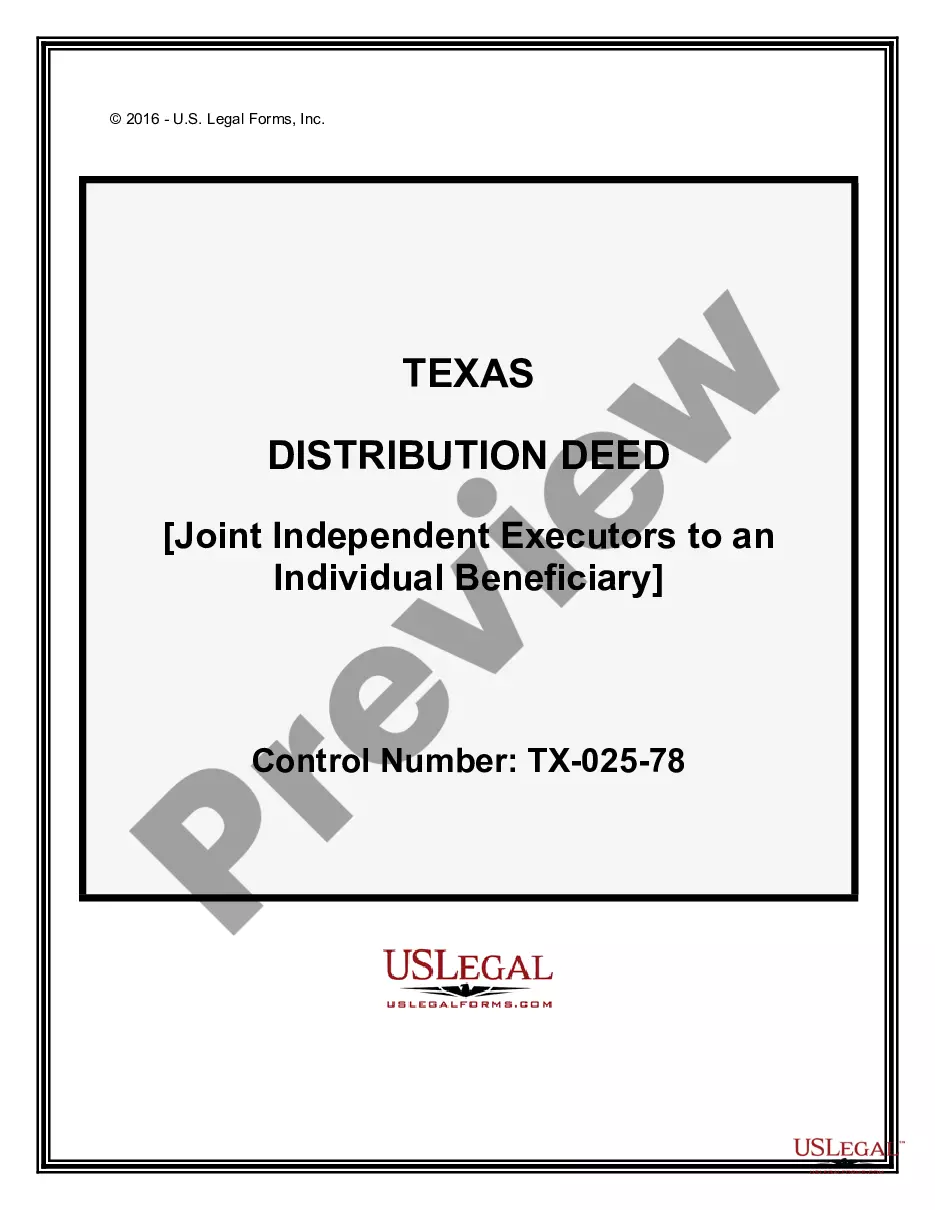
Distribution Of Deed
Description
Get your form ready online
Our built-in tools help you complete, sign, share, and store your documents in one place.
Make edits, fill in missing information, and update formatting in US Legal Forms—just like you would in MS Word.
Download a copy, print it, send it by email, or mail it via USPS—whatever works best for your next step.
Sign and collect signatures with our SignNow integration. Send to multiple recipients, set reminders, and more. Go Premium to unlock E-Sign.
If this form requires notarization, complete it online through a secure video call—no need to meet a notary in person or wait for an appointment.
We protect your documents and personal data by following strict security and privacy standards.

Make edits, fill in missing information, and update formatting in US Legal Forms—just like you would in MS Word.

Download a copy, print it, send it by email, or mail it via USPS—whatever works best for your next step.

Sign and collect signatures with our SignNow integration. Send to multiple recipients, set reminders, and more. Go Premium to unlock E-Sign.

If this form requires notarization, complete it online through a secure video call—no need to meet a notary in person or wait for an appointment.

We protect your documents and personal data by following strict security and privacy standards.
Looking for another form?

How to fill out Texas Distribution Deed - Joint Independent Executors To An Individual Beneficiary?
- Begin by logging in to your US Legal Forms account. If you're a first-time user, create a new account to gain access.
- Once logged in, check the preview mode and description of the distribution of deed form. Ensure it aligns with your local jurisdiction's specifications.
- If the current template doesn't meet your requirements, utilize the search function to find more suitable options.
- Select the desired document and click on the 'Buy Now' button. Choose from the variety of subscription plans available.
- Complete your purchase by entering your payment information. You can use a credit card or PayPal for convenience.
- After the transaction, download the form to your device for easy access and completion. You can find it again later in the 'My Forms' section of your account.
In summary, US Legal Forms not only offers a robust and diverse collection of legal documents but also provides premium support for form completion. Their platform ensures that users can navigate legal processes with confidence.
Start your journey towards effortless document management today by visiting US Legal Forms!
Form popularity
FAQ
Despite its importance in property transactions, there are disadvantages associated with deeds. Legal issues may arise during the distribution of deed, such as challenges to ownership or claims by creditors. Additionally, mistakes made in drafting a deed can lead to costly corrections or disputes later. Using services like US Legal Forms can help minimize such risks by providing accurate legal documents.
Deciding whether to put someone on your deed involves various factors, especially during the distribution of deed. Adding someone can facilitate easier transfer of property upon death or avoid probate costs. However, it can also have implications for taxes, liability, and control over the property. Consulting with a legal professional can help you make informed decisions tailored to your circumstances.
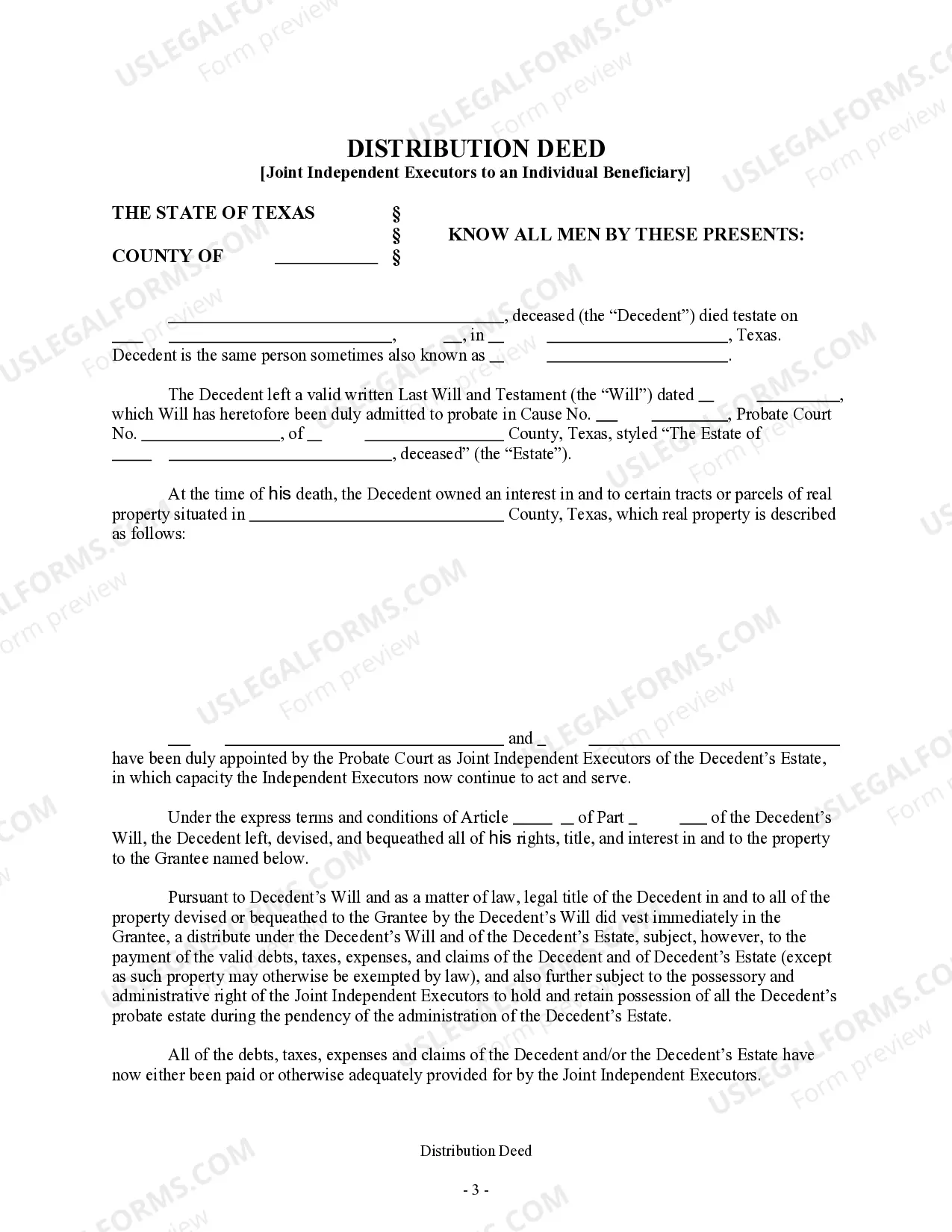
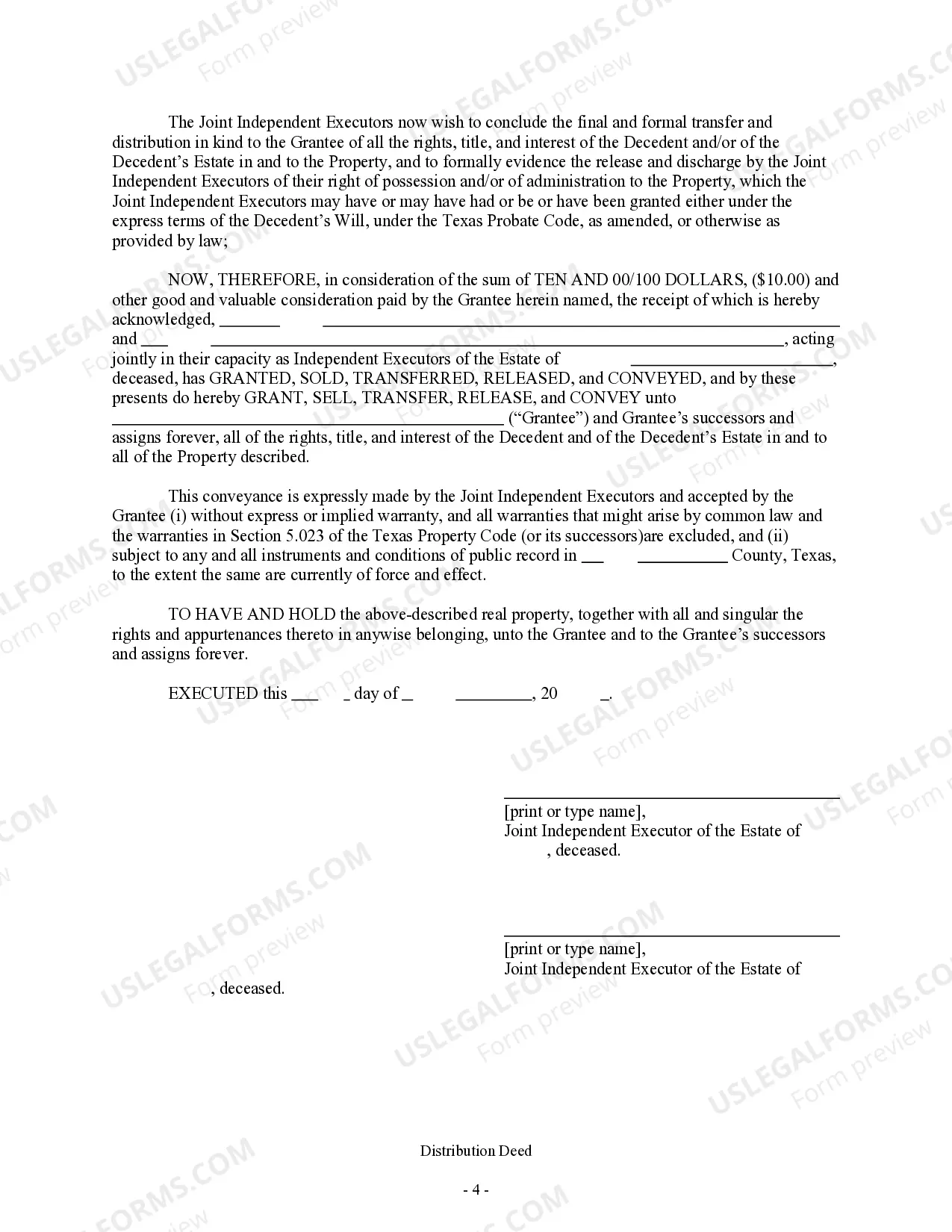
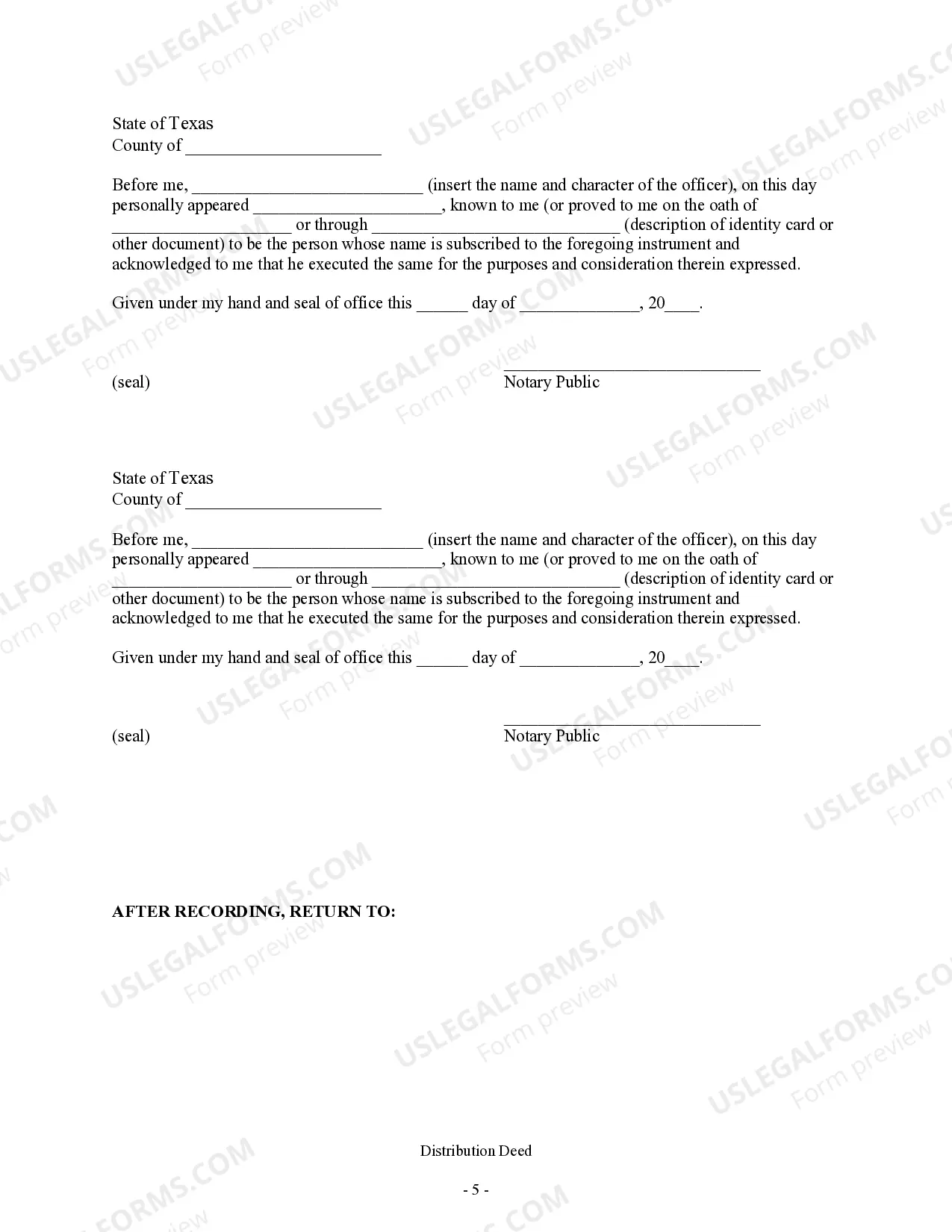
A deed of distribution in Texas is a legal document that indicates how property should be divided after someone passes away. This deed serves while honoring the decedent's wishes as outlined in a will, or according to state laws if no will exists. The distribution of deed in this context ensures that the property is legally transferred to the heirs. For proper execution, utilizing a reliable resource such as US Legal Forms can simplify the process.
In South Carolina, transferring a deed after someone's death involves several steps. First, you will need to determine if the deceased left a will that specifies the distribution of deed. If there is no will, the estate will go through probate laws to establish the rightful heir. It can often be beneficial to consult a legal expert or use a service like US Legal Forms to facilitate the process.
When considering the distribution of deed, many people wonder about the importance of title versus deed. The title proves ownership of a property, while the deed is the legal document that transfers that ownership. Both documents are essential, but the title is often seen as more crucial when proving rights to the property. Understanding both concepts is vital to avoid disputes during the distribution of deed.
Filling out a quit claim deed to add a spouse involves providing both spouses' names and the legal description of the property. List your current ownership interest and state the intention to transfer this interest to include your spouse. Using platforms like US Legal Forms can simplify this process with easy-to-follow templates and instructions, ensuring that your distribution of deed is properly executed.
The process to file a deed of distribution in South Carolina starts with completing the deed correctly. After obtaining the necessary signatures, submit the document to your local county clerk's office. It's advisable to review local requirements beforehand, as this can vary by location, ensuring a smooth filing process.
To file a deed of distribution in South Carolina, you must first complete the deed accurately. Next, take the signed document to the county clerk's office for recording. Filing fees may apply, and it's important to retain a copy for your records, as this ensures proper documentation of the property transfer.
Filling out a deed of distribution requires attention to detail. First, gather all necessary information about the deceased, heirs, and property. Ensure you clearly state the names of the beneficiaries and the property details, as errors can lead to complications. Resources such as the US Legal Forms platform can provide templates and guidance to streamline this process.
The person listed on the deed is considered the legal owner of the house. When property is transferred through a distribution of deed, ownership shifts to the beneficiaries as specified. Therefore, understanding how deeds work is crucial for anyone involved in property transactions or estate planning.