Texas Gift Deed With Life Estate

Description
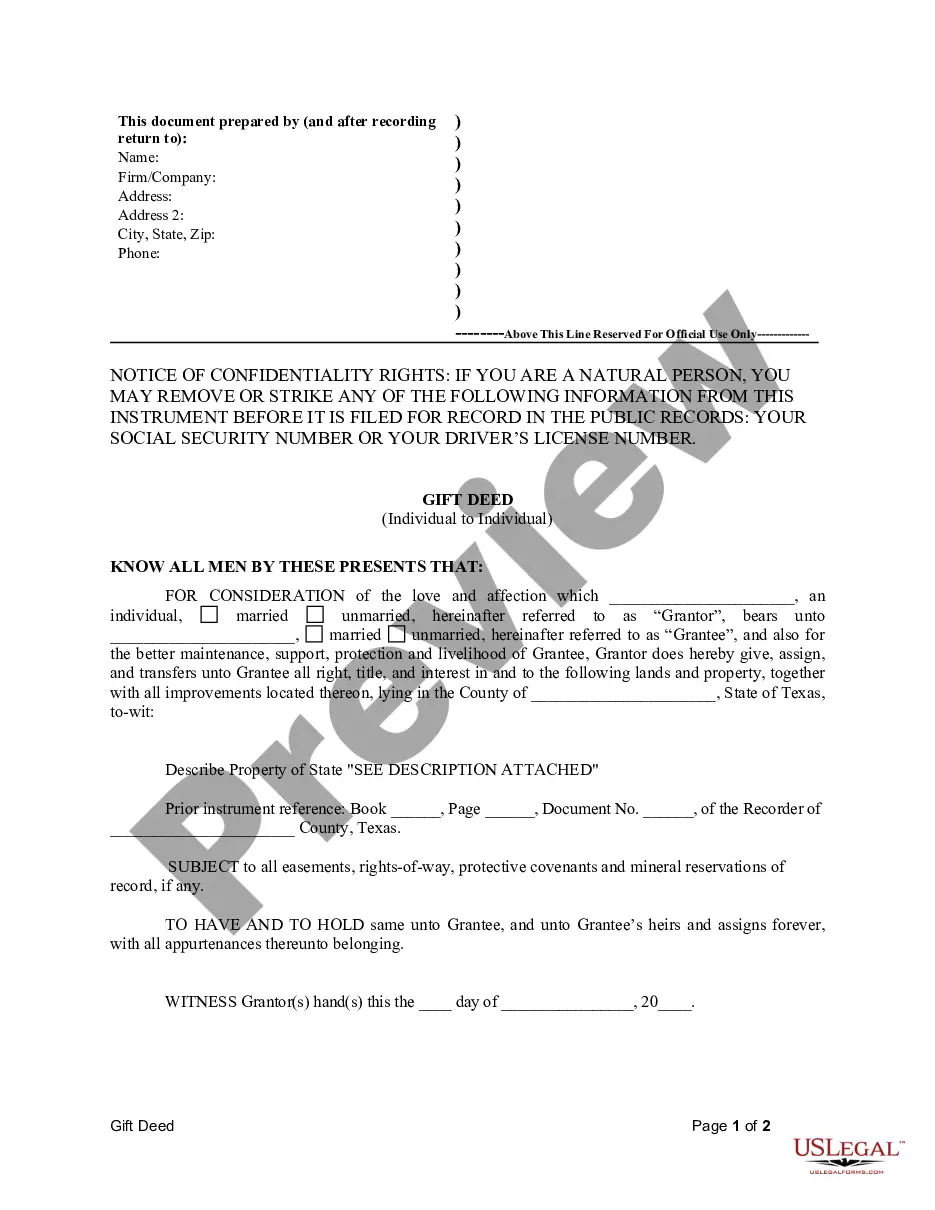
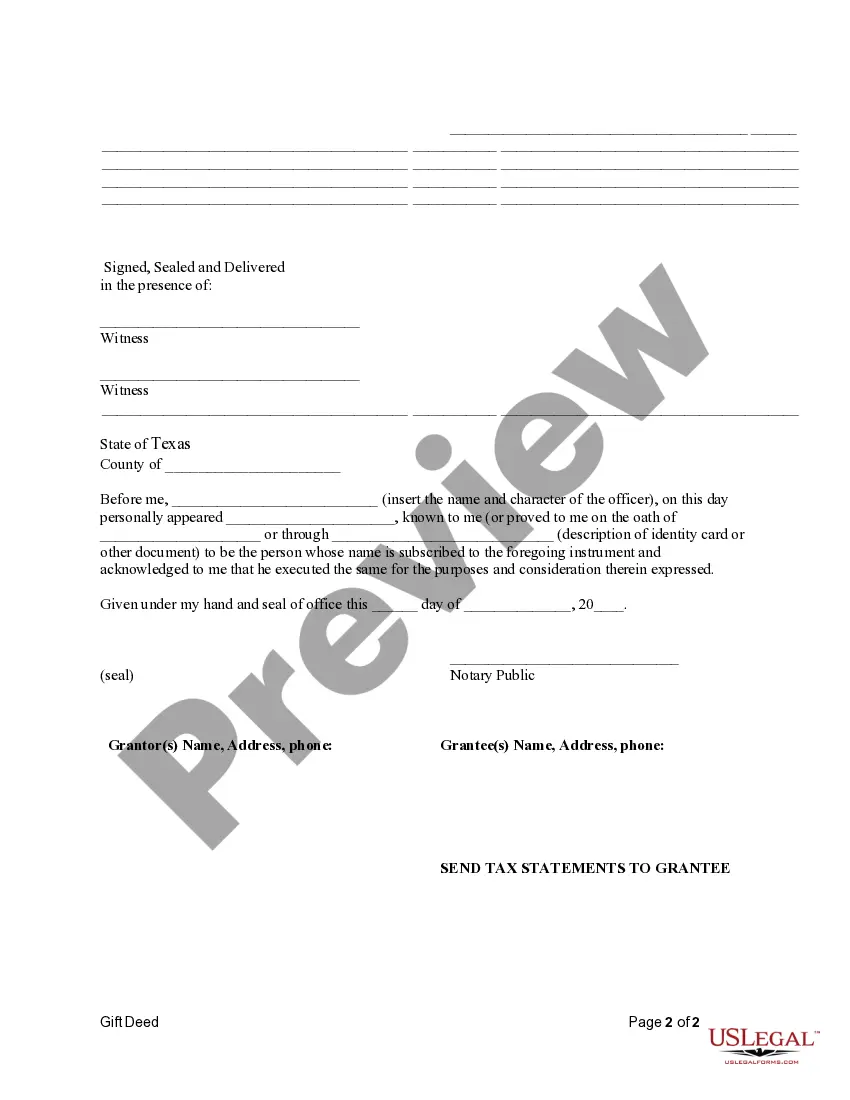
Get your form ready online
Our built-in tools help you complete, sign, share, and store your documents in one place.
Make edits, fill in missing information, and update formatting in US Legal Forms—just like you would in MS Word.
Download a copy, print it, send it by email, or mail it via USPS—whatever works best for your next step.
Sign and collect signatures with our SignNow integration. Send to multiple recipients, set reminders, and more. Go Premium to unlock E-Sign.
If this form requires notarization, complete it online through a secure video call—no need to meet a notary in person or wait for an appointment.
We protect your documents and personal data by following strict security and privacy standards.

Make edits, fill in missing information, and update formatting in US Legal Forms—just like you would in MS Word.

Download a copy, print it, send it by email, or mail it via USPS—whatever works best for your next step.

Sign and collect signatures with our SignNow integration. Send to multiple recipients, set reminders, and more. Go Premium to unlock E-Sign.

If this form requires notarization, complete it online through a secure video call—no need to meet a notary in person or wait for an appointment.

We protect your documents and personal data by following strict security and privacy standards.
Looking for another form?
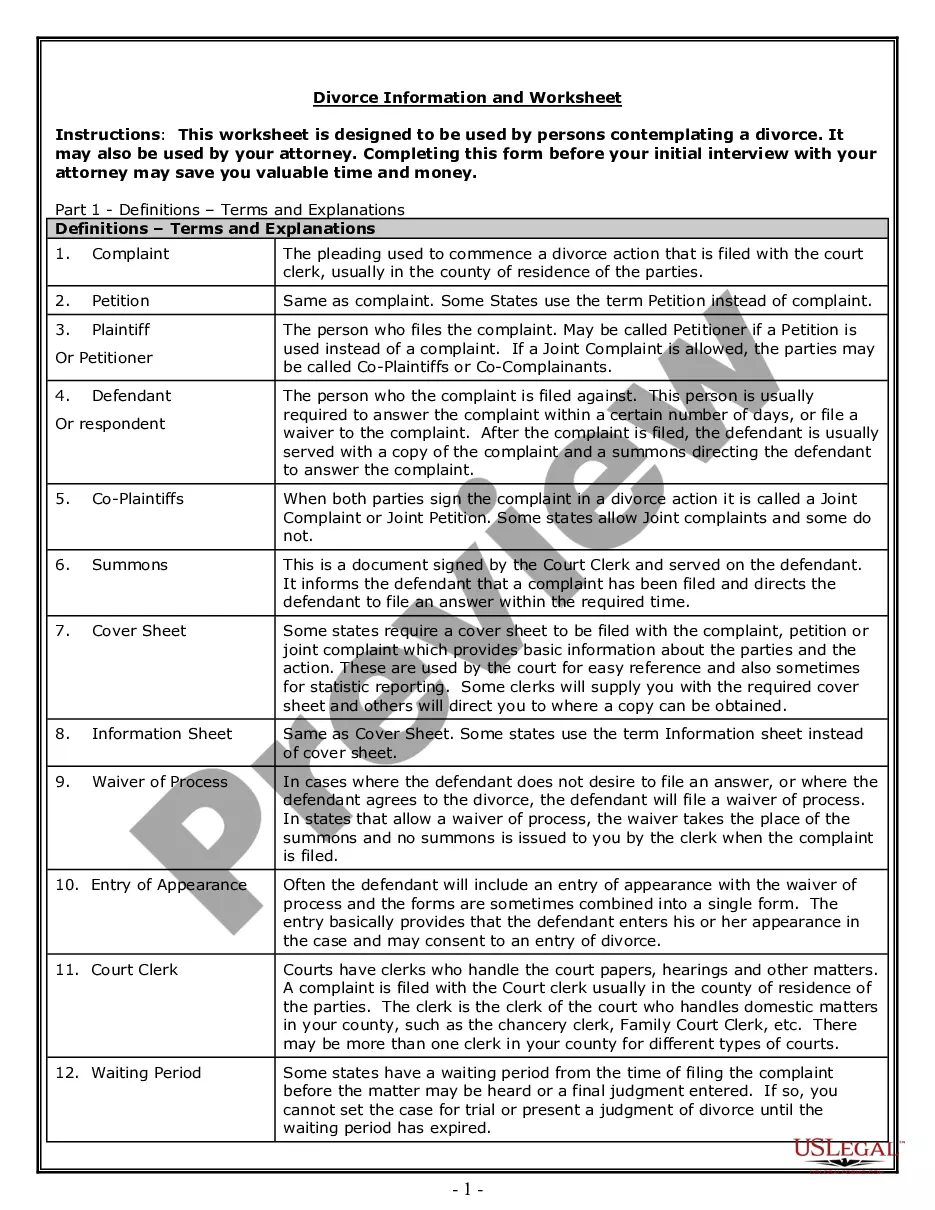




How to fill out Texas Gift Deed For Individual To Individual?
Bureaucracy demands exactness and correctness.
If you do not handle filling out documents like Texas Gift Deed With Life Estate frequently, it may lead to some misunderstandings.
Choosing the appropriate template from the start will ensure that your document submission proceeds smoothly and avoid any issues of resubmitting a file or starting the same task entirely from the beginning.
If you are not a registered user, locating the required template would involve a few additional steps: Locate the form using the search bar. Confirm that the Texas Gift Deed With Life Estate you’ve found is valid for your state or county. Check the preview or review the description that contains details on the usage of the template. If the result fits your search, click the Buy Now button. Choose the suitable option among the offered pricing plans. Log In to your account or sign up for a new one. Complete the transaction using a credit card or PayPal account. Download the form in your preferred format. Finding the right and latest samples for your documentation takes just a few minutes with an account at US Legal Forms. Eliminate bureaucratic worries and simplify your paperwork.
- You can always find the right template for your documentation on US Legal Forms.
- US Legal Forms is the largest online forms repository that provides over 85 thousand samples across various fields.
- You can acquire the latest and most suitable version of the Texas Gift Deed With Life Estate by simply searching for it on the website.
- Locate, store, and retain forms in your account or refer to the description to ensure you possess the correct one.
- With an account on US Legal Forms, it is simple to obtain, keep in one place, and navigate the forms you store for quick access.
- When on the website, click the Log In button to authenticate.
- Then, move to the My documents page, where your document list is preserved.
- Browse through the description of the forms and save those you need at any time.
Form popularity
FAQ
In a Texas gift deed with life estate, the life tenant holds rights to use the property for their lifetime, while the remainderman is the eventual owner after the life tenant's death. This arrangement allows the life tenant to live in the property and make decisions about it during their lifetime. To navigate these rights properly, consulting with legal experts or leveraging resources like US Legal Forms is advisable.
A life estate in Texas allows an individual to use and benefit from a property for their lifetime while designating someone else as the future owner, known as the remainderman. This arrangement helps avoid probate and can be established through a Texas gift deed with life estate, which outlines the rights and responsibilities of each party. Understanding how a life estate operates can be crucial for effective estate planning.
Transferring ownership of property after death in Texas typically involves the probate process unless there is a valid life estate deed in place. If a life estate was established through a Texas gift deed with life estate, the property automatically transfers to the remainderman upon the death of the life tenant. Consulting with an attorney or using US Legal Forms can simplify your options for managing post-death property transfers.
To create a valid gift deed in Texas, the grantor must be competent to convey the property, and the deed must be properly executed and recorded. Additionally, gifting a life estate requires clear terms regarding the rights and limitations set for the life tenant. For guidance on drafting a gift deed that includes a life estate, consider using services like US Legal Forms.
While both a life estate deed and a ladybird deed provide certain rights during the owner's lifetime, they differ significantly in terms of control and estate planning. A ladybird deed allows the owner to sell or mortgage the property without needing consent from the remainderman, whereas a life estate deed does not. Understanding these differences can help you decide which option aligns better with your goals for a Texas gift deed with life estate.
Yes, a life estate deed can be revoked in Texas, but specific conditions must be met. Generally, the original owner can reestablish control by creating a new deed that effectively revokes the life estate. It's wise to consult with a legal professional or utilize platforms like US Legal Forms to ensure all legal steps are correctly followed.
Yes, Texas does allow transfer on death deeds. This type of deed enables property owners to designate a beneficiary who will automatically receive the property upon the owner’s death, avoiding probate. It's a straightforward way to ensure your loved ones inherit your property efficiently. If you’re considering this option alongside a Texas gift deed with life estate, consult resources or experts, such as those offered by US Legal Forms, to navigate your choices.
Yes, you can convey a life estate in Texas. This means a property owner can transfer their life estate to another person, allowing that person to enjoy the property during the owner's lifetime. However, the original owner retains a right to use and occupy the property. This kind of arrangement can be effectively established through a Texas gift deed with life estate, simplifying ownership transfers.
To terminate a life estate in Texas, you usually need to create a written agreement among the parties involved. This could involve the life tenant and the remainderman agreeing to dissolve the life estate and transferring the property in full ownership to one party. It's important to document this properly to avoid any future disputes. Using services like US Legal Forms can streamline this process and ensure compliance with Texas laws.
A Texas gift deed with life estate allows a property owner to give their property to another person while retaining the right to live on it during their lifetime. This arrangement provides the owner with security and control over the property for as long as they live. Once the owner passes away, the property transfers to the designated beneficiary without going through probate. This strategy can simplify estate planning and provide clarity for heirs.