Tx Contempt Order For Civil
Description

Get your form ready online
Our built-in tools help you complete, sign, share, and store your documents in one place.
Make edits, fill in missing information, and update formatting in US Legal Forms—just like you would in MS Word.
Download a copy, print it, send it by email, or mail it via USPS—whatever works best for your next step.
Sign and collect signatures with our SignNow integration. Send to multiple recipients, set reminders, and more. Go Premium to unlock E-Sign.
If this form requires notarization, complete it online through a secure video call—no need to meet a notary in person or wait for an appointment.
We protect your documents and personal data by following strict security and privacy standards.

Make edits, fill in missing information, and update formatting in US Legal Forms—just like you would in MS Word.

Download a copy, print it, send it by email, or mail it via USPS—whatever works best for your next step.

Sign and collect signatures with our SignNow integration. Send to multiple recipients, set reminders, and more. Go Premium to unlock E-Sign.

If this form requires notarization, complete it online through a secure video call—no need to meet a notary in person or wait for an appointment.

We protect your documents and personal data by following strict security and privacy standards.
Looking for another form?





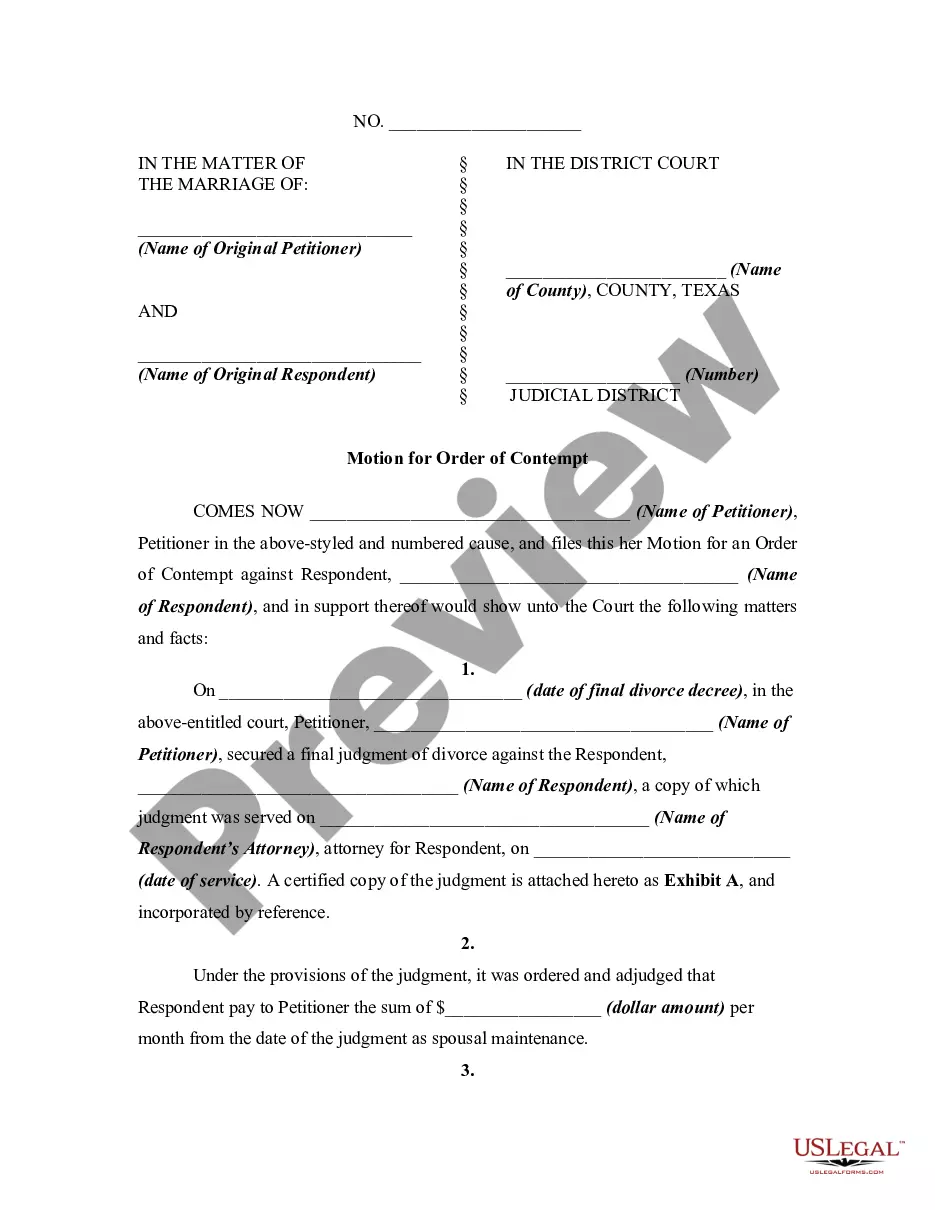
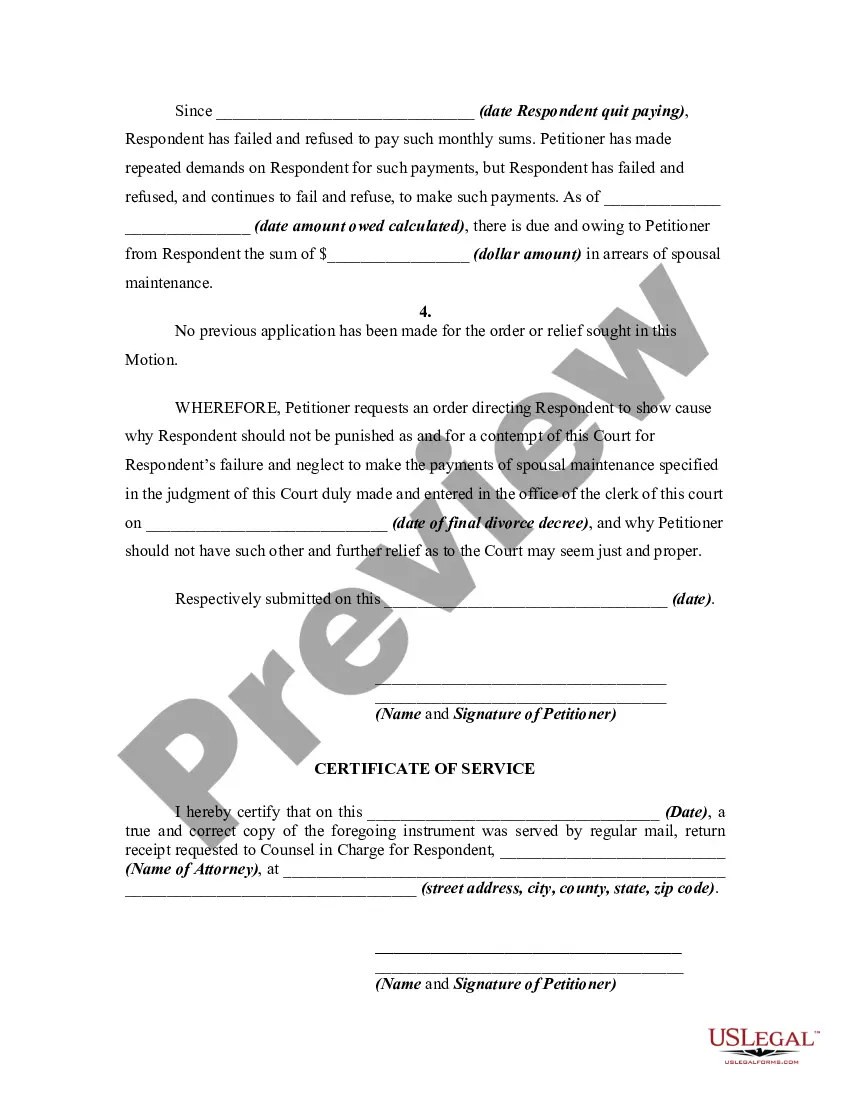
How to fill out Texas Motion For Order Of Contempt For Failure To Pay Spousal Maintenance?
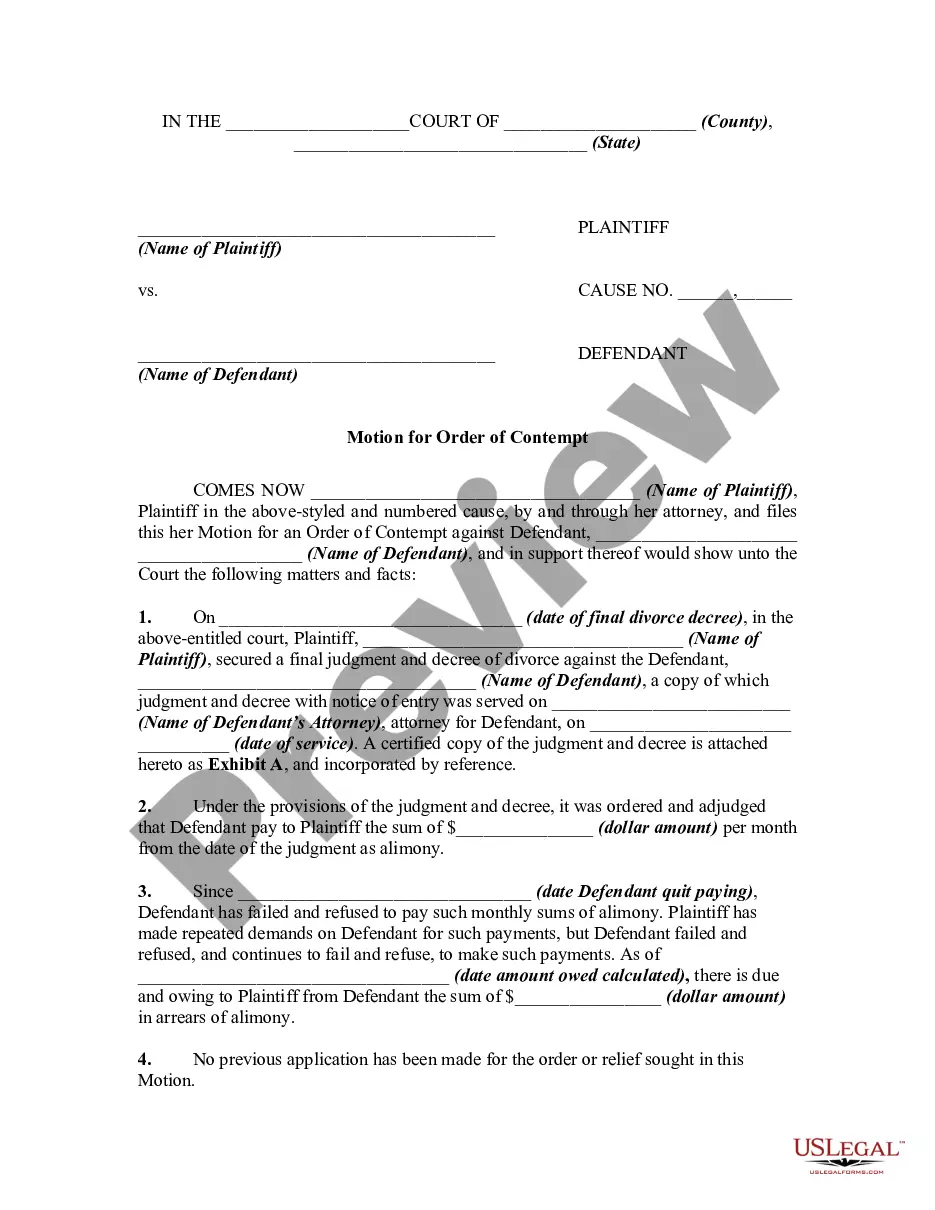
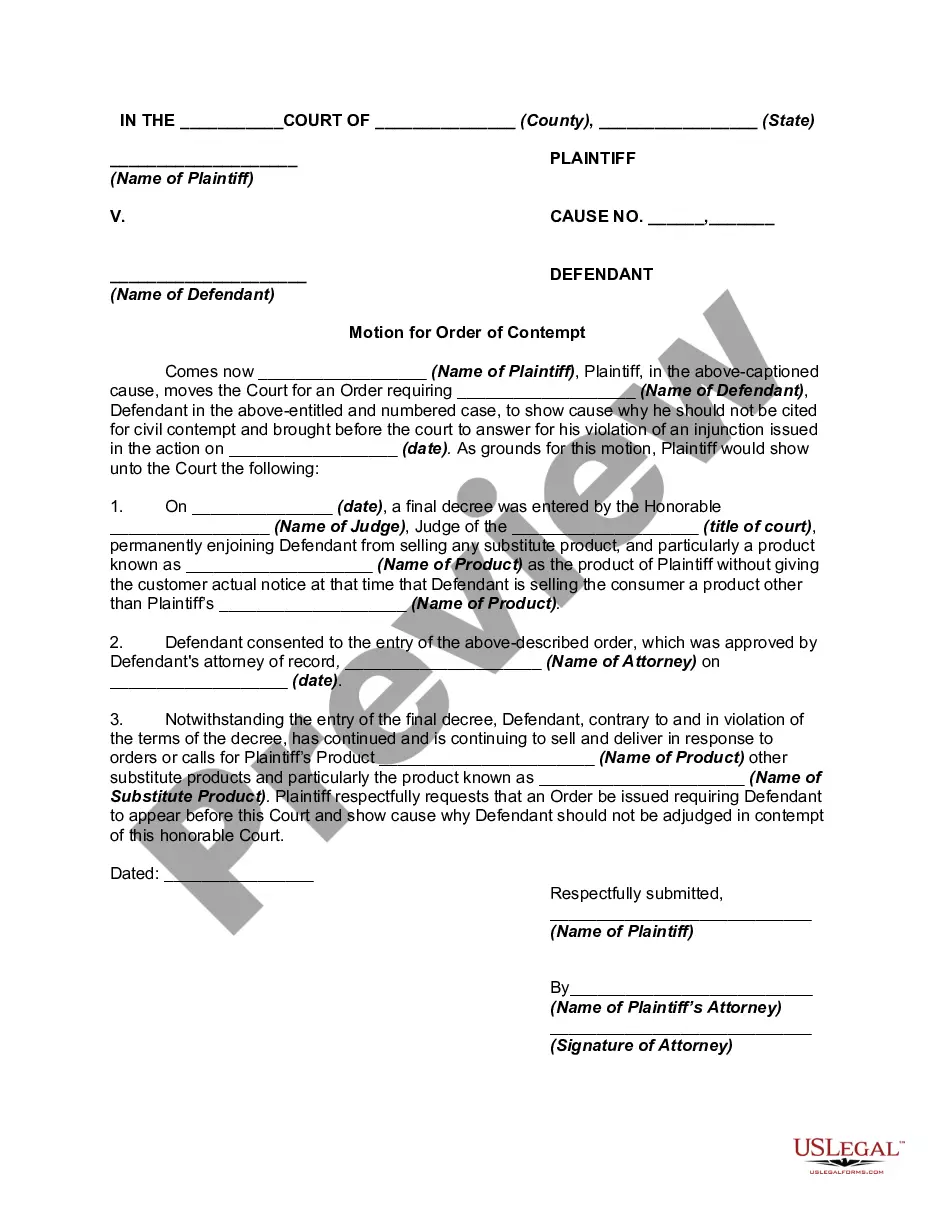
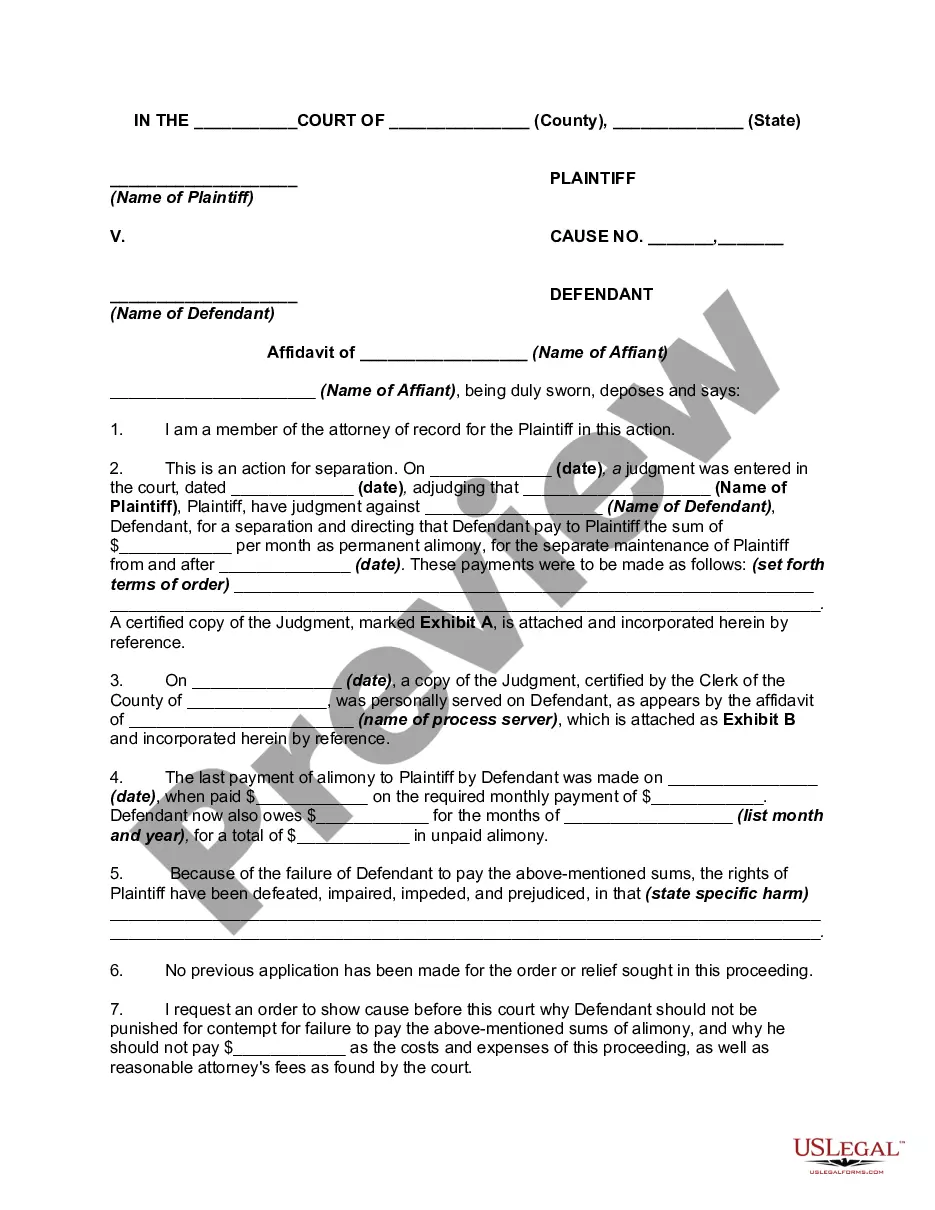
The Tx Contempt Order For Civil you observe on this page is a reusable formal template created by qualified attorneys in compliance with federal and local statutes and regulations.
For over 25 years, US Legal Forms has supplied individuals, businesses, and lawyers with more than 85,000 validated, state-specific documents for any professional and personal event. It’s the quickest, easiest, and most dependable method to acquire the forms you require, as the service ensures the utmost level of data protection and anti-malware security.
Enroll in US Legal Forms to have authenticated legal templates for all of life’s situations at your fingertips.
- Browse for the document you require and examine it.
- Select the pricing option that fits you and create an account. Use PayPal or a credit card to make an immediate payment. If you already possess an account, Log In and verify your subscription to proceed.
- Choose the format you prefer for your Tx Contempt Order For Civil (PDF, Word, RTF) and save the sample to your device.
- Print the template to fill it out manually. Alternatively, use an online versatile PDF editor to quickly and accurately complete and sign your form with an eSignature.
- Re-download your documents whenever necessary. Access the My documents tab in your profile to retrieve any previously saved forms.
Form popularity
FAQ
Civil contempt is the failure of someone to comply with a court order. Judges use civil contempt sanctions to push a person into conceding with a court order the person has violated.
Both civil and criminal contempt share the same punishment under the Contempt of Courts Act 1971. The Act allows for a maximum term of imprisonment for six months, and this can be supplemented with a fine of up to ?2000.
Ing to the rules of the Supreme Court, a contempt petition should contain: The name, description and place of residence of the complainant(s) and of the persons charged (with the alleged contempt). ... Nature of the contempt alleged, and facts, including the date or dates of commission of the alleged contempt.
(ii) In every case of civil contempt, the accused shall appear either in person or by Counsel before the High Court, on the first date of hearing and on every Page 7 101 subsequent date to which the case is posted, but shall appear in person whenever directed by the High Court.