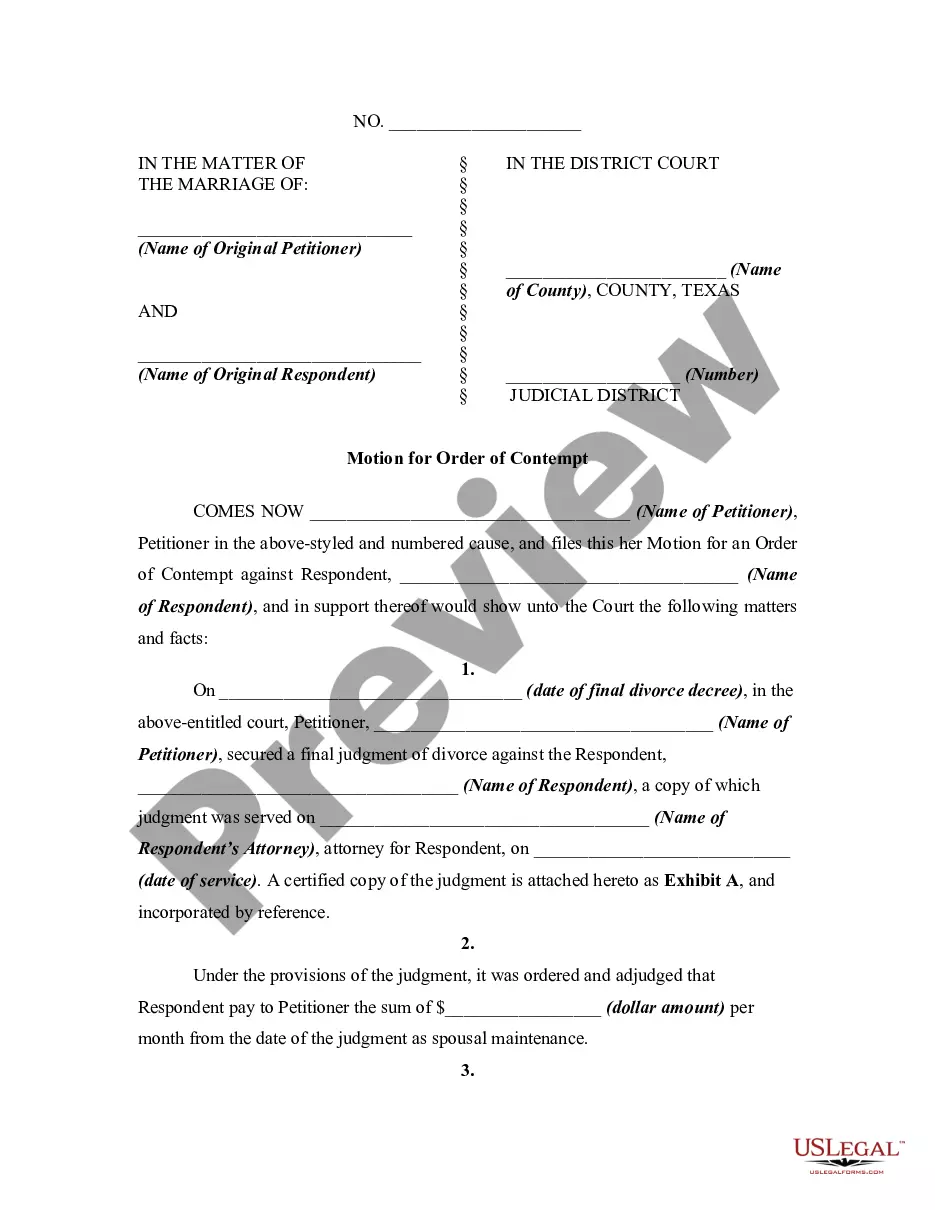
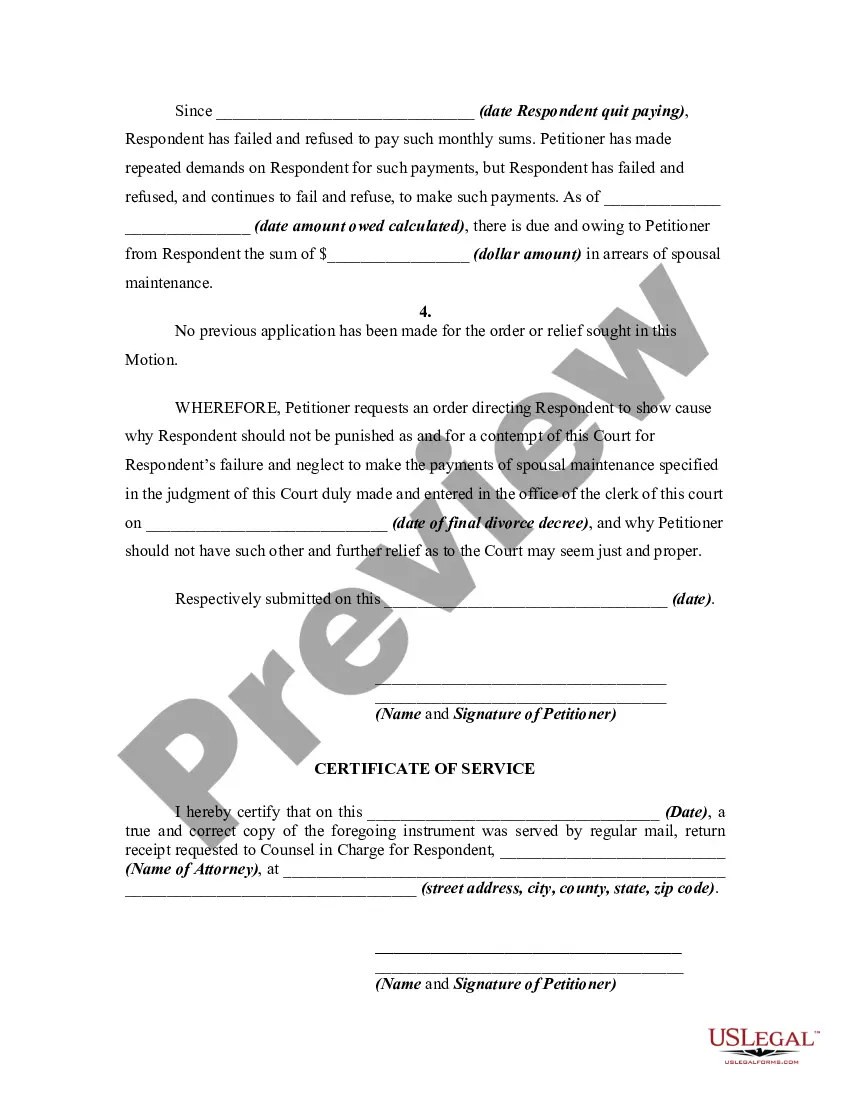
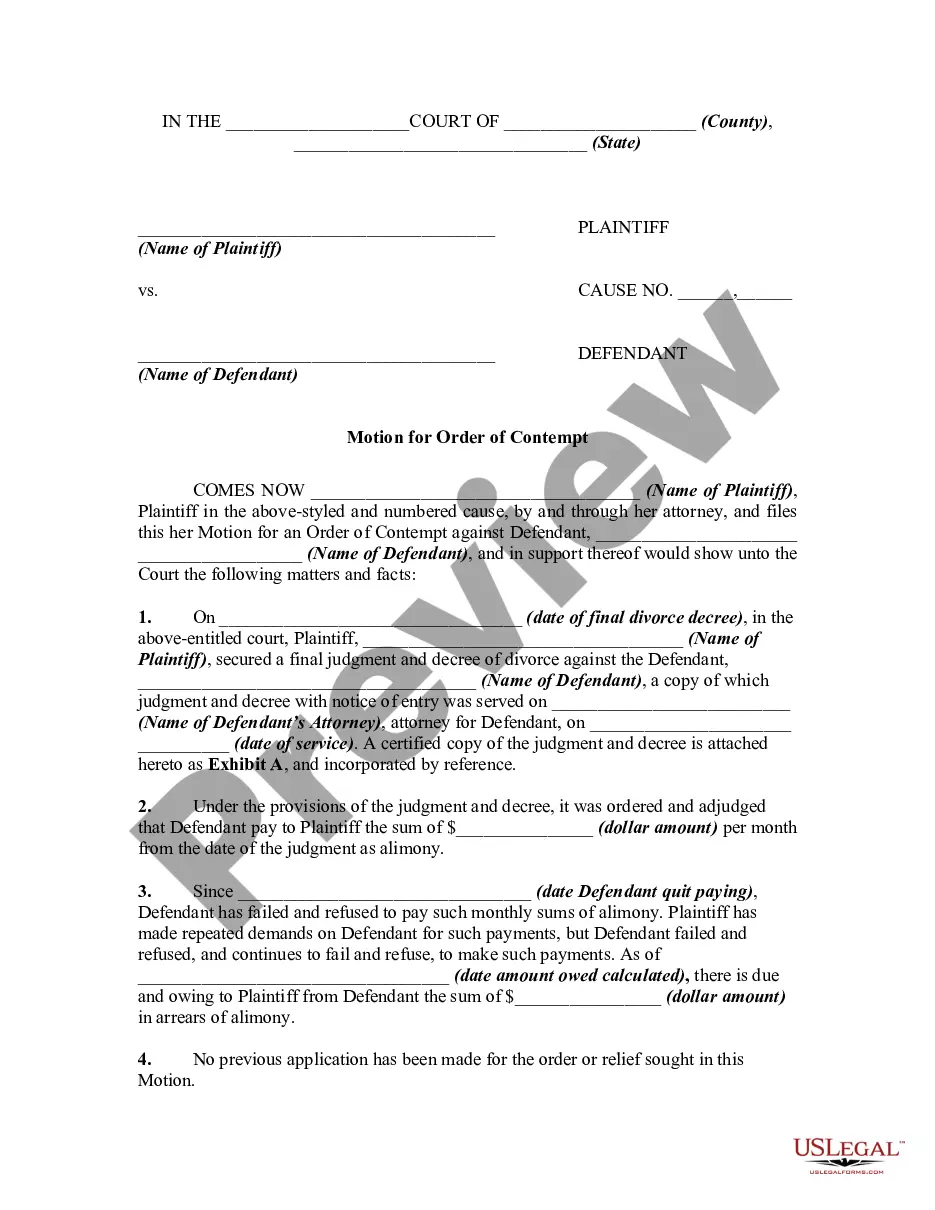
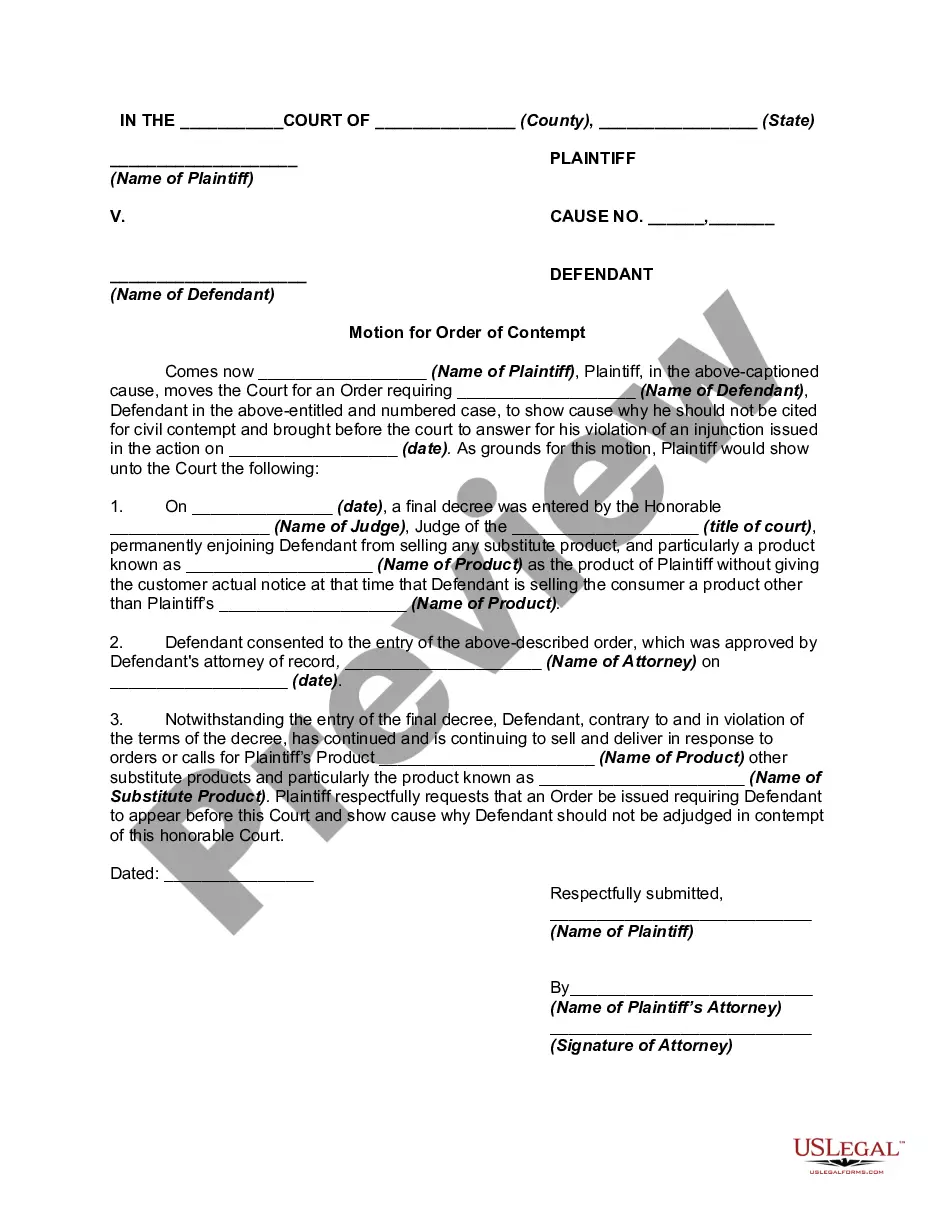
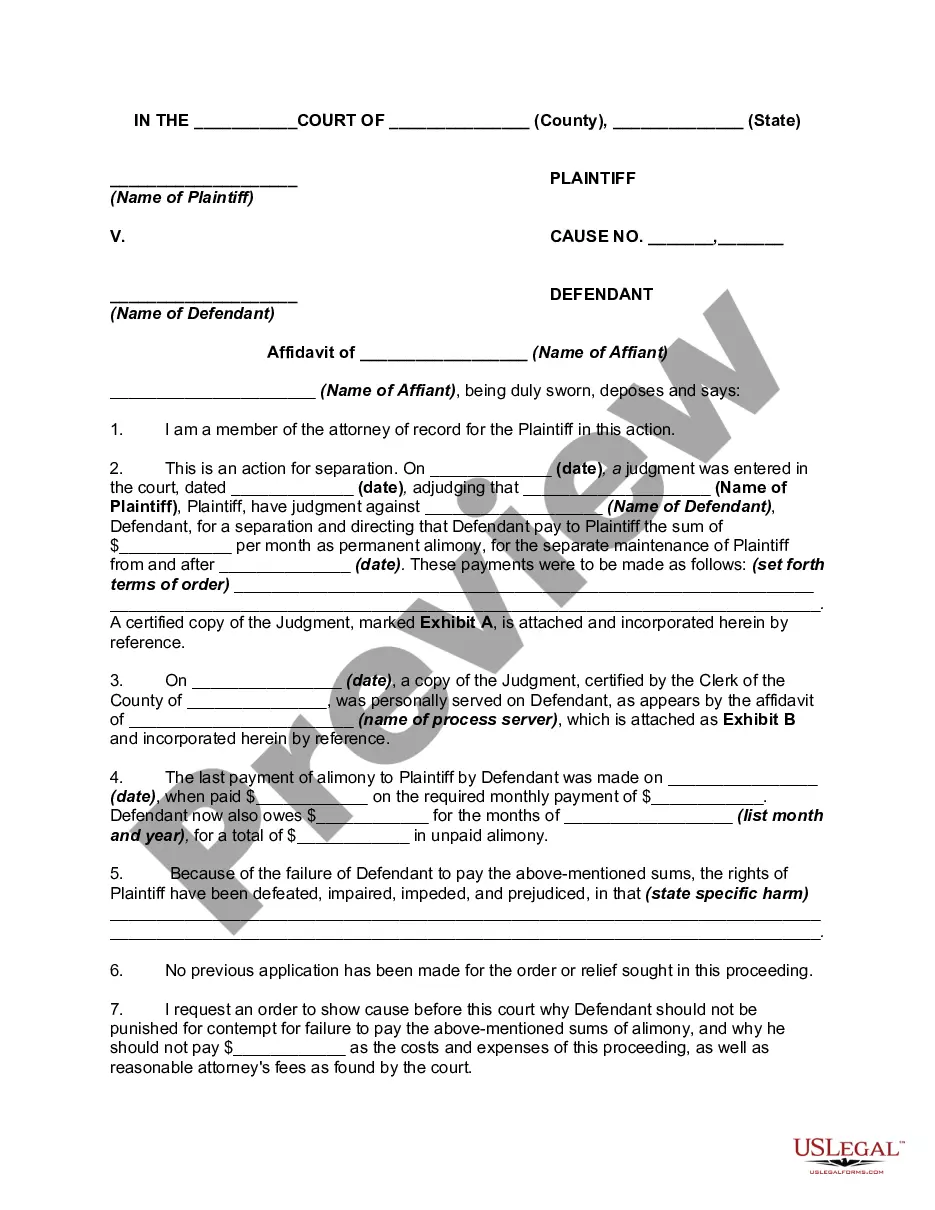
Motion For Contempt Form Texas Without Court
Description

Get your form ready online
Our built-in tools help you complete, sign, share, and store your documents in one place.
Make edits, fill in missing information, and update formatting in US Legal Forms—just like you would in MS Word.
Download a copy, print it, send it by email, or mail it via USPS—whatever works best for your next step.
Sign and collect signatures with our SignNow integration. Send to multiple recipients, set reminders, and more. Go Premium to unlock E-Sign.
If this form requires notarization, complete it online through a secure video call—no need to meet a notary in person or wait for an appointment.
We protect your documents and personal data by following strict security and privacy standards.

Make edits, fill in missing information, and update formatting in US Legal Forms—just like you would in MS Word.

Download a copy, print it, send it by email, or mail it via USPS—whatever works best for your next step.

Sign and collect signatures with our SignNow integration. Send to multiple recipients, set reminders, and more. Go Premium to unlock E-Sign.

If this form requires notarization, complete it online through a secure video call—no need to meet a notary in person or wait for an appointment.

We protect your documents and personal data by following strict security and privacy standards.
Looking for another form?






How to fill out Texas Motion For Order Of Contempt For Failure To Pay Spousal Maintenance?
Managing legal papers and processes can be a lengthy addition to the day.
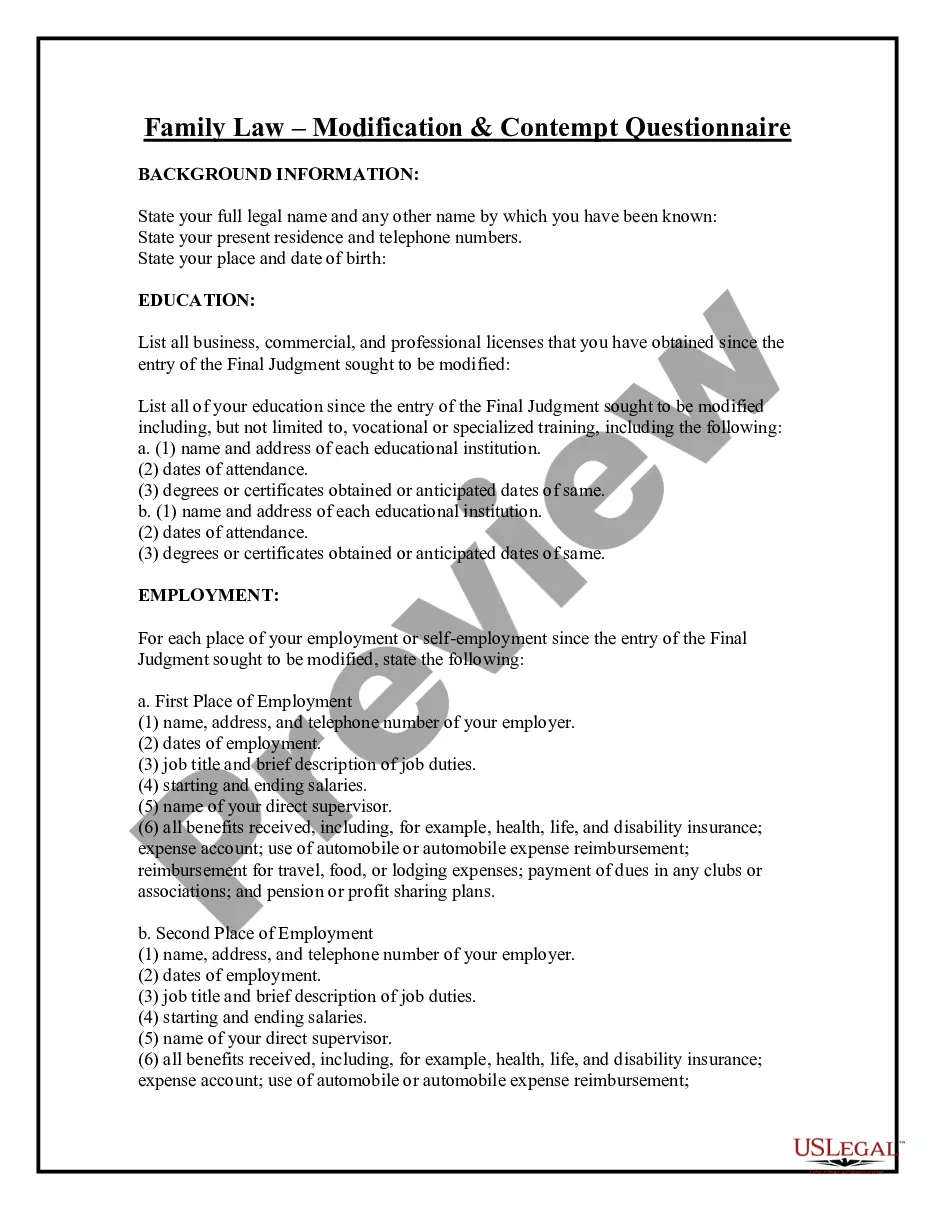
Motion For Contempt Form Texas Without Court and similar forms frequently necessitate that you search for them and understand how to fill them out correctly.
Thus, if you are handling financial, legal, or personal issues, having a comprehensive and efficient online directory of forms readily available will prove beneficial.
US Legal Forms is the leading online platform for legal templates, providing over 85,000 state-specific documents and various tools to help you complete your paperwork effortlessly.
Is this your first experience with US Legal Forms? Register and create an account in a few minutes to access the form library and Motion For Contempt Form Texas Without Court. Then, follow these steps to complete your document.
- Explore the collection of relevant documents accessible to you with just a single click.
- US Legal Forms provides you with state- and county-specific documents available for download at any moment.
- Secure your document processing procedures by utilizing a top-tier service that allows you to create any document in minutes without incurring additional or concealed fees.
- Simply Log In to your account, find Motion For Contempt Form Texas Without Court, and download it immediately from the My documents section.
- You can also retrieve previously downloaded documents.
Form popularity
FAQ
The consequences of the motion: A motion to enforce, if approved, inflicts no punishment on the non-compliant party and instead serves as a reminder to fulfill their legal duties. Alternatively, a motion for contempt can result in jail time or fines for not following a verdict.
1. File your papers with the district clerk's office in the county where you got the order that you're trying to enforce. Take your documents (and your copies) to the district clerk's office. Tell the clerk you're there to file a Motion to Enforce and hand the clerk all of your documents.
A motion for contempt is used to enforce a court order. Basically, a person might be found in contempt if they disobeyed a court order. In your case, you are filing the motion because your co-parent has violated or continues to violate the child custody order.
If you seek to have someone held in contempt, the person must receive actual notice of the contempt hearing. This means that the respondent must be personally served with the Motion for Contempt containing the Show Cause Order.
When it comes to contempt & enforcement in Texas, the court has the power to make an offending party responsible in several ways. A judge may hold a party in contempt and sentence him to as much as six months in county jail for each offense. The judge may impose a $500 fine for each instance of offense.