Texas Farm Life
Description



Get your form ready online
Our built-in tools help you complete, sign, share, and store your documents in one place.
Make edits, fill in missing information, and update formatting in US Legal Forms—just like you would in MS Word.
Download a copy, print it, send it by email, or mail it via USPS—whatever works best for your next step.
Sign and collect signatures with our SignNow integration. Send to multiple recipients, set reminders, and more. Go Premium to unlock E-Sign.
If this form requires notarization, complete it online through a secure video call—no need to meet a notary in person or wait for an appointment.
We protect your documents and personal data by following strict security and privacy standards.

Make edits, fill in missing information, and update formatting in US Legal Forms—just like you would in MS Word.

Download a copy, print it, send it by email, or mail it via USPS—whatever works best for your next step.

Sign and collect signatures with our SignNow integration. Send to multiple recipients, set reminders, and more. Go Premium to unlock E-Sign.

If this form requires notarization, complete it online through a secure video call—no need to meet a notary in person or wait for an appointment.

We protect your documents and personal data by following strict security and privacy standards.
Looking for another form?







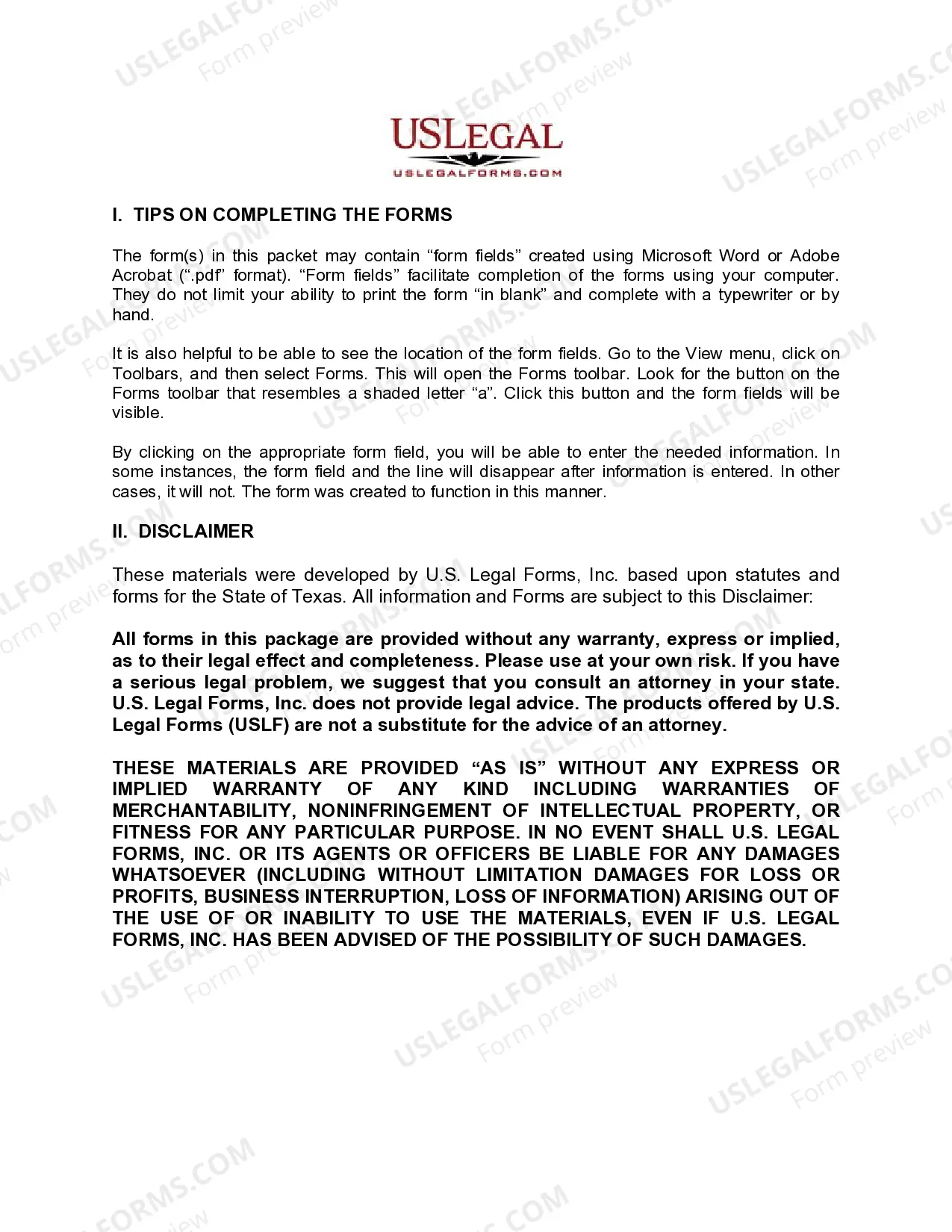
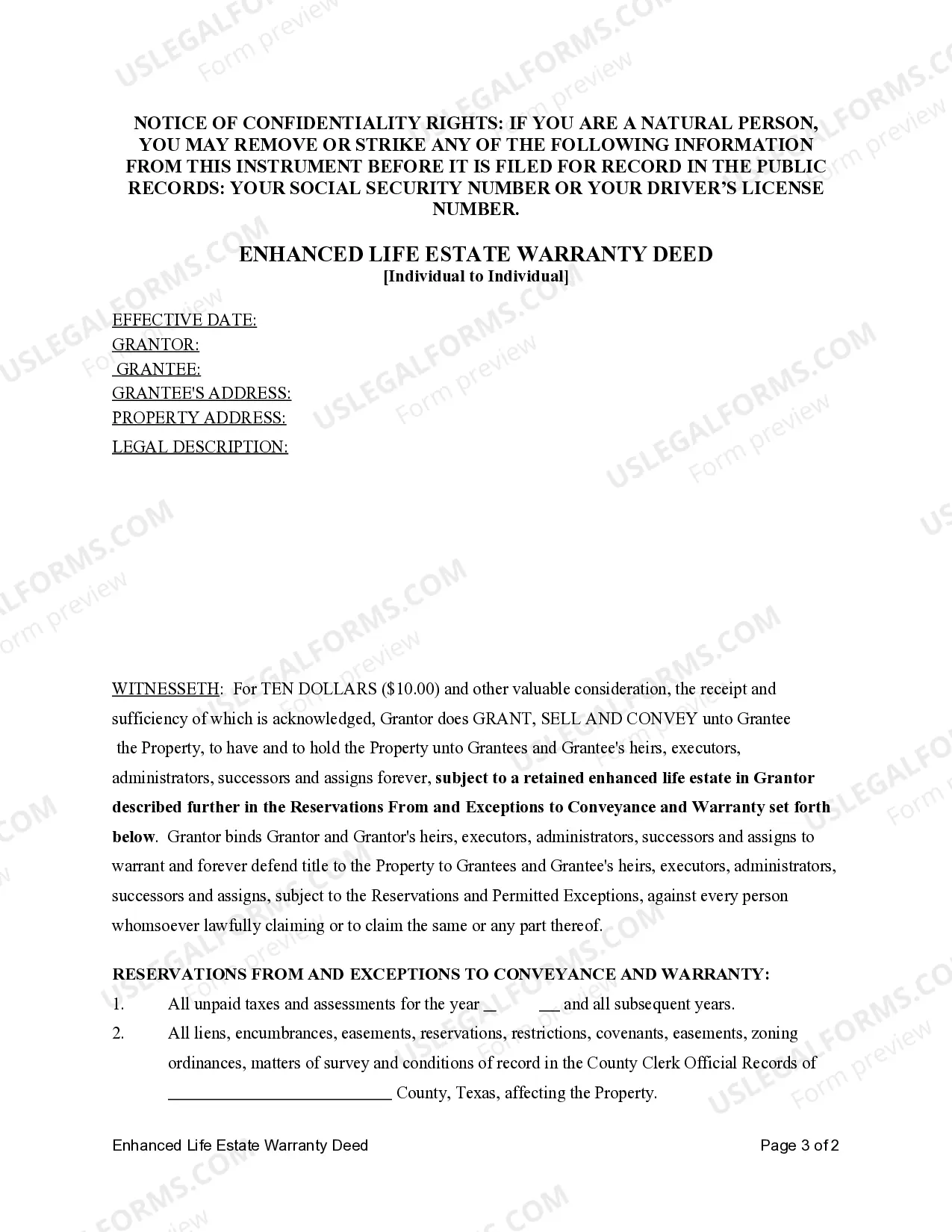
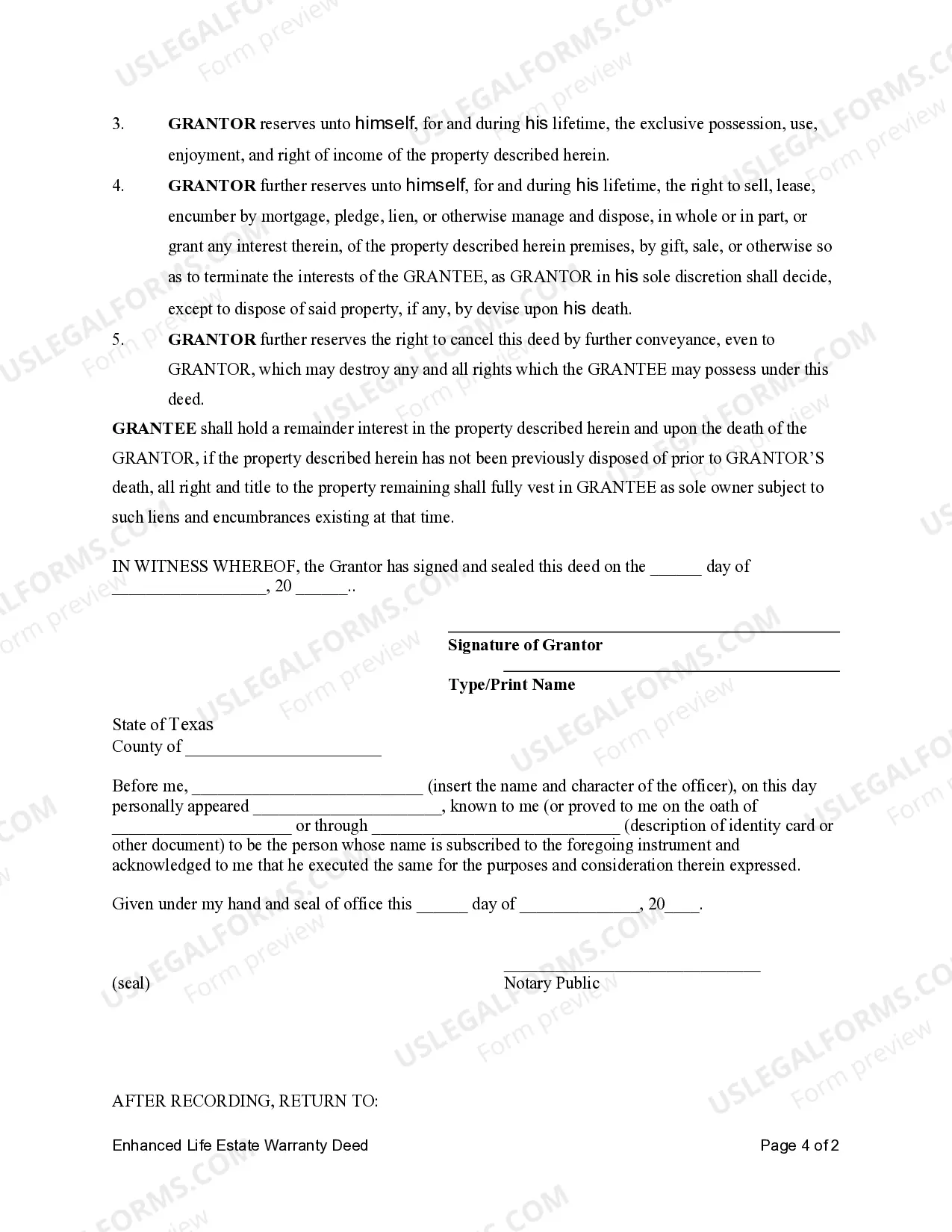
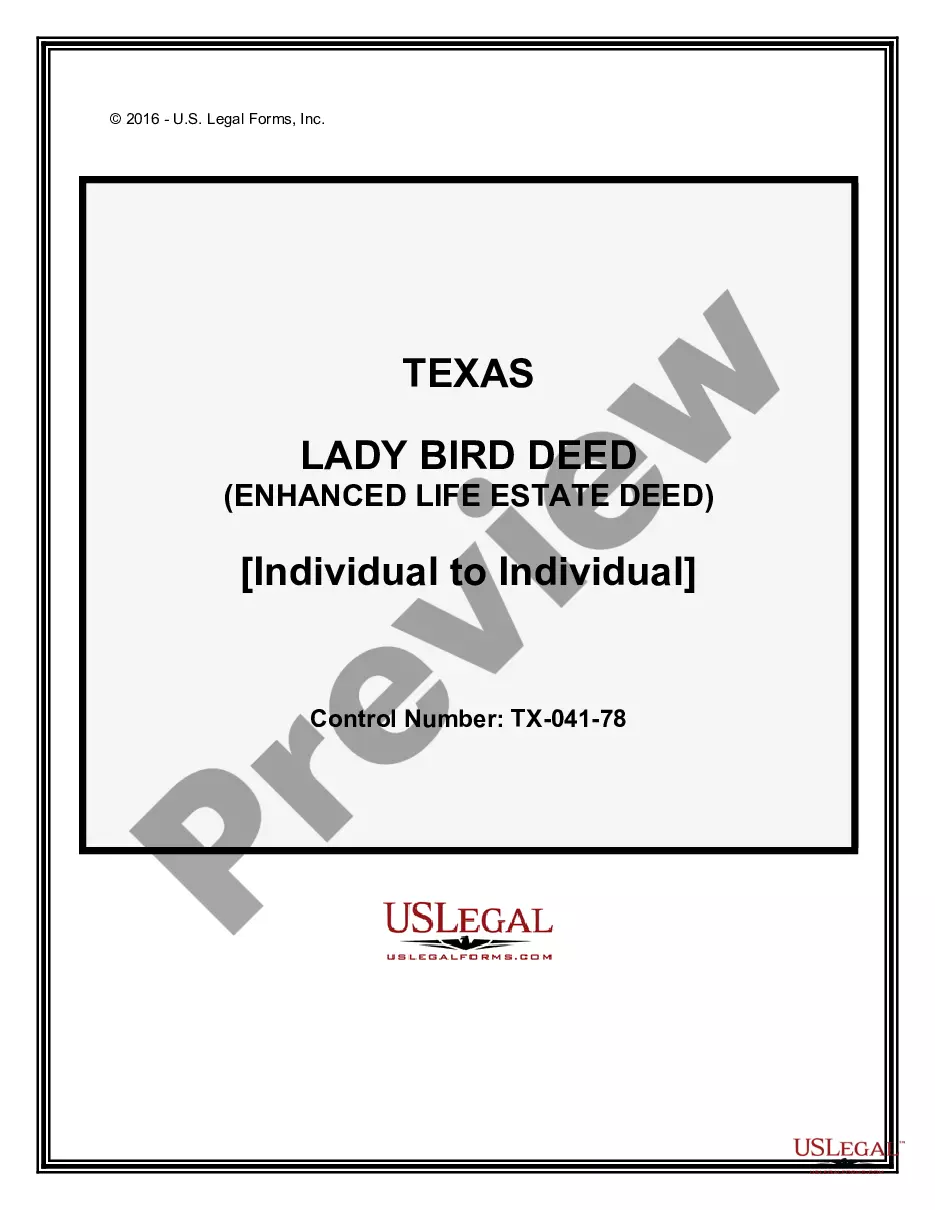
How to fill out Texas Lady Bird Or Enhanced Life Estate Warranty Deed - Individual To Individual?
- Log into your existing account at US Legal Forms if you've used the service before. Verify and renew your subscription if necessary.
- Start by checking the Preview mode and reading the form description. Ensure it fully meets the requirements of your Texas farm life needs and local jurisdiction.
- If you need a different template, use the Search tab to find more options. Make sure it aligns with your specific needs.
- Proceed to purchase your chosen document by clicking on the Buy Now button. Select the subscription plan that works best for you.
- Complete your transaction by entering your payment details via credit card or PayPal.
- After your purchase, download the form and save it to your device for easy access. You can also find it later in the My Forms section of your account.
Incorporating well-structured legal documents is essential for Texas farm life. By following these straightforward steps, you can ensure compliance and peace of mind in your farming endeavors.
Start your journey today with US Legal Forms to gain access to a wealth of resources tailored for Texas farm life!
Form popularity
FAQ
To qualify for a farm exemption in Texas, you must prove that your property is primarily used for agricultural purposes. This generally involves demonstrating that you are engaged in farming activities, such as raising crops or livestock. Submitting the right documentation and staying informed about Texas farm life regulations will enhance your chances of success. Local appraisal districts can provide you with the necessary forms and information.
Filing a claim with Texas Farm Bureau typically involves contacting them directly or visiting their website for claims submission guidelines. You will need to provide details about the incident, including your policy number and documentation of any damages. This process can help protect your interests and support your endeavors in Texas farm life. Utilizing the resources available through Texas Farm Bureau can streamline your experience.
In Texas, the number of acres required to be classified as a farm varies by county, though many areas accept as few as 10 acres, depending on use. Essentially, the land must be actively producing for agricultural purposes, regardless of size. This policy supports diverse forms of Texas farm life, fostering both small and large farming operations. Always check with your local tax office for specific guidelines in your region.
Getting a farm exemption in Texas involves several steps, starting with determining your eligibility based on land usage. You will need to complete an application form, often available through your local appraisal district. Moreover, providing documentation, such as tax returns or receipts, may help support your case. This process helps ensure that your connection to Texas farm life is both recognized and supported.
To obtain a farm tax exemption in Texas, you must demonstrate that your land is primarily used for agricultural production. This includes raising crops, livestock, or engaging in farming activities that contribute to the local economy. You also need to provide evidence of the land's productivity and submit an application to your local appraisal district. Embracing Texas farm life means understanding these requirements and embracing practices that align with them.
The easiest agricultural exemption in Texas typically involves wildlife management or the use of the land for certain agricultural practices. To qualify, you must actively engage in activities such as raising livestock or cultivating crops. By meeting these criteria, you can experience the benefits of Texas farm life while maintaining compliance with state regulations. Be sure to keep accurate records of your activities for a smoother application process.
Starting a farm as a beginner involves careful planning and research. First, identify the type of farming that aligns with your interests and resources. Next, create a business plan that outlines your goals, equipment, and financial needs. Engaging with platforms like USLegalForms can provide you with essential legal forms and guidance to help you kickstart your Texas farm life journey confidently.
The most profitable farm to start in Texas often depends on your interests and market demand. Options like organic vegetables, poultry, and specialty cattle can yield good returns. Researching local markets will help you understand what products are in demand. Moreover, using resources like USLegalForms can assist in navigating the legal requirements for starting a profitable Texas farm life.
You generally do not need a license to start a farm in Texas, but specific agricultural activities may require permits. For example, if you plan to sell certain livestock or crops, you may need to comply with state regulations. It’s wise to consult local authorities for guidance and make sure you are on the right track with Texas farm life. Getting the necessary paperwork in order can set you up for success.
In Texas, there is no specific minimum number of acres required to be considered a farm. However, having at least 10 acres is often seen as a good starting point for various agricultural practices. Remember, even smaller plots can contribute to Texas farm life, especially if you focus on niche farming or specialty crops. Your farming goals will largely determine the land size you need.