Executory Document With Estate
Description

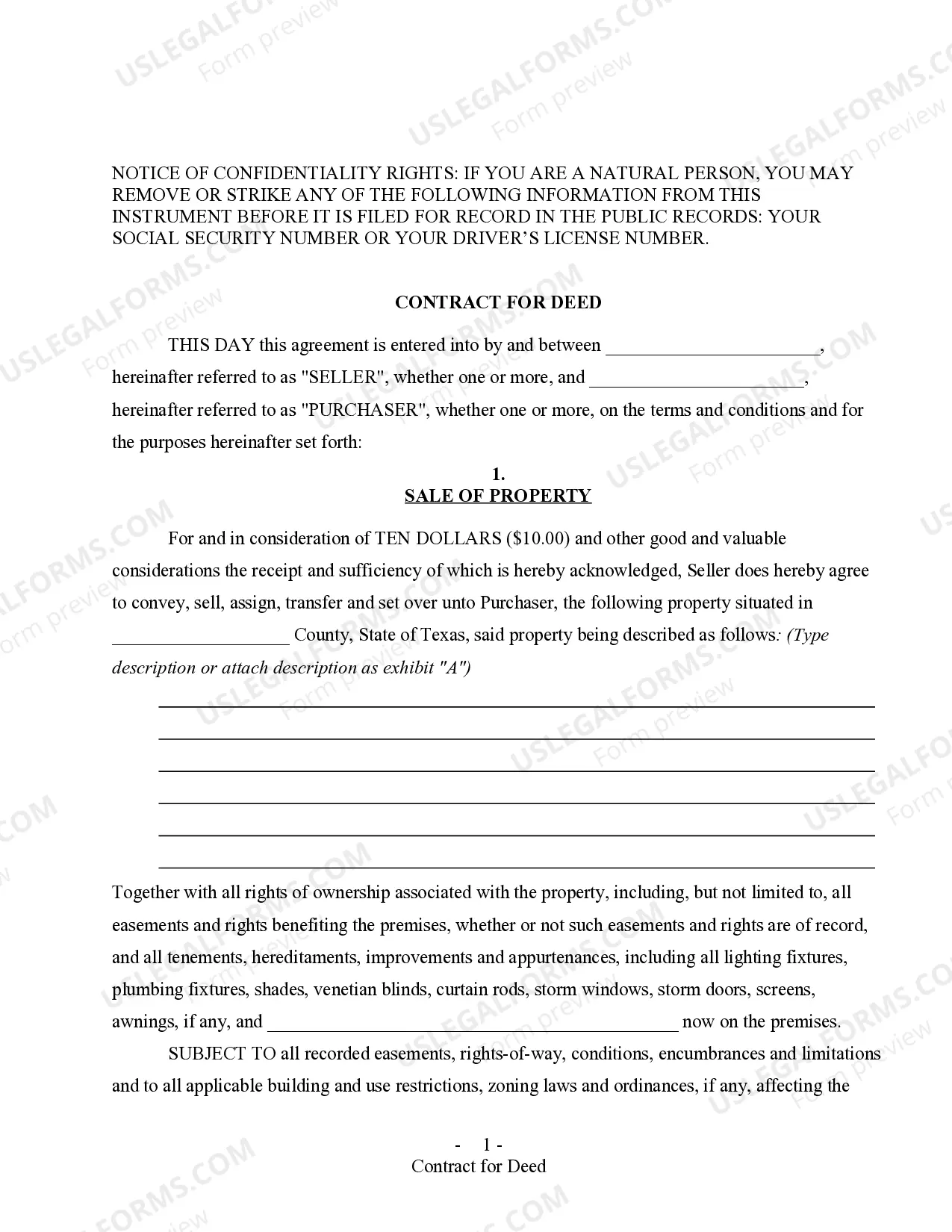
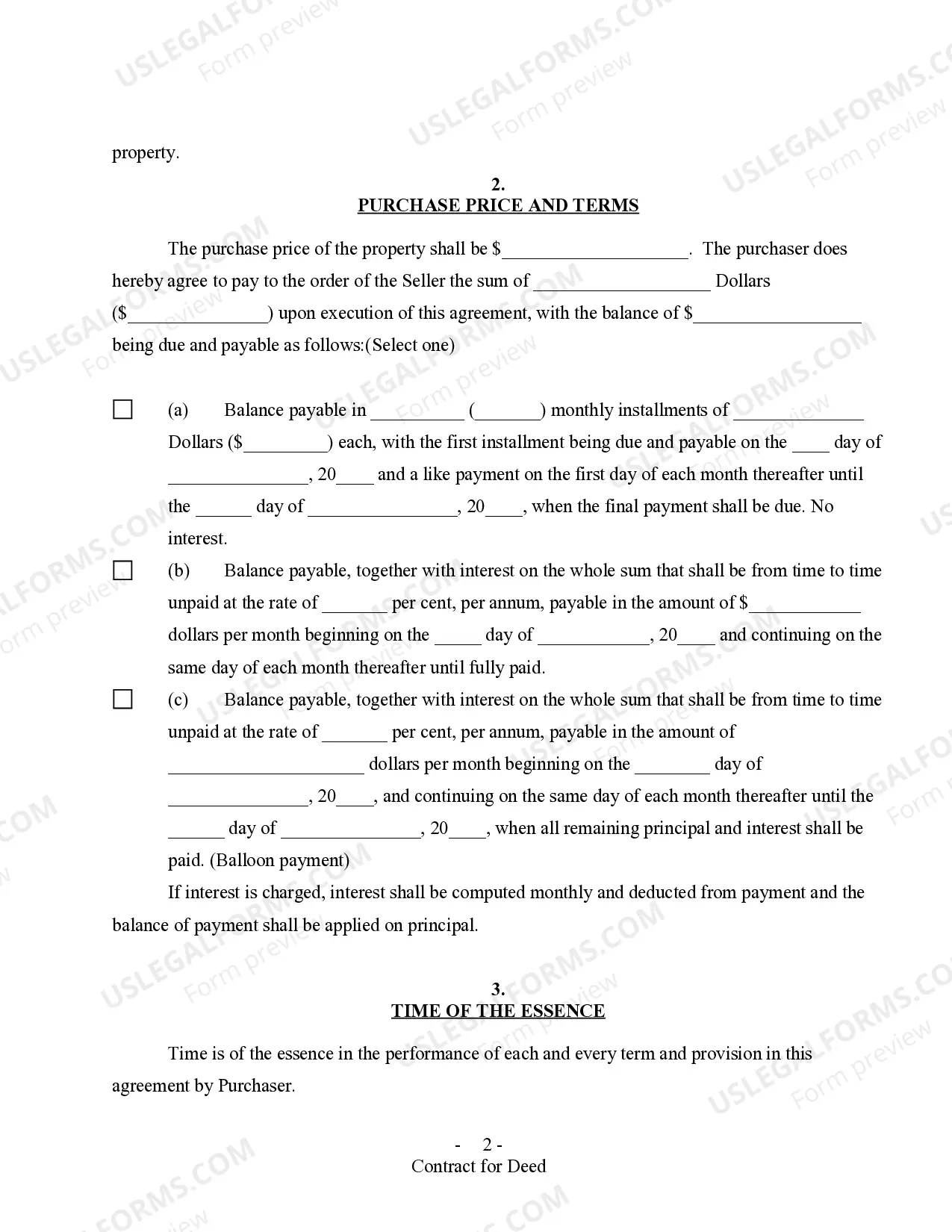
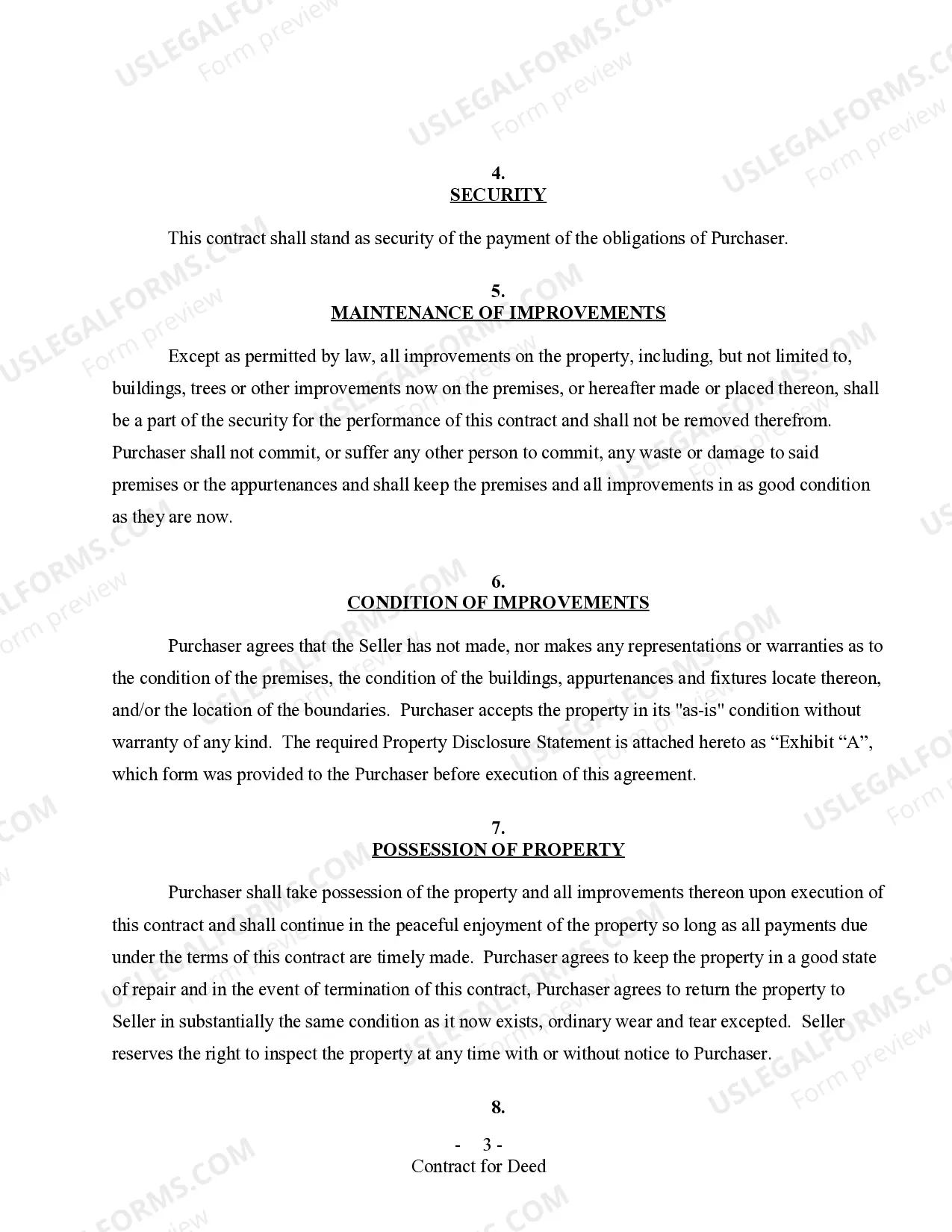
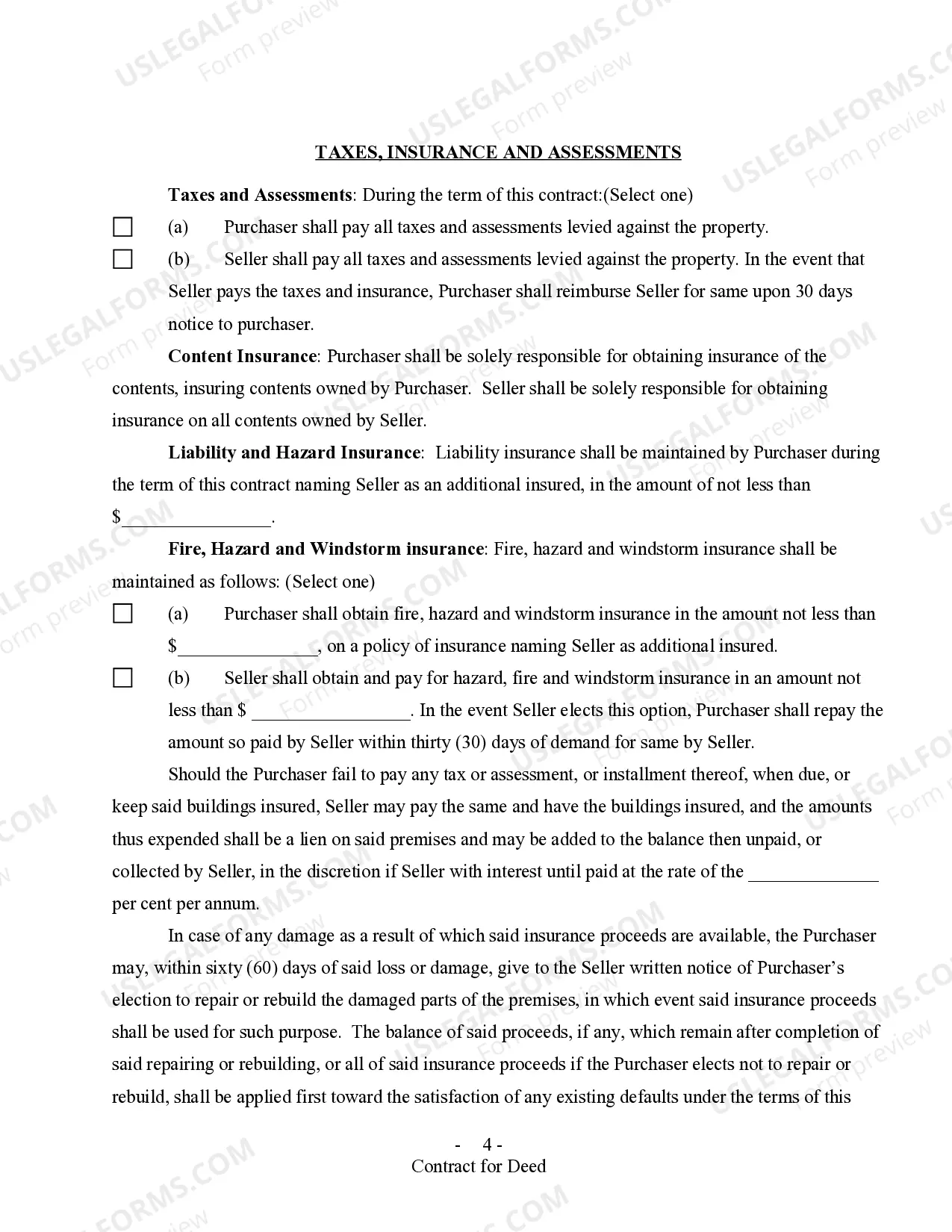


Get your form ready online
Our built-in tools help you complete, sign, share, and store your documents in one place.
Make edits, fill in missing information, and update formatting in US Legal Forms—just like you would in MS Word.
Download a copy, print it, send it by email, or mail it via USPS—whatever works best for your next step.
Sign and collect signatures with our SignNow integration. Send to multiple recipients, set reminders, and more. Go Premium to unlock E-Sign.
If this form requires notarization, complete it online through a secure video call—no need to meet a notary in person or wait for an appointment.
We protect your documents and personal data by following strict security and privacy standards.

Make edits, fill in missing information, and update formatting in US Legal Forms—just like you would in MS Word.

Download a copy, print it, send it by email, or mail it via USPS—whatever works best for your next step.

Sign and collect signatures with our SignNow integration. Send to multiple recipients, set reminders, and more. Go Premium to unlock E-Sign.

If this form requires notarization, complete it online through a secure video call—no need to meet a notary in person or wait for an appointment.

We protect your documents and personal data by following strict security and privacy standards.
Looking for another form?




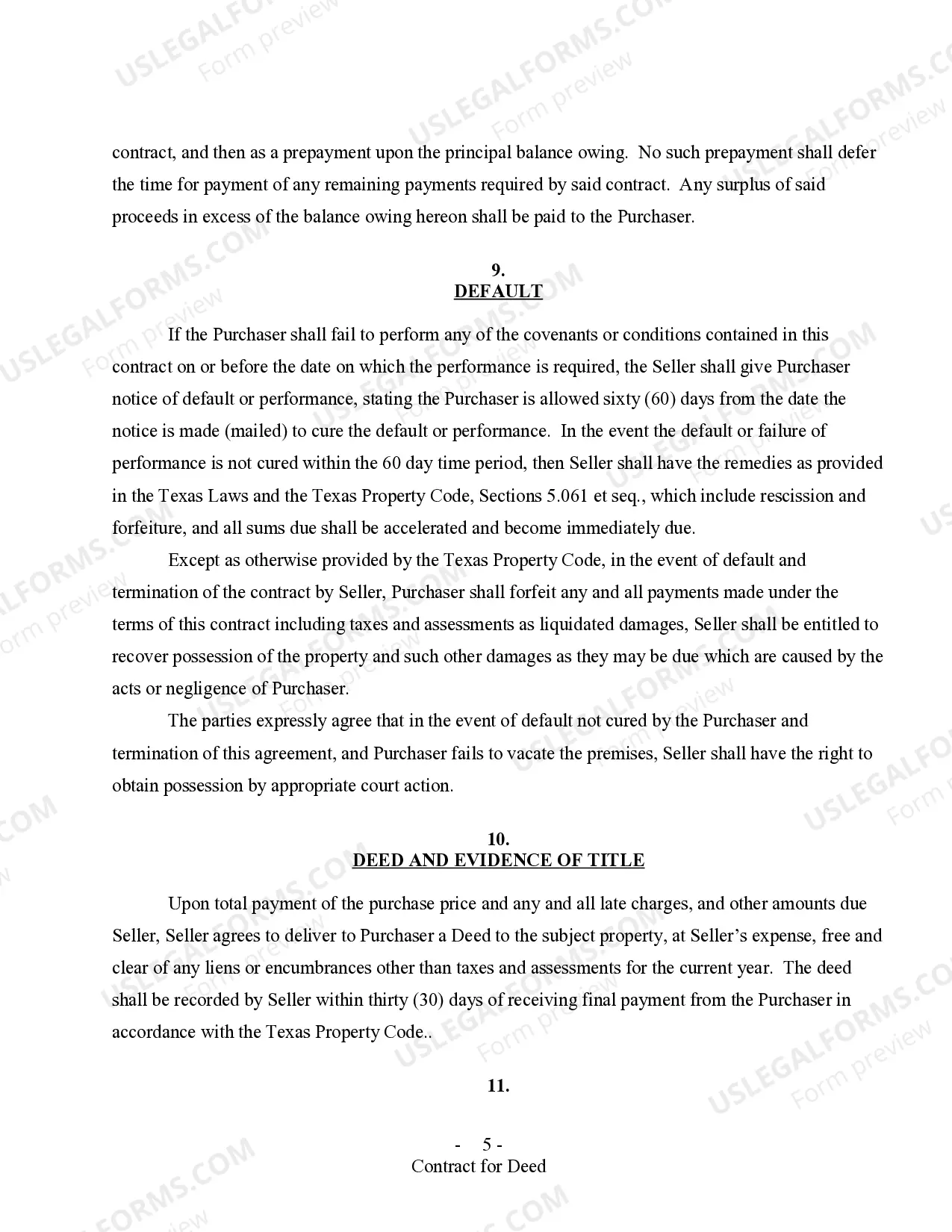
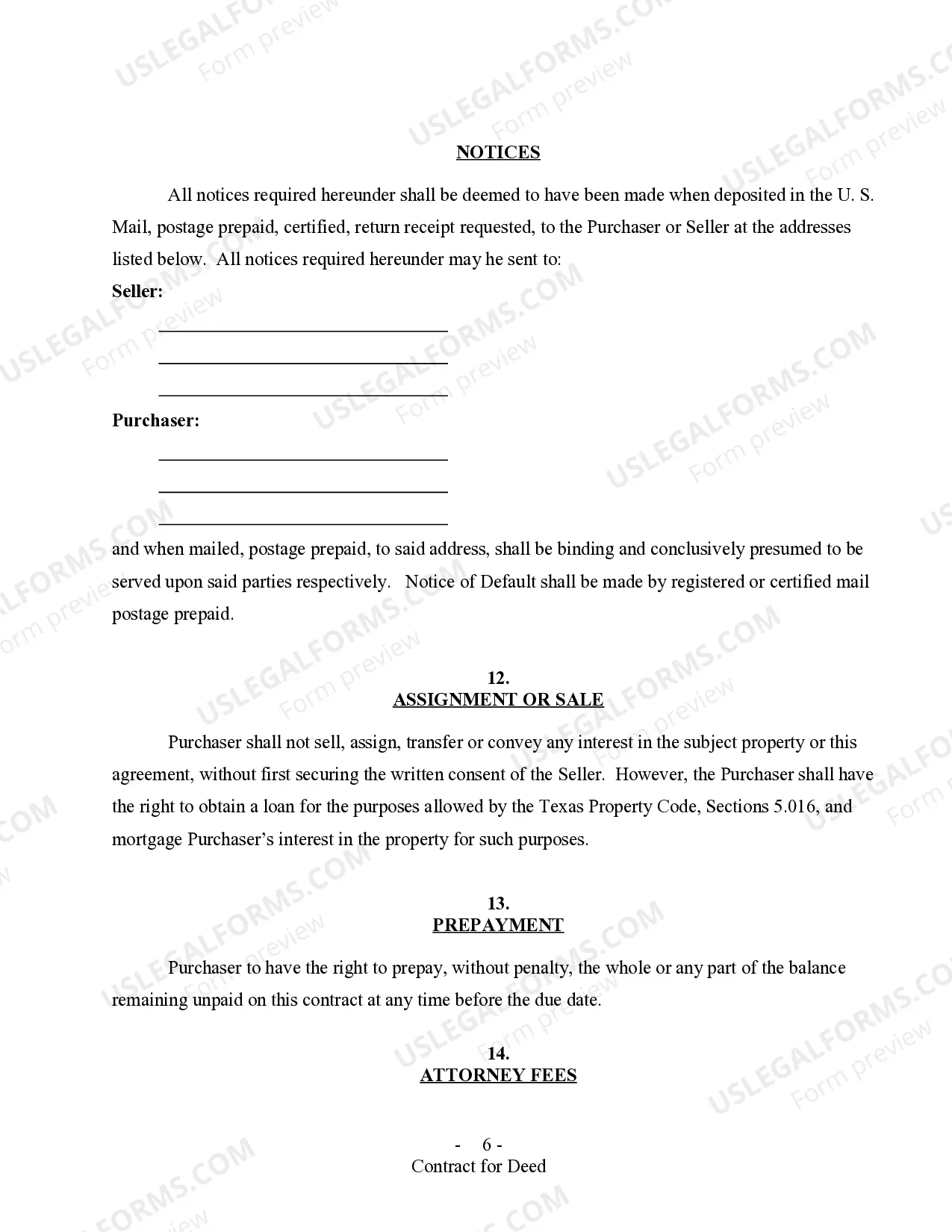
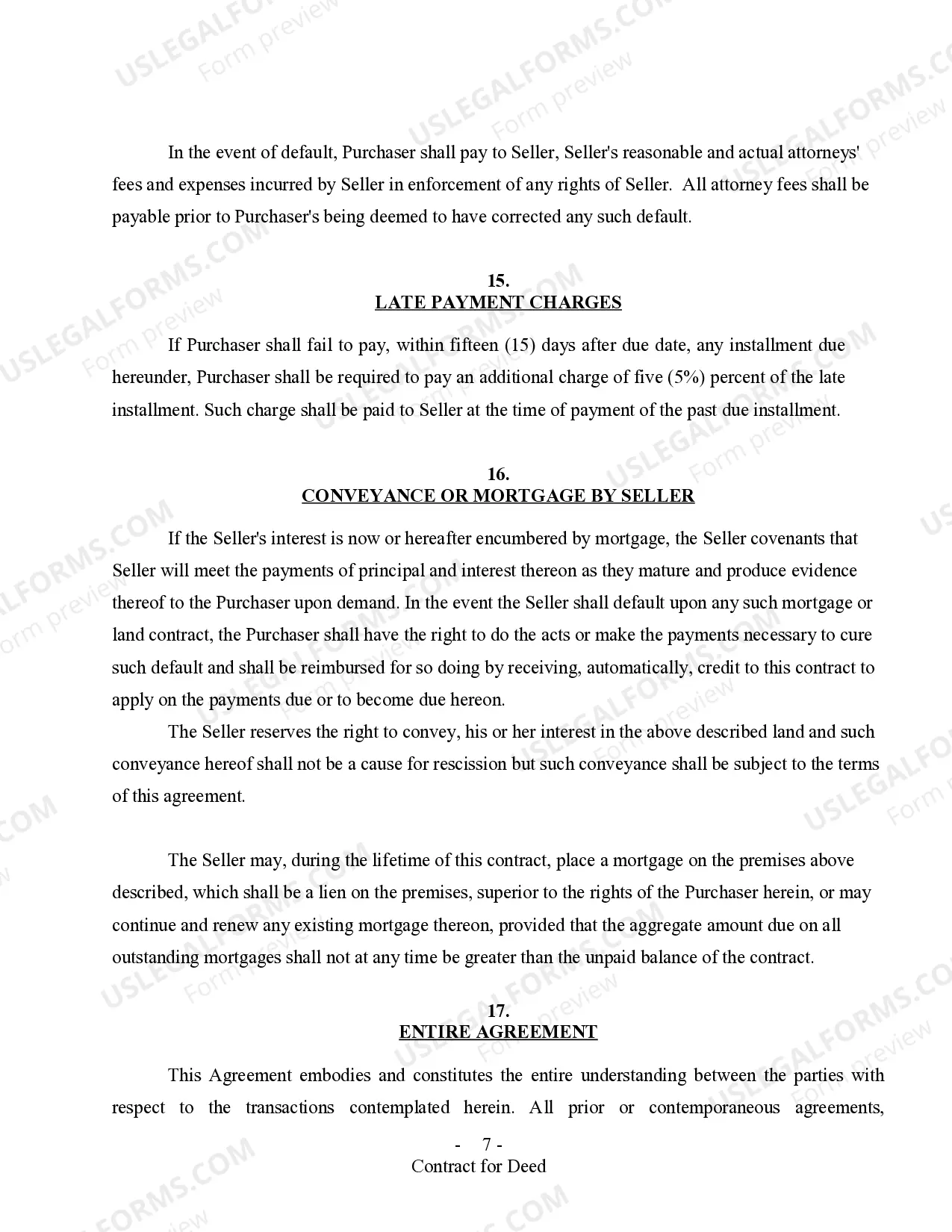
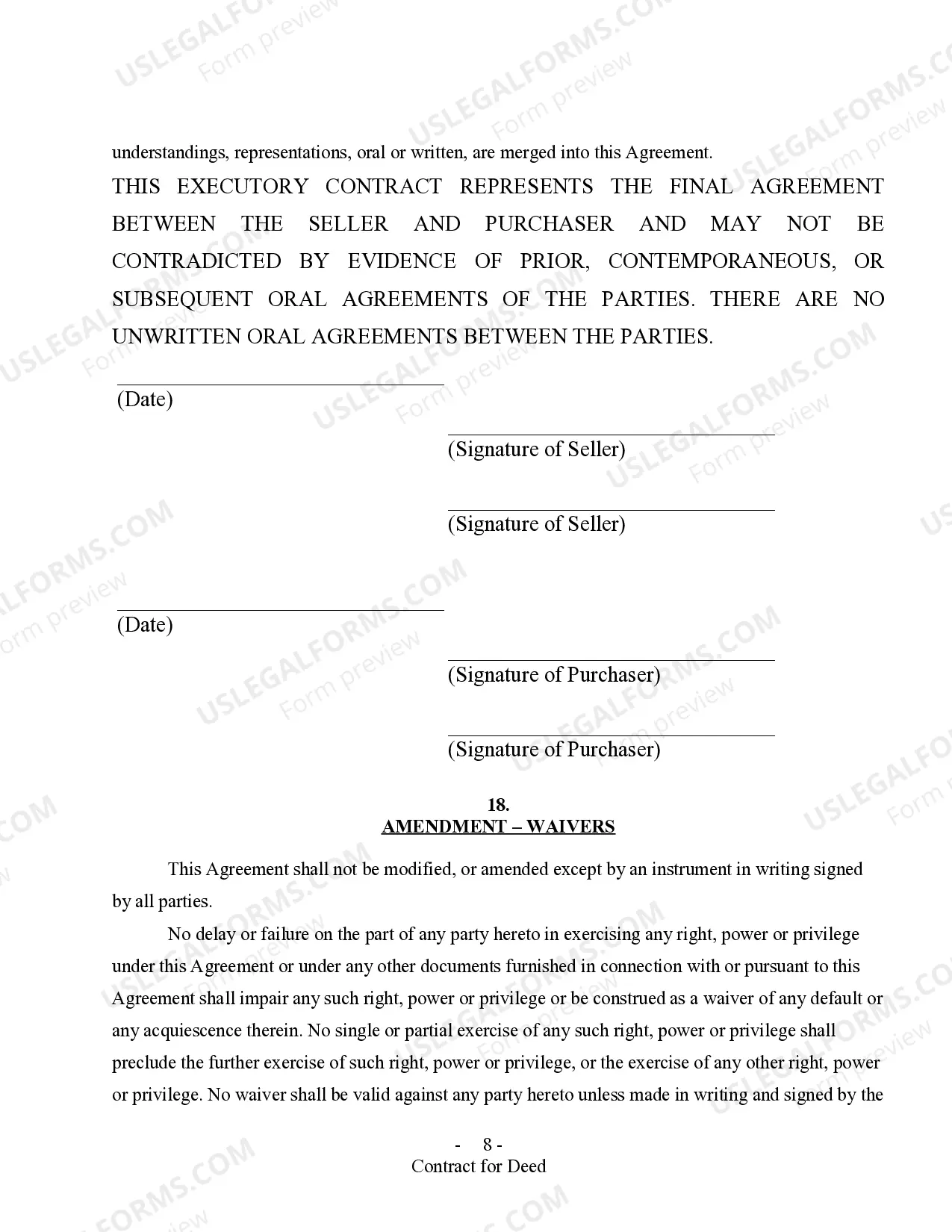
How to fill out All Texas Contract For Deed Forms For Residential Use - Land Contract, Agreement For Deed, Executory Contract?
- If you are a returning user, log into your account to download the required template by clicking the Download button. Ensure your subscription is active; if not, renew it according to your payment plan.
- For first-time users, begin by browsing the Preview mode and reviewing the form descriptions. Make sure you select the appropriate document for your needs and verify it meets local jurisdiction requirements.
- If the document you selected doesn't meet your needs, utilize the Search tab to find an alternative template. Confirm it aligns with your requirements before proceeding.
- Once you've found a suitable form, click the Buy Now button and select your preferred subscription plan. You will need to create an account to access the complete library.
- Complete your purchase by entering your credit card information or using PayPal to pay for your subscription.
- Finally, download your chosen form to your device, allowing easy access for completion. You can find it anytime in the My Forms menu in your profile.
By following these straightforward steps, you can seamlessly obtain your executory document with estate through US Legal Forms. This platform not only offers expansive form collections but also connects you with experts for guidance on form completion, ensuring you have every resource you need at your fingertips.
Start simplifying your legal documentation process today by visiting US Legal Forms and accessing their extensive library of legal documents!
Form popularity
FAQ
Proof of executorship can be obtained through the probate court that issued your 'Letters Testamentary.' This document serves as official evidence of your role and is necessary for handling estate affairs. For convenience, you may also explore services like USLegalForms, which can assist in managing your paperwork.
The primary difference lies in the scope of authority. An executor manages the estate after someone's death, while a power of attorney acts on behalf of a person while they are alive. Executors work based on executory documents with estate, whereas a power of attorney handles decisions based on a signed document during the individual’s lifetime.
You can prove you are the executor by presenting the 'Letters Testamentary' issued by the probate court. This legal document confirms your role and authority. Additionally, providing a copy of the will can further substantiate your claim.
A Letter stating you are the executor of the estate, commonly known as 'Letters Testamentary', serves as proof of your authority to manage the estate. This official document enables you to handle estate affairs, such as collecting assets and settling debts. It's an essential part of executing your duties.
To obtain executor of estate paperwork, you can contact the probate court where the deceased resided. They can provide you with the required executory documents with estate and guide you through the necessary steps. Using platforms like USLegalForms can simplify this process by offering templates and services.
You know you are an executor if the will names you as such, and you receive the 'Letters Testamentary' from the probate court. This official document outlines your role and authority. If you are unsure, consult the will or a legal professional.
The document that proves you are an executor is typically the 'Letters Testamentary' or 'Letters of Administration.' These executory documents with estate confirm your authority to act on behalf of the estate. In most cases, the probate court issues these letters after validating the will.
To get appointed as an executor of an estate, you need to file a petition with the probate court along with the deceased's will and an executory document with estate details. The court will review your petition and may require a hearing to confirm your appointment. Showing that you are willing and able to fulfill the responsibilities of this role can strengthen your case.
As an executor of a will, your first steps involve reviewing the will thoroughly and gathering essential documents, including an executory document with estate details. Next, you should file the will with the probate court and notify the beneficiaries. It's important to understand your duties clearly and establish a plan for managing the estate effectively.
To file for executor of an estate, you should begin by submitting a petition to the probate court. This petition typically includes the will and an executory document with estate information. It’s crucial to provide relevant details about the deceased and their assets. Using resources like uslegalforms can assist you in preparing the necessary legal documents to make this process smoother.