Evict Dakota South Withers
Description
Get your form ready online
Our built-in tools help you complete, sign, share, and store your documents in one place.
Make edits, fill in missing information, and update formatting in US Legal Forms—just like you would in MS Word.
Download a copy, print it, send it by email, or mail it via USPS—whatever works best for your next step.
Sign and collect signatures with our SignNow integration. Send to multiple recipients, set reminders, and more. Go Premium to unlock E-Sign.
If this form requires notarization, complete it online through a secure video call—no need to meet a notary in person or wait for an appointment.
We protect your documents and personal data by following strict security and privacy standards.

Make edits, fill in missing information, and update formatting in US Legal Forms—just like you would in MS Word.

Download a copy, print it, send it by email, or mail it via USPS—whatever works best for your next step.

Sign and collect signatures with our SignNow integration. Send to multiple recipients, set reminders, and more. Go Premium to unlock E-Sign.

If this form requires notarization, complete it online through a secure video call—no need to meet a notary in person or wait for an appointment.

We protect your documents and personal data by following strict security and privacy standards.
Looking for another form?









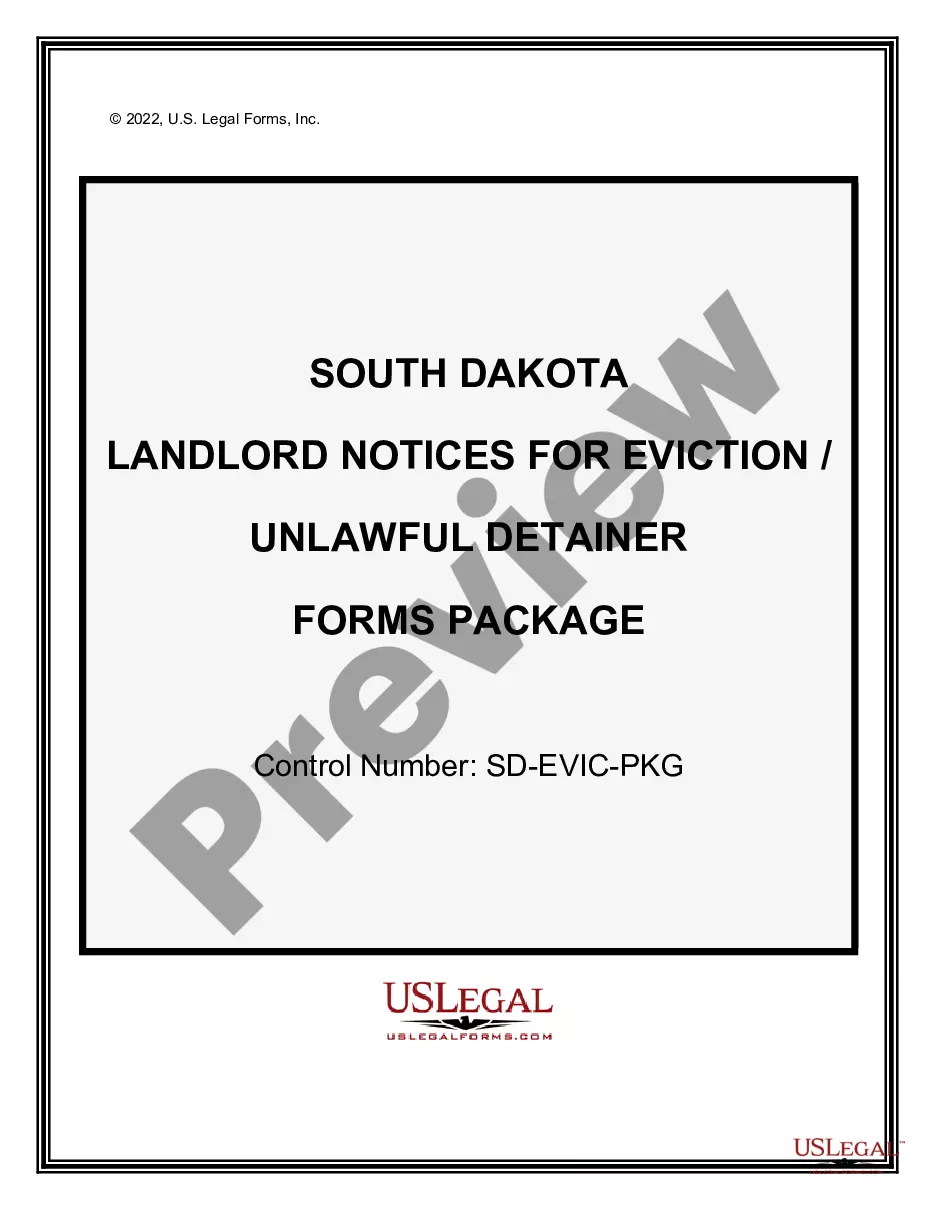
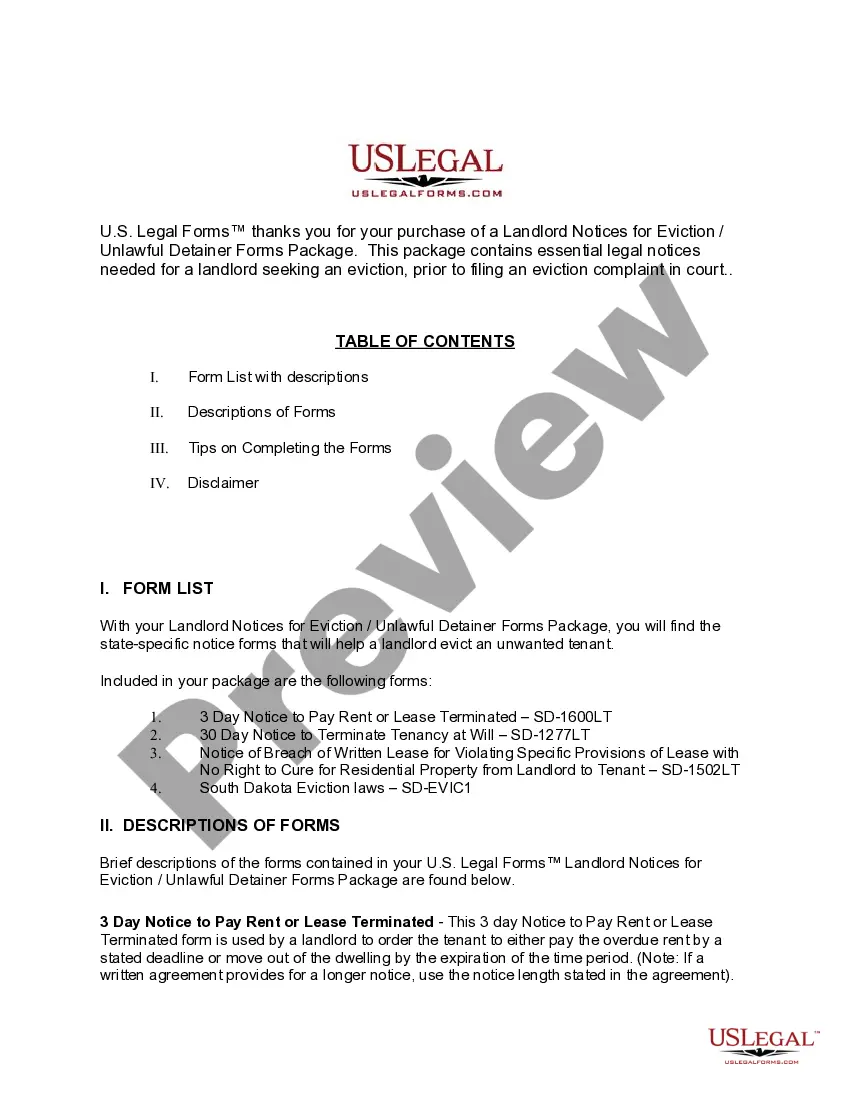
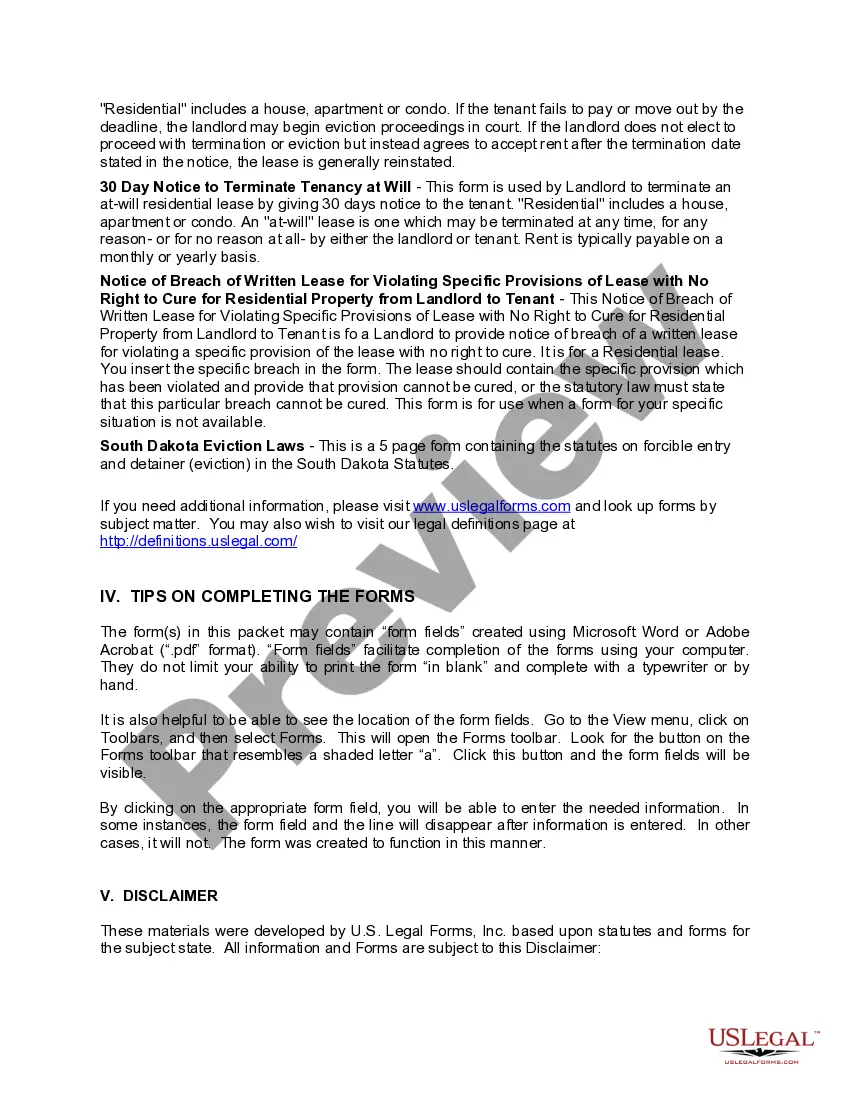
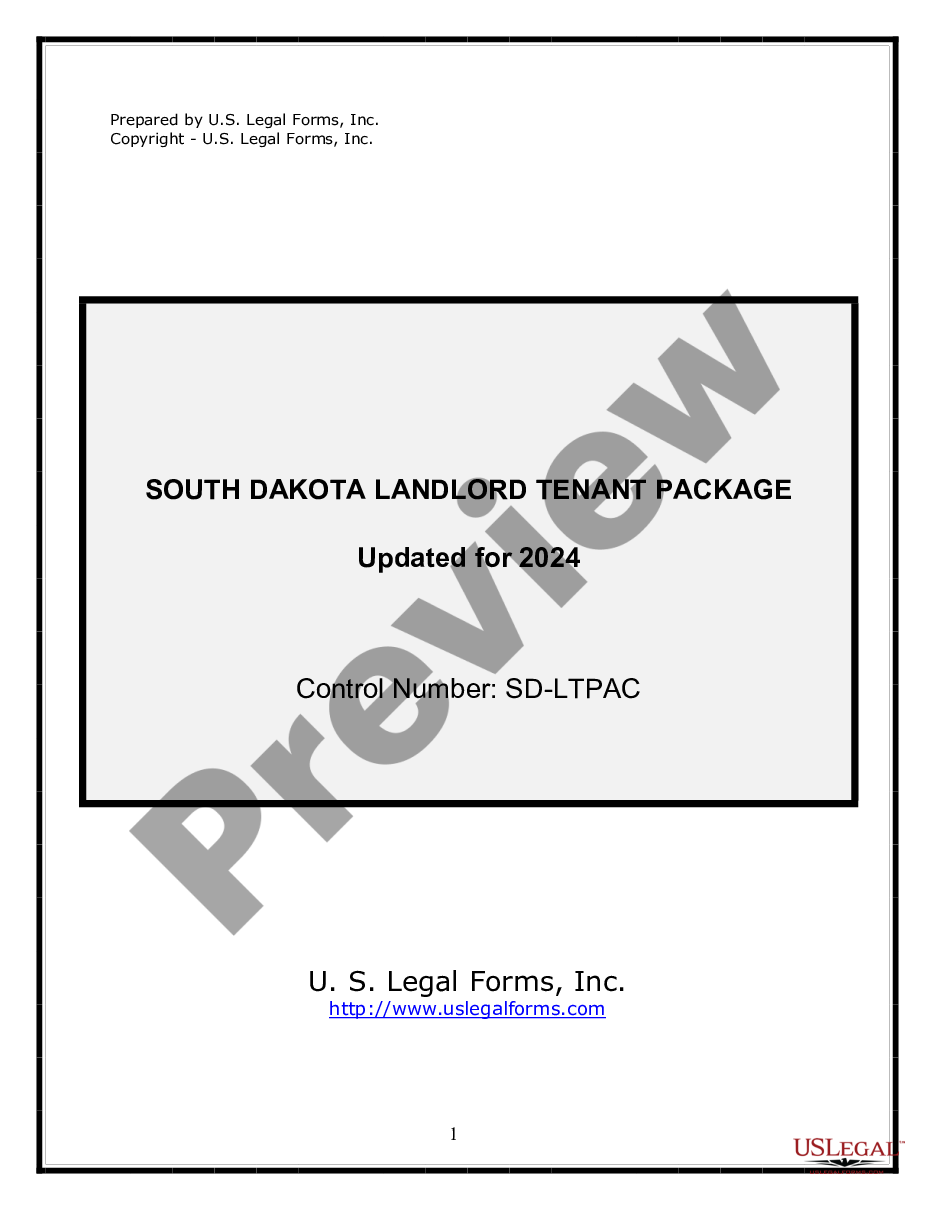
How to fill out South Dakota Landlord Notices For Eviction / Unlawful Detainer Forms Package?
Locating a reliable source for obtaining the latest and most pertinent legal templates constitutes a significant part of navigating bureaucracy. Securing the appropriate legal documents requires precision and meticulousness, highlighting the importance of sourcing Evict Dakota South Withers samples exclusively from credible providers, such as US Legal Forms. An incorrect template will squander your time and hinder your current situation. With US Legal Forms, you can rest assured. You can access and review all the specifics related to the document's application and relevance for your situation and in your jurisdiction.
Follow these outlined steps to finalize your Evict Dakota South Withers.
Eliminate the complications associated with your legal documentation. Browse the vast US Legal Forms library to discover legal templates, assess their relevance to your situation, and download them immediately.
- Utilize the directory navigation or search bar to locate your sample.
- Examine the form's description to verify its compliance with the requirements of your jurisdiction.
- Check the form preview, if available, to confirm it is the template you need.
- Return to the search to find the appropriate document if the Evict Dakota South Withers does not align with your needs.
- Once you are confident about the form's relevance, download it.
- If you are a registered user, click Log in to verify and access your chosen templates in My documents.
- If you do not have an account yet, click Buy now to acquire the template.
- Select the pricing option that suits your needs.
- Proceed with the registration to finalize your purchase.
- Complete your transaction by selecting a payment method (credit card or PayPal).
- Choose the file format for downloading Evict Dakota South Withers.
- Once you have the form on your device, you can modify it with the editor or print it out to fill it in by hand.
Form popularity
FAQ
30-Day Lease Termination Landlords must give tenants 30 days' notice to move out if they're on a month-to-month lease in South Dakota.
Subject to a fee, the sheriff's office or process server will serve the Notice to Quit and Vacate on the tenant(s) and provide you with an Affidavit of Service. The tenant(s) will have 3 days after service to vacate the premises. If the tenant(s) comply with the Notice to Quit and Vacate, no further action is needed.
A tenant must be given three (3) days notice to vacate before a Forcible Entry or Detainer action can be commenced by a landlord. If the tenant refuses to move after three (3) days, the landlord can then file a lawsuit (Forcible Entry and Detainer) for eviction.
Before they can start the eviction process, a landlord must give the tenant an official written 3-Day Notice to Quit. If the tenant fails to vacate the rental unit after the three-day notice, the landlord may continue filing for a Forcible Entry and Detainer action.
The Eviction Legal Process A landlord provides an eviction notice to their tenant, giving them a number of days to pay rent, fix any damages, or otherwise remedy the problem that led to eviction. The landlord may then file an eviction lawsuit against the renter if that time period ends without a resolution.