Tenant Landlord Cease With A Tenant
Description



Get your form ready online
Our built-in tools help you complete, sign, share, and store your documents in one place.
Make edits, fill in missing information, and update formatting in US Legal Forms—just like you would in MS Word.
Download a copy, print it, send it by email, or mail it via USPS—whatever works best for your next step.
Sign and collect signatures with our SignNow integration. Send to multiple recipients, set reminders, and more. Go Premium to unlock E-Sign.
If this form requires notarization, complete it online through a secure video call—no need to meet a notary in person or wait for an appointment.
We protect your documents and personal data by following strict security and privacy standards.

Make edits, fill in missing information, and update formatting in US Legal Forms—just like you would in MS Word.

Download a copy, print it, send it by email, or mail it via USPS—whatever works best for your next step.

Sign and collect signatures with our SignNow integration. Send to multiple recipients, set reminders, and more. Go Premium to unlock E-Sign.

If this form requires notarization, complete it online through a secure video call—no need to meet a notary in person or wait for an appointment.

We protect your documents and personal data by following strict security and privacy standards.
Looking for another form?






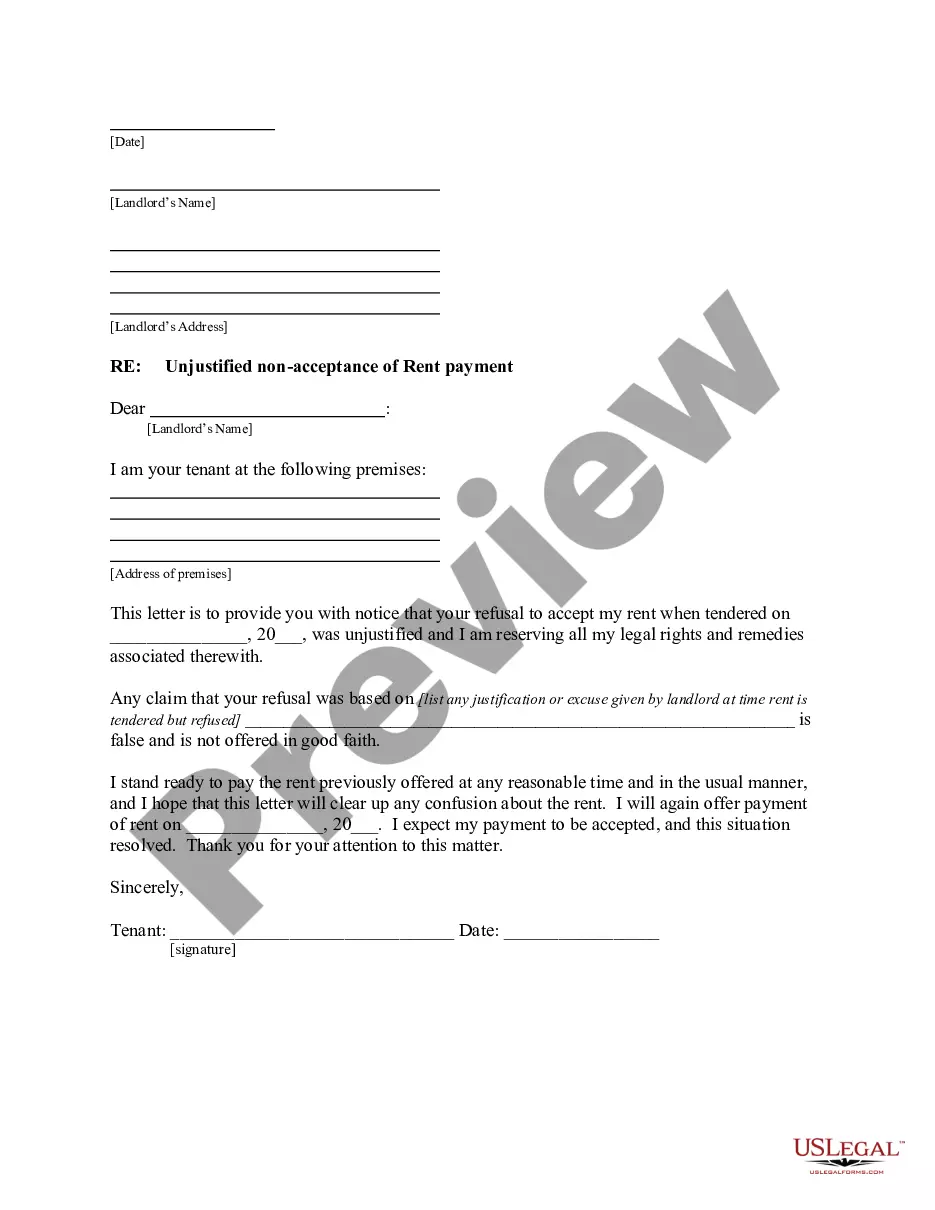
How to fill out Pennsylvania Letter From Tenant To Landlord Containing Notice To Cease Unjustified Nonacceptance Of Rent?
- If you’ve used US Legal Forms before, log in to your account and ensure your subscription is active. Click the Download button for your desired form.
- If this is your first time, start by checking the form description and preview mode to confirm it matches your jurisdiction's specific needs.
- If you need a different form, utilize the Search tab to find what best suits your requirements and ensure compliance.
- Purchase your document by clicking the Buy Now button. Choose your preferred subscription plan and register for full access.
- Complete your transaction by entering your credit card details or opting for PayPal to finalize your subscription.
- Download the form to your device, allowing you to complete it at your convenience. You can also access it anytime from the My Forms section.
Utilizing US Legal Forms ensures that you have the right resources to create legally sound documents with confidence. Their robust form collection and expert assistance empower both individuals and attorneys to effectively address their needs.
Don’t navigate the legal maze alone. Start your journey with US Legal Forms today and equip yourself with the tools you need for success!
Form popularity
FAQ
In Wyoming, a landlord must typically provide at least a 30-day notice for tenants to vacate the rental property. This notice period can be longer depending on the lease agreement. It is important for both parties to adhere to these timelines to avoid potential legal disputes.
Renters in Wyoming possess rights that include safe housing conditions, proper notice before entry by landlords, and the right to challenge eviction. These rights help maintain a balanced relationship between tenants and landlords. Educating yourself about these rights is essential when navigating tenant landlord cease with a tenant issues.
The time it takes to evict a tenant in Wyoming can vary, but it generally takes a few weeks to a couple of months. This timeline depends on factors like the type of notice given and whether the tenant contest the eviction. Landlords should be well-informed on the eviction process to manage expectations.
One of the most common disputes between landlords and tenants involves non-payment of rent. This issue can lead to legal actions and might require the tenants to seek assistance in understanding their rights. When facing such disputes, exploring solutions like UsLegalForms can help clarify the next steps for both parties.
Renters in Wyoming have several rights designed to protect them as tenants. Key rights include the right to habitable living conditions, the right to privacy, and the right to due process in eviction. Understanding these rights is crucial in any tenant landlord cease with a tenant situation.
The eviction process in Wyoming typically begins with the landlord providing written notice to the tenant. This notice must detail the reason for eviction, such as non-payment of rent or lease violations. Following this, if the issue is not resolved, the landlord can file an eviction lawsuit in court, leading to a hearing where both parties can present their case.
Yes, a landlord can sue a tenant after they move out if there are damages or unpaid rent. This legal action falls under tenant landlord cease with a tenant agreements. It is essential for landlords to document any issues that arise during the tenancy to support their claims.
To write a letter from a landlord to a tenant to vacate, include essential details like the date, tenant's name, rental property address, and the notice period. Clearly state the reason for the notice, if applicable, and make sure to specify a deadline for moving out. You can find templates on US Legal Forms that provide structured guidance, ensuring your letter meets legal standards in tenant landlord cease with a tenant contexts.
A landlord in California typically has to give either 30 or 60 days, based on the duration of the lease agreement. For a month-to-month tenancy, a 30-day notice is standard, while tenants who have lived in the property for over a year require a 60-day notice. Knowing these timelines can help tenants prepare for relocation and engage effectively in tenant landlord cease with a tenant situations.
In California, the standard notice period for a landlord to give a tenant to move out is either 30 or 60 days, depending on the length of tenancy. For tenancies lasting less than one year, 30 days is sufficient; for those over a year, 60 days is required. Tenants should keep this in mind, particularly when facing situations of tenant landlord cease with a tenant, to better understand their rights.