Corrective Deed Pennsylvania Withholding
Description

Get your form ready online
Our built-in tools help you complete, sign, share, and store your documents in one place.
Make edits, fill in missing information, and update formatting in US Legal Forms—just like you would in MS Word.
Download a copy, print it, send it by email, or mail it via USPS—whatever works best for your next step.
Sign and collect signatures with our SignNow integration. Send to multiple recipients, set reminders, and more. Go Premium to unlock E-Sign.
If this form requires notarization, complete it online through a secure video call—no need to meet a notary in person or wait for an appointment.
We protect your documents and personal data by following strict security and privacy standards.

Make edits, fill in missing information, and update formatting in US Legal Forms—just like you would in MS Word.

Download a copy, print it, send it by email, or mail it via USPS—whatever works best for your next step.

Sign and collect signatures with our SignNow integration. Send to multiple recipients, set reminders, and more. Go Premium to unlock E-Sign.

If this form requires notarization, complete it online through a secure video call—no need to meet a notary in person or wait for an appointment.

We protect your documents and personal data by following strict security and privacy standards.
Looking for another form?







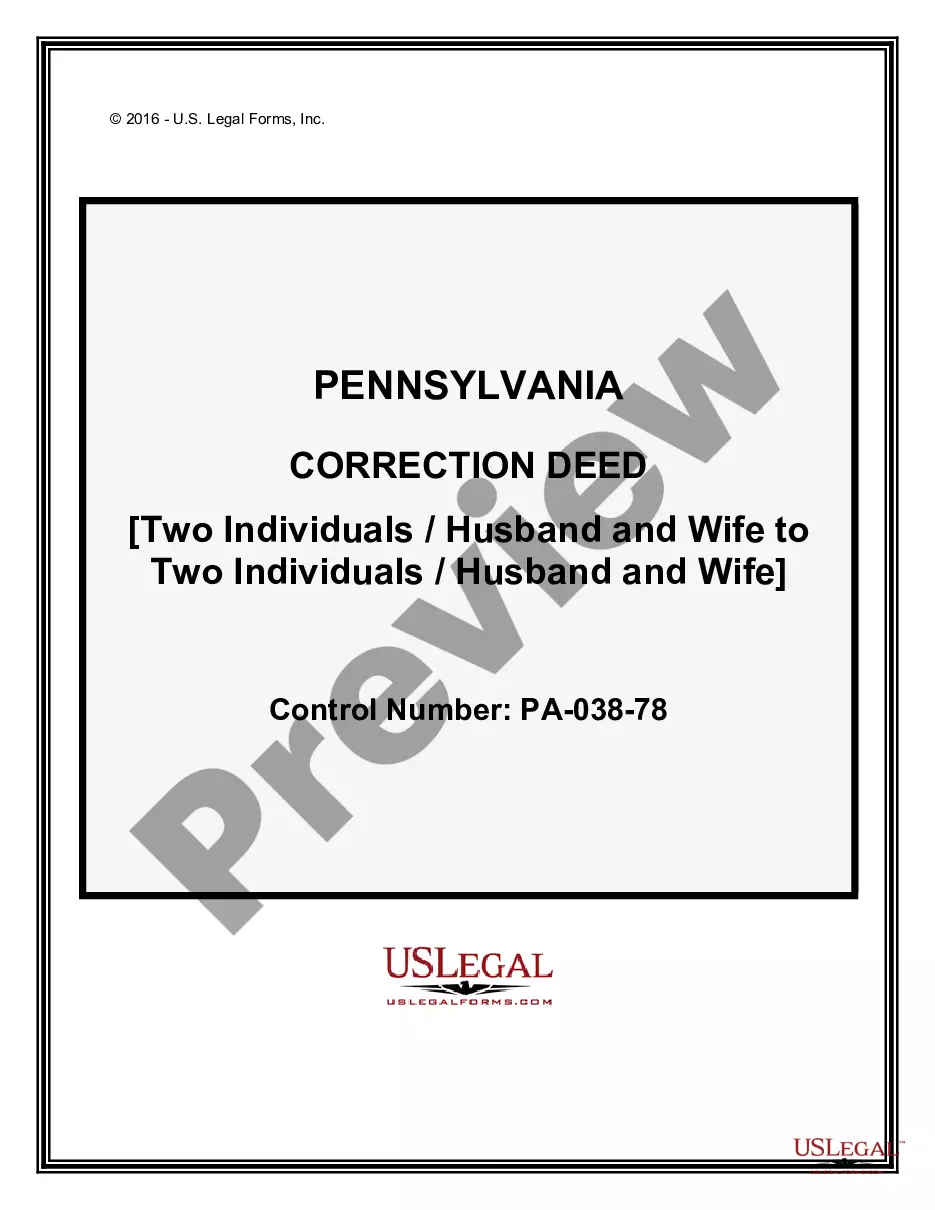
How to fill out Pennsylvania Correction Deed -?
It’s widely known that you cannot transform into a legal authority instantly, nor can you quickly learn how to prepare Corrective Deed Pennsylvania Withholding without possessing a specialized skill set.
Compiling legal documents is a lengthy process that demands specific education and expertise. So why not entrust the drafting of the Corrective Deed Pennsylvania Withholding to the experts.
With US Legal Forms, one of the most extensive legal template repositories, you can locate everything from court papers to templates for workplace communication.
If you require any additional forms, restart your search.
Sign up for a free account and select a subscription plan to purchase the form. Choose Buy now. Once the payment is processed, you can download the Corrective Deed Pennsylvania Withholding, fill it out, print it, and send or mail it to the intended recipients or organizations.
- We recognize how vital compliance and adherence to federal and state laws and regulations are.
- That’s why, on our site, all templates are region-specific and current.
- Start with our website and acquire the form you need in just minutes.
- Find the form you require using the search bar at the top of the page.
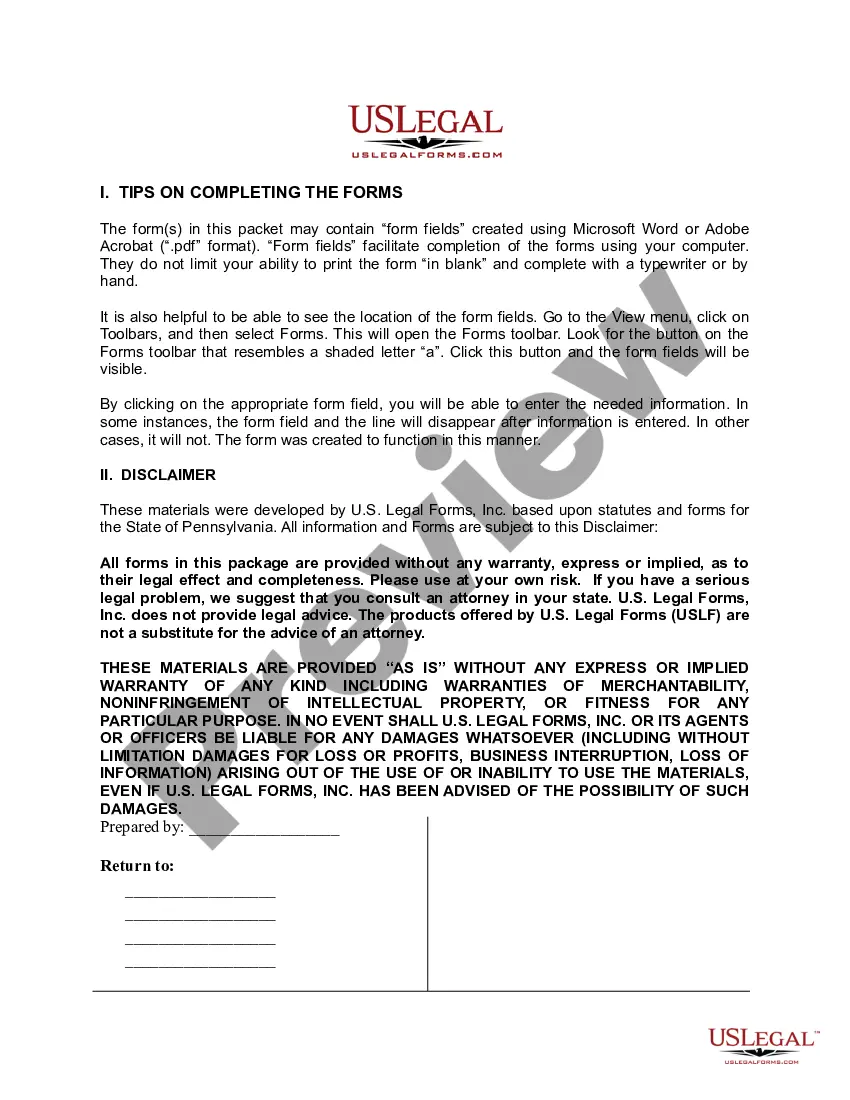
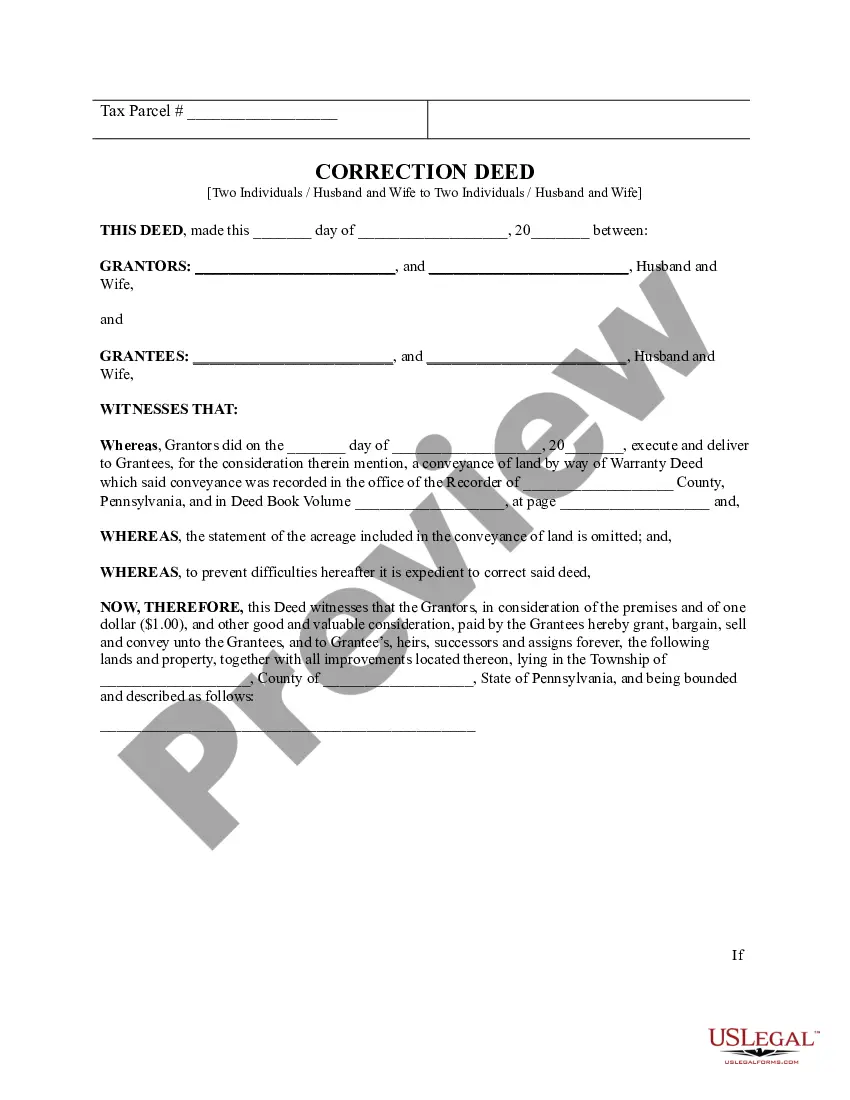
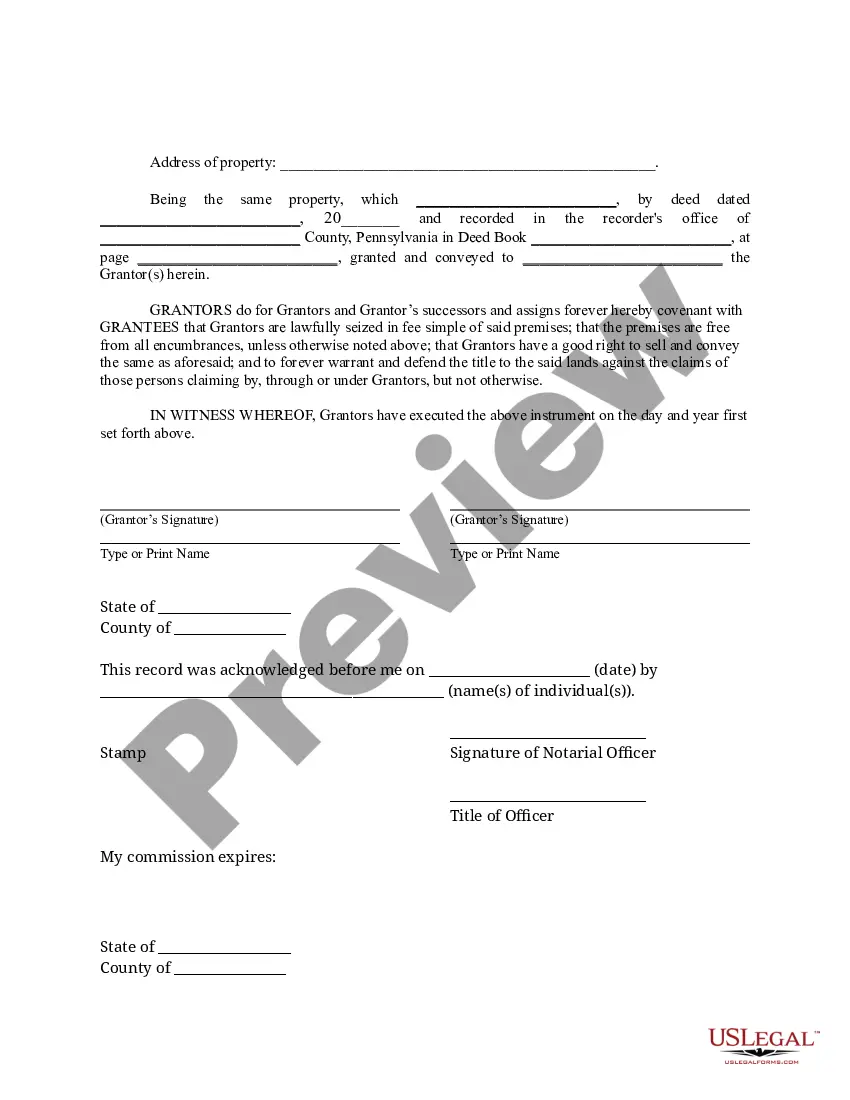
- Preview it (if this option is available) and review the supporting description to determine if Corrective Deed Pennsylvania Withholding is what you need.
Form popularity
FAQ
To change, add or remove a name on your deed a new deed needs to be recorded reflecting the change. Many people think they can come into the office and change the present recorded deed with a form, but that is not the case. Once a deed is recorded it cannot be changed.
Many people think they can come to our office and change the present deed on record. However, once a document or deed is recorded, it cannot be altered or changed in any way. A new deed is needed and can be prepared for you by your attorney.
Checklist: Preparing and Recording Your Quitclaim Deed Fill in the deed form. Print it out. Have the grantor(s) and grantee(s) sign and get the signature(s) notarized. Fill out a Statement of Value form, if necessary. Get the Uniform Parcel Number (UPI) on the deed certified, if required by your county.
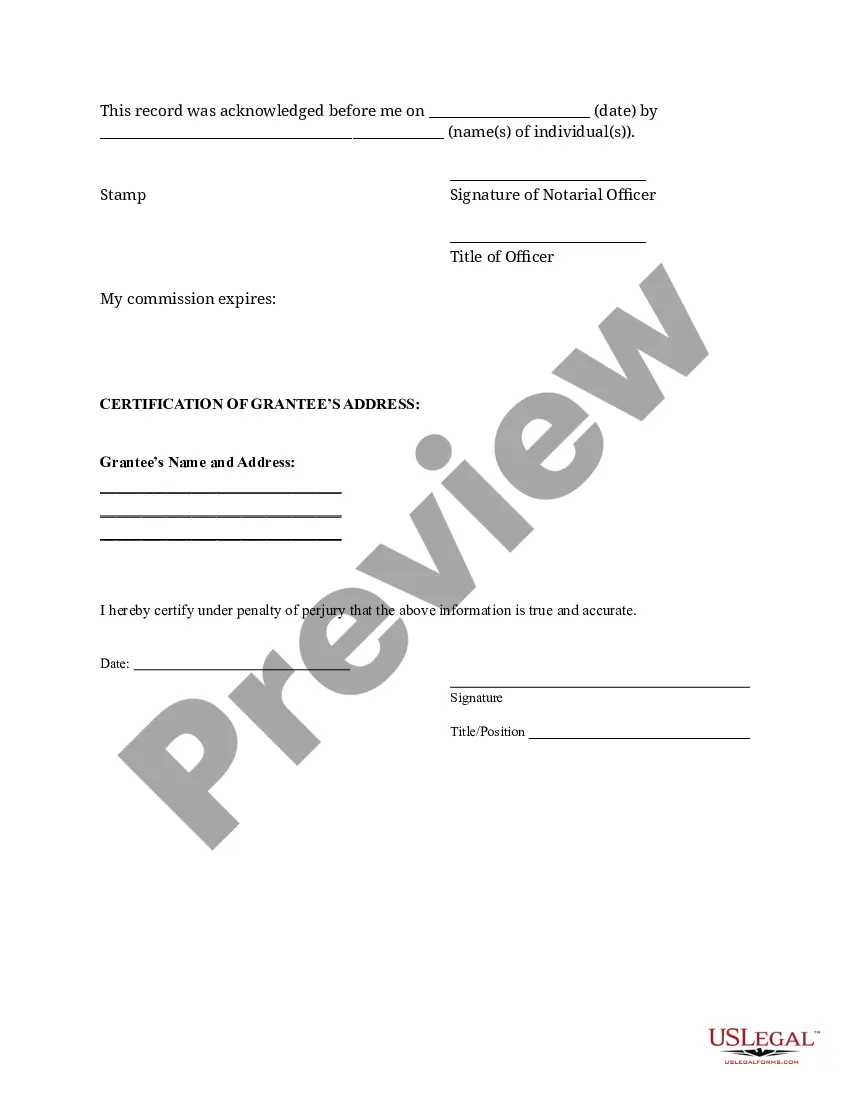
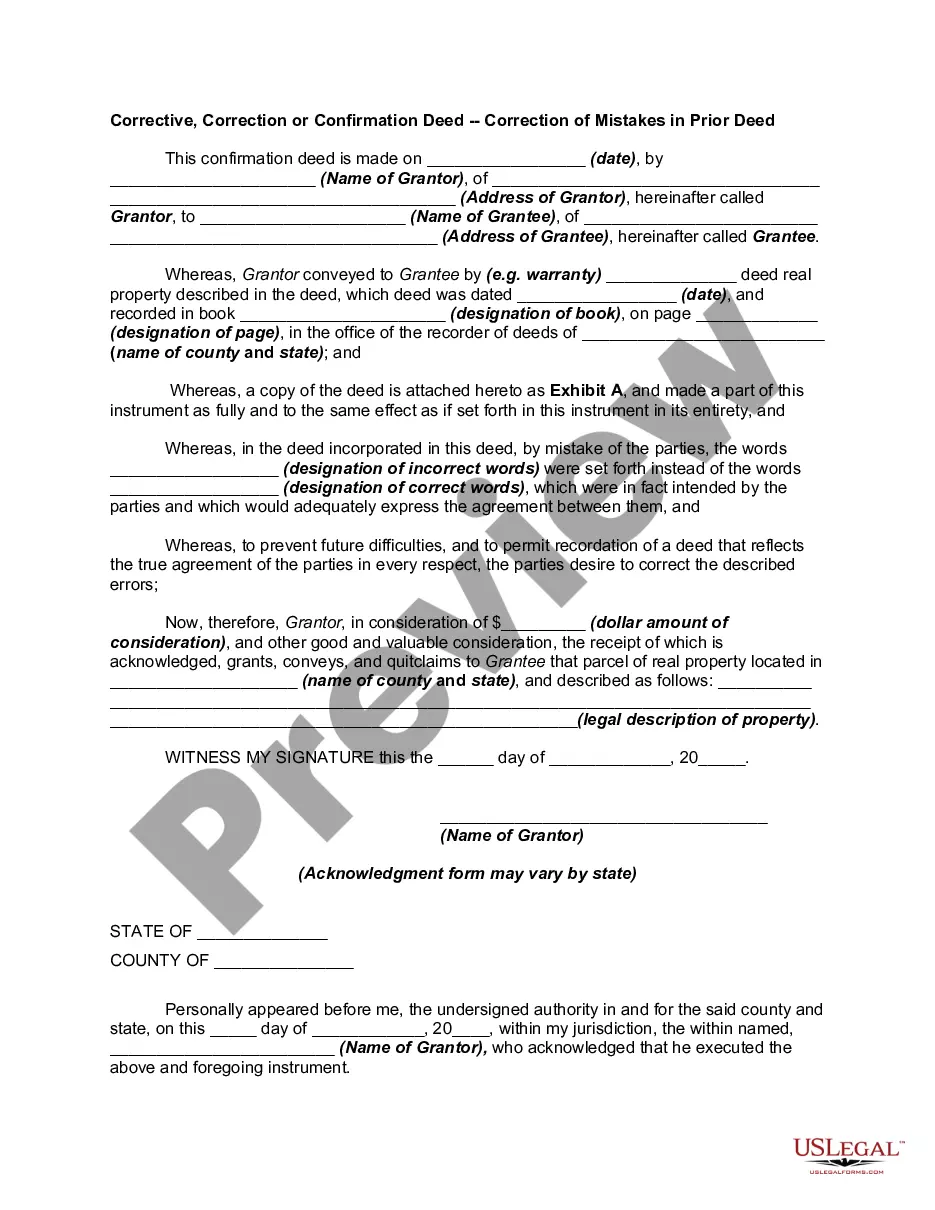
A corrective deed, also known as a confirmatory or correction deed, is a type of legal document used to amend errors in an existing property title. It is most commonly used for minor mistakes, such as misspelled or incomplete names, omissions of marital status, and missing information.
The document must have a formal acknowledgment (not sworn and subscribed) by a notary public, and must include the following: state and county; date (should not predate the document date); name of individual, corporate or authorized officer appearing; notary signature, notary stamp (where applicable), and expiration ...