Life Estate For Surviving Spouse
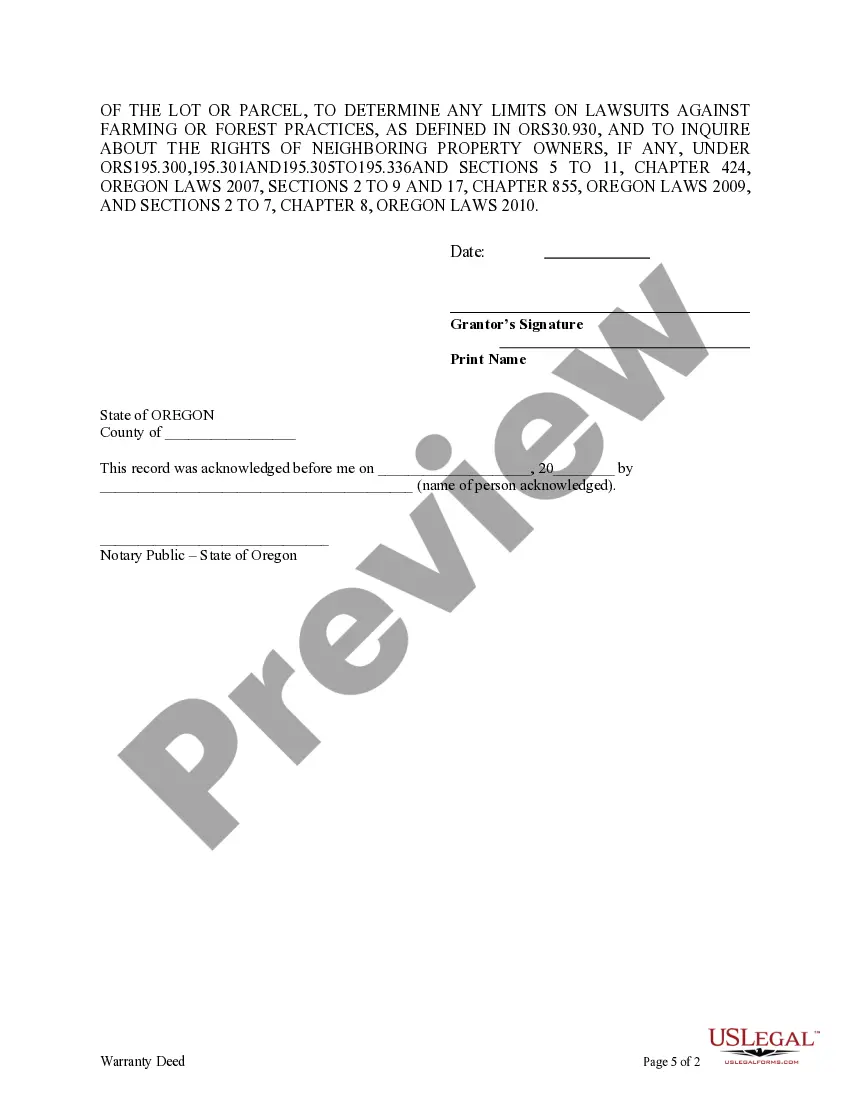
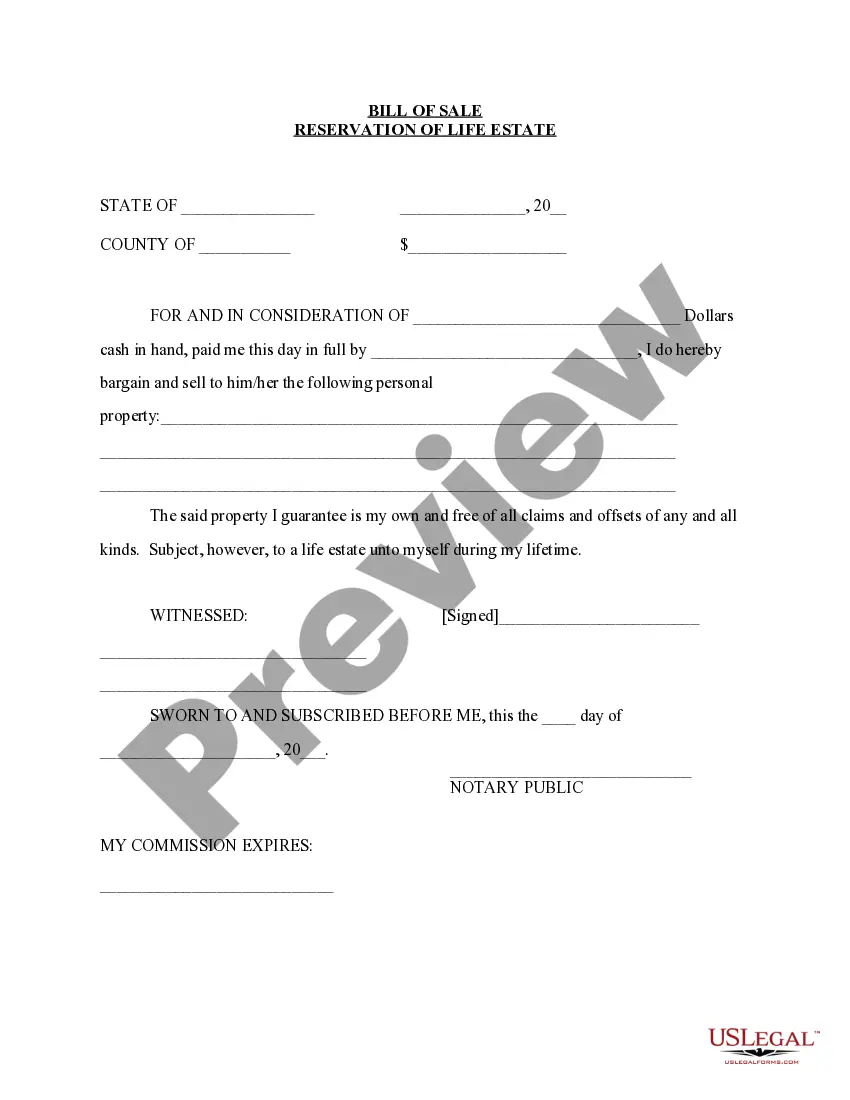
Description


Get your form ready online
Our built-in tools help you complete, sign, share, and store your documents in one place.
Make edits, fill in missing information, and update formatting in US Legal Forms—just like you would in MS Word.
Download a copy, print it, send it by email, or mail it via USPS—whatever works best for your next step.
Sign and collect signatures with our SignNow integration. Send to multiple recipients, set reminders, and more. Go Premium to unlock E-Sign.
If this form requires notarization, complete it online through a secure video call—no need to meet a notary in person or wait for an appointment.
We protect your documents and personal data by following strict security and privacy standards.

Make edits, fill in missing information, and update formatting in US Legal Forms—just like you would in MS Word.

Download a copy, print it, send it by email, or mail it via USPS—whatever works best for your next step.

Sign and collect signatures with our SignNow integration. Send to multiple recipients, set reminders, and more. Go Premium to unlock E-Sign.

If this form requires notarization, complete it online through a secure video call—no need to meet a notary in person or wait for an appointment.

We protect your documents and personal data by following strict security and privacy standards.
Looking for another form?
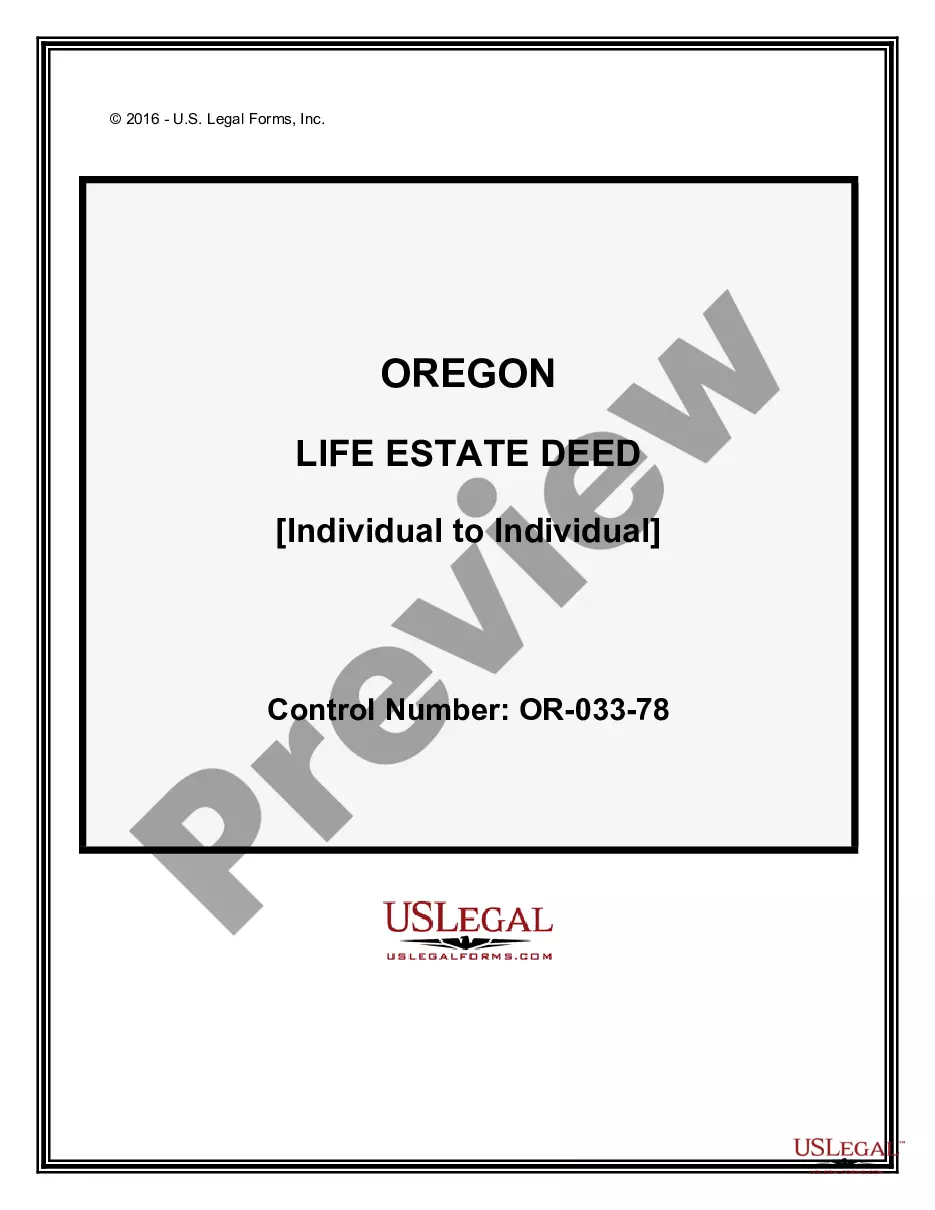
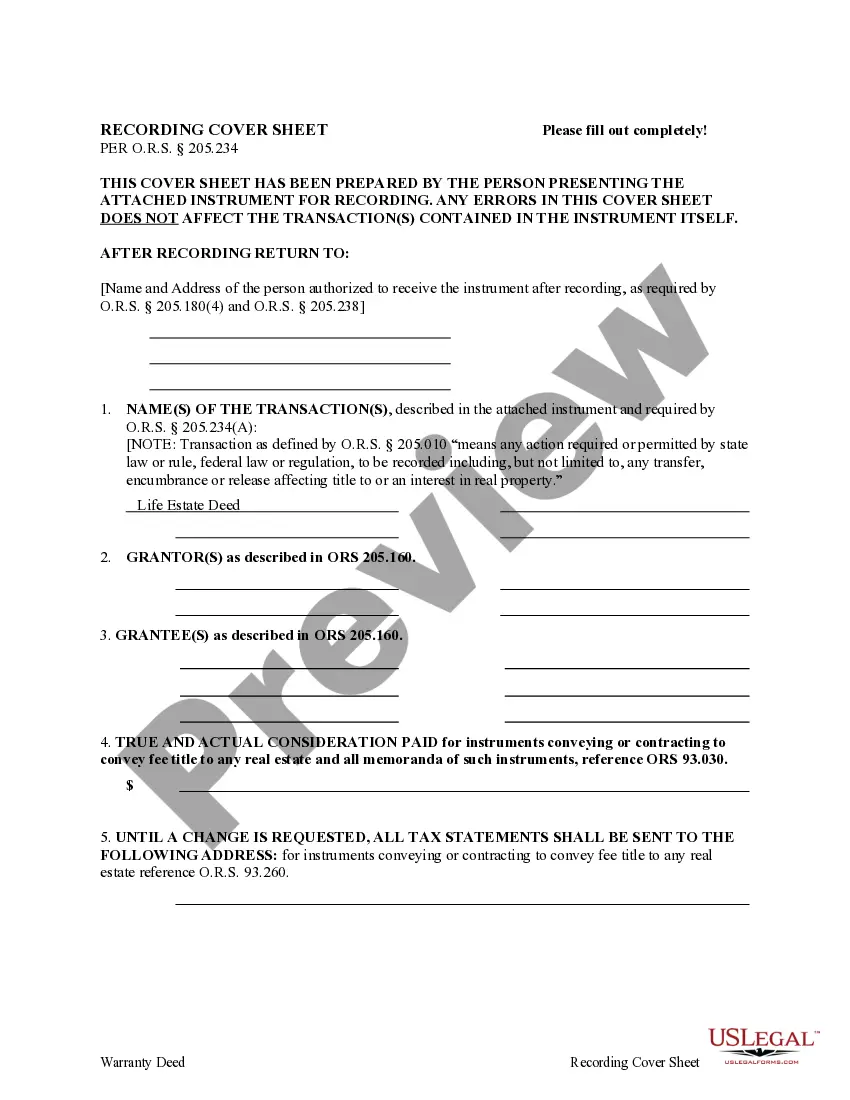
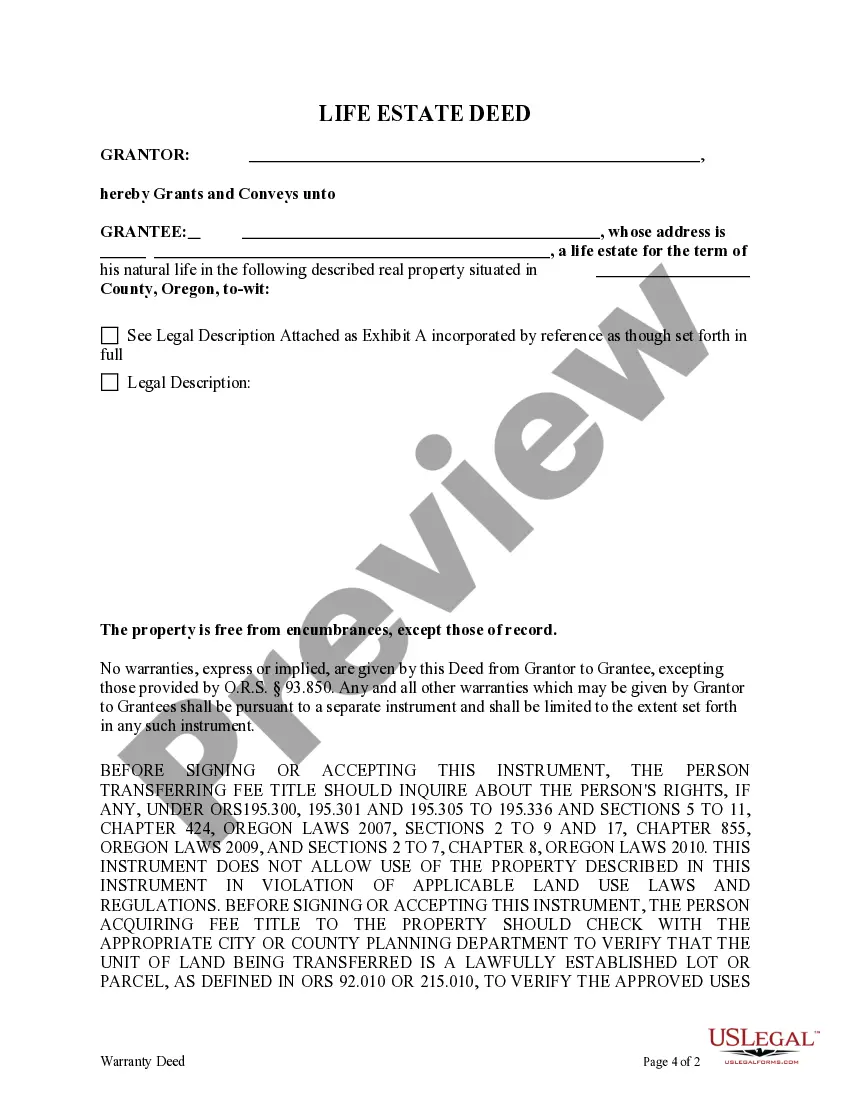
How to fill out Oregon Life Estate Deed From An Individual To An Individual.?
The Life Estate For Surviving Spouse that you observe on this webpage is a versatile formal template crafted by expert attorneys in compliance with federal and state laws.
For over 25 years, US Legal Forms has supplied individuals, organizations, and legal practitioners with more than 85,000 validated, state-specific documents for any business or personal situation. It’s the quickest, simplest, and most trustworthy method to acquire the paperwork you require, as the service ensures the utmost level of data security and anti-malware safeguards.
Select the format you desire for your Life Estate For Surviving Spouse (PDF, DOCX, RTF) and download the document onto your device.
- Search for the document you require and examine it.
- Review the sample you found and either preview it or read the form description to verify it meets your requirements. If it doesn’t, leverage the search bar to locate the appropriate one. Click Buy Now once you have identified the template you need.
- Choose and Log Into your account.
- Select the subscription plan that fits you and create an account. Use PayPal or your credit card to complete a swift payment. If you already possess an account, Log In and verify your subscription to proceed.
- Retrieve the editable template.
Form popularity
FAQ
Life estates can be a good idea for many couples, particularly those wishing to provide security for a surviving spouse. They offer a straightforward way to transfer property while retaining control during one's lifetime. However, it's essential to consider potential drawbacks, such as loss of flexibility and the impact on heirs. Using platforms like US Legal Forms can help you navigate these decisions effectively and create a life estate that meets your needs.
The tax consequences of a life estate for surviving spouse can be complex. Generally, the surviving spouse may not face immediate tax liabilities upon inheriting the property, but capital gains tax could arise when selling the home. Additionally, estate taxes may apply depending on the overall value of the estate. It is wise to consult with a tax professional to understand these implications fully and make informed decisions.
People often create life estates to ensure that their spouse has a secure home after their passing. A life estate for surviving spouse allows individuals to maintain control of their property during their lifetime while designating their spouse as the ultimate beneficiary. This arrangement can simplify the transfer of property and avoid complications with probate. By choosing this option, couples can provide peace of mind regarding their shared assets.
A life estate does not automatically exempt the property from Medicaid consideration. If you are planning for long-term care, it's essential to understand how a life estate for a surviving spouse may impact Medicaid eligibility. Consulting legal experts or using platforms like US Legal Forms can provide guidance tailored to your situation.
Creating a life estate can be an effective tool for ensuring that a surviving spouse has a secure place to live after one partner passes away. This arrangement protects the home and can avoid probate proceedings, making it easier for loved ones to manage the estate. Additionally, a life estate can offer peace of mind and financial clarity.
A life estate deed can provide significant advantages, such as allowing a surviving spouse to live in the property for their lifetime without the burden of probate. It also ensures that the property transfers automatically to the designated remainderman after the holder's death. This arrangement can simplify estate planning and preserve family assets.
Not necessarily. In the context of a life estate for a surviving spouse, the assets left to the wife depend on how the estate is structured. If the husband has created a life estate for the wife, she may retain use of the property, but it will not be solely hers after his death.
When the person holding a life estate passes away, their interest in the property automatically transfers to the remainderman. In the case of a life estate for a surviving spouse, this transfer means that the property will no longer be under their control or ownership. Understanding this process is essential for managing estate transitions effectively.
A life estate for a surviving spouse can limit their control over the property. Although they can live in the home, they cannot sell or modify the property without the consent of the remainderman. Additionally, a life estate may create complications in estate planning and taxes, which can be significant considerations for the surviving spouse.
One downside of a life estate for a surviving spouse is that this arrangement can limit control over the property. For instance, the life tenant cannot sell or mortgage the property without the consent of the remainderman. Additionally, if the property incurs debts or taxes, the life tenant may face financial hardships that affect their living situation. It is crucial to weigh these potential drawbacks when considering a life estate.