Ohio Parenting Plan Template For Toddlers
Description

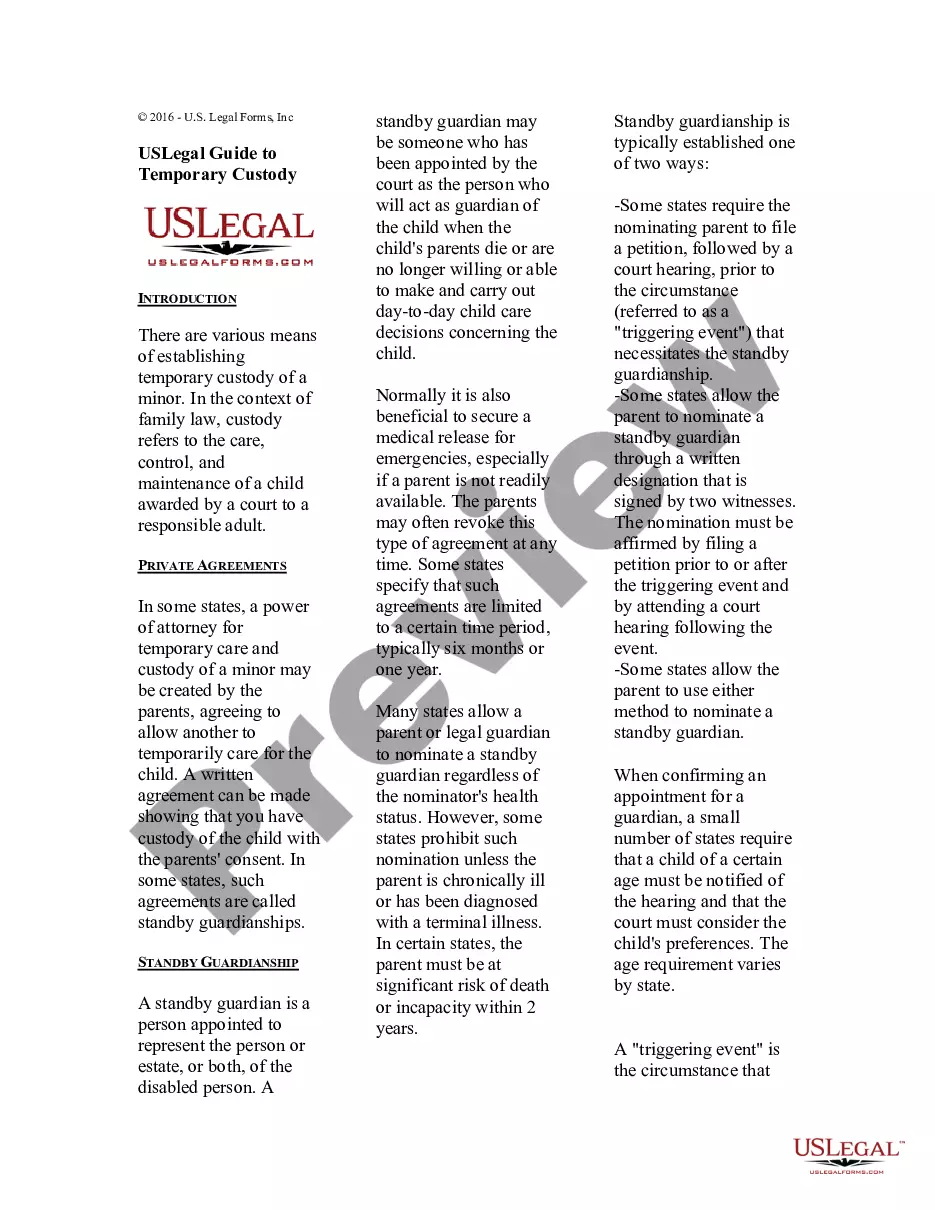
Get your form ready online
Our built-in tools help you complete, sign, share, and store your documents in one place.
Make edits, fill in missing information, and update formatting in US Legal Forms—just like you would in MS Word.
Download a copy, print it, send it by email, or mail it via USPS—whatever works best for your next step.
Sign and collect signatures with our SignNow integration. Send to multiple recipients, set reminders, and more. Go Premium to unlock E-Sign.
If this form requires notarization, complete it online through a secure video call—no need to meet a notary in person or wait for an appointment.
We protect your documents and personal data by following strict security and privacy standards.

Make edits, fill in missing information, and update formatting in US Legal Forms—just like you would in MS Word.

Download a copy, print it, send it by email, or mail it via USPS—whatever works best for your next step.

Sign and collect signatures with our SignNow integration. Send to multiple recipients, set reminders, and more. Go Premium to unlock E-Sign.

If this form requires notarization, complete it online through a secure video call—no need to meet a notary in person or wait for an appointment.

We protect your documents and personal data by following strict security and privacy standards.
Looking for another form?







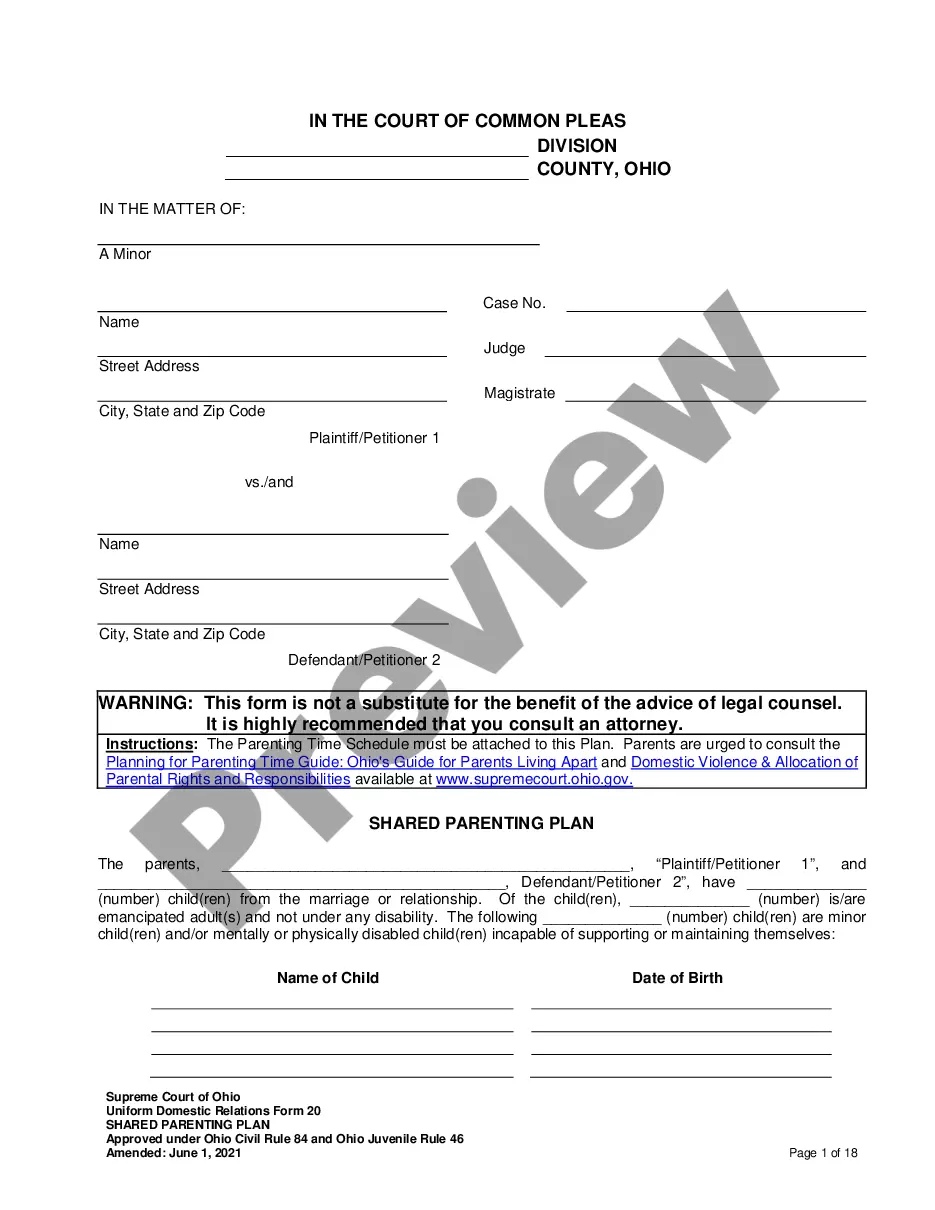
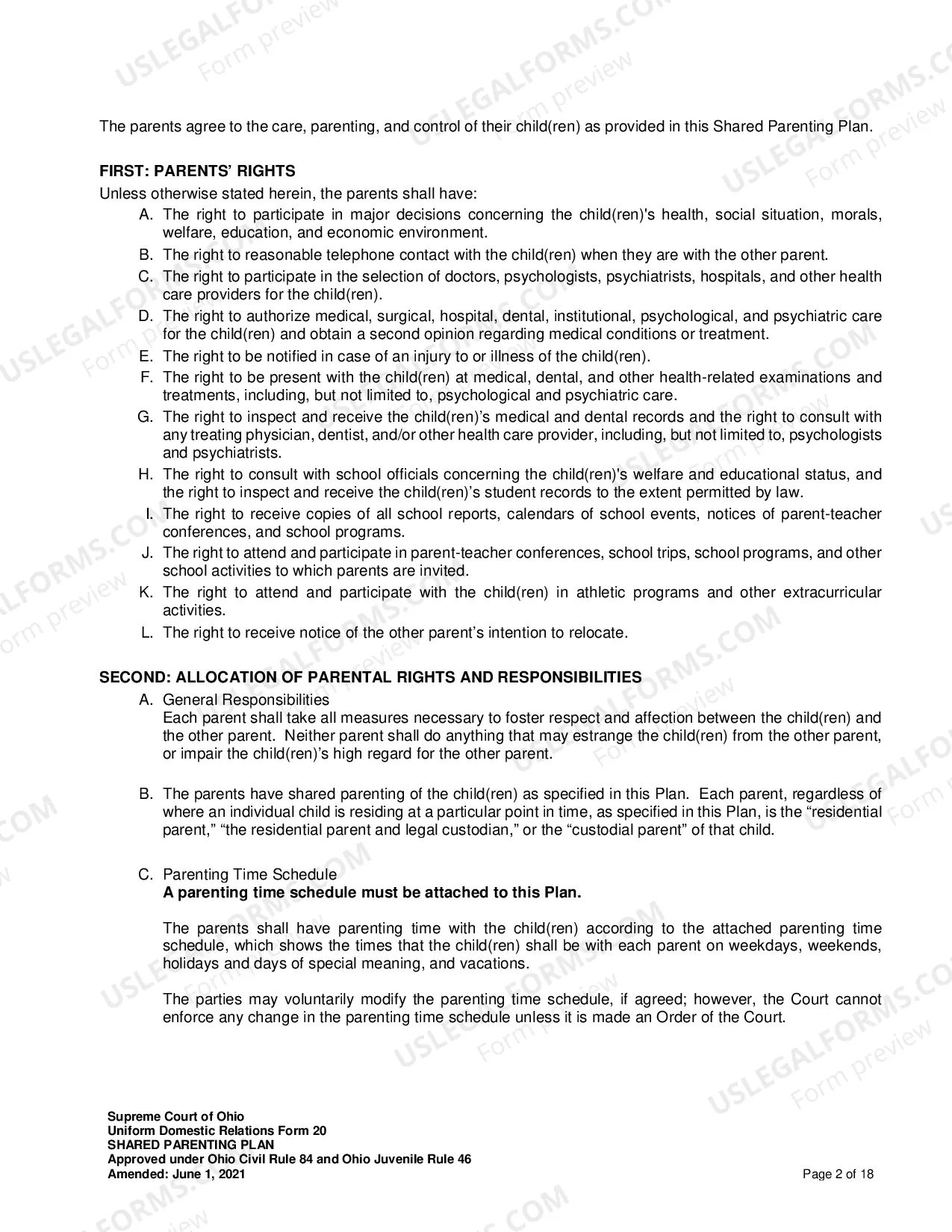
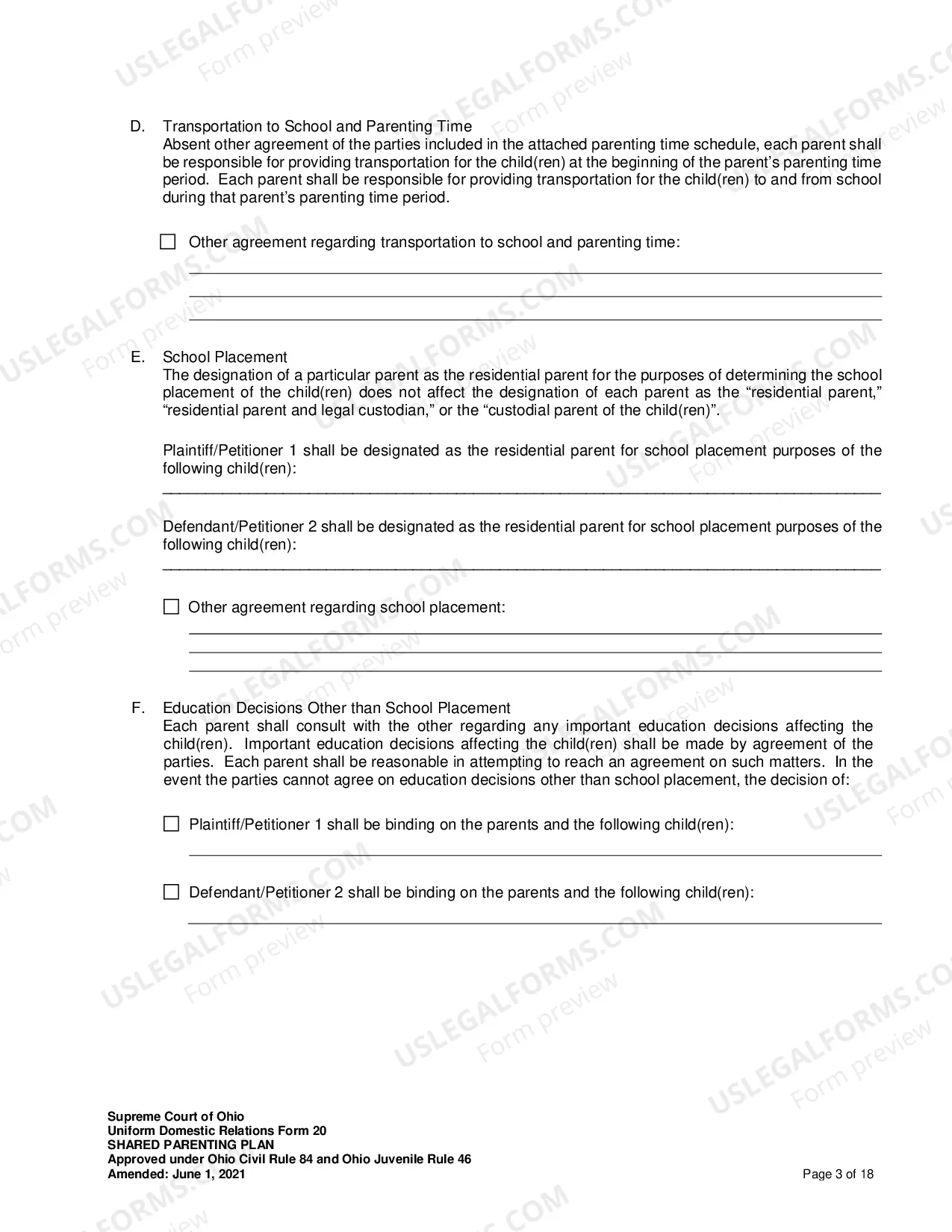
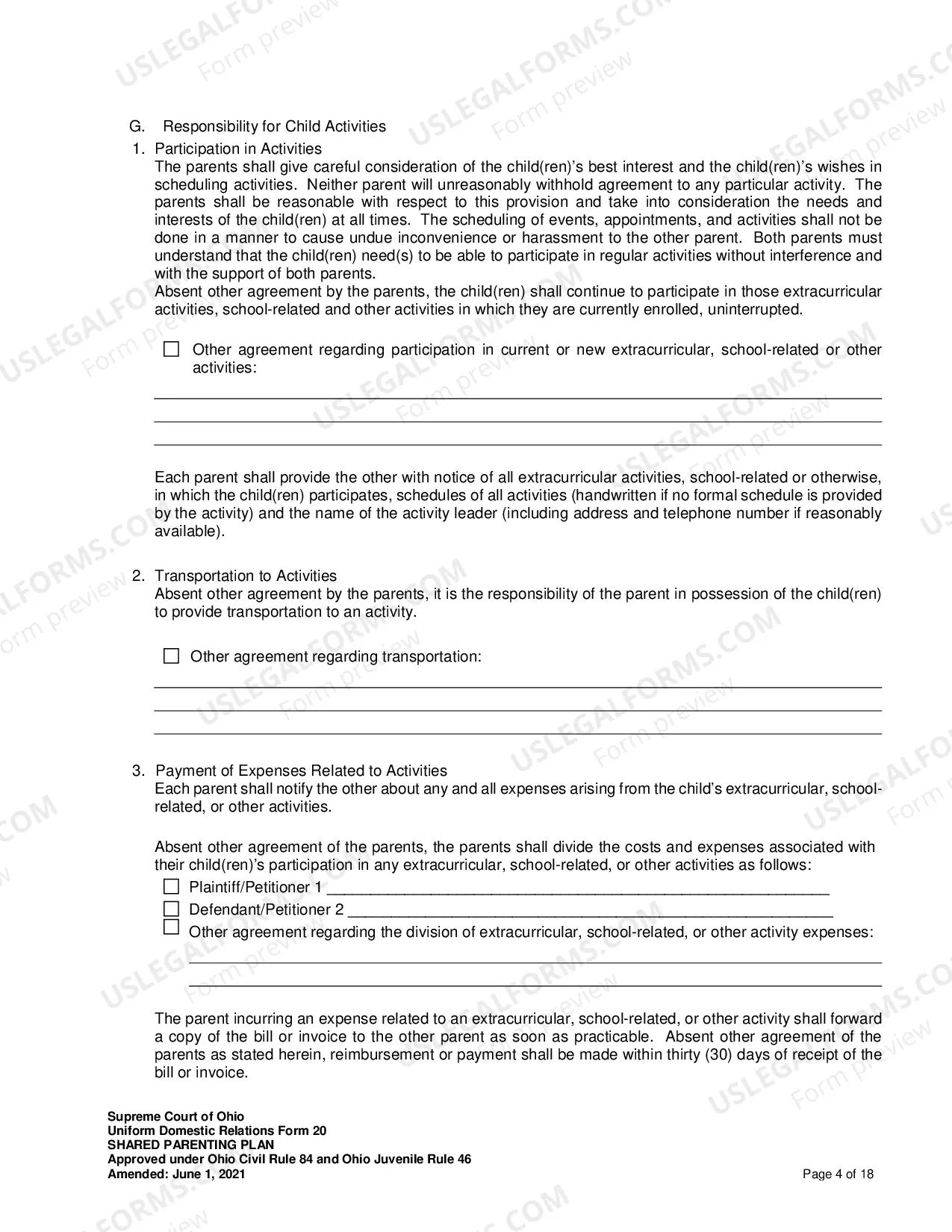
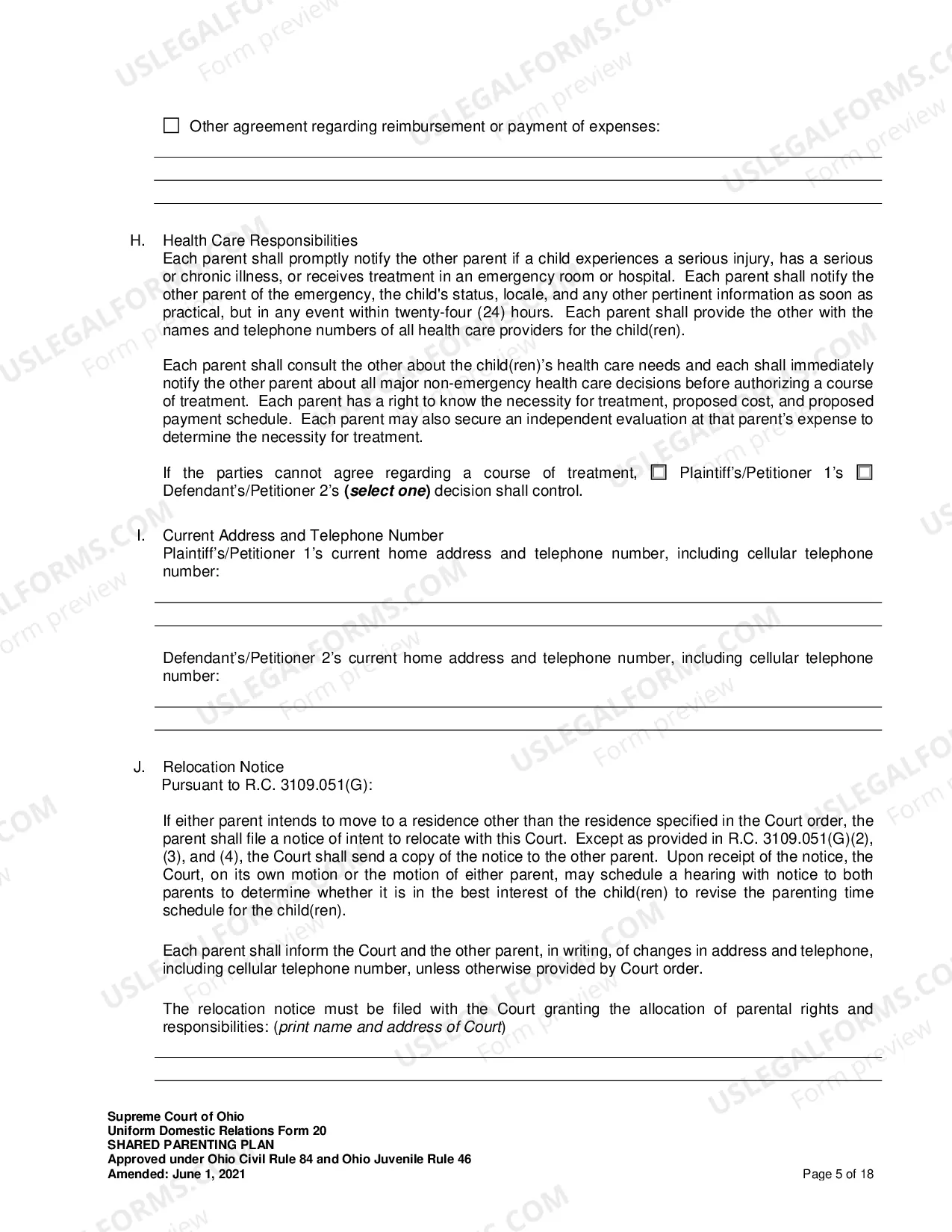
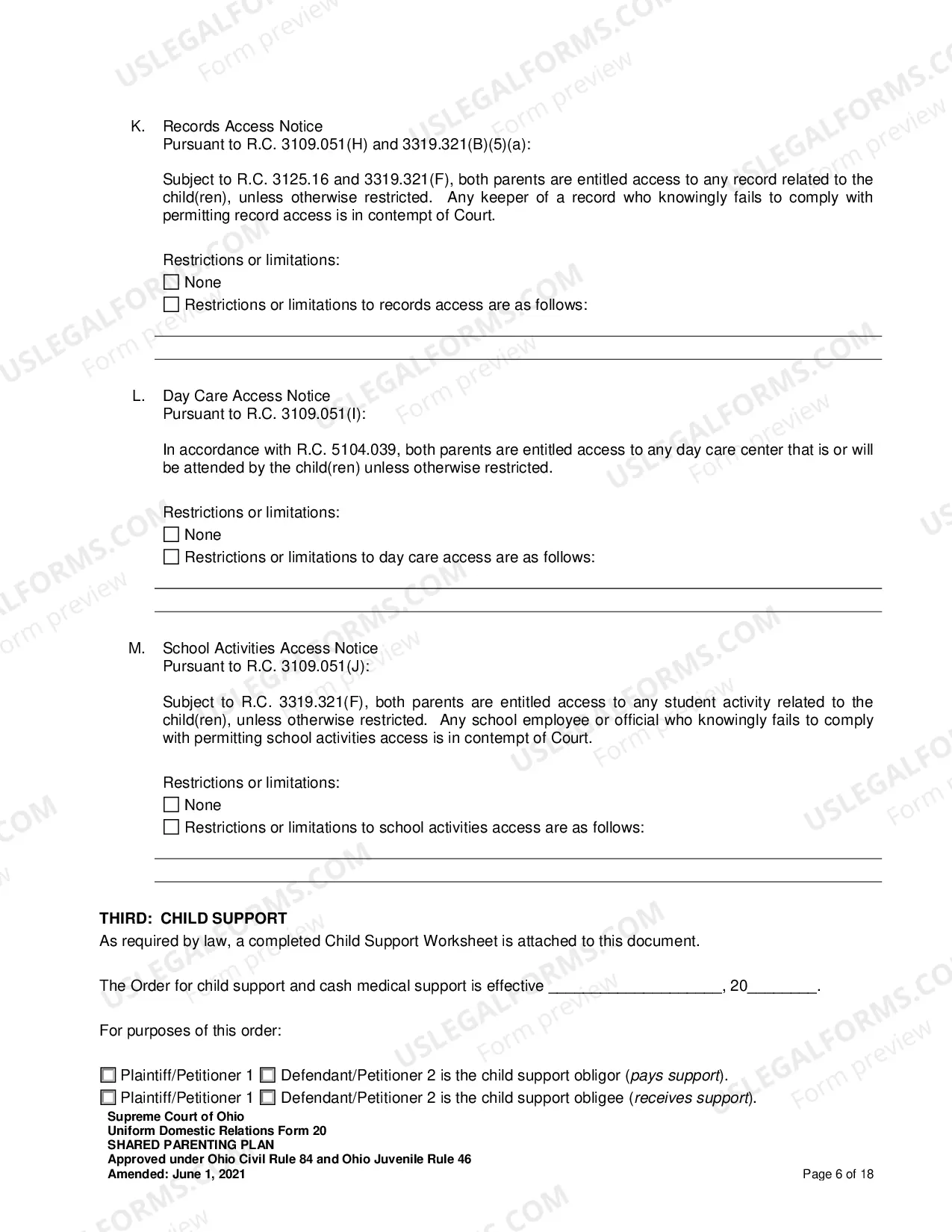
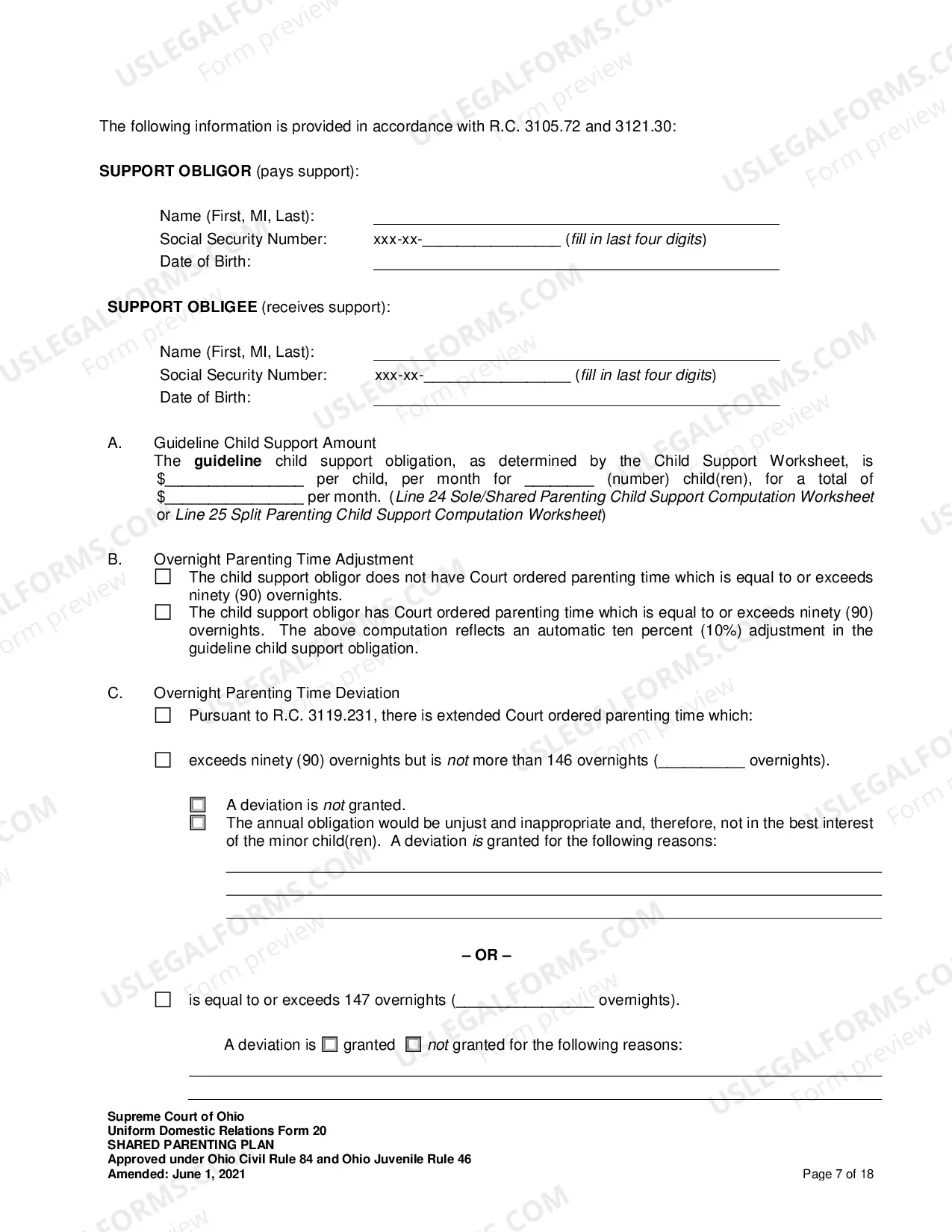
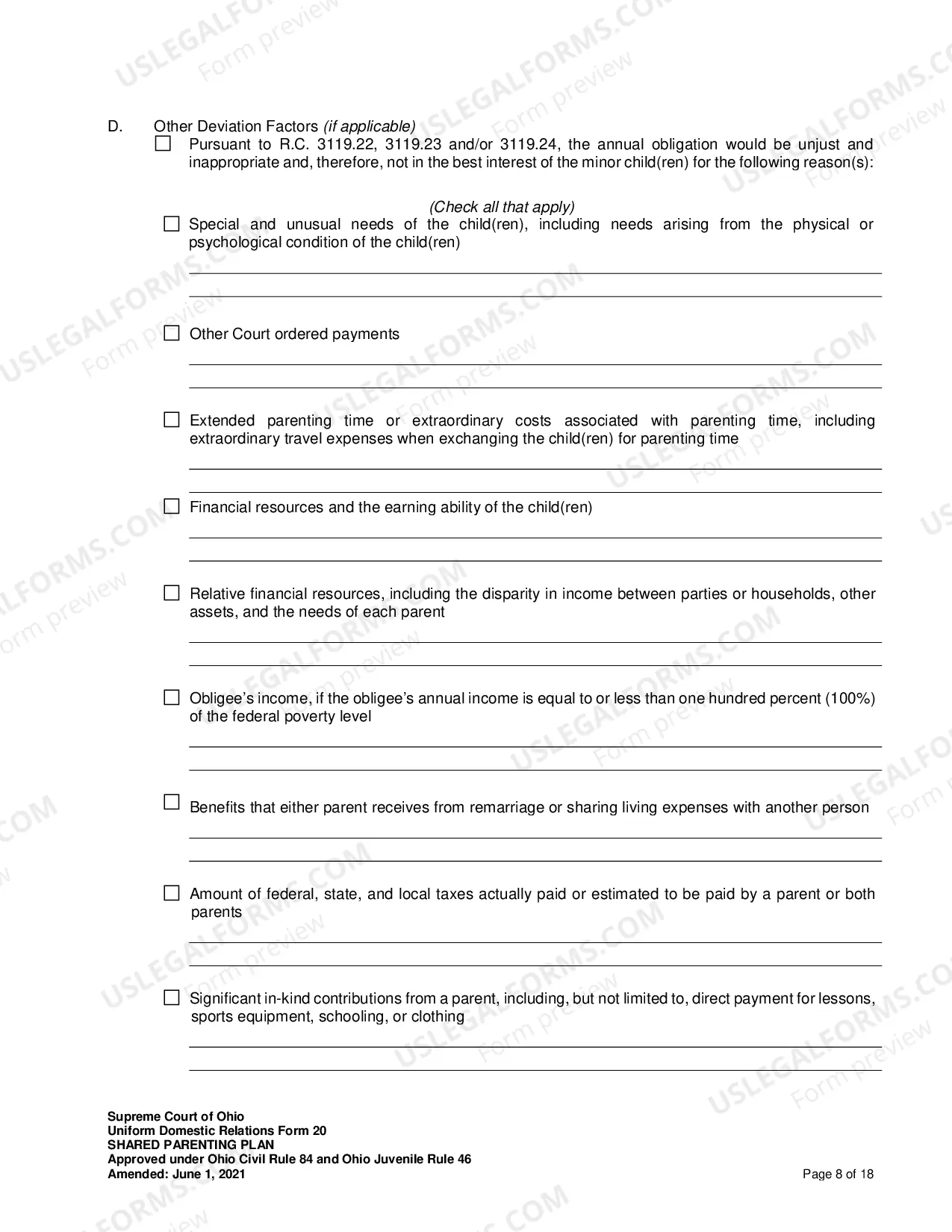
How to fill out Ohio Shared Parenting Plan?
Legal documents handling can be daunting, even for the most experienced experts.
When you are looking for an Ohio Parenting Plan Template for Toddlers and lack the time to spend finding the appropriate and current version, the experience can be taxing.
US Legal Forms accommodates any requirements you might have, ranging from personal to commercial documents, all in one location.
Utilize sophisticated tools to complete and manage your Ohio Parenting Plan Template for Toddlers.
Here are the steps to follow after downloading the desired form: Confirm it is the correct document by previewing it and reviewing its description. Ensure that the template is accepted in your state or county. Click Buy Now when you are ready. Select a subscription plan. Choose the file format you prefer, and Download, complete, sign, print, and submit your documents. Experience the US Legal Forms online catalog, backed by 25 years of expertise and reliability. Transform your routine document management into a seamless and user-friendly process today.
- Access a repository of articles, guides, and manuals that are highly pertinent to your circumstances and needs.
- Save time and energy searching for the documents you require, and leverage US Legal Forms' advanced search and Review tool to find the Ohio Parenting Plan Template for Toddlers and download it.
- If you possess a subscription, Log In to your US Legal Forms account, search for the document, and download it.
- Check your My documents tab to see the documents you have previously downloaded and manage your folders as you wish.
- If it is your initial encounter with US Legal Forms, create a free account and receive unlimited access to all the advantages of the library.
- A comprehensive online form directory may be a transformative solution for anyone aiming to handle these matters effectively.
- US Legal Forms stands as a prominent provider of online legal documents, boasting over 85,000 state-specific legal forms accessible at any time.
- With US Legal Forms, you can access tailored state or county-specific legal and business documents.
Form popularity
FAQ
A parenting plan outlines the responsibilities and time allocation for each parent regarding their child. In contrast, a shared parenting plan emphasizes equal involvement from both parents. When using an Ohio parenting plan template for toddlers, it's essential to understand these differences to create an arrangement that suits your family's needs. Each plan aims to prioritize your child's well-being and ensure they thrive in a supportive environment.
The 80 20 rule for custody suggests that one parent should have physical custody 80% of the time while the other parent has it 20% of the time. This approach can simplify parenting arrangements, especially for toddlers. When creating your Ohio parenting plan template for toddlers, consider how this rule can help establish a consistent routine for your child. Ultimately, the goal is to promote stability and emotional security for your little one.
50/50 custody for a 2-year-old means that both parents share equal time with the child, providing a balanced environment. This arrangement can be structured in various ways, such as alternating weeks or splitting the week. Utilizing an Ohio parenting plan template for toddlers can guide you in creating a fair and effective custody plan that benefits your little one.
The best custody arrangement for a toddler often includes frequent and consistent contact with both parents. Many experts recommend a setup that allows for stability, like a 50/50 split or a modified schedule that considers the child's routine and emotional needs. An Ohio parenting plan template for toddlers can help you craft a plan that prioritizes your child's development and happiness.
A 2/2/3 schedule divides the week into segments where the child spends two days with one parent, two days with the other, and then alternates the weekend. This arrangement provides consistent time with both parents, which is beneficial for toddlers. Using an Ohio parenting plan template for toddlers can assist you in structuring this schedule effectively, ensuring it meets your child's needs.
In a custody case, any behavior that demonstrates neglect or lack of involvement in your child's life can negatively impact your standing. For instance, failing to attend important events or not being engaged in your child's education may raise concerns. Using an Ohio parenting plan template for toddlers can help you outline your commitment to your child's well-being, which can positively influence the court's perception.
Ohio law does not provide a predetermined age, though many counties do in their local rules. Often they are addressed in the county's standard order of parenting time. The majority of counties appear to choose the age of 16 as the age in which the minor child may make the choice on their own behalf.
You may be wondering what age can a child refuse visitation in Ohio. Children under the age of 18 cannot legally make the decision themselves whether or not to have visitation with their parents.
While neither parent has to force visitation between the child and other parent, a custodial parent can face legal consequences for preventing visits. Obviously, it's much harder to get a teenager to attend visits than it is to get a preschooler to the other parent's house.
For a 3-6 year old, about 2-3 days ? a week at the maximum, and that's probably stretching it. That said, the problem with our culture is that very few parents have a tribe-like support system around them.