Transfer Death Tod Agreement With The Us
Description


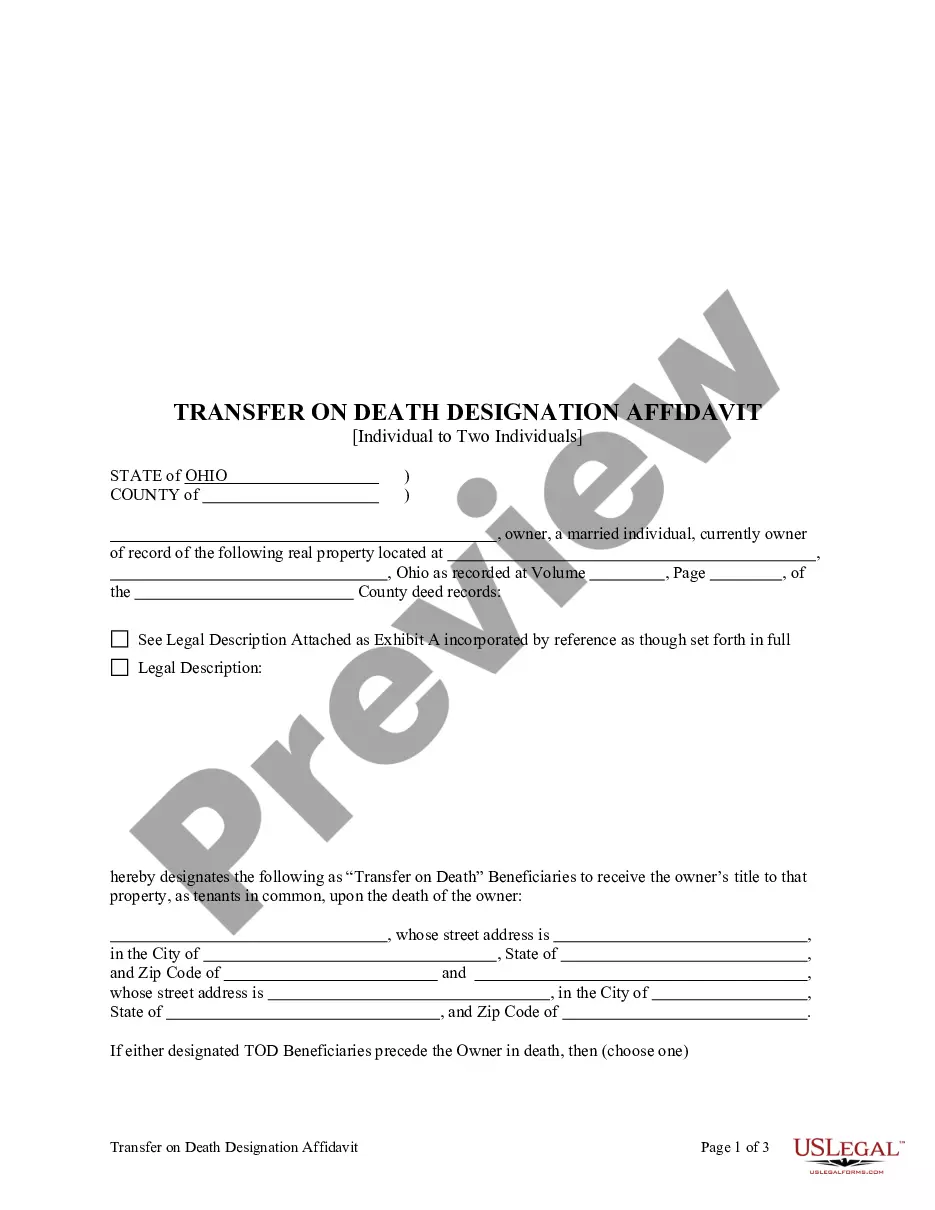
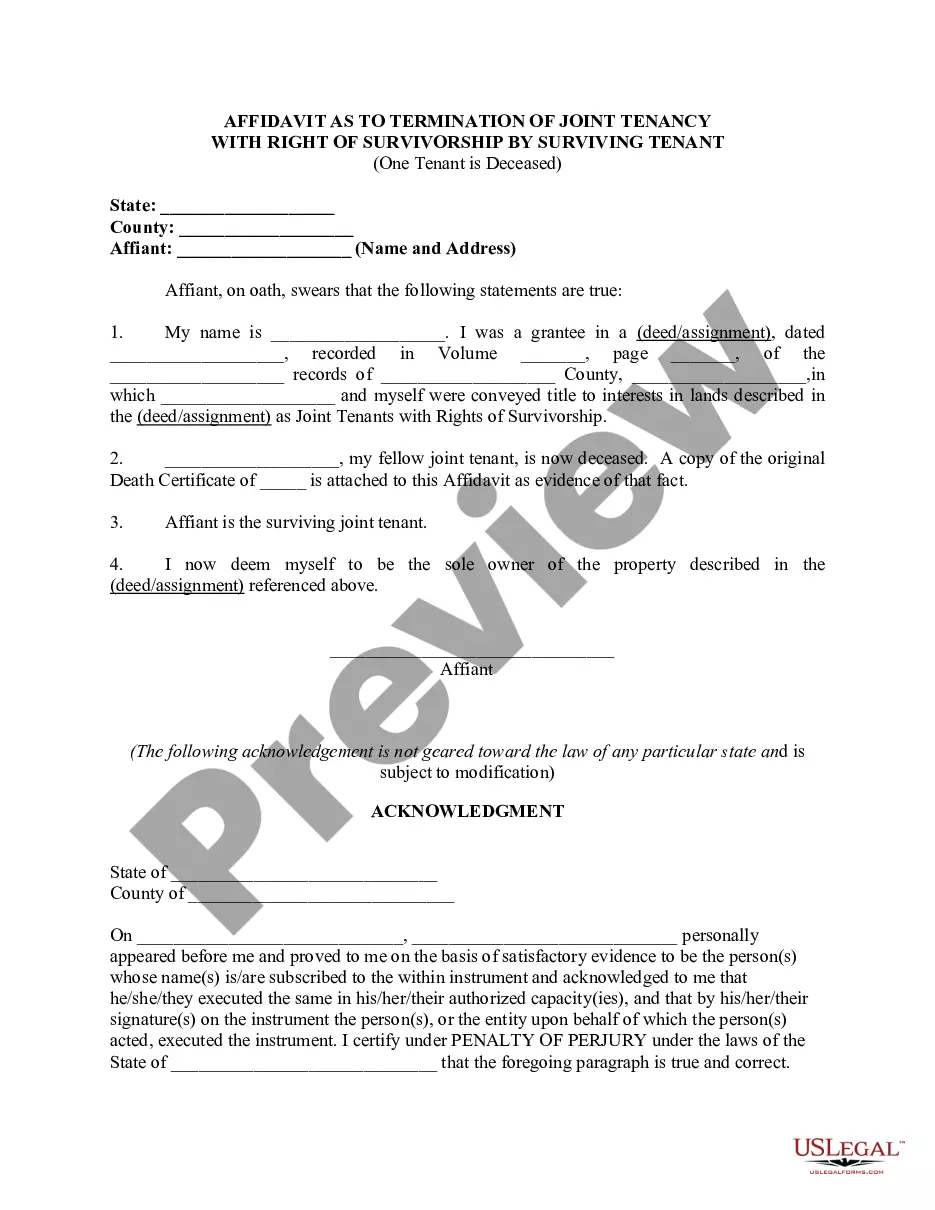
Get your form ready online
Our built-in tools help you complete, sign, share, and store your documents in one place.
Make edits, fill in missing information, and update formatting in US Legal Forms—just like you would in MS Word.
Download a copy, print it, send it by email, or mail it via USPS—whatever works best for your next step.
Sign and collect signatures with our SignNow integration. Send to multiple recipients, set reminders, and more. Go Premium to unlock E-Sign.
If this form requires notarization, complete it online through a secure video call—no need to meet a notary in person or wait for an appointment.
We protect your documents and personal data by following strict security and privacy standards.

Make edits, fill in missing information, and update formatting in US Legal Forms—just like you would in MS Word.

Download a copy, print it, send it by email, or mail it via USPS—whatever works best for your next step.

Sign and collect signatures with our SignNow integration. Send to multiple recipients, set reminders, and more. Go Premium to unlock E-Sign.

If this form requires notarization, complete it online through a secure video call—no need to meet a notary in person or wait for an appointment.

We protect your documents and personal data by following strict security and privacy standards.
Looking for another form?
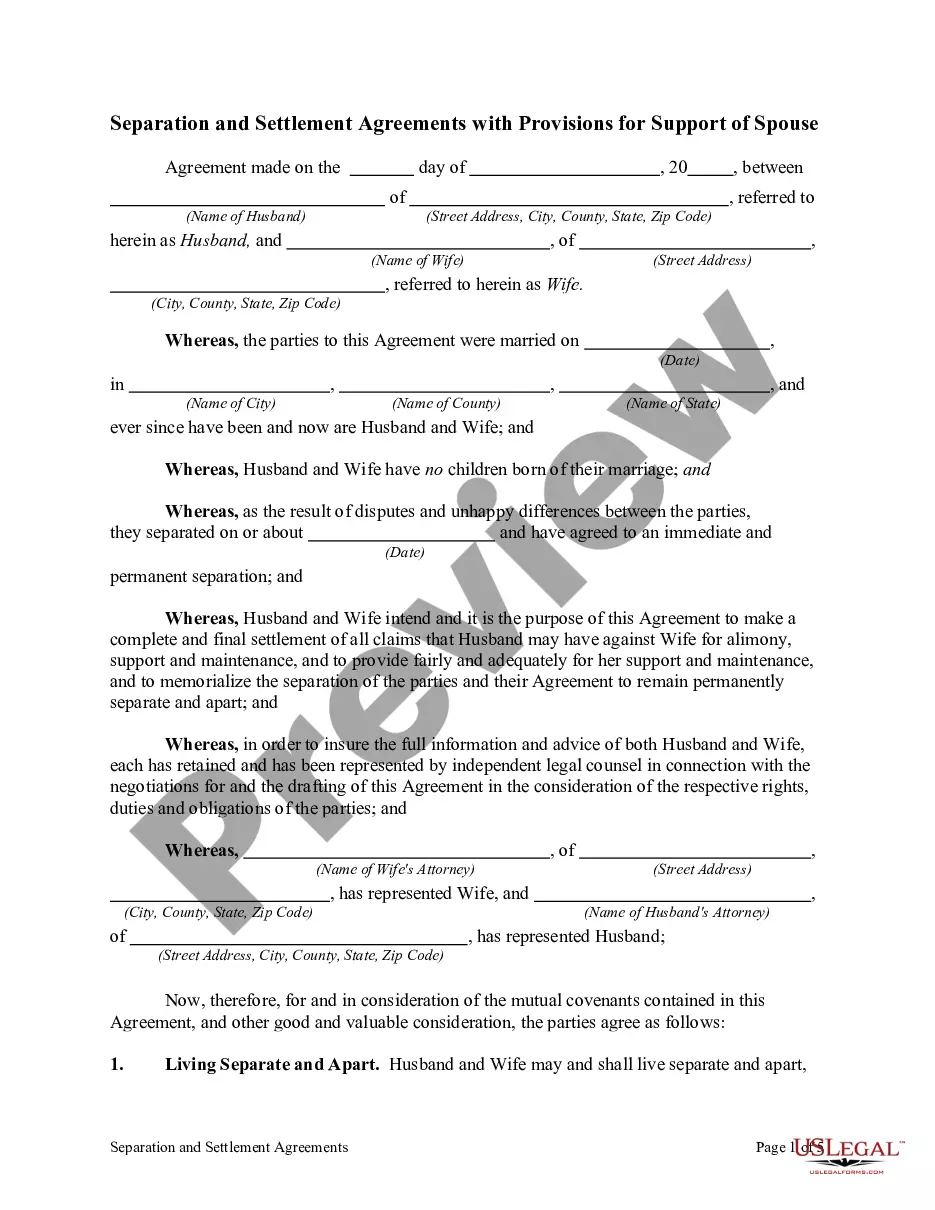








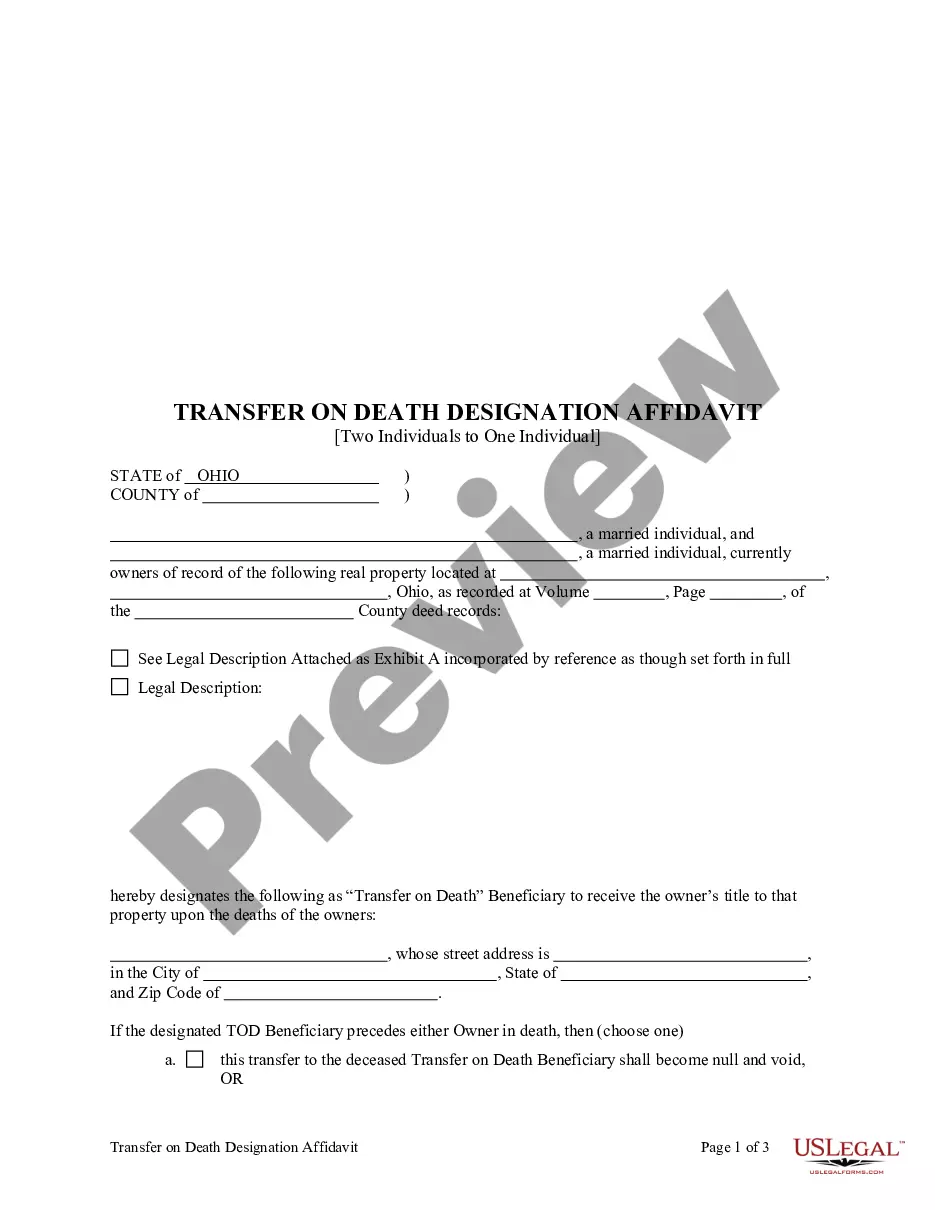
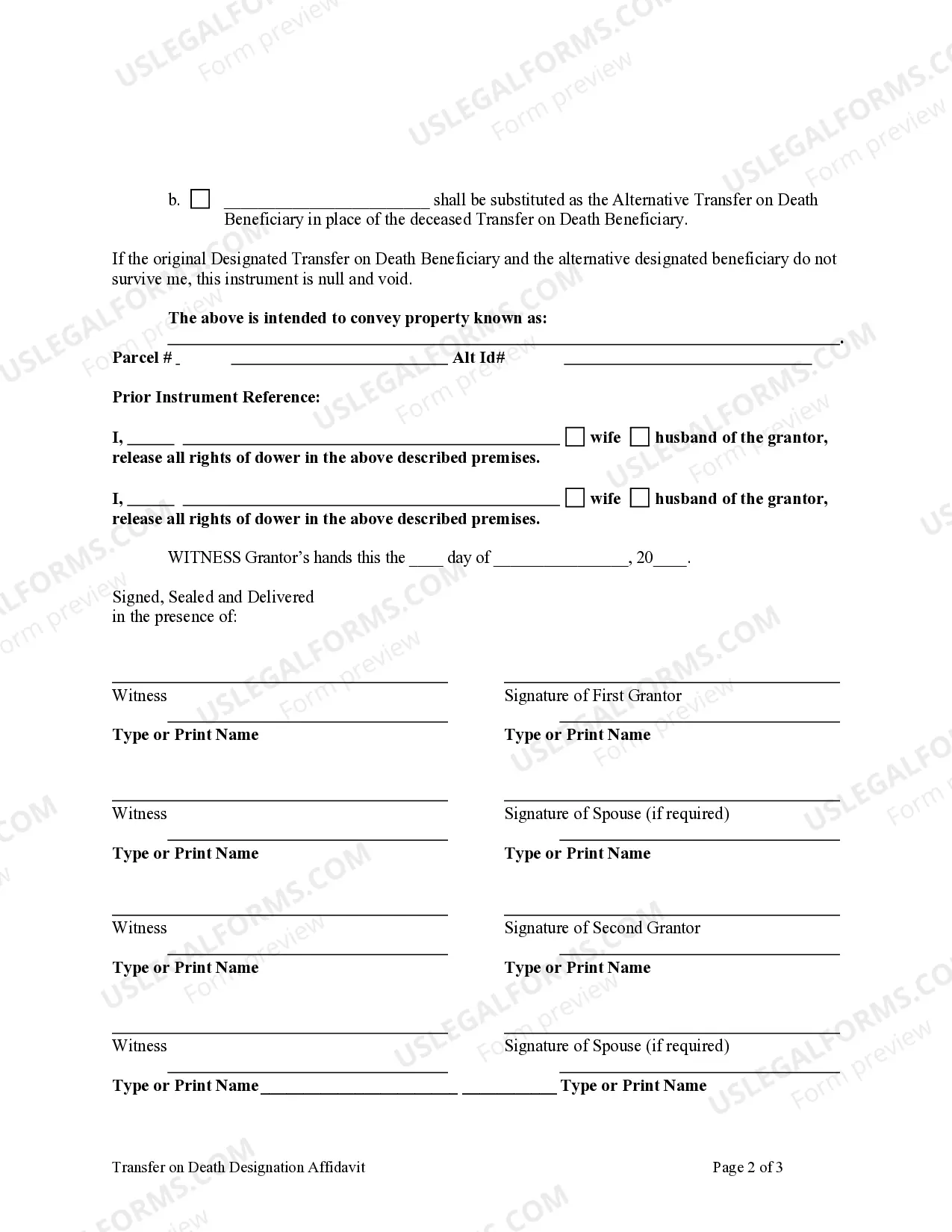
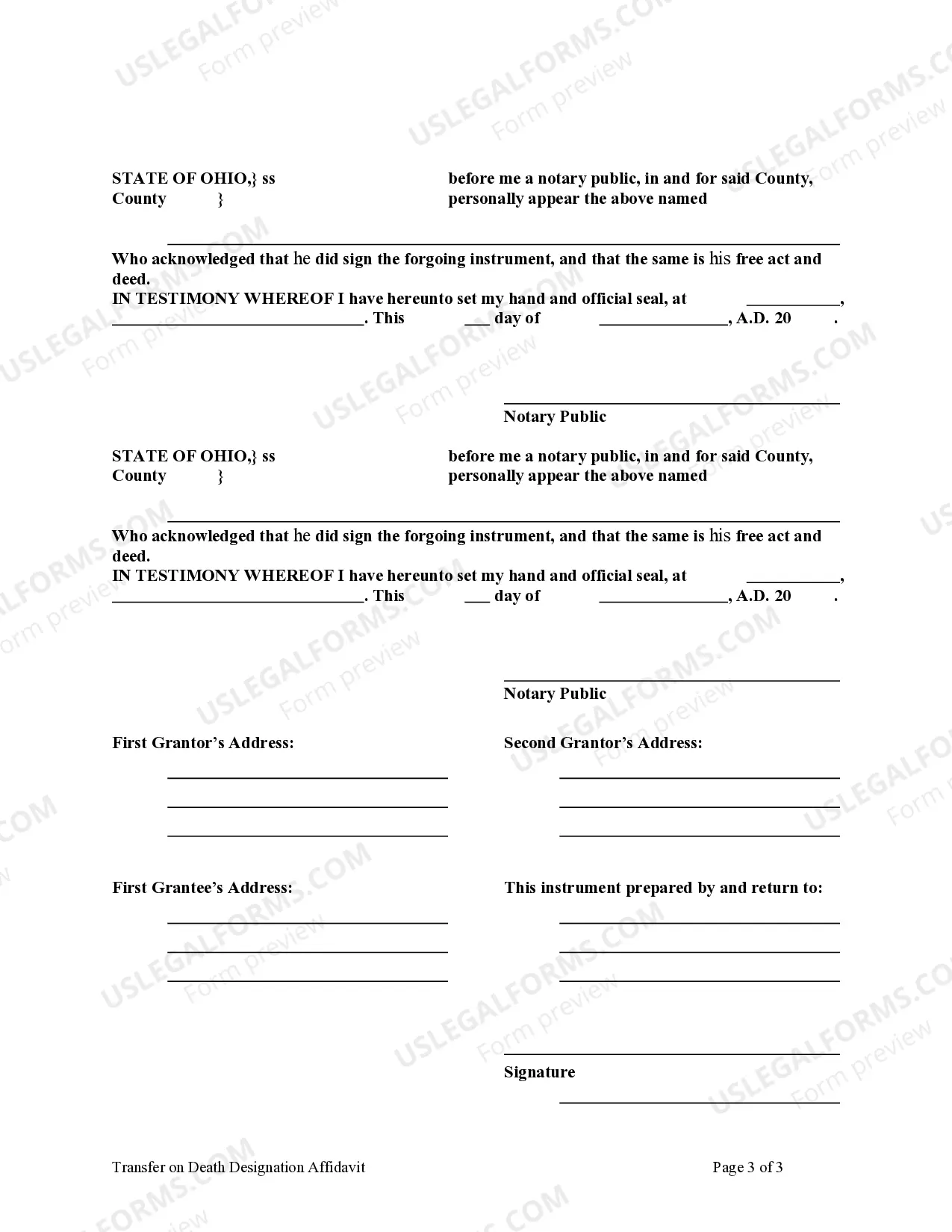
How to fill out Ohio Transfer On Death Designation Affidavit - TOD From Two Individuals To One Individual?
- Start by logging into your US Legal Forms account to access your existing documents. If you haven’t used the service before, create an account.
- Ensure that your subscription is current. If it has expired, renew it according to your chosen payment plan.
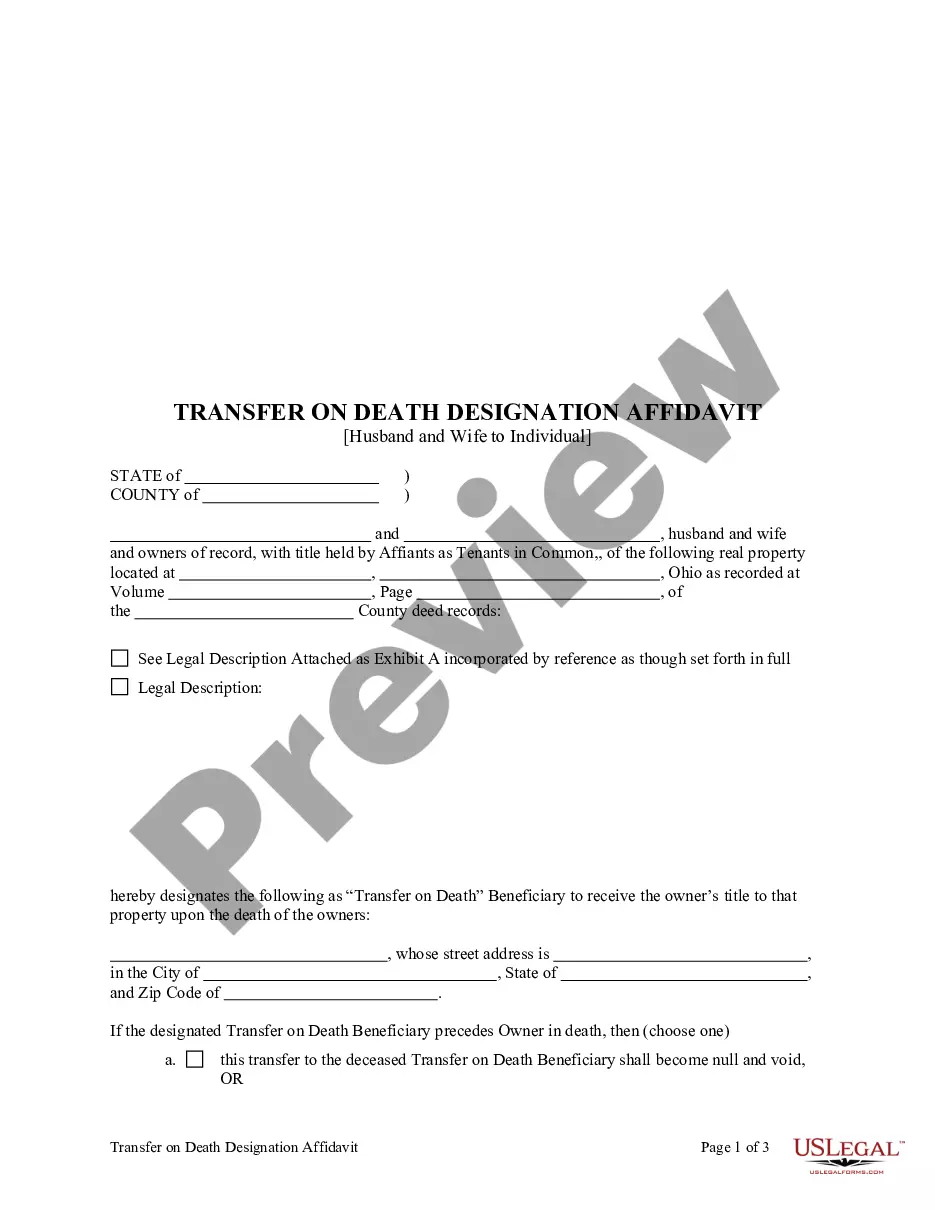
- Browse the extensive library to locate the appropriate death TOD agreement form. Utilize the Preview mode to confirm it meets your needs.
- If needed, use the Search tab to find additional templates that may better satisfy local jurisdiction requirements.
- Select the document and click the Buy Now button, which will prompt you to choose a subscription plan.
- Complete your purchase by entering your payment information or using your PayPal account.
- Finally, download the completed form and save it on your device. You can access it later through the My Forms section in your profile.
By following these straightforward steps, you'll ensure that you have the right documentation for your transfer. US Legal Forms stands out with its extensive library and expert guidance that guarantees your paperwork is precise and legally compliant.
Don’t wait any longer! Visit US Legal Forms today to start your journey toward easily managing your legal documents.
Form popularity
FAQ
In addition to those previously mentioned, other states like Arizona, Nevada, and Washington also permit transfer on death deeds. Each state has its requirements and procedures, which can vary significantly. To navigate the complexities of a transfer death tod agreement with the US, consider utilizing resources from USLegalForms to guide you through state regulations and documentation.
Currently, several states in the US allow the use of a transfer on death deed, including California, Texas, and Florida. These states provide residents with the opportunity to simplify the transfer process after death, reducing the burden on heirs. If you're exploring a transfer death tod agreement with the US, examining state-specific laws is crucial to ensure compliance and effectiveness.
While a transfer on death deed allows property to pass outside probate, it has certain disadvantages. First, it may not offer the same level of control as a traditional will, since you can't impose conditions on the transfer. Additionally, if you wish to change your mind about the transfer, you will need to revoke the deed formally. Understanding these factors is essential when considering a transfer death tod agreement with the us.
Setting up a transfer on death (TOD) account involves selecting the right financial institution that offers this feature. You will need to open a basic account and fill out a transfer death TOD agreement with the US to designate beneficiaries for your funds. It is essential to provide accurate information about your beneficiaries to ensure a smooth transition upon your passing. You can streamline this process through platforms like USLegalForms, which can guide you in completing the required legal documents.
To add a transfer on death (TOD) designation to your bank account, you need to contact your bank directly. Most banks will require you to fill out specific forms that formalize the transfer death TOD agreement with the US. You will need to provide details about your beneficiaries and ensure that they are eligible to receive the account assets. Once you've completed the forms, your bank will process the designation and update your account accordingly.
Whether a transfer on death agreement is better than a trust depends on individual circumstances. TODs provide a straightforward way to transfer assets, but they lack some flexibility that trusts offer for more complex situations. Evaluating all options, including a transfer death TOD agreement with the US or setting up a trust, will help ensure your estate plan meets your needs.
A transfer on death (TOD) deed allows an owner to designate a beneficiary to receive the property upon their death. This allows for the seamless transfer of ownership without navigating the probate process. Understanding the specific mechanics of a transfer death TOD agreement with the US can be beneficial for effective estate planning.
One drawback of a transfer on death agreement may be its inability to accommodate complicated asset distributions. If a beneficiary encounters issues or if the assets require management, a TOD might not suffice. Evaluating the suitability of a transfer death TOD agreement with the US against your estate planning needs is crucial.
In many cases, a transfer on death deed will not incur inheritance tax at the time of the transfer. This pathway can provide significant benefits during estate planning, minimizing the financial burden for beneficiaries. Make sure to review state-specific regulations regarding the transfer death TOD agreement with the US.
Yes, accounts held under a transfer on death agreement typically avoid probate. This means the assets can go directly to the designated beneficiary, leading to a simplified process. Utilizing a transfer death TOD agreement with the US can streamline the transfer process significantly.