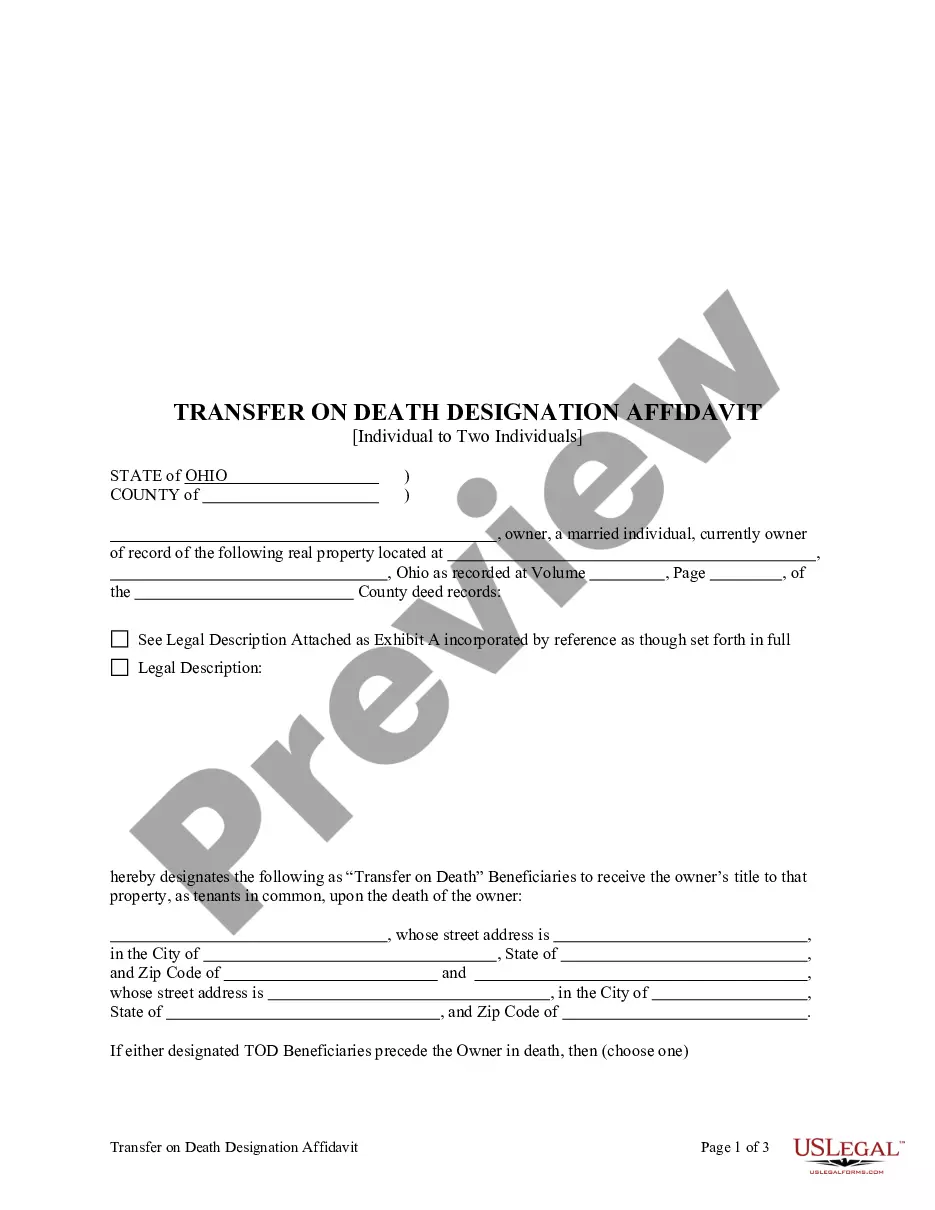
Transfer Death Tod Agreement For The Us
Description


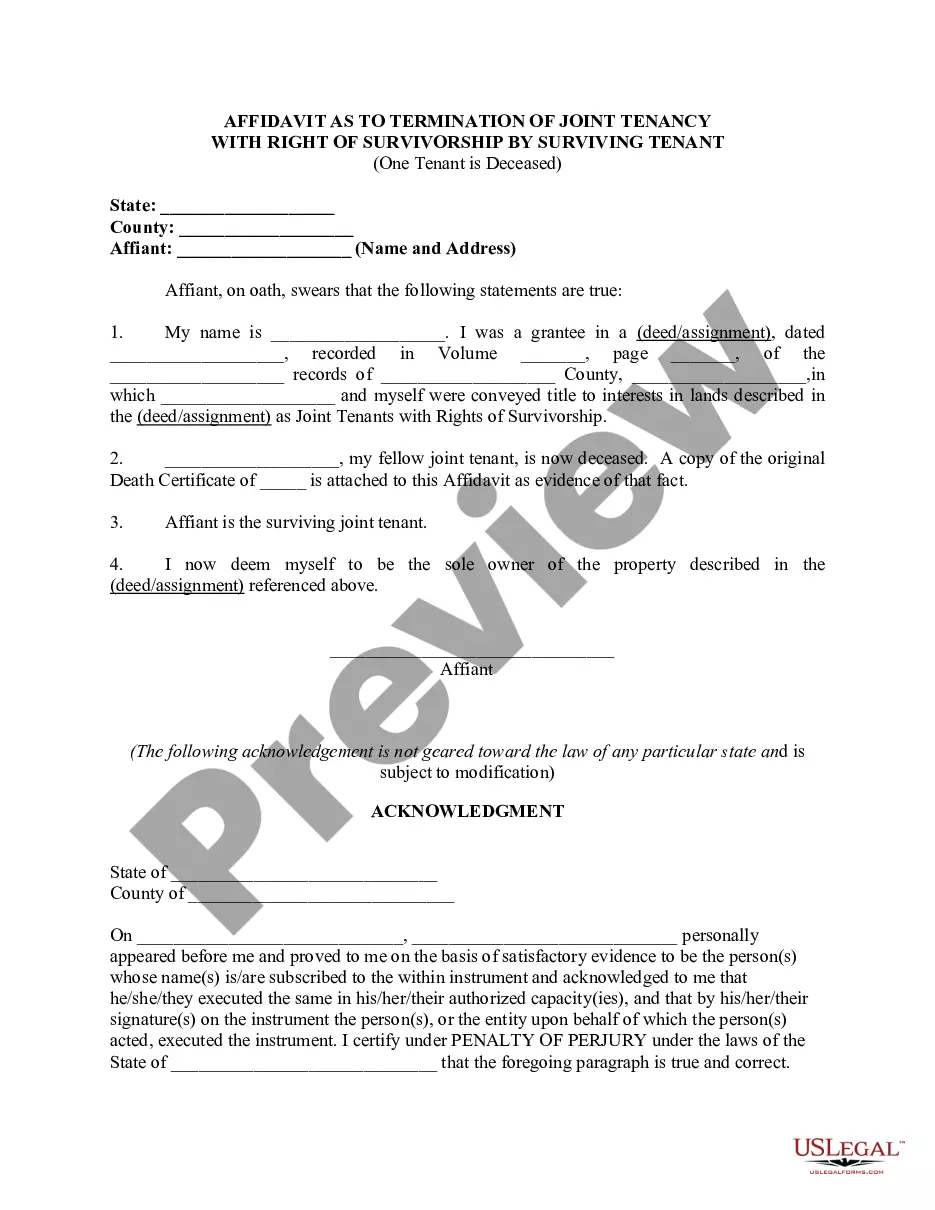
Get your form ready online
Our built-in tools help you complete, sign, share, and store your documents in one place.
Make edits, fill in missing information, and update formatting in US Legal Forms—just like you would in MS Word.
Download a copy, print it, send it by email, or mail it via USPS—whatever works best for your next step.
Sign and collect signatures with our SignNow integration. Send to multiple recipients, set reminders, and more. Go Premium to unlock E-Sign.
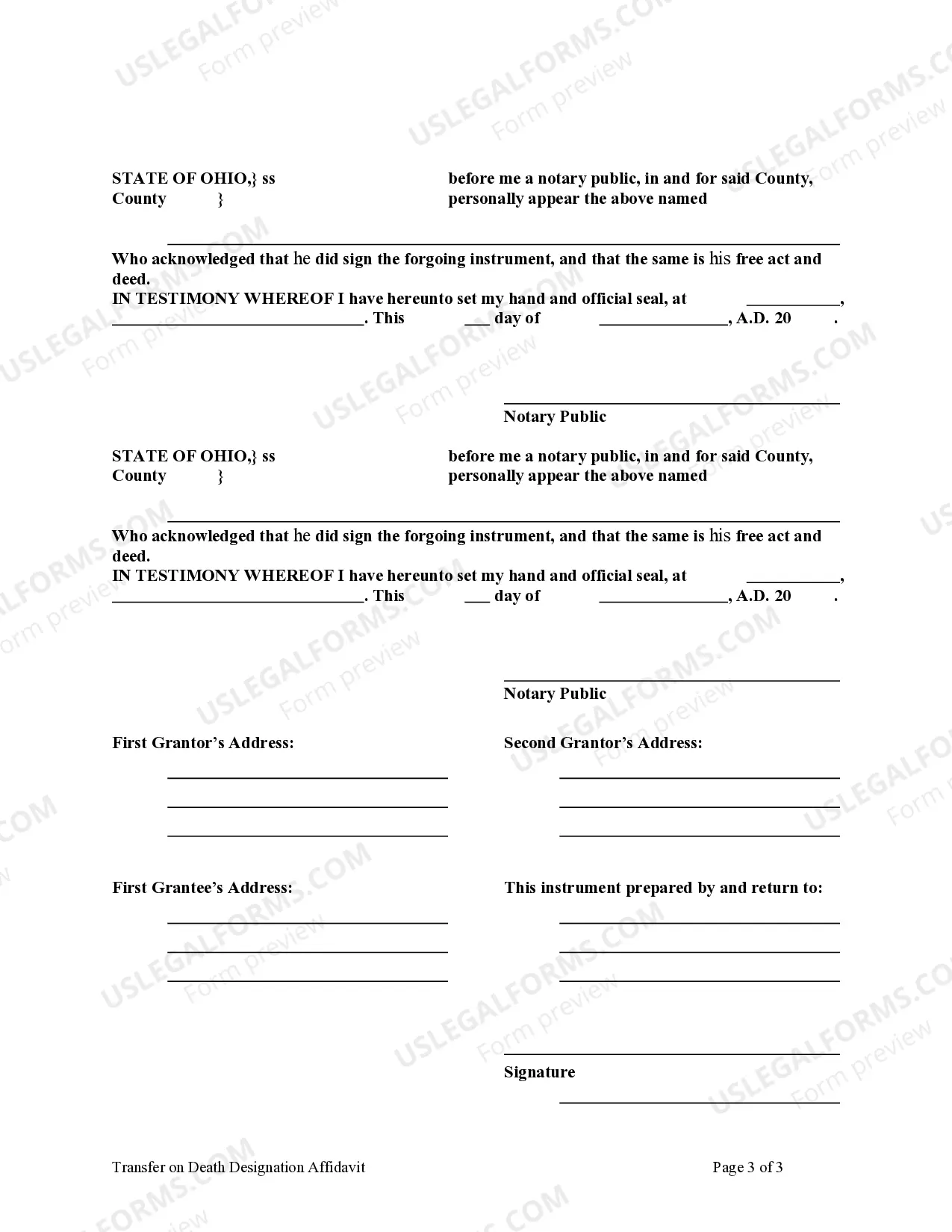
If this form requires notarization, complete it online through a secure video call—no need to meet a notary in person or wait for an appointment.
We protect your documents and personal data by following strict security and privacy standards.

Make edits, fill in missing information, and update formatting in US Legal Forms—just like you would in MS Word.

Download a copy, print it, send it by email, or mail it via USPS—whatever works best for your next step.

Sign and collect signatures with our SignNow integration. Send to multiple recipients, set reminders, and more. Go Premium to unlock E-Sign.

If this form requires notarization, complete it online through a secure video call—no need to meet a notary in person or wait for an appointment.

We protect your documents and personal data by following strict security and privacy standards.
Looking for another form?






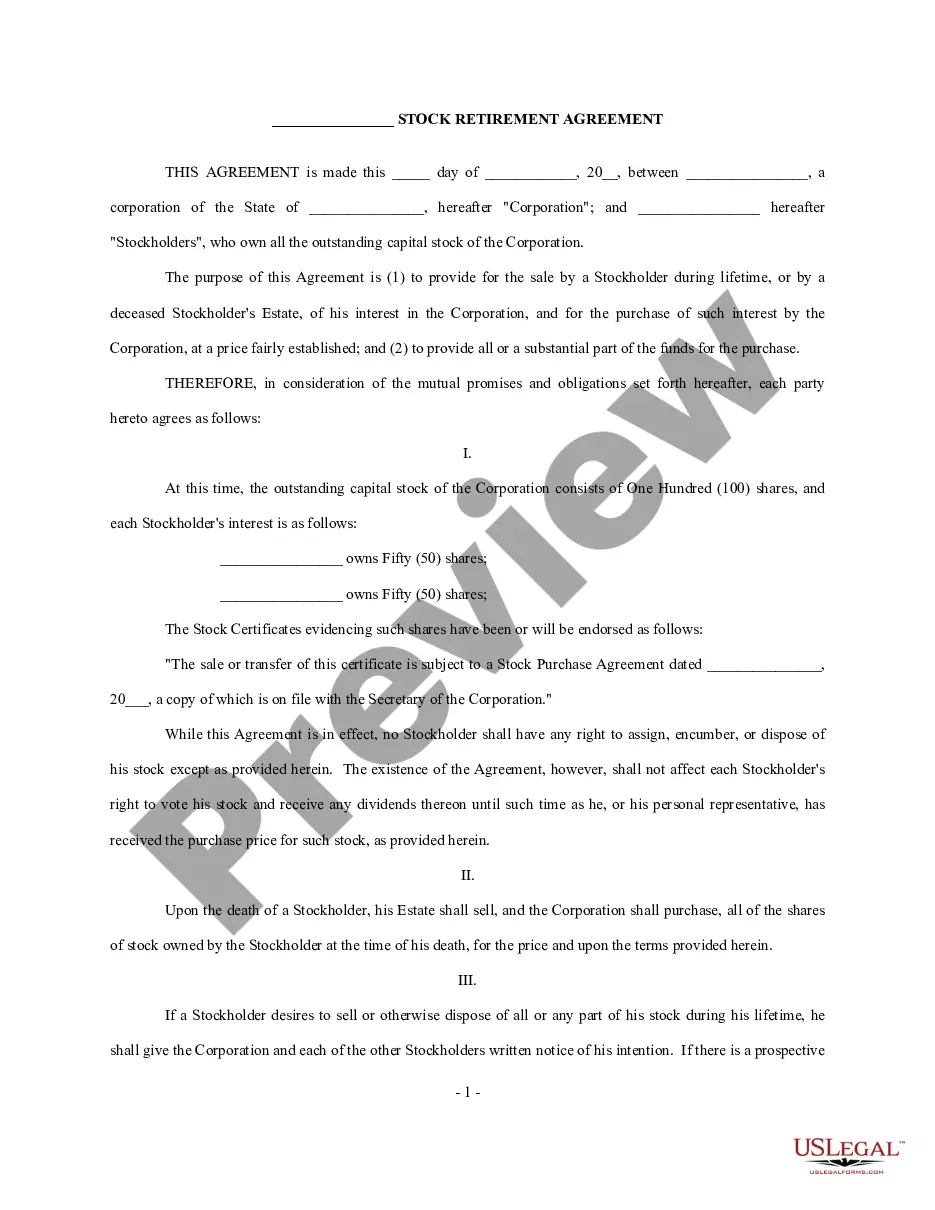


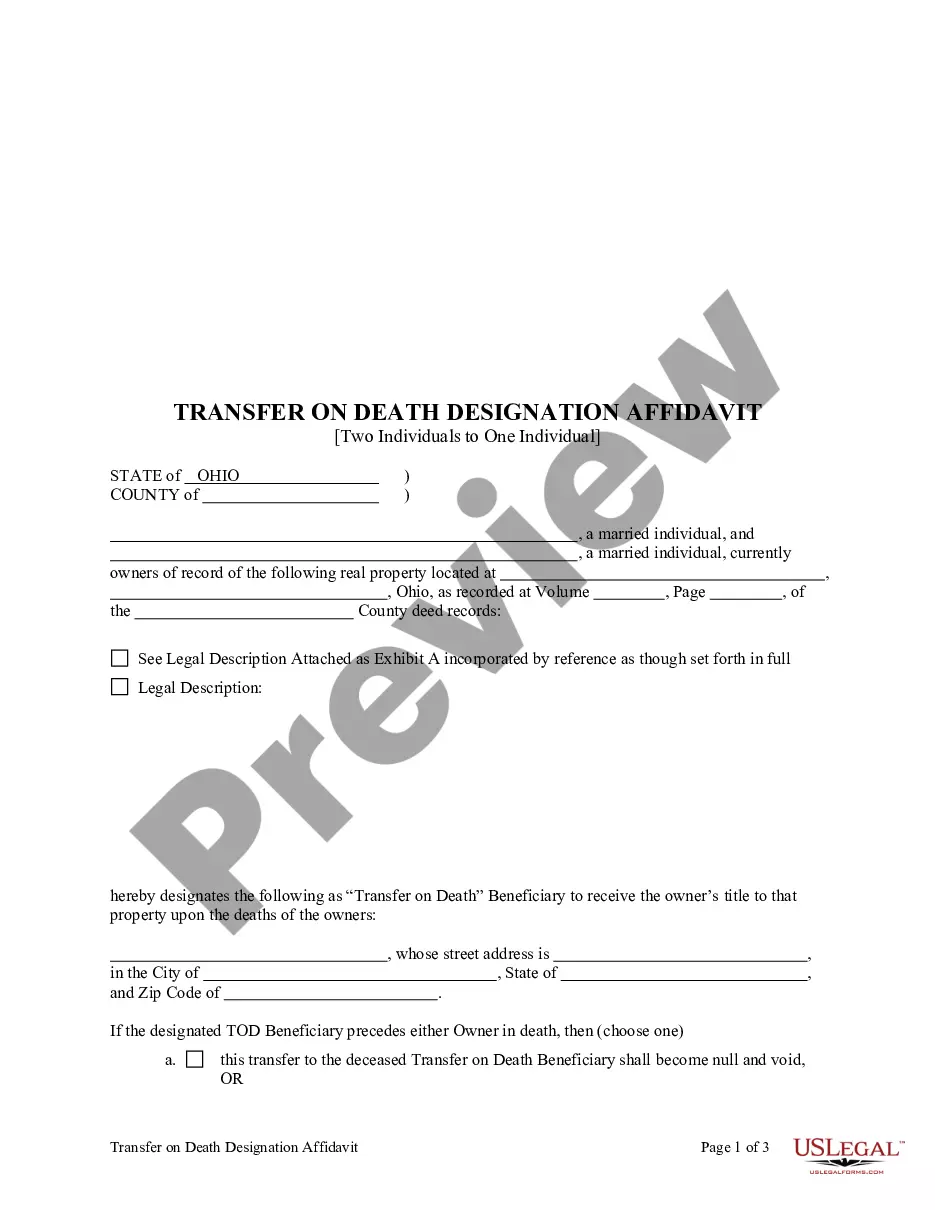
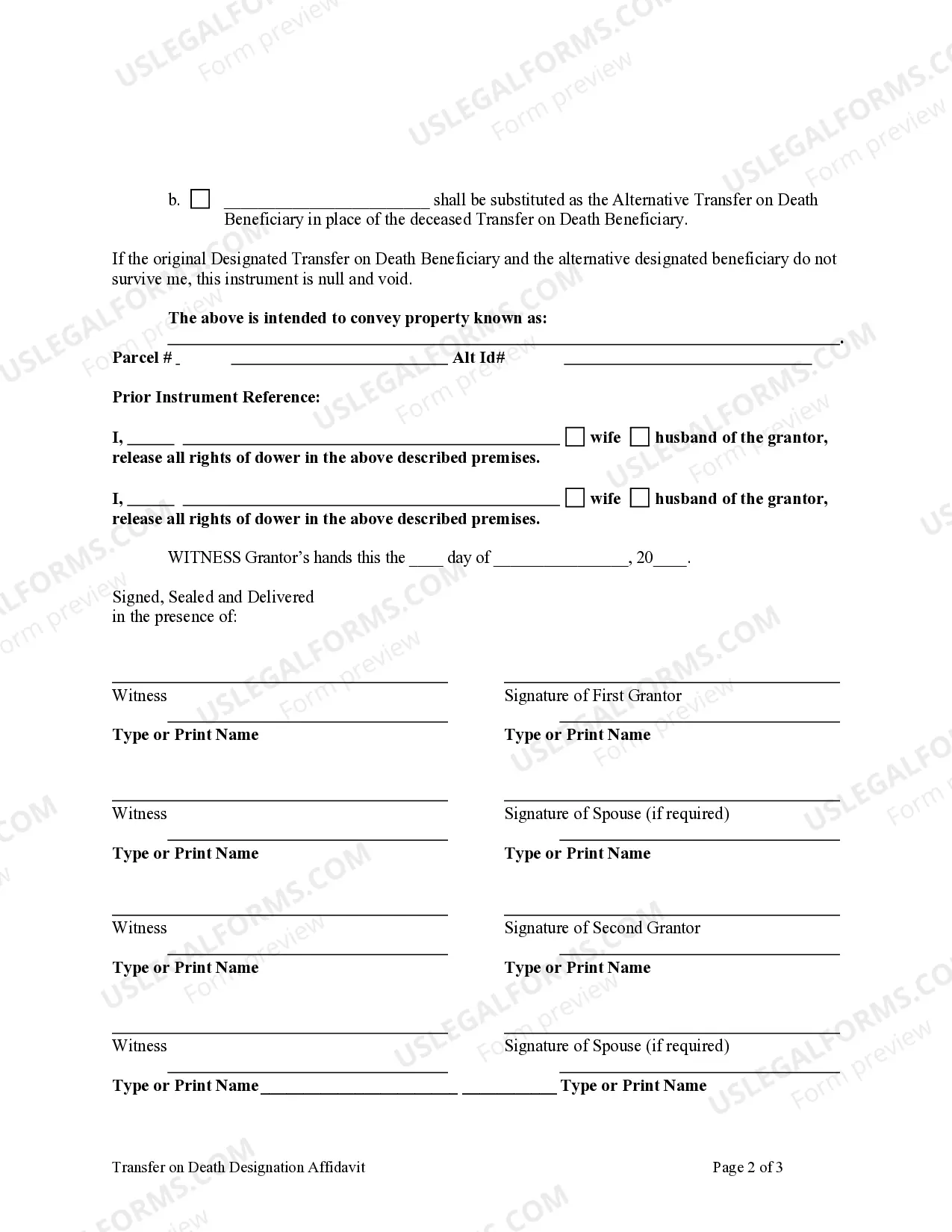
How to fill out Ohio Transfer On Death Designation Affidavit - TOD From Two Individuals To One Individual?
- Log into your existing US Legal Forms account. If you've never registered, create a new account to get started.
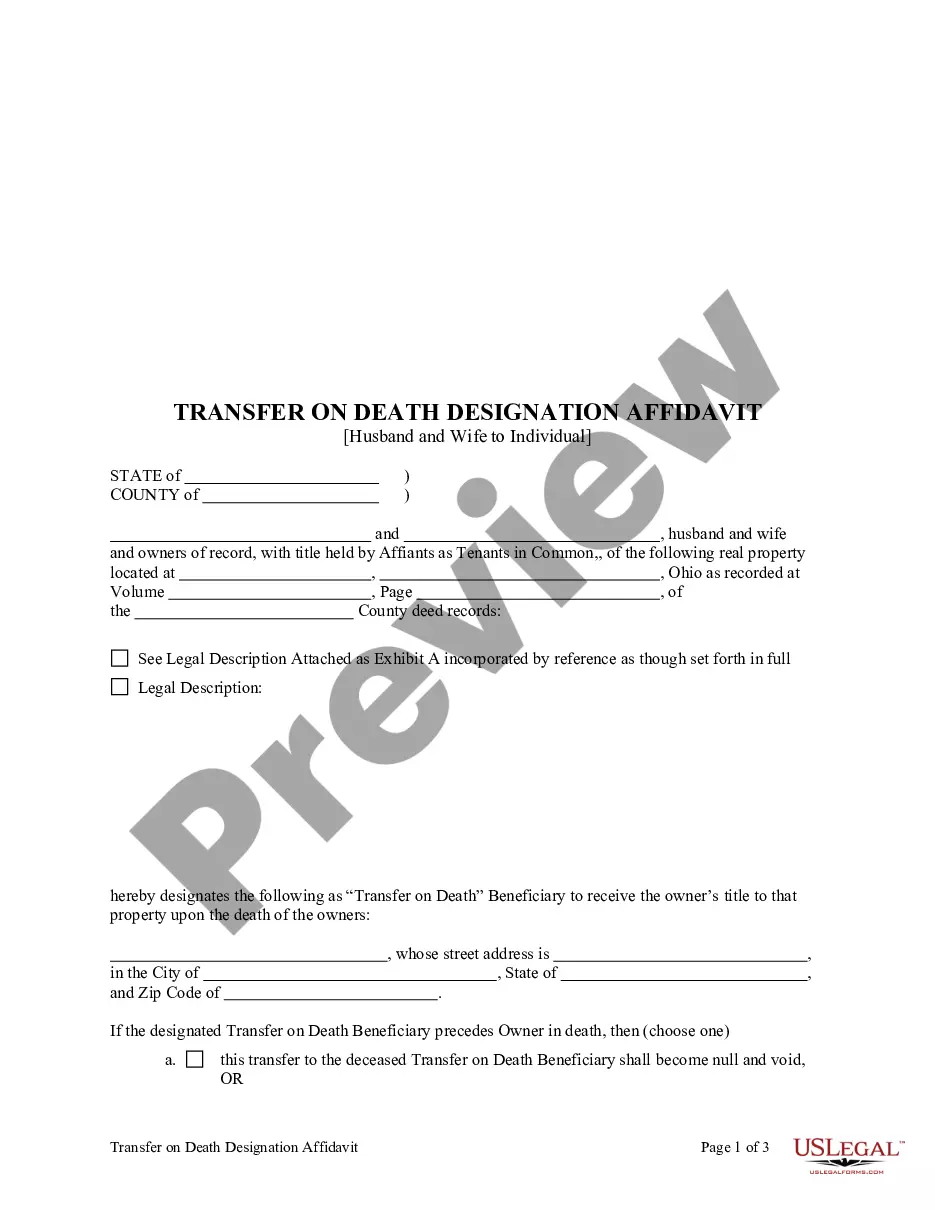
- Browse or utilize the Search function to find the specific TOD agreement that suits your state jurisdiction and needs.
- Review the template details in Preview mode to verify it meets your requirements. Make any adjustments necessary.
- Select the subscription plan that works for you by clicking the Buy Now button and following the registration prompts.
- Complete your purchase by entering your payment information, whether using a credit card or PayPal.
- Download the TOD agreement to your device, ensuring quick access in the My Forms section of your profile.
Completing the above steps ensures you're equipped with the proper documentation to handle transfer death TOD agreements in the US. With US Legal Forms, not only do you gain access to an extensive range of legal forms, but also to expert assistance if you need help filling out your documents correctly.
Start your journey with US Legal Forms today and simplify your legal processes! Whether it’s your first time or you're a returning user, find the legal solutions you need efficiently.
Form popularity
FAQ
Yes, a non-US citizen can be named as a beneficiary in a transfer death TOD agreement for the US. The key aspect here is that the agreement must be valid under the state laws where it is executed. Foreign beneficiaries can benefit from this arrangement just like US citizens. For detailed assistance, USLegalForms provides resources that can help you navigate these nuances efficiently.
The transfer death TOD agreement for the US is permitted in several states across the country. These include Arizona, California, Colorado, Florida, Illinois, Indiana, Nevada, New Mexico, North Dakota, Oregon, Texas, and Washington. Each state has specific regulations regarding the transfer, so it is crucial to understand local laws. Be sure to consult your state's legal guidelines to ensure that you comply with all necessary requirements.
A transfer-on-death (TOD) agreement allows you to designate beneficiaries who will receive your assets upon your death. This type of agreement simplifies the transfer process, avoiding probate and ensuring that your loved ones receive their inheritances quickly. In the context of a transfer death TOD agreement for the US, this legal tool offers clear advantages in estate planning, providing peace of mind and ease of management. With platforms like USLegalForms, you can easily create a TOD agreement tailored to your needs.
The transfer death tod agreement for the US has certain downsides worth considering. For example, if the property has significant debt, the beneficiaries may inherit that burden along with the asset. Moreover, if you decide to sell or transfer the property before death, the original TOD may no longer reflect your current wishes, leading to potential complications.
Creating a transfer death tod agreement for the US does not always require a lawyer, but having legal expertise can be beneficial. Legal professionals can help ensure that your TOD is drafted correctly and meets all necessary state requirements. Using services like US Legal Forms can also provide templates and guidance, making the process simpler for you.
Establishing a transfer death tod agreement for the US can be advantageous for many individuals. These accounts simplify the transfer process for your heirs, making it easier to navigate after your death. However, they should align with your overall estate planning, and it's worth seeking legal guidance to ensure they fit well within your strategy.
Choosing between a transfer death tod agreement for the US and designating a beneficiary depends on your specific needs. The TOD is often seen as straightforward because it automatically transfers property to the designated beneficiary at death. However, direct beneficiary designations may offer more flexibility in certain financial accounts, so it's wise to evaluate both options carefully.
The transfer death tod agreement for the US, while beneficial, does have drawbacks. One major issue is that if the property owner incurs debt or faces a lawsuit, the property may still be subject to those claims. Additionally, multiple beneficiaries can lead to disputes among heirs, complicating the transfer process.
While the transfer death tod agreement for the US offers clear advantages, there are disadvantages as well. For instance, it may limit your control over the property during your lifetime, as the beneficiary has a vested interest. Moreover, if your circumstances change, revoking a TOD can be more complicated than expected, leading to potential legal challenges.
The transfer death tod agreement for the US can help avoid probate, but it does not necessarily eliminate inheritance tax. Beneficiaries may still be responsible for taxes depending on the value of the estate. It's essential to consult with a tax advisor to understand all potential tax implications associated with your specific situation.