Transfer Death Individual For Life
Description


Get your form ready online
Our built-in tools help you complete, sign, share, and store your documents in one place.
Make edits, fill in missing information, and update formatting in US Legal Forms—just like you would in MS Word.
Download a copy, print it, send it by email, or mail it via USPS—whatever works best for your next step.
Sign and collect signatures with our SignNow integration. Send to multiple recipients, set reminders, and more. Go Premium to unlock E-Sign.
If this form requires notarization, complete it online through a secure video call—no need to meet a notary in person or wait for an appointment.
We protect your documents and personal data by following strict security and privacy standards.

Make edits, fill in missing information, and update formatting in US Legal Forms—just like you would in MS Word.

Download a copy, print it, send it by email, or mail it via USPS—whatever works best for your next step.

Sign and collect signatures with our SignNow integration. Send to multiple recipients, set reminders, and more. Go Premium to unlock E-Sign.

If this form requires notarization, complete it online through a secure video call—no need to meet a notary in person or wait for an appointment.

We protect your documents and personal data by following strict security and privacy standards.
Looking for another form?









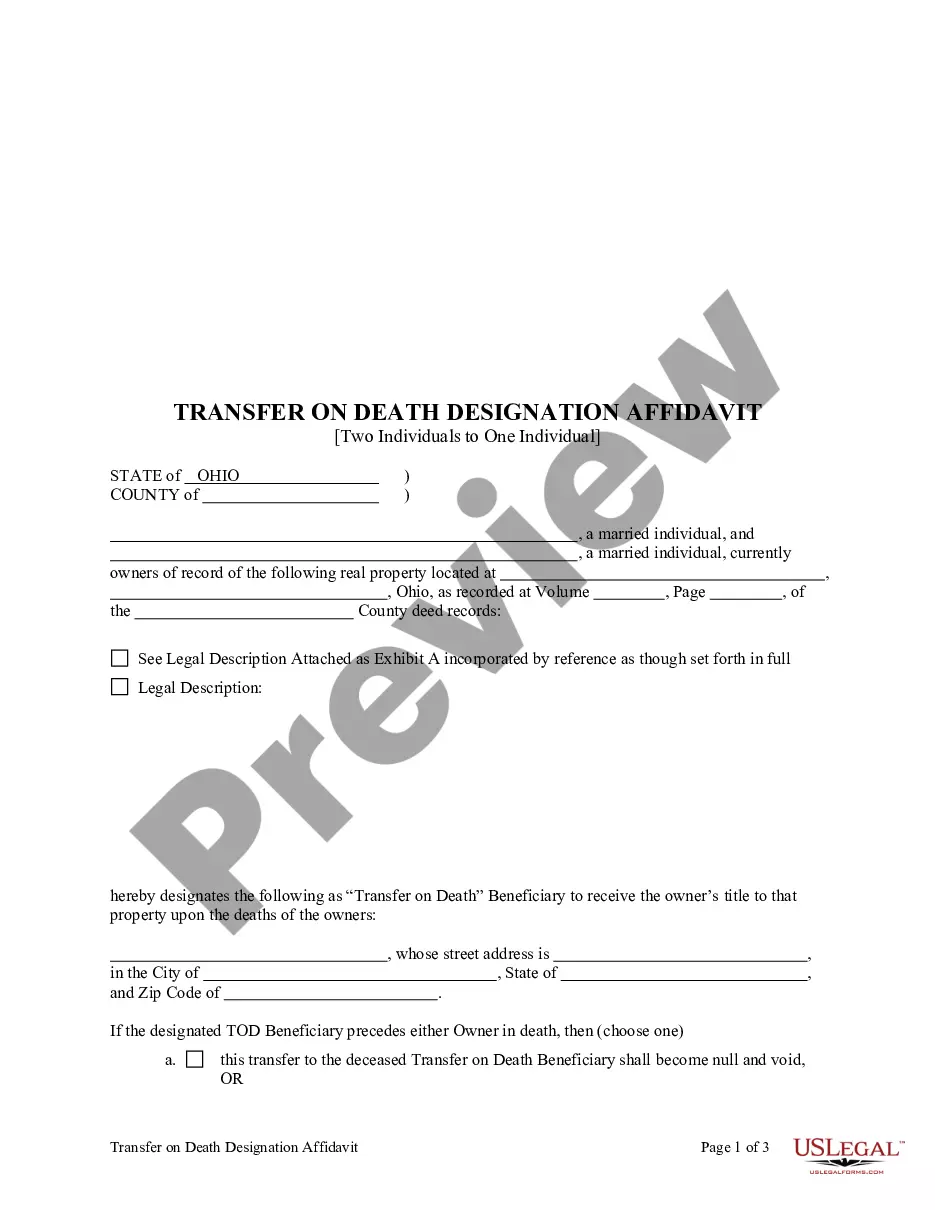
How to fill out Ohio Transfer On Death Designation Affidavit - TOD From Two Individuals To One Individual?
Obtaining legal document examples that adhere to federal and local regulations is crucial, and the web provides numerous alternatives to choose from.
However, what's the purpose of spending time searching for the appropriate Transfer Death Individual For Life example online when the US Legal Forms digital library already has such documents collected all in one location.
US Legal Forms is the largest online legal repository with over 85,000 customizable templates created by lawyers for any business or personal circumstance. They are user-friendly to navigate with all documents categorized by state and intended use.
Explore additional samples using the search feature at the top of the page if necessary.
- Our experts keep up with legal changes, so you can always trust that your form is current and compliant when acquiring a Transfer Death Individual For Life from our site.
- Securing a Transfer Death Individual For Life is quick and straightforward for both existing and new users.
- If you possess an account with an active subscription, Log In and retrieve the document sample you require in your desired format.
- If you are new to our site, follow the steps outlined below.
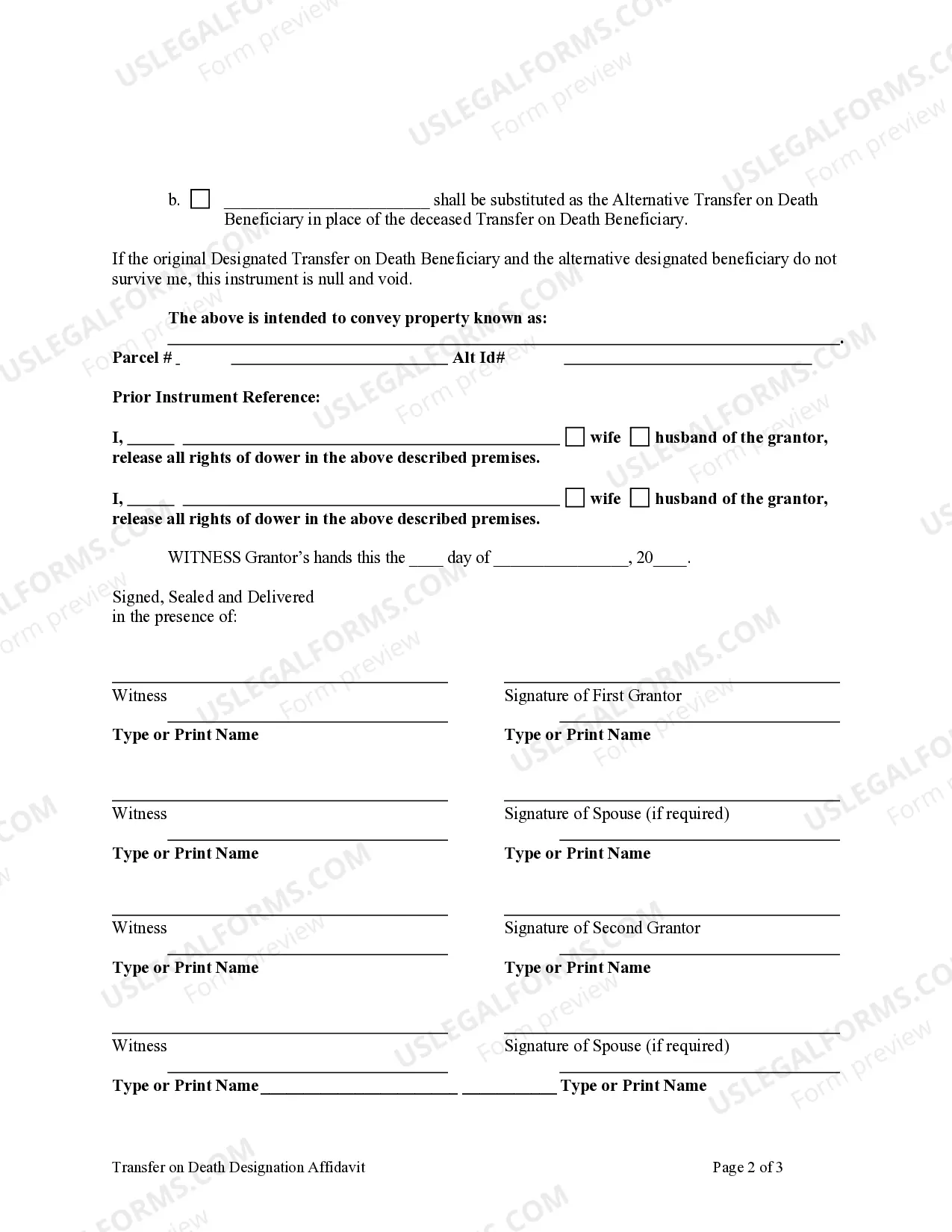
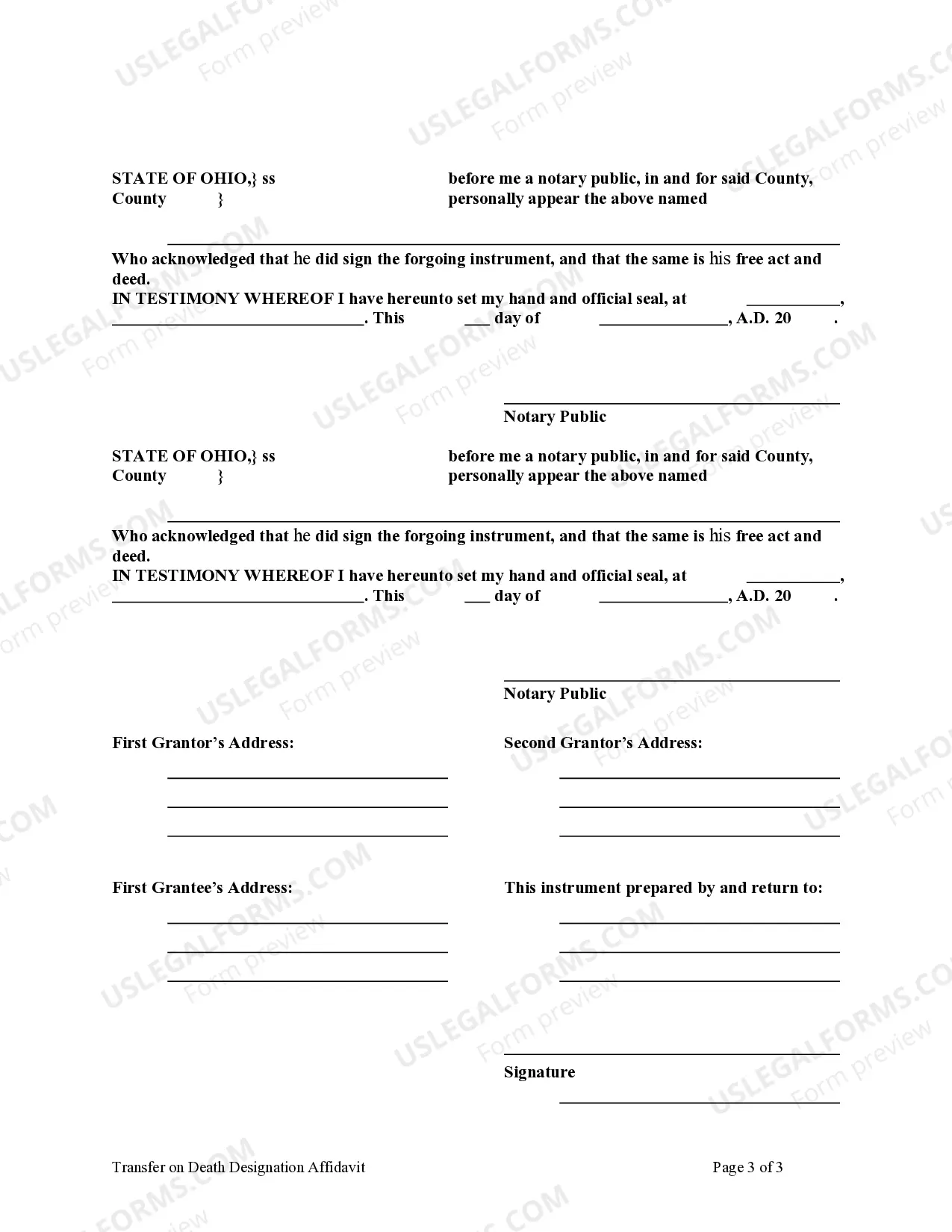
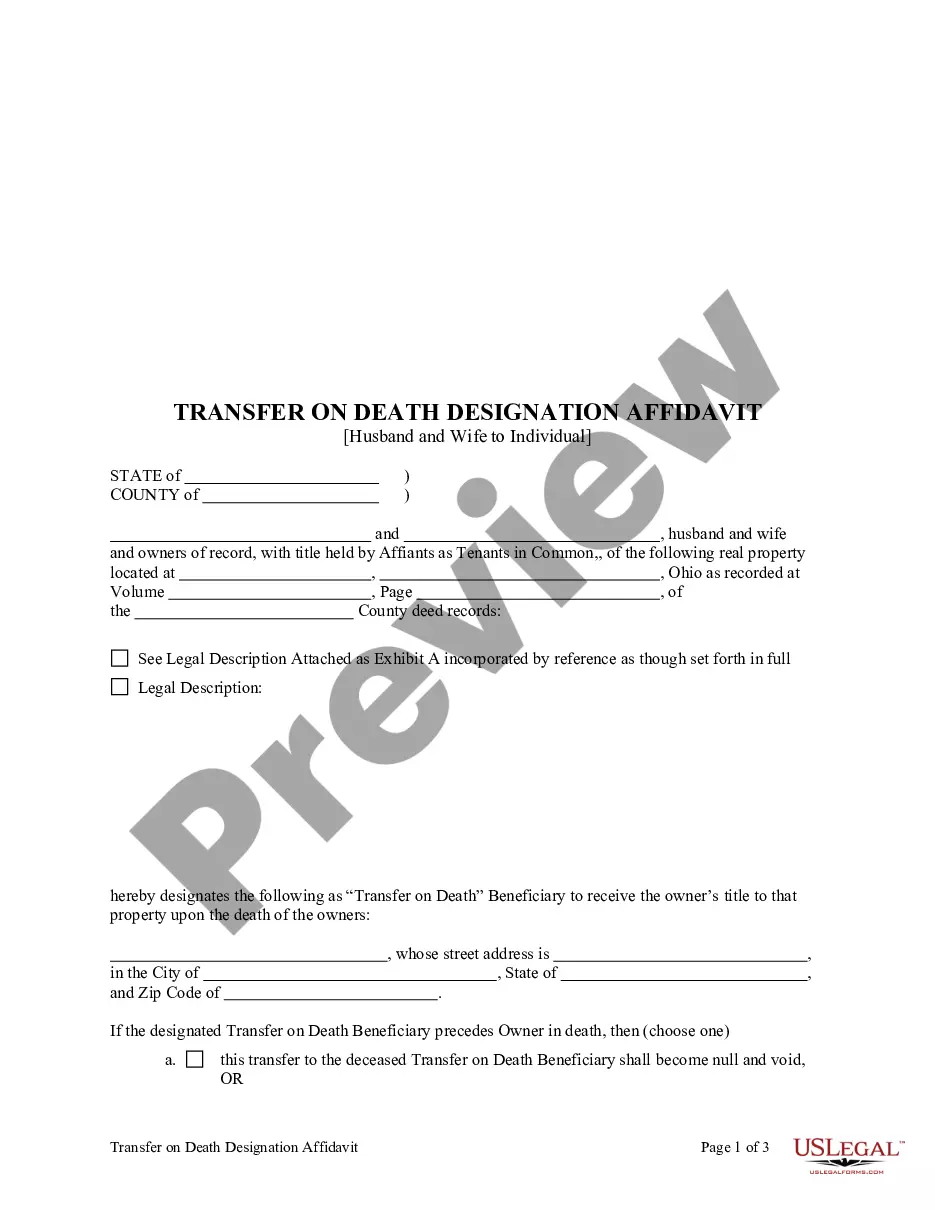
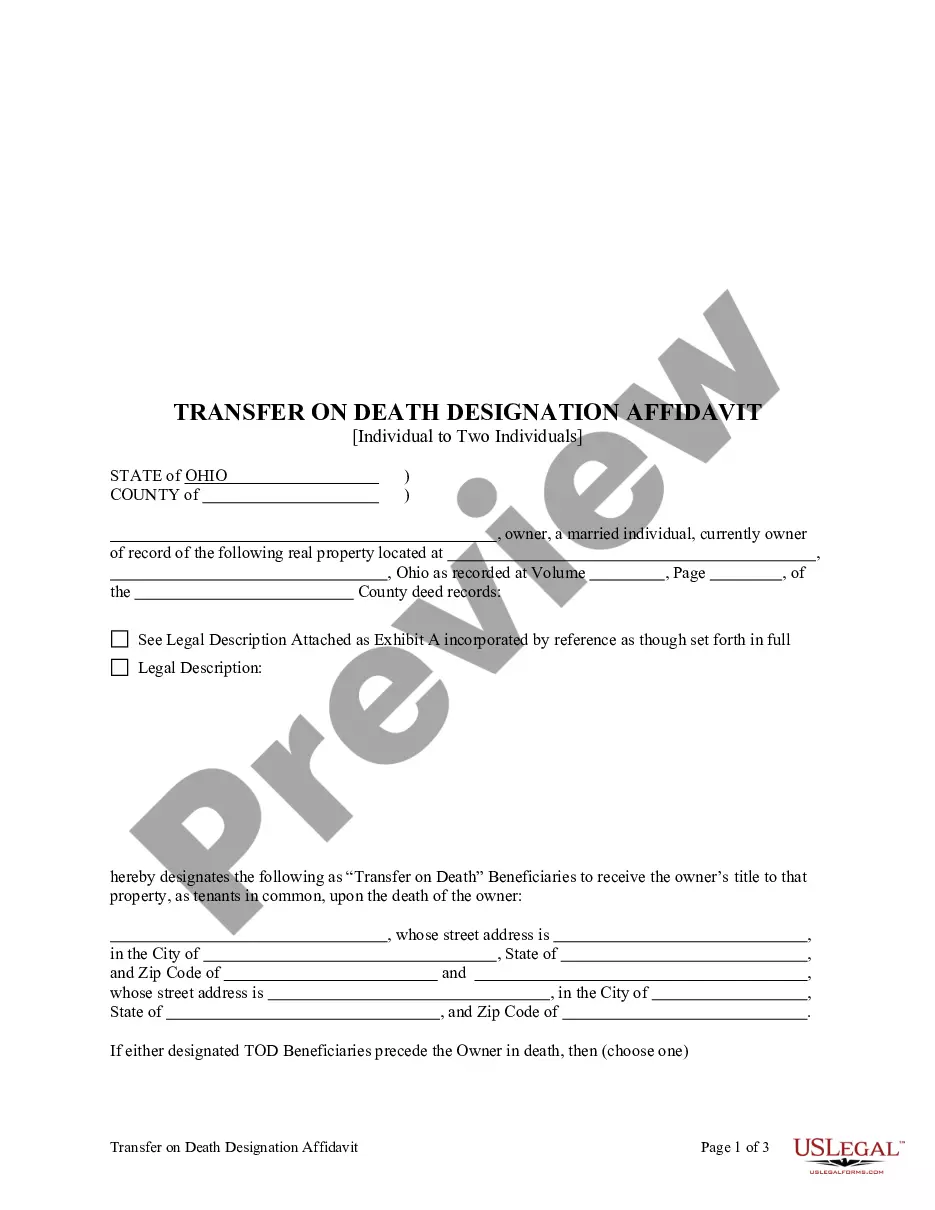
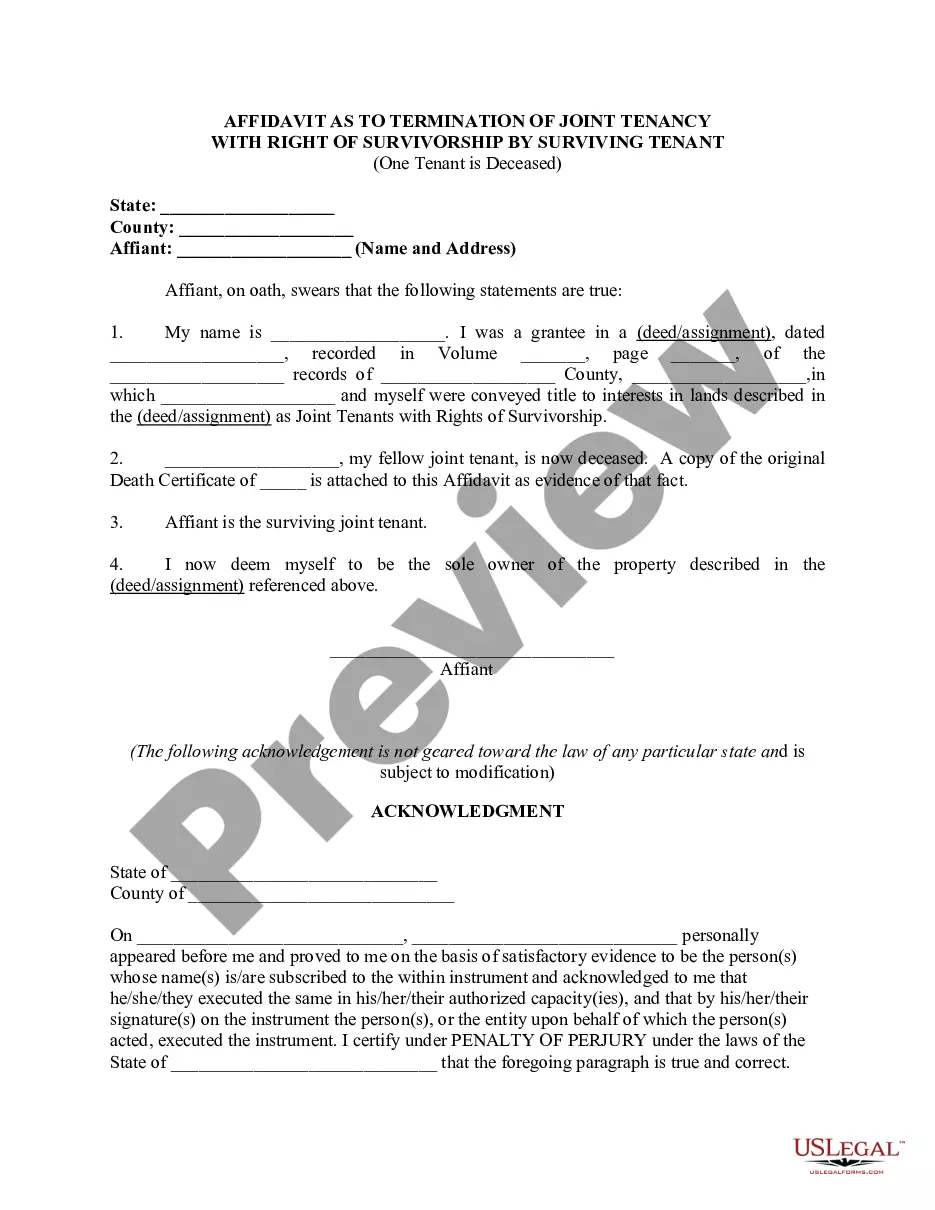
- Review the template using the Preview option or through the text description to ensure it meets your requirements.
Form popularity
FAQ
There are various components to the titling of assets: One is using a transfer on death (TOD) designation, generally used for investment accounts, or a payable on death (POD) designation, used for bank accounts, which act as beneficiary designations, stating to whom account assets are to pass when the owner dies.
Transfer-on-Death deeds also do not allow for naming a contingent beneficiary on the deed like a trust document that owns the property does. Secondly, if the intended beneficiary is a minor, the minor would not be able to manage or transfer the property until they reach the age of 18.
Disability: If your beneficiary has a disability or acquires one from an accident or illness before death. In that case, the POD and TOD funds could end up with the government or jeopardize their Medicaid and SSI.
A transfer on death (TOD) bank account is a popular estate planning tool designed to avoid probate court by naming a beneficiary. However, it doesn't avoid taxes.
Transfer on death (TOD) a provision of a brokerage account that allows the account's assets to pass directly to an intended beneficiary; the equivalent of a beneficiary designation. Estate Planning and Inheritance Glossary.