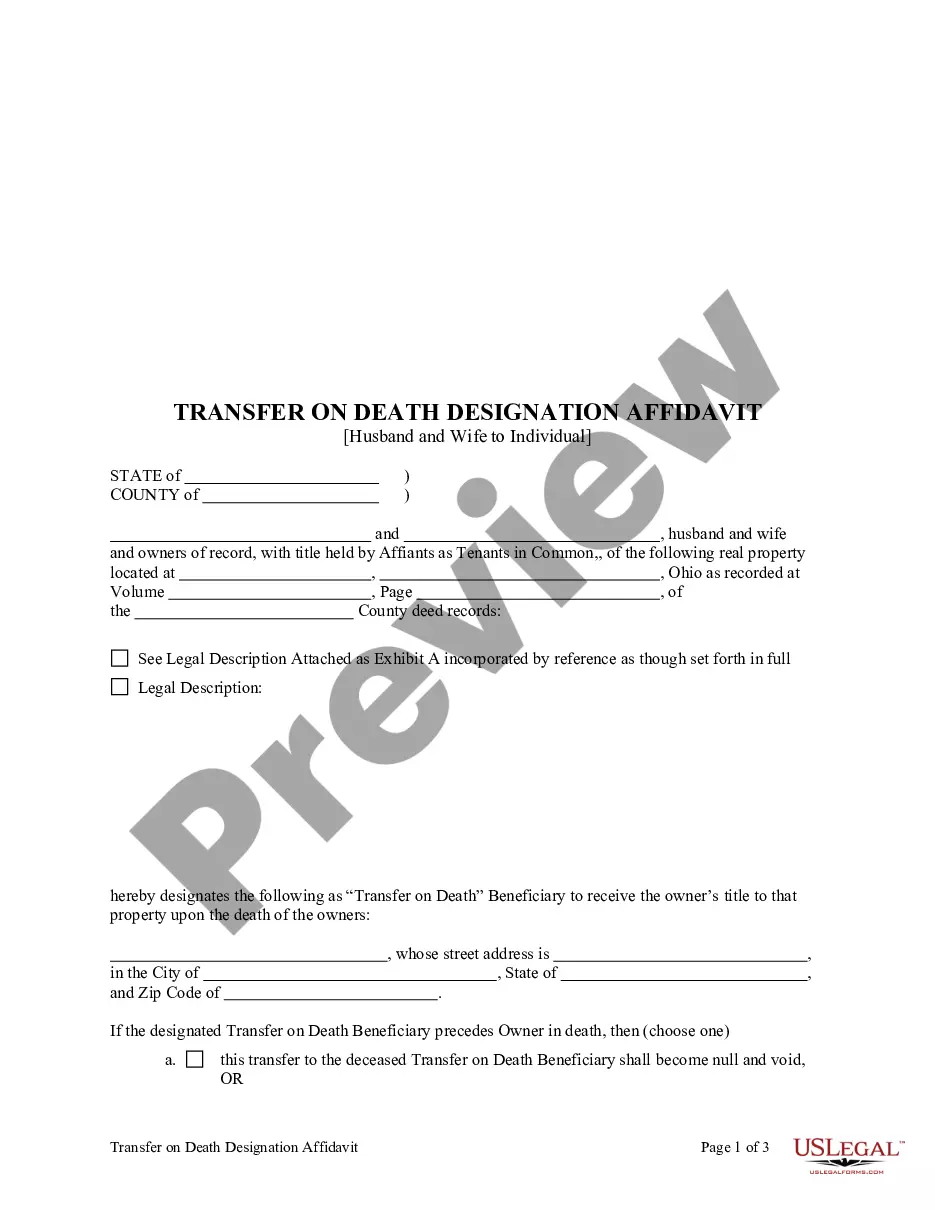
Ohio Transfer Death Form For Employees
Description


Get your form ready online
Our built-in tools help you complete, sign, share, and store your documents in one place.
Make edits, fill in missing information, and update formatting in US Legal Forms—just like you would in MS Word.
Download a copy, print it, send it by email, or mail it via USPS—whatever works best for your next step.
Sign and collect signatures with our SignNow integration. Send to multiple recipients, set reminders, and more. Go Premium to unlock E-Sign.
If this form requires notarization, complete it online through a secure video call—no need to meet a notary in person or wait for an appointment.
We protect your documents and personal data by following strict security and privacy standards.

Make edits, fill in missing information, and update formatting in US Legal Forms—just like you would in MS Word.

Download a copy, print it, send it by email, or mail it via USPS—whatever works best for your next step.

Sign and collect signatures with our SignNow integration. Send to multiple recipients, set reminders, and more. Go Premium to unlock E-Sign.

If this form requires notarization, complete it online through a secure video call—no need to meet a notary in person or wait for an appointment.

We protect your documents and personal data by following strict security and privacy standards.
Looking for another form?
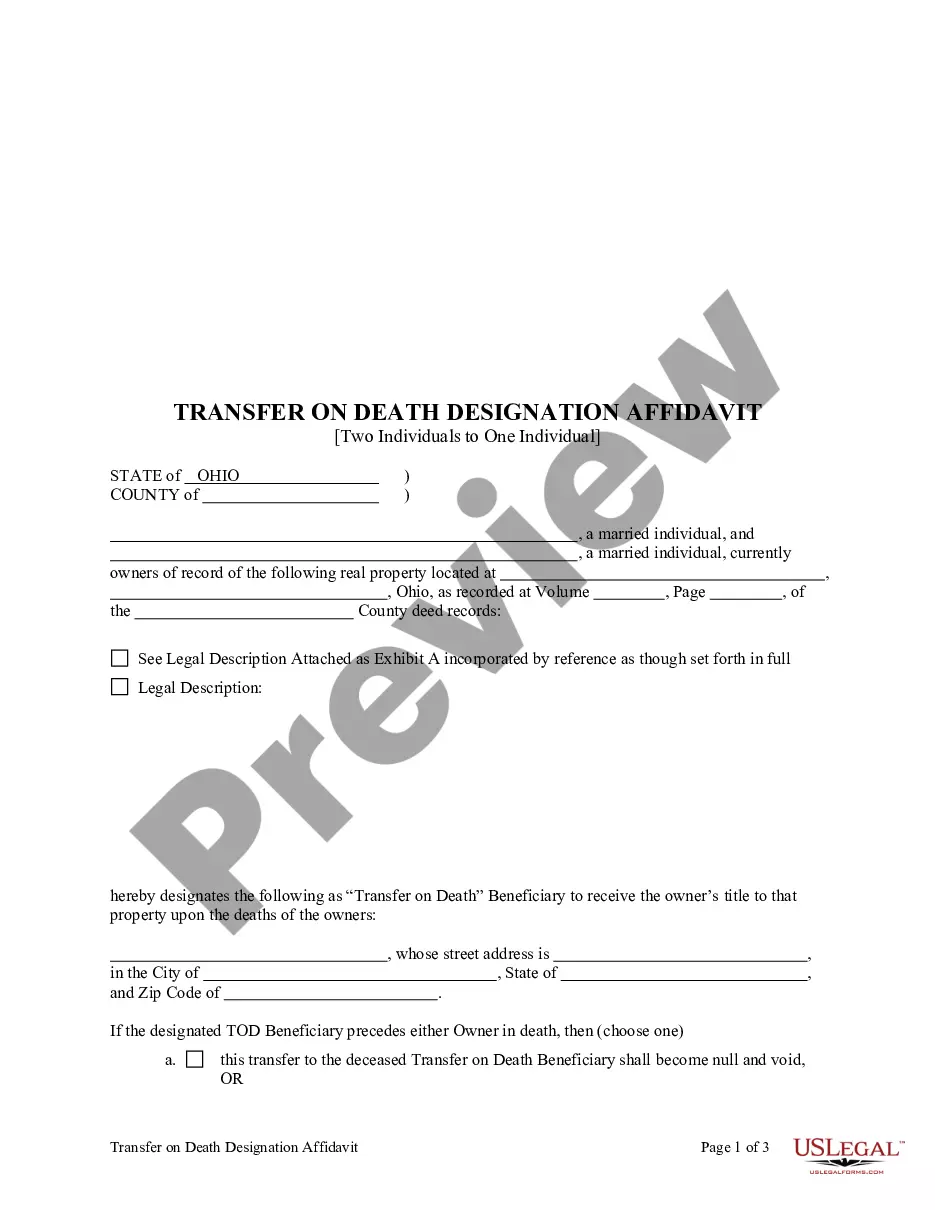
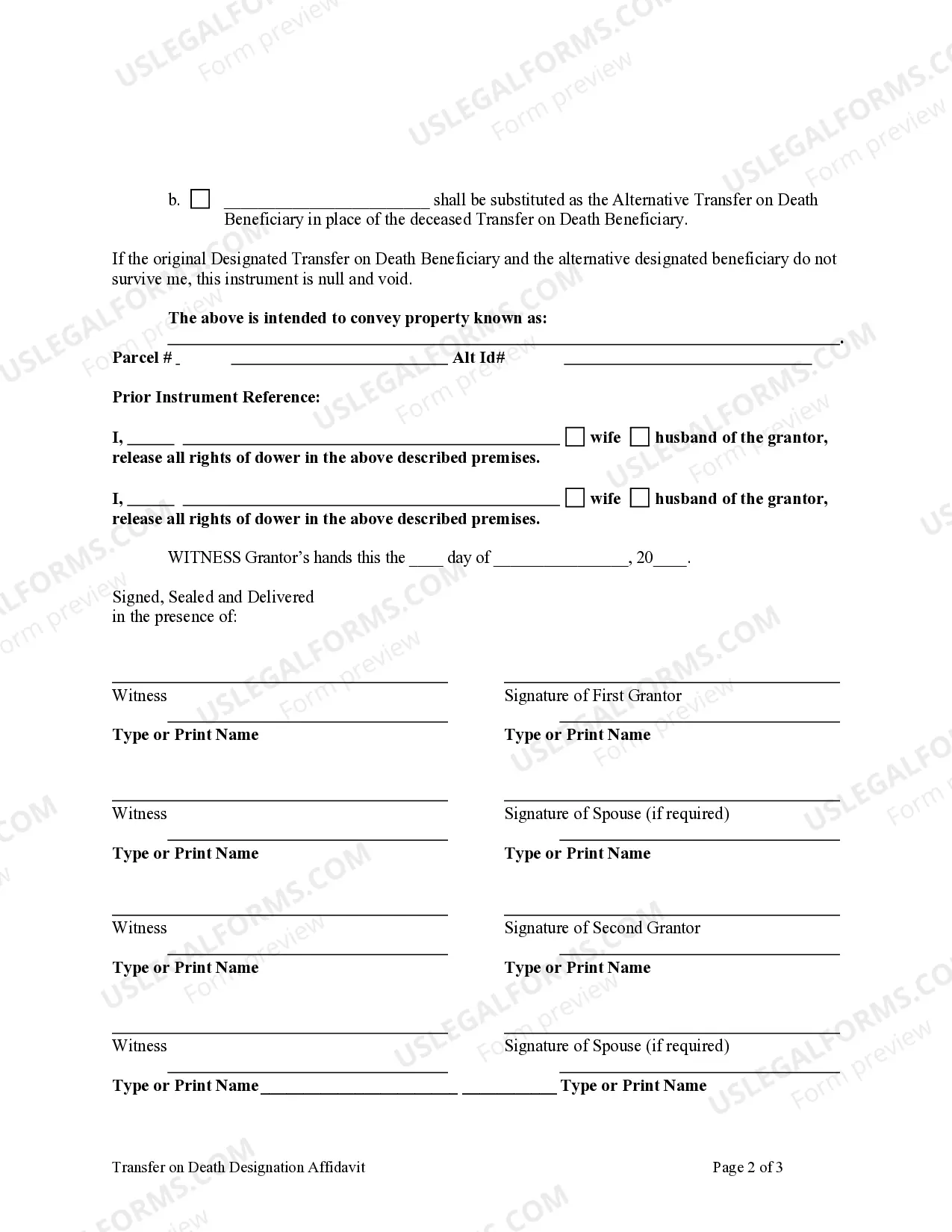
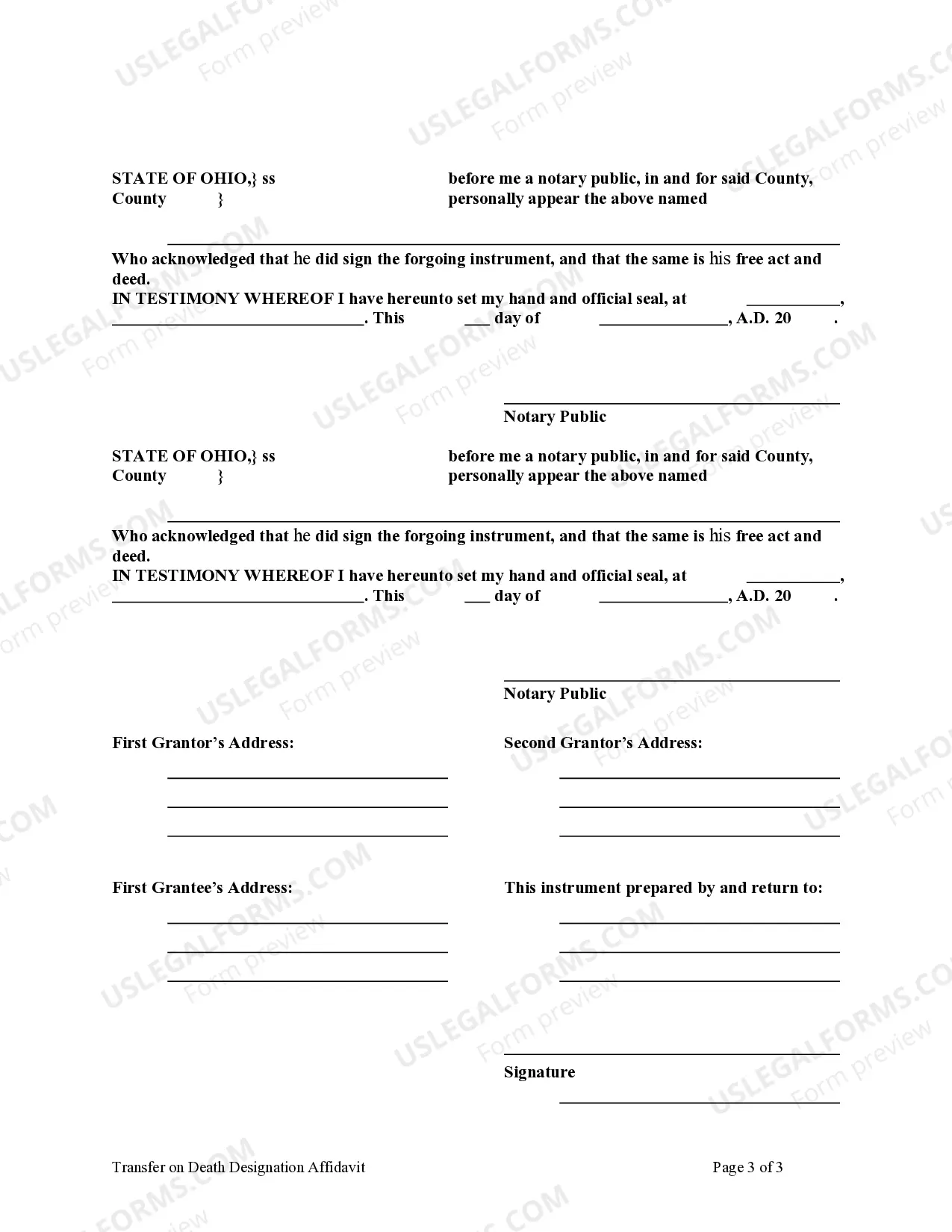
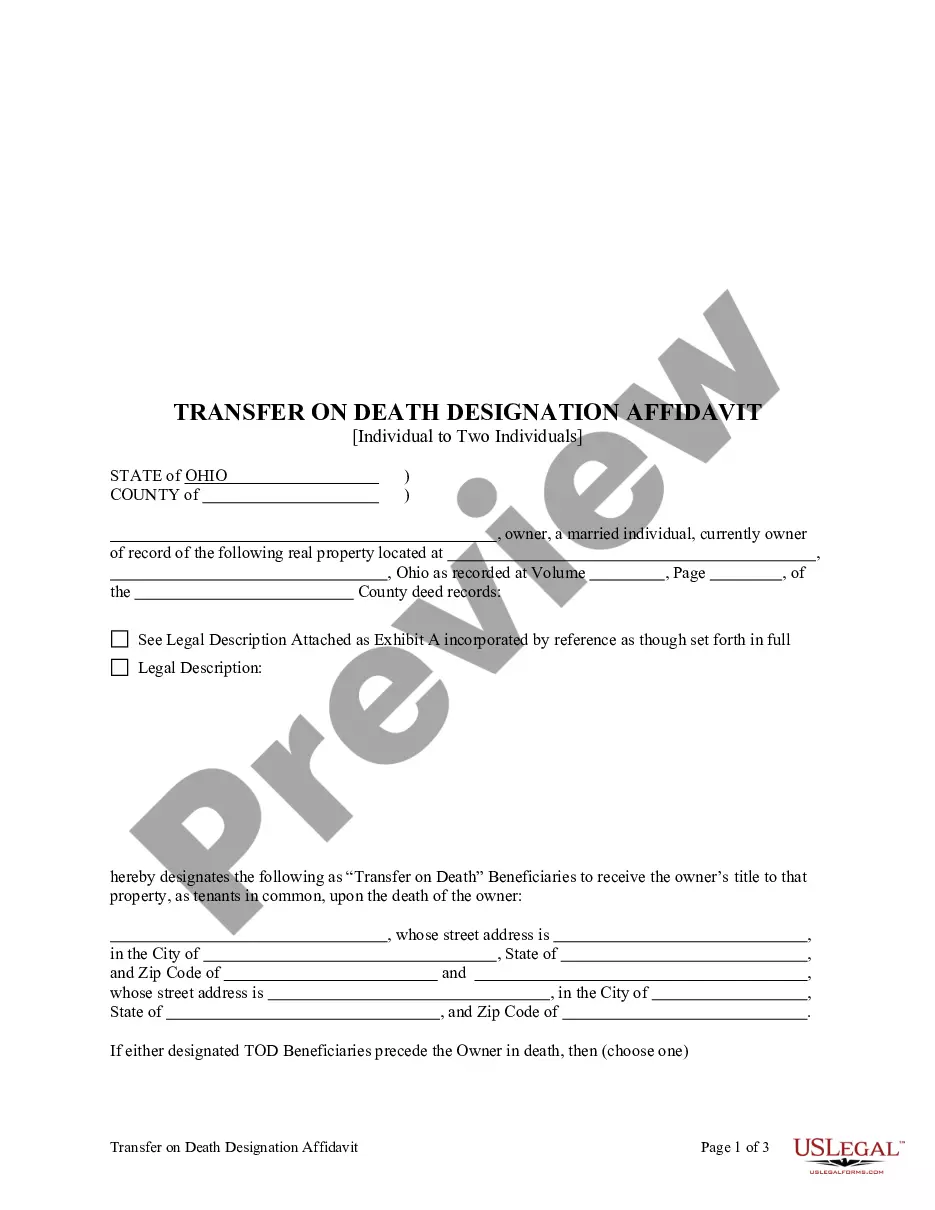
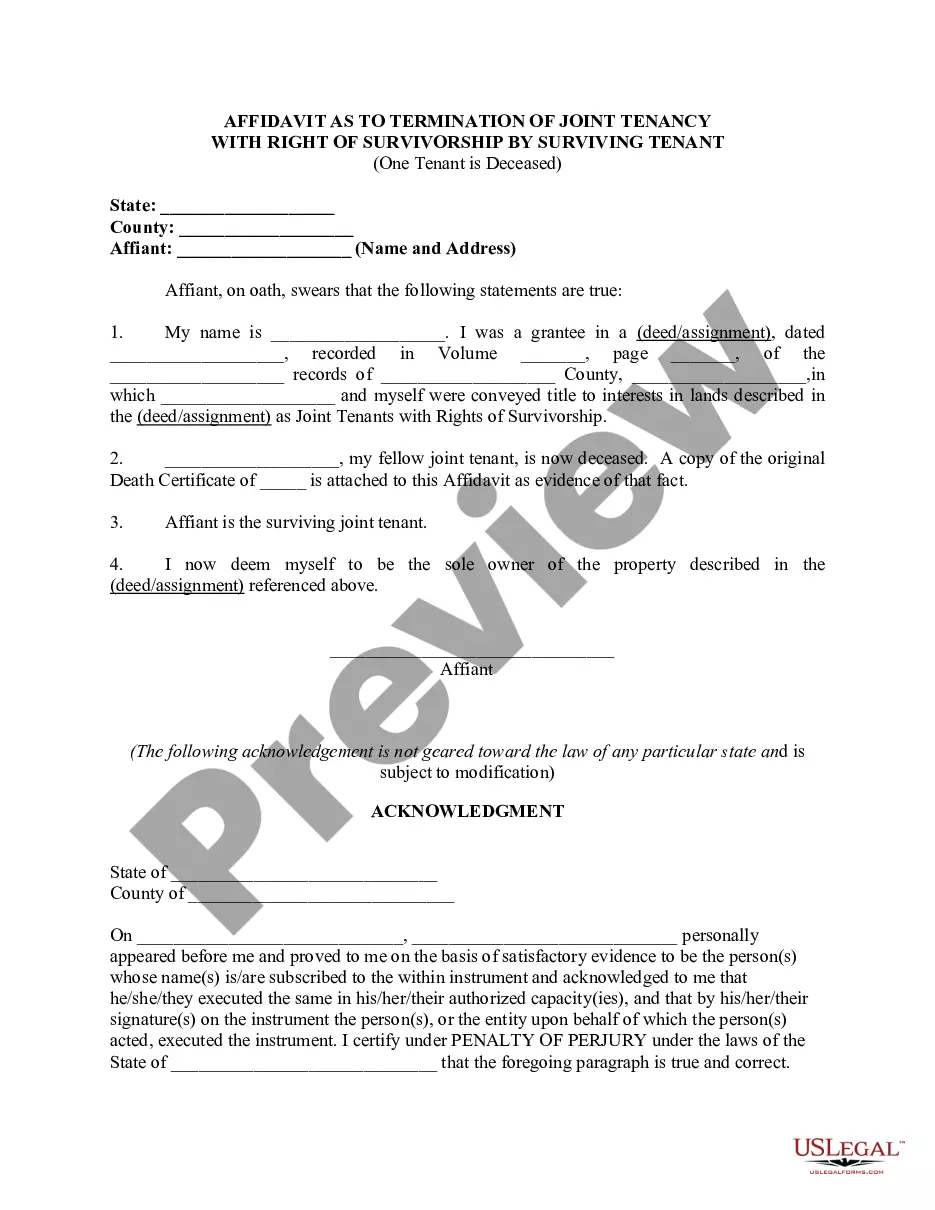
How to fill out Ohio Transfer On Death Designation Affidavit - TOD From Two Individuals To One Individual?
Locating a preferred destination to obtain the latest and suitable legal forms is a significant part of dealing with bureaucracy.
Selecting the correct legal documents necessitates precision and carefulness, which is why it is crucial to acquire samples of the Ohio Transfer Death Form For Employees exclusively from trustworthy sources, such as US Legal Forms.
Eliminate the stress that comes with your legal documentation. Explore the extensive US Legal Forms library where you can discover legal templates, assess their applicability to your case, and download them instantly.
- Utilize the library navigation or search bar to find your document sample.
- Review the form’s details to confirm it meets the standards of your state and area.
- Examine the form preview, if available, to verify it is indeed the form you require.
- Continue your search for the suitable template if the Ohio Transfer Death Form For Employees does not meet your needs.
- If you are confident about the form’s relevance, proceed to download it.
- If you are a registered member, click Log in to verify and access your chosen forms in My documents.
- If you haven’t created an account yet, click Buy now to purchase the template.
- Select the payment plan that aligns with your preferences.
- Proceed to register to complete your order.
- Finalize your purchase by selecting a payment method (credit card or PayPal).
- Choose the file format for downloading the Ohio Transfer Death Form For Employees.
- Once you have the form on your device, you can edit it using the editor or print it and complete it manually.
Form popularity
FAQ
Uniform Commercial Code (UCC) filings allow creditors to notify other creditors about a debtor's assets used as collateral for a secured transaction. UCC liens filed with Secretary of State offices act as a public notice by the "creditor" of the creditor's interest in the property.
In addition to filing with the state, the UCC is filed with the County office that holds the county real estate records for the property. Filings for ownership entities are made in the state where the entity is registered. Filings for individuals are made in the state in which the individual resides.
A Uniform Commercial Code filing, also known as a UCC filing, is a document that lenders use to establish their legal right to assets that a borrower uses to secure a loan. This notice allows the lender to seize the borrower's collateral in the case of default.
Having a UCC-1 filing or lien tied to your name or business isn't necessarily a bad thing. It's simply a public record stating that a lender has the rights to certain assets until that loan is repaid. That record will also show if the loan has been repaid or not.
In Missouri, the lien claimant must file the mechanics lien with the clerk of the circuit court in the county in which the property is located ? and provide the required preliminary notices. There is no requirement, however, that the lien be served on any party subsequent to its recording.
?UCC? stands for Uniform Commercial Code. The Uniform Commercial Code is a uniform law that governs commercial transactions, including sales of goods, secured transactions and negotiable instruments. The Uniform Commercial Code is a comprehensive set of statutes created to provide consistency among the states.
Missouri law requires any person or business entity which transacts business in the state under a name other than their own ?true name? to register that business name with the Secretary of State's Office as a Fictitious Name Registration.
An Example of a UCC Lien Filing If you secure equipment financing, the lender will file a UCC lien to state that if the debt for the espresso machine is not repaid, the lender has the right to repossess the espresso machine or seize other assets from your business.