Quit Claim Deed In Ohio
Description
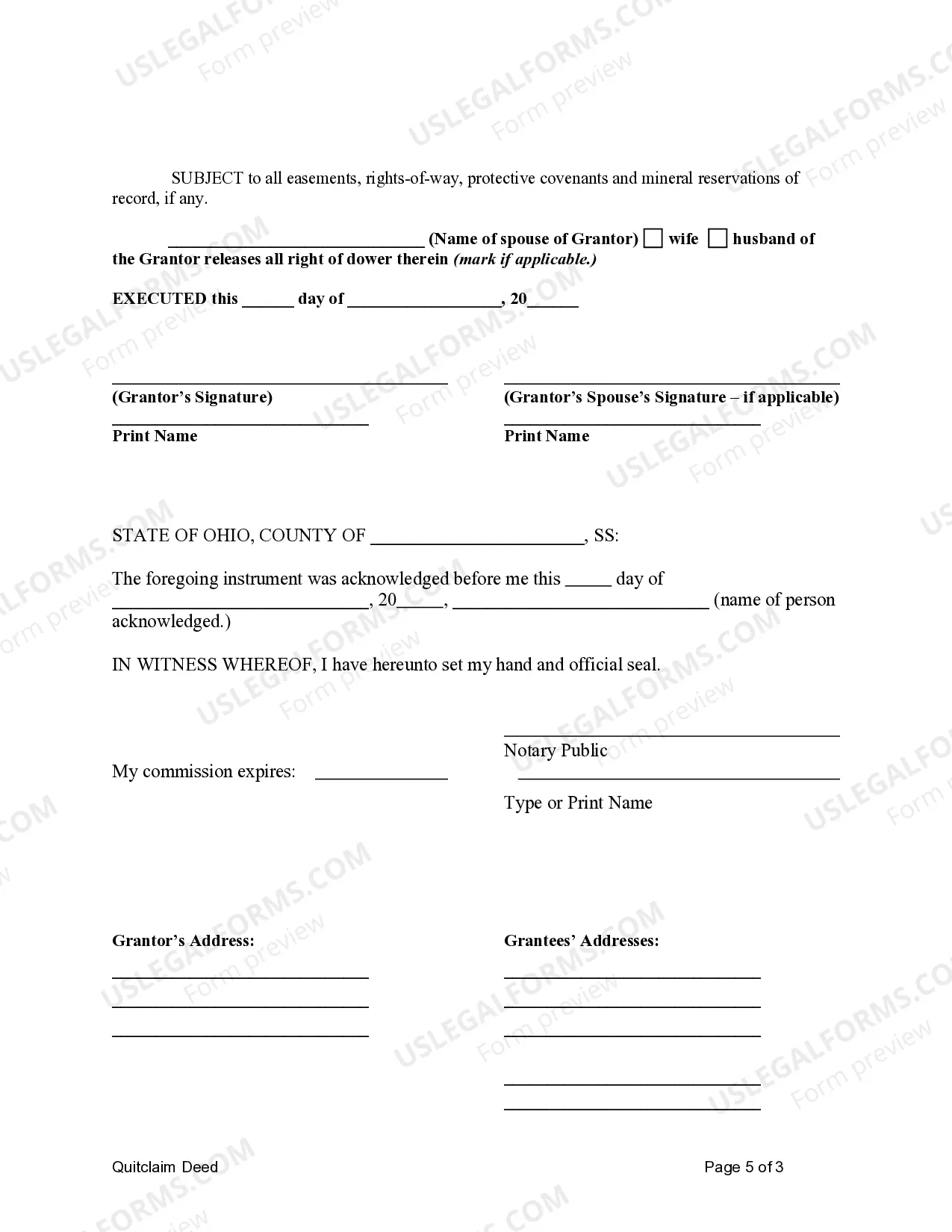


Get your form ready online
Our built-in tools help you complete, sign, share, and store your documents in one place.
Make edits, fill in missing information, and update formatting in US Legal Forms—just like you would in MS Word.
Download a copy, print it, send it by email, or mail it via USPS—whatever works best for your next step.
Sign and collect signatures with our SignNow integration. Send to multiple recipients, set reminders, and more. Go Premium to unlock E-Sign.
If this form requires notarization, complete it online through a secure video call—no need to meet a notary in person or wait for an appointment.
We protect your documents and personal data by following strict security and privacy standards.

Make edits, fill in missing information, and update formatting in US Legal Forms—just like you would in MS Word.

Download a copy, print it, send it by email, or mail it via USPS—whatever works best for your next step.

Sign and collect signatures with our SignNow integration. Send to multiple recipients, set reminders, and more. Go Premium to unlock E-Sign.

If this form requires notarization, complete it online through a secure video call—no need to meet a notary in person or wait for an appointment.

We protect your documents and personal data by following strict security and privacy standards.
Looking for another form?








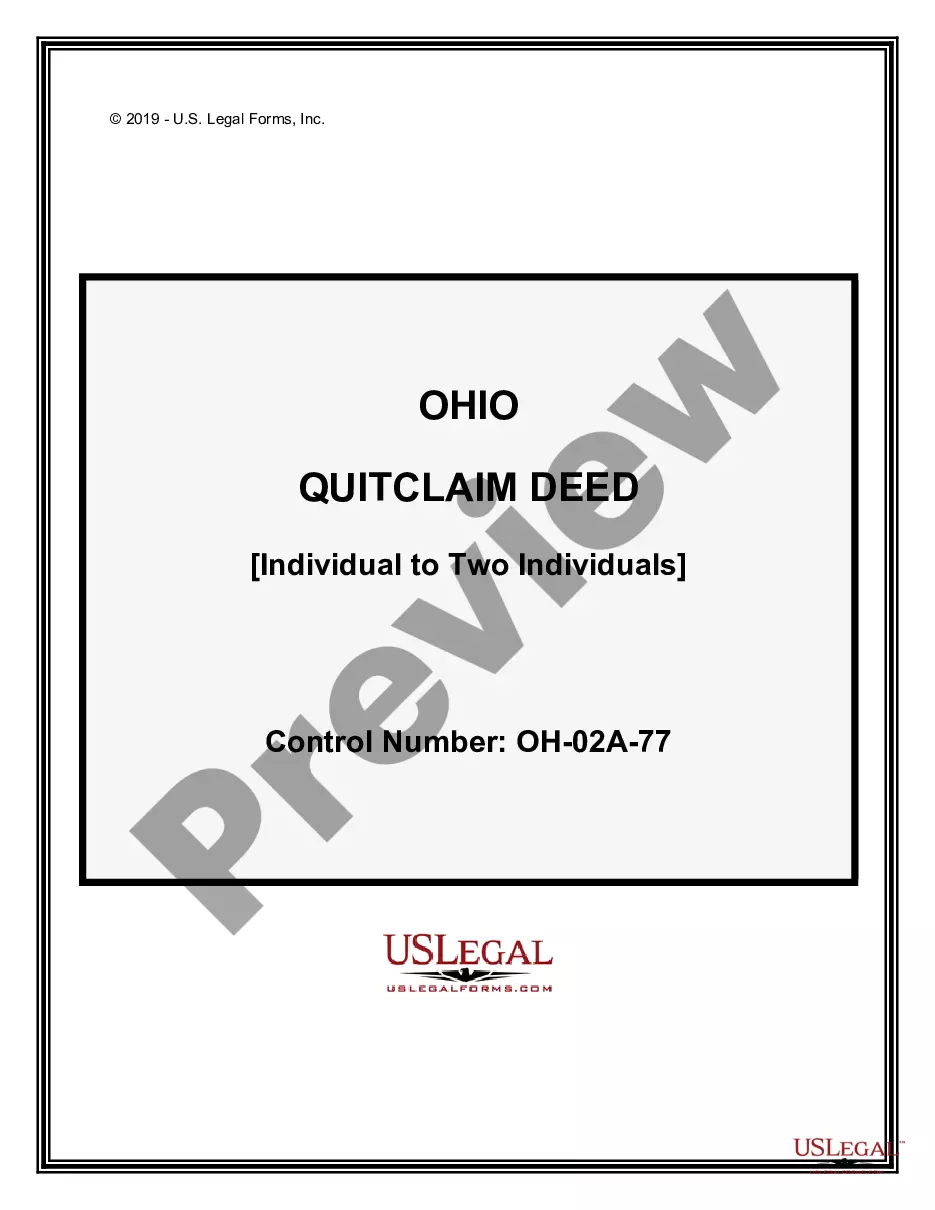
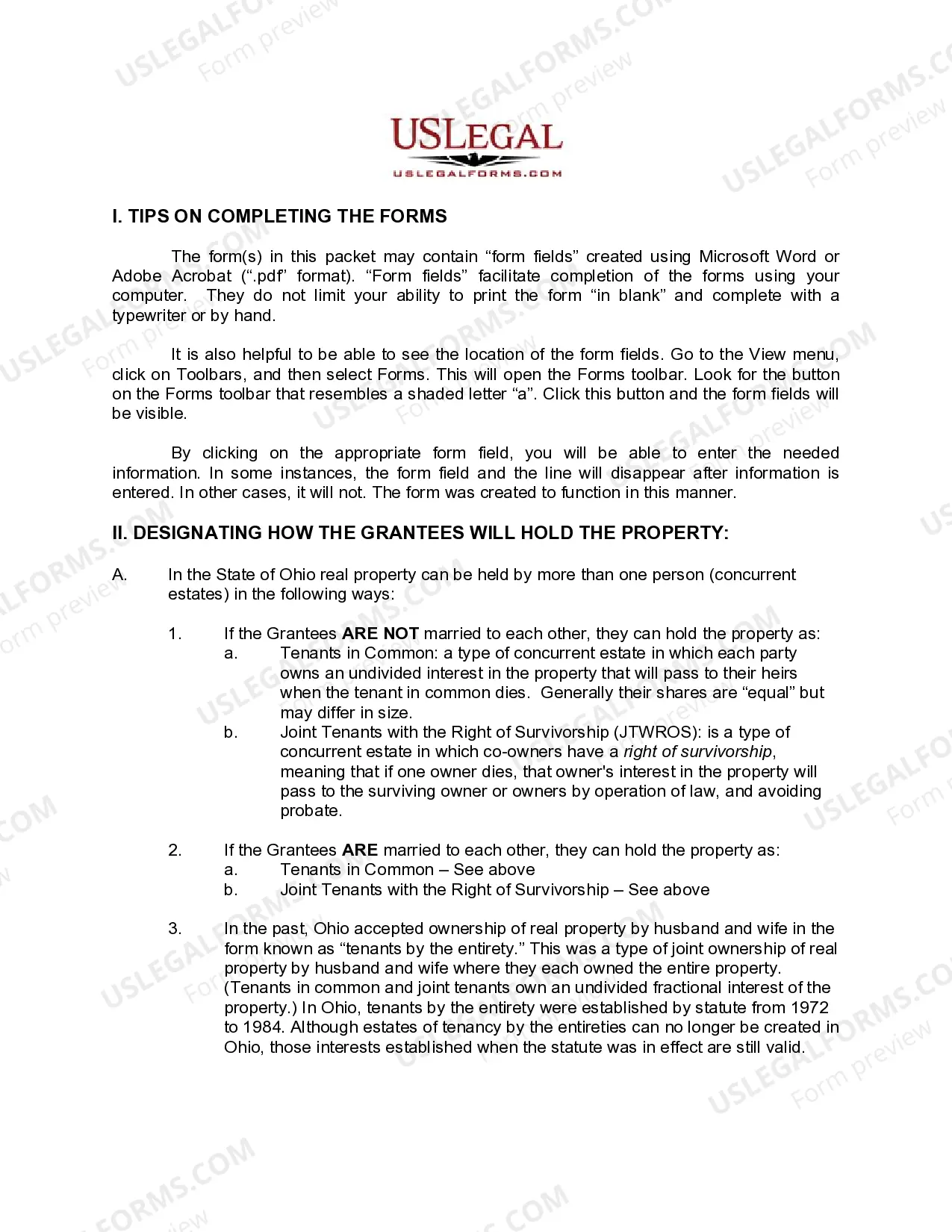
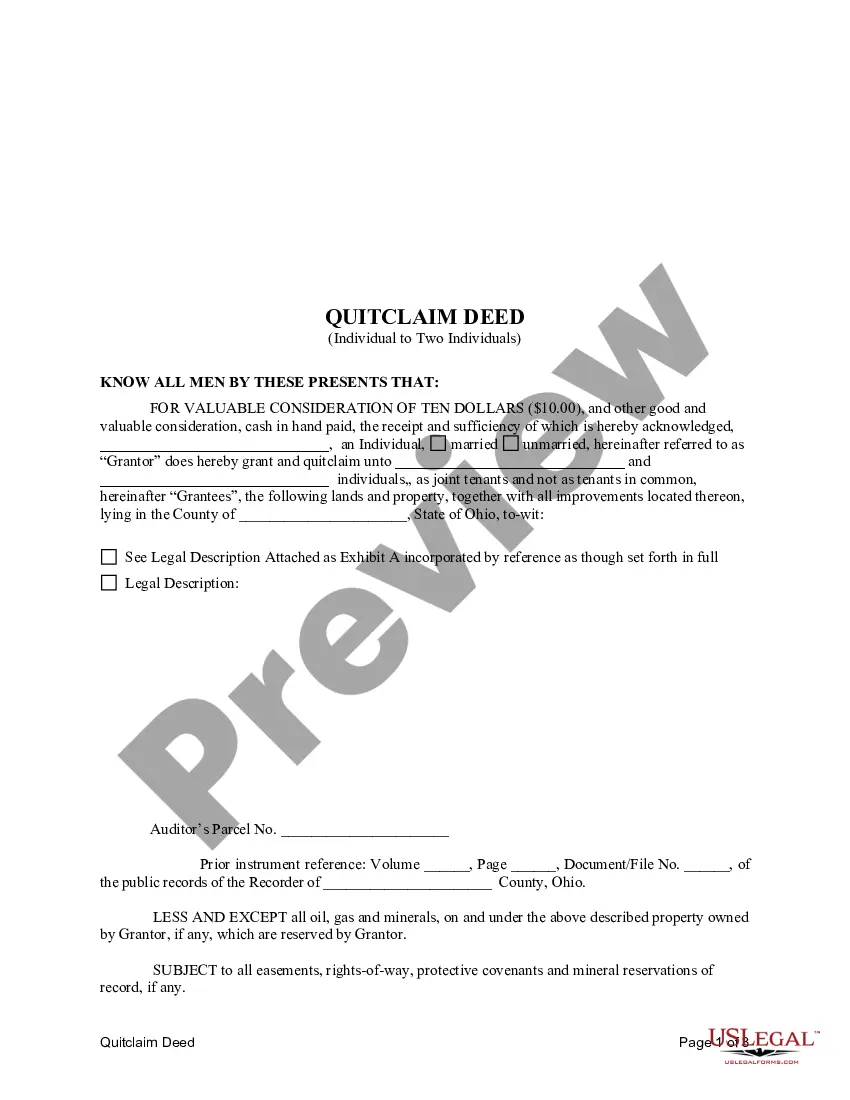
How to fill out Ohio Quitclaim Deed From Individual To Two Individuals In Joint Tenancy?
Creating legal documents from the ground up can occasionally be overwhelming. Some situations may require extensive investigation and significant financial investment.
If you’re looking for a simpler and more cost-effective method of crafting a Quit Claim Deed In Ohio or any other documents without dealing with complicated processes, US Legal Forms is always accessible.
Our online repository of over 85,000 current legal forms covers nearly every aspect of your financial, legal, and personal affairs. With just a few clicks, you can quickly obtain state- and county-specific templates meticulously prepared for you by our legal experts.
Utilize our platform whenever you require trusted and dependable services through which you can swiftly find and download the Quit Claim Deed In Ohio. If you’re familiar with our site and have previously registered an account with us, simply Log In to your account, choose the template, and download it or retrieve it at any time in the My documents section.
Ensure the template you choose meets the regulations of your state and county. Select the most appropriate subscription option to acquire the Quit Claim Deed In Ohio. Download the form, then fill it out, certify it, and print it. US Legal Forms enjoys a solid reputation and over 25 years of experience. Join us today and make document processing a simple and efficient task!
- Not registered yet? No worries.
- It takes minimal time to sign up and explore the library.
- Before directly downloading the Quit Claim Deed In Ohio, follow these suggestions.
- Review the form preview and descriptions to ensure you are accessing the correct form.
Form popularity
FAQ
Yes. As of February 1, 2002, Ohio law no longer requires two witnesses to the signing of the seller's quitclaim deed or to other transfers of title to real property such as a mortgage or land contract. You can create a valid deed as long as an authorized public notary notarizes it.
Record the deed at the recorder's office in the county where the property is located for a valid transfer. Contact the same office to confirm accepted forms of payment. A Conveyance Fee Statement (Form DTE 100, or DTE 100EX if claiming an exemption) must be signed by the grantee and filed with the deed.
In a quitclaim deed, the rights of one party pass to another party, called the grantor and grantee, respectively. As a spouse, you give up your interest in the property when you sign a quitclaim deed. This means that you no longer have a legal right to it.
A transmutation agreement is a postnuptial agreement. In this sense, it is a document that allows married couples to change the nature of the property they own for their benefit, either to avoid a messy divorce due to property disputes in the future or for tax benefits and other assorted purposes.
To transfer title, you must deliver the executed and acknowledged deed to the grantee. This means that you must give up control over the deed during your lifetime and intend to transfer title to the grantee. To complete the transfer, the grantee must accept the delivered deed.