Affidavit Of Heirship New York Without Probate

Description
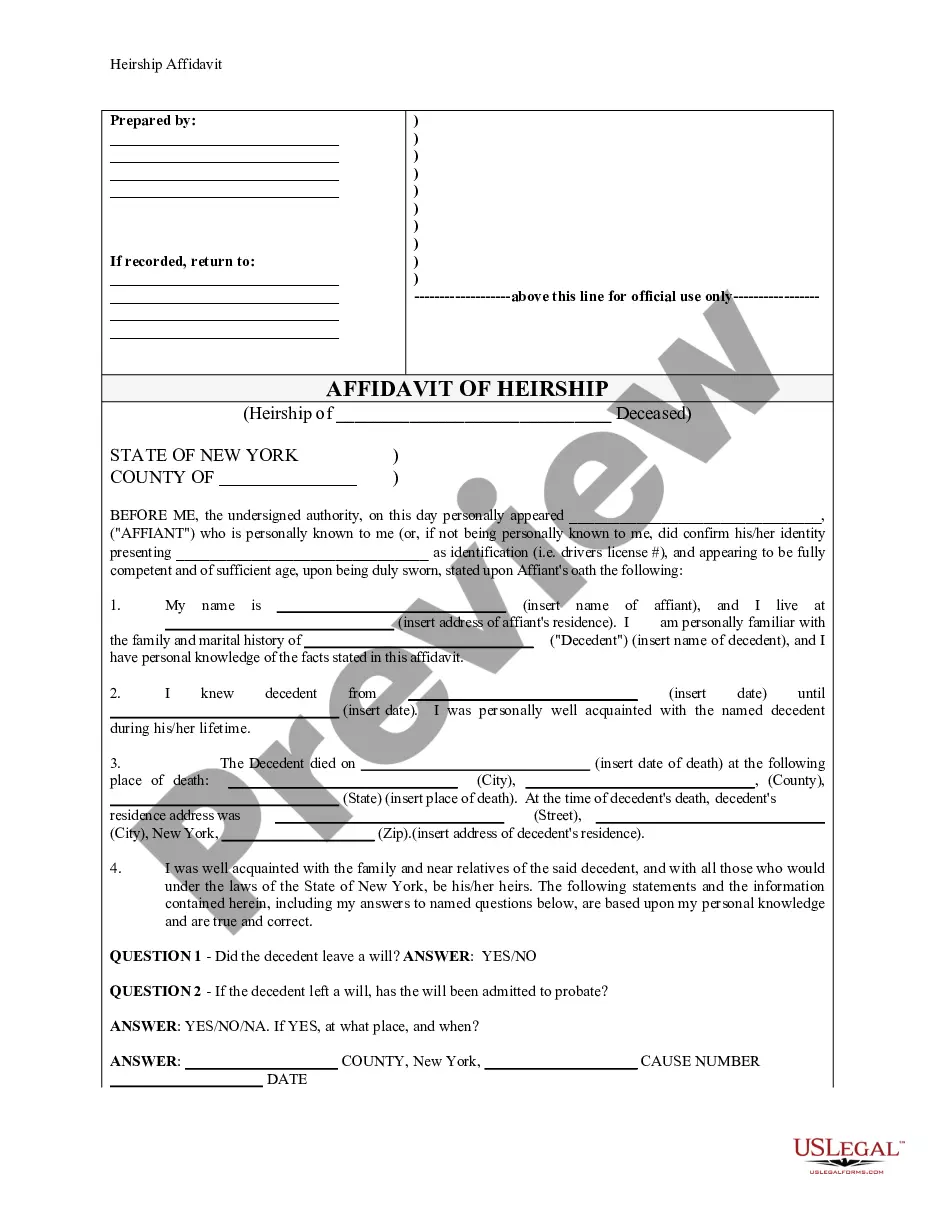
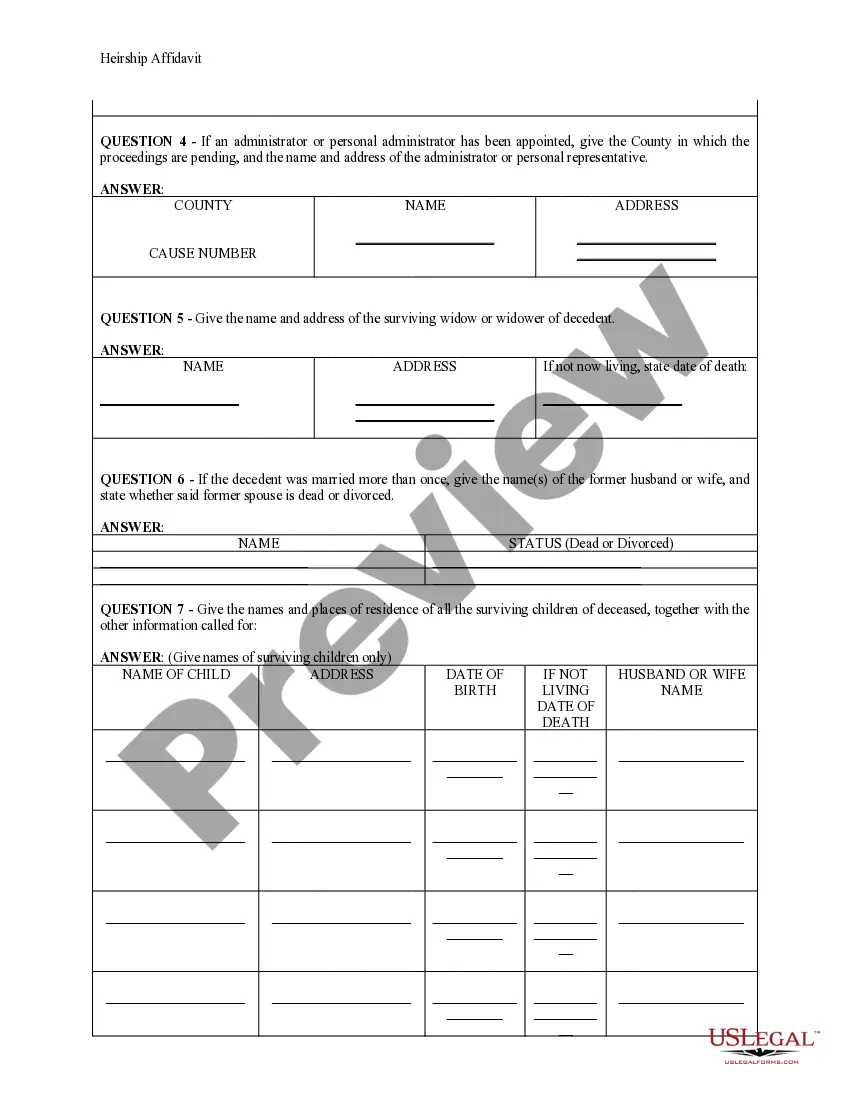
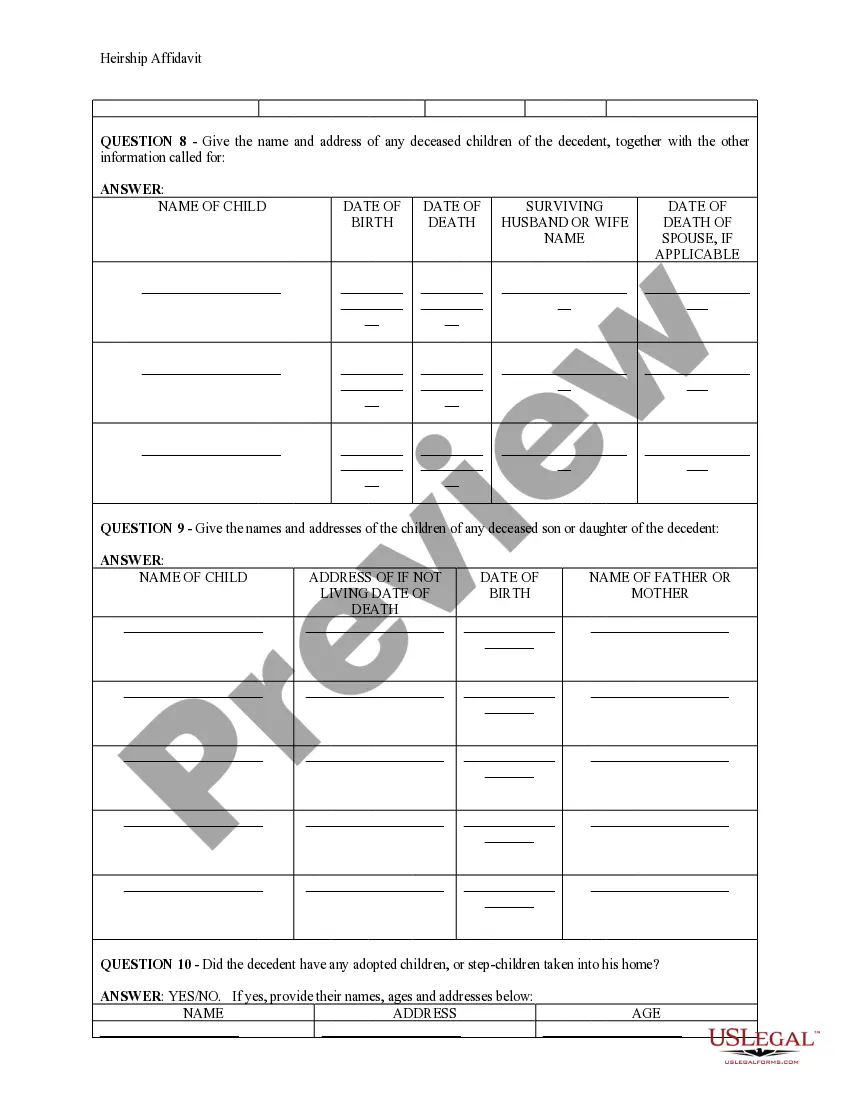
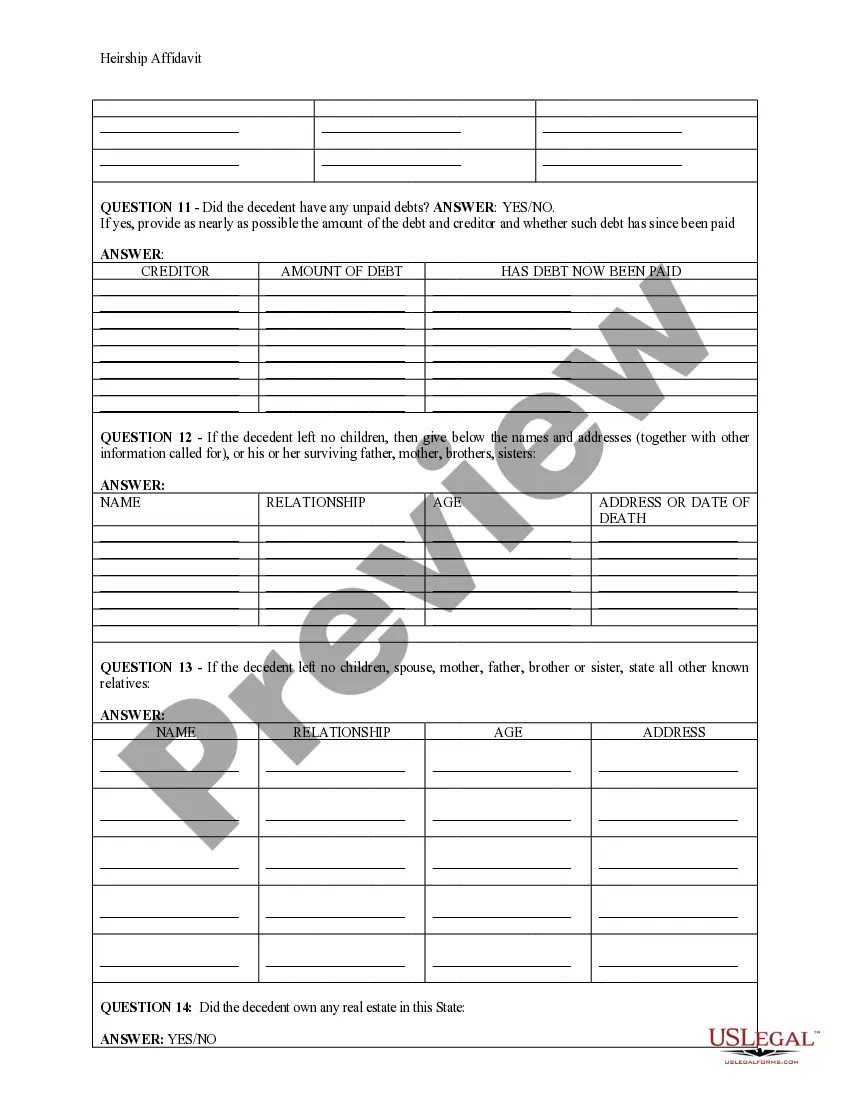
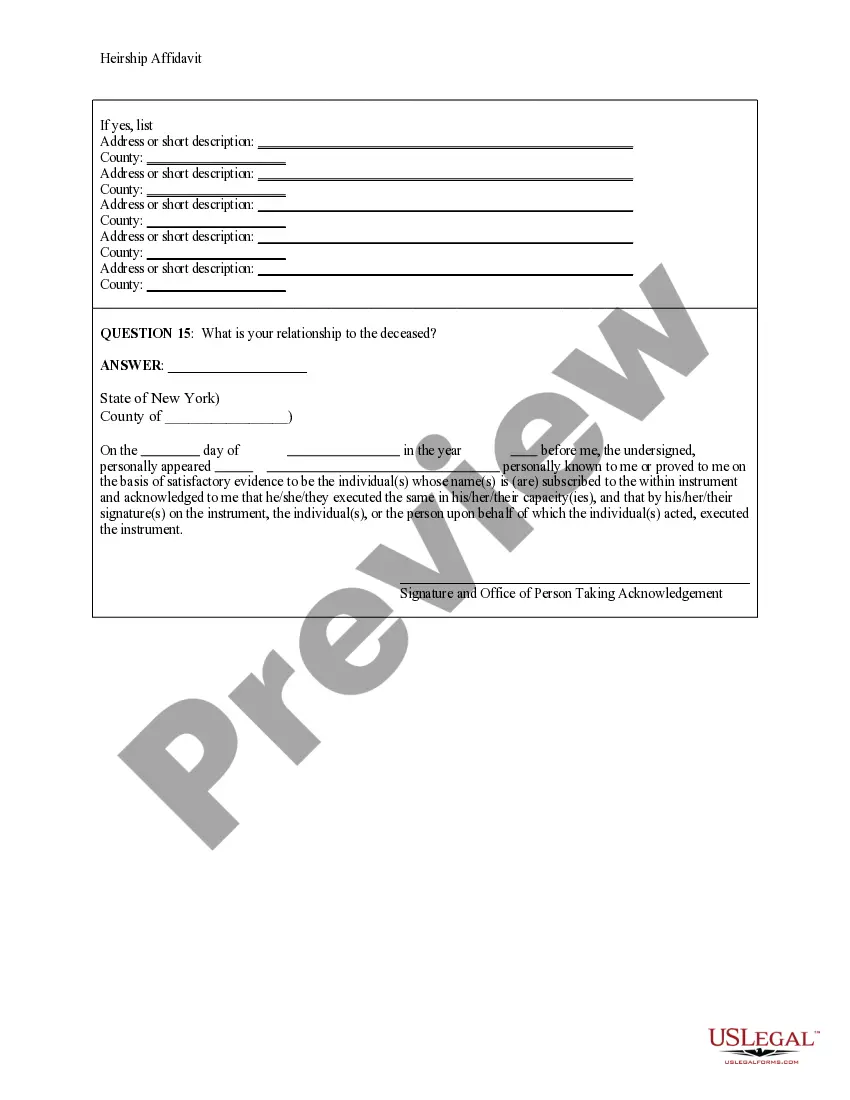
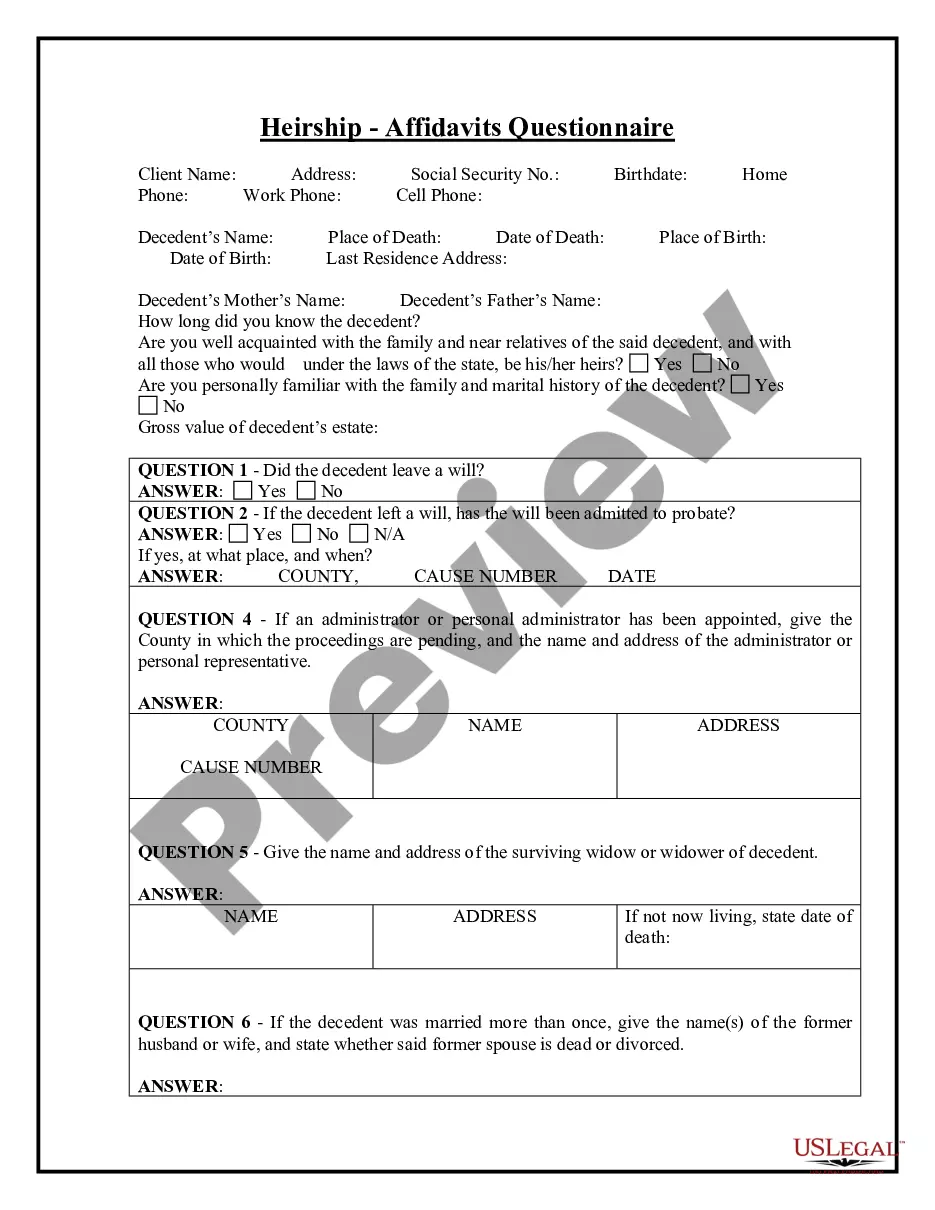
Get your form ready online
Our built-in tools help you complete, sign, share, and store your documents in one place.
Make edits, fill in missing information, and update formatting in US Legal Forms—just like you would in MS Word.
Download a copy, print it, send it by email, or mail it via USPS—whatever works best for your next step.
Sign and collect signatures with our SignNow integration. Send to multiple recipients, set reminders, and more. Go Premium to unlock E-Sign.
If this form requires notarization, complete it online through a secure video call—no need to meet a notary in person or wait for an appointment.
We protect your documents and personal data by following strict security and privacy standards.

Make edits, fill in missing information, and update formatting in US Legal Forms—just like you would in MS Word.

Download a copy, print it, send it by email, or mail it via USPS—whatever works best for your next step.

Sign and collect signatures with our SignNow integration. Send to multiple recipients, set reminders, and more. Go Premium to unlock E-Sign.

If this form requires notarization, complete it online through a secure video call—no need to meet a notary in person or wait for an appointment.

We protect your documents and personal data by following strict security and privacy standards.
Looking for another form?
How to fill out New York Heirship Affidavit - Descent?
Regardless of whether for commercial objectives or personal affairs, everyone must handle legal matters eventually in their lifetime.
Filling out legal documents necessitates meticulous care, beginning with selecting the correct form template.
Once downloaded, you can complete the form using editing software or print it out to finish it manually. With a comprehensive US Legal Forms catalog available, you don’t have to waste time searching for the right template online. Utilize the library’s straightforward navigation to find the appropriate template for any occasion.
- For example, when you choose an incorrect version of the Affidavit Of Heirship New York Without Probate, it will be denied once you submit it.
- Thus, it is vital to have a trustworthy source of legal documents like US Legal Forms.
- If you need to obtain an Affidavit Of Heirship New York Without Probate template, follow these simple steps.
- Locate the template you require by using the search box or catalog navigation.
- Review the form's details to confirm it fits your situation, state, and county.
- Click on the form's preview to inspect it.
- If it is the incorrect form, return to the search option to find the Affidavit Of Heirship New York Without Probate example you need.
- Download the document if it meets your needs.
- If you have a US Legal Forms account, click Log in to reach previously saved templates in My documents.
- If you do not possess an account yet, you may download the form by clicking Buy now.
- Select the suitable pricing option.
- Complete the profile registration form.
- Choose your payment method: you can use a credit card or PayPal account.
- Select the file format you prefer and download the Affidavit Of Heirship New York Without Probate.
Form popularity
FAQ
If you are named as an heir, you may have to prove to the estate trustee that you are the person named. This can be done by showing the estate trustee identification or providing an affidavit.
The form is fairly straightforward and requires the following information: Name, address, and date of death of the decedent. Whether the deceased person was ever married. Names of the surviving heirs. Statement that the deceased did not leave a will. Statement that you are an heir under your state intestacy law.
The affidavit must be signed by a disinterested person, meaning someone who has no financial interest in the estate's assets. Family members who stand to gain or lose something of value by omitting the name of another possible heir are barred from signing the affidavit of heirship.
The primary reason heirs opt for Affidavits of Heirship instead of full probate is that it is a cheaper alternative. Another reason is that more than four years have passed since the date of death, and probate may not be an available option.