Beneficiary Bank

Description




Get your form ready online
Our built-in tools help you complete, sign, share, and store your documents in one place.
Make edits, fill in missing information, and update formatting in US Legal Forms—just like you would in MS Word.
Download a copy, print it, send it by email, or mail it via USPS—whatever works best for your next step.
Sign and collect signatures with our SignNow integration. Send to multiple recipients, set reminders, and more. Go Premium to unlock E-Sign.
If this form requires notarization, complete it online through a secure video call—no need to meet a notary in person or wait for an appointment.
We protect your documents and personal data by following strict security and privacy standards.

Make edits, fill in missing information, and update formatting in US Legal Forms—just like you would in MS Word.

Download a copy, print it, send it by email, or mail it via USPS—whatever works best for your next step.

Sign and collect signatures with our SignNow integration. Send to multiple recipients, set reminders, and more. Go Premium to unlock E-Sign.

If this form requires notarization, complete it online through a secure video call—no need to meet a notary in person or wait for an appointment.

We protect your documents and personal data by following strict security and privacy standards.
Looking for another form?







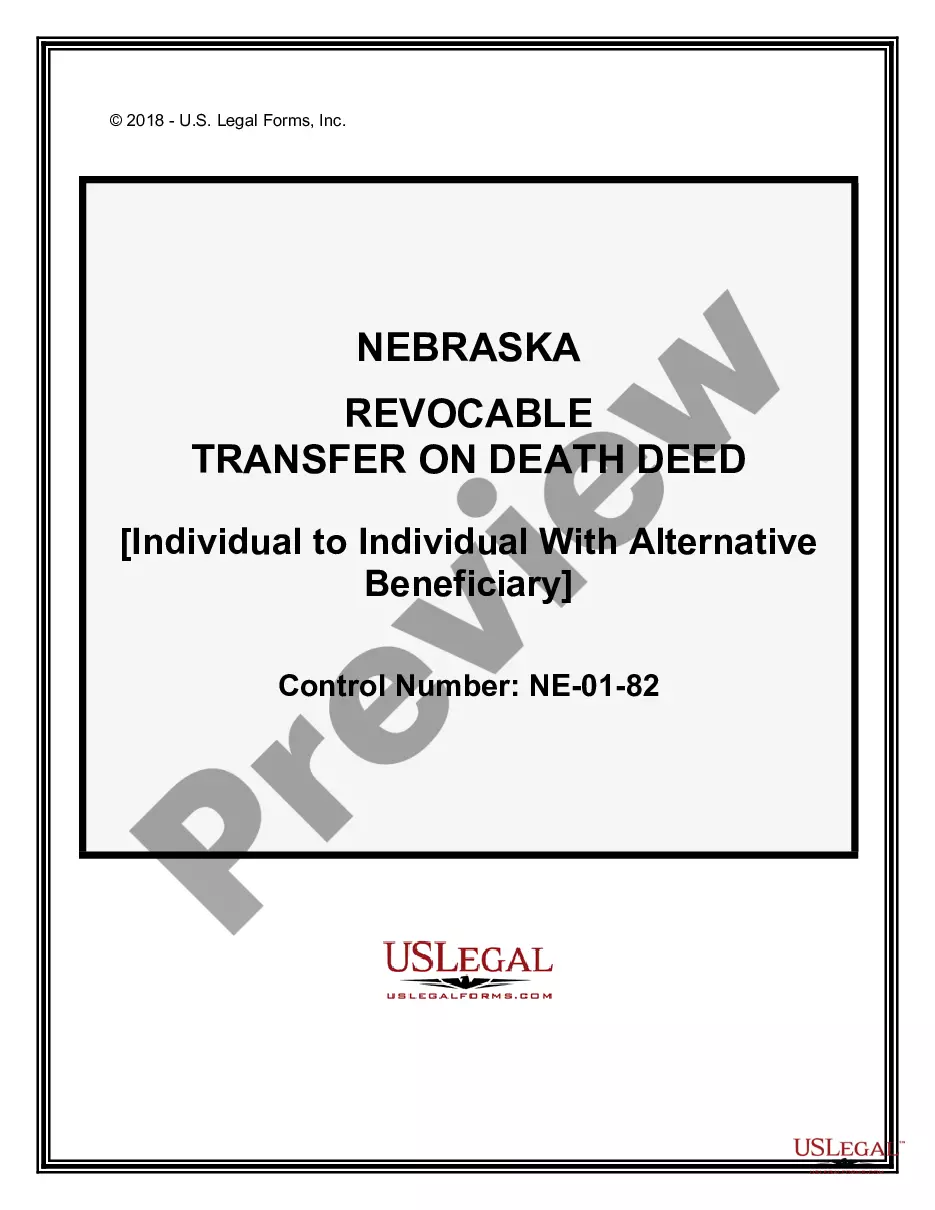
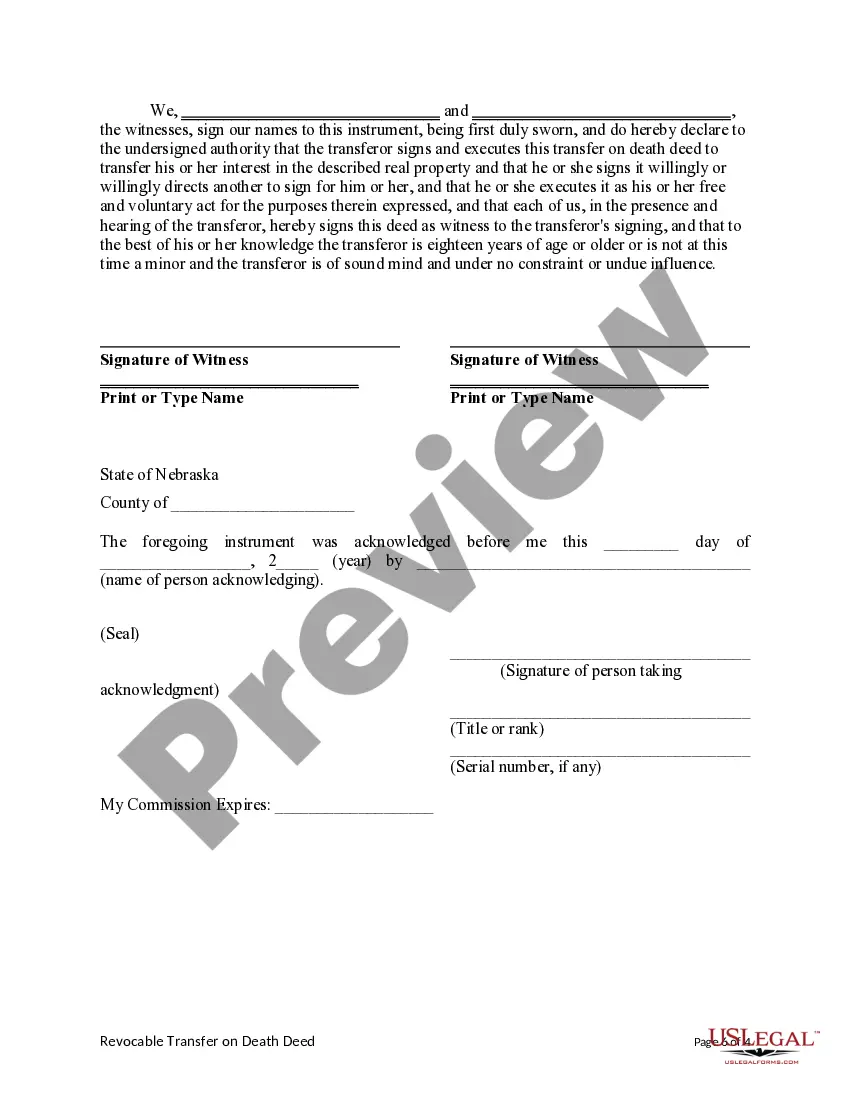
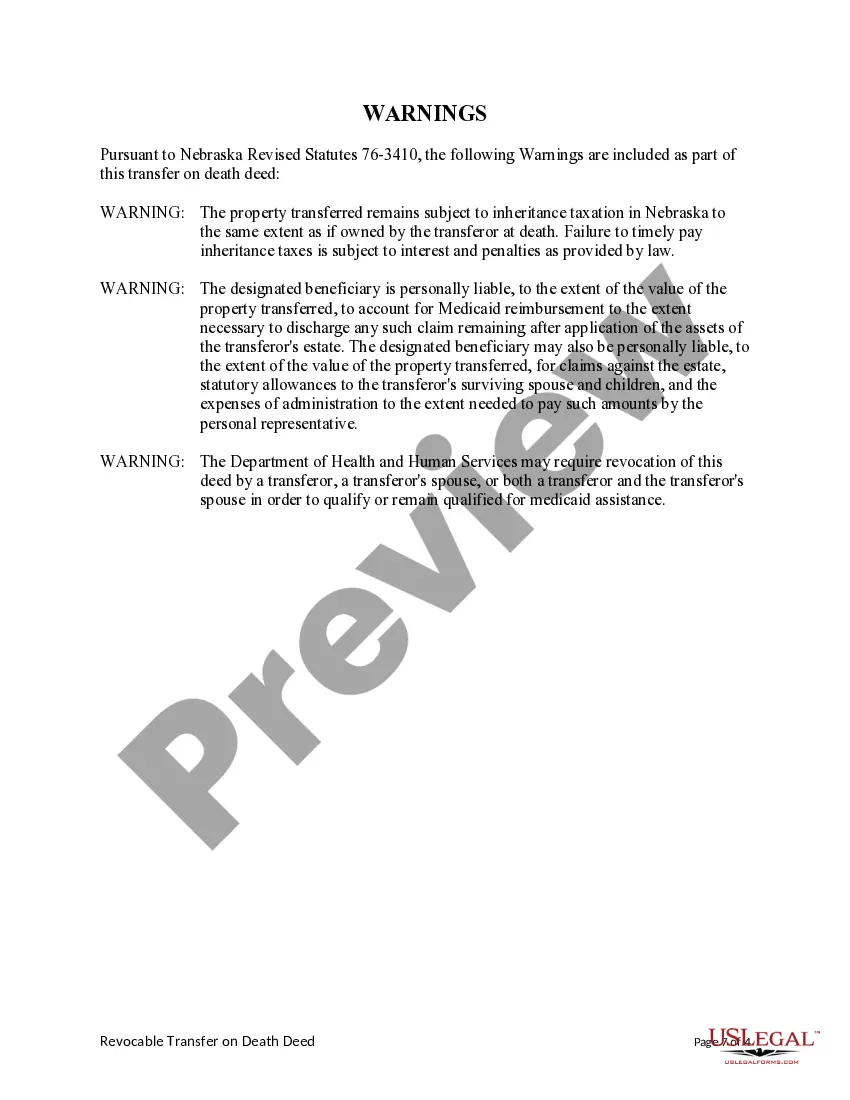
How to fill out Nebraska Transfer On Death Deed Or TOD - Beneficiary Deed - Individual To Individual With Provision For Alternate Beneficiary?
- If you are an existing user, log in to your account and select the desired form template for download. Ensure that your subscription is active; if not, renew it as per your payment plan.
- For first-time users, start by checking the preview mode and form descriptions. Confirm that the document aligns with your needs and complies with local legal stipulations.
- If needed, conduct a search for alternative templates using the search bar to find the most fitting option. If the document meets your criteria, proceed to the next step.
- Purchase the necessary document by clicking on the 'Buy Now' button and selecting your favored subscription plan. You will need to create an account to access the complete library.
- Complete your payment by entering your credit card information or using a PayPal account to finalize your subscription.
- Finally, download the form directly to your device for easy access. You can also revisit it in the My Forms section of your profile whenever necessary.
Utilizing US Legal Forms not only equips individuals and attorneys with a robust set of legal documents but also provides access to premium experts for assistance, ensuring documents are accurate and legally compliant.
Start streamlining your legal documentation process today by exploring the various forms available at US Legal Forms—your comprehensive solution for legal needs.
Form popularity
FAQ
The receiving bank is the institution that physically handles the transfer of funds during a transaction, while a beneficiary bank refers specifically to the bank where a beneficiary holds an account. Understanding these terms clarifies their roles in financial processes. Making informed decisions about your relationships with both banks is essential for your financial health.
If you don’t add a beneficiary to your bank account, your assets may go through probate, which can be a lengthy and costly process. This means your funds might be tied up in court, delaying access for your loved ones. It’s wise to take proactive steps in representing your wishes through proper estate planning.
Having a beneficiary on your bank account is generally recommended for efficient estate planning. It ensures that your assets are distributed according to your wishes without the delays often associated with probate. Consider utilizing uslegalforms for assistance in setting up your beneficiary designations.
Yes, adding a beneficiary to a bank account can streamline the transfer of assets after your passing. It allows your funds to bypass probate and go directly to your chosen individual, providing them with quick access. However, it’s crucial to choose someone trustworthy to act in your best interests.
Being a beneficiary may come with some downsides. For instance, you could face tax implications on the inherited funds, and there might be disputes among family members regarding asset distribution. It’s essential to understand these potential issues and seek guidance when necessary.
A beneficiary bank is the financial institution that receives funds or assets on behalf of a designated beneficiary. This can occur in situations such as inheritance or payouts from life insurance policies. Understanding the role of a beneficiary bank helps you plan your finances effectively.
To set up a beneficiary bank account, start by choosing a bank that offers this service. You will need to fill out a beneficiary designation form, which is typically available at the bank or on their website. Ensure that you provide accurate information about your chosen beneficiary, including their full legal name and contact details. This step is essential in ensuring that, upon your passing, the funds are transferred smoothly to your designated beneficiary bank.
Listing beneficiaries on your bank account is straightforward and important for managing your assets. Begin by reviewing your account settings, either in person or online. Many banks allow you to add, edit, or remove beneficiaries easily through their platform. Additionally, using resources like US Legal Forms can simplify the process, providing you with the tools to create and maintain a clear beneficiary list.
To add a beneficiary bank account, start by contacting your bank or visiting their website. Most banks provide simple online tools for this process. You will need to provide the beneficiary's personal information, such as their name and Social Security number. Once you submit the information, confirm that your bank has updated your account to reflect the change.
Yes, you can add a beneficiary to your bank account at any time. Most banks allow account holders to designate one or more beneficiaries easily. All you need to do is fill out the necessary paperwork, which can usually be done online or in-person at your local branch. By taking this simple step, you ensure that your assets will transfer smoothly to your chosen beneficiary bank without unnecessary delays.