North Dakota Trust With The United States
Description

Get your form ready online
Our built-in tools help you complete, sign, share, and store your documents in one place.
Make edits, fill in missing information, and update formatting in US Legal Forms—just like you would in MS Word.
Download a copy, print it, send it by email, or mail it via USPS—whatever works best for your next step.
Sign and collect signatures with our SignNow integration. Send to multiple recipients, set reminders, and more. Go Premium to unlock E-Sign.
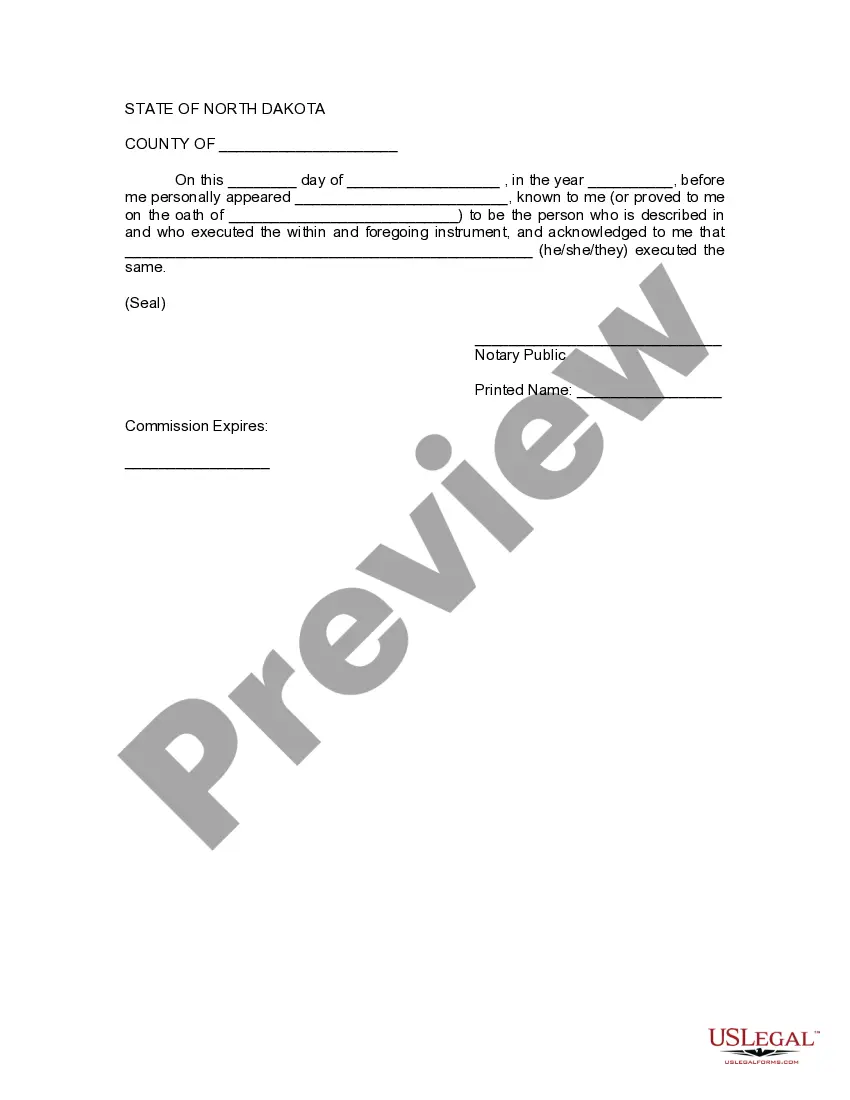
If this form requires notarization, complete it online through a secure video call—no need to meet a notary in person or wait for an appointment.
We protect your documents and personal data by following strict security and privacy standards.

Make edits, fill in missing information, and update formatting in US Legal Forms—just like you would in MS Word.

Download a copy, print it, send it by email, or mail it via USPS—whatever works best for your next step.

Sign and collect signatures with our SignNow integration. Send to multiple recipients, set reminders, and more. Go Premium to unlock E-Sign.

If this form requires notarization, complete it online through a secure video call—no need to meet a notary in person or wait for an appointment.

We protect your documents and personal data by following strict security and privacy standards.
Looking for another form?







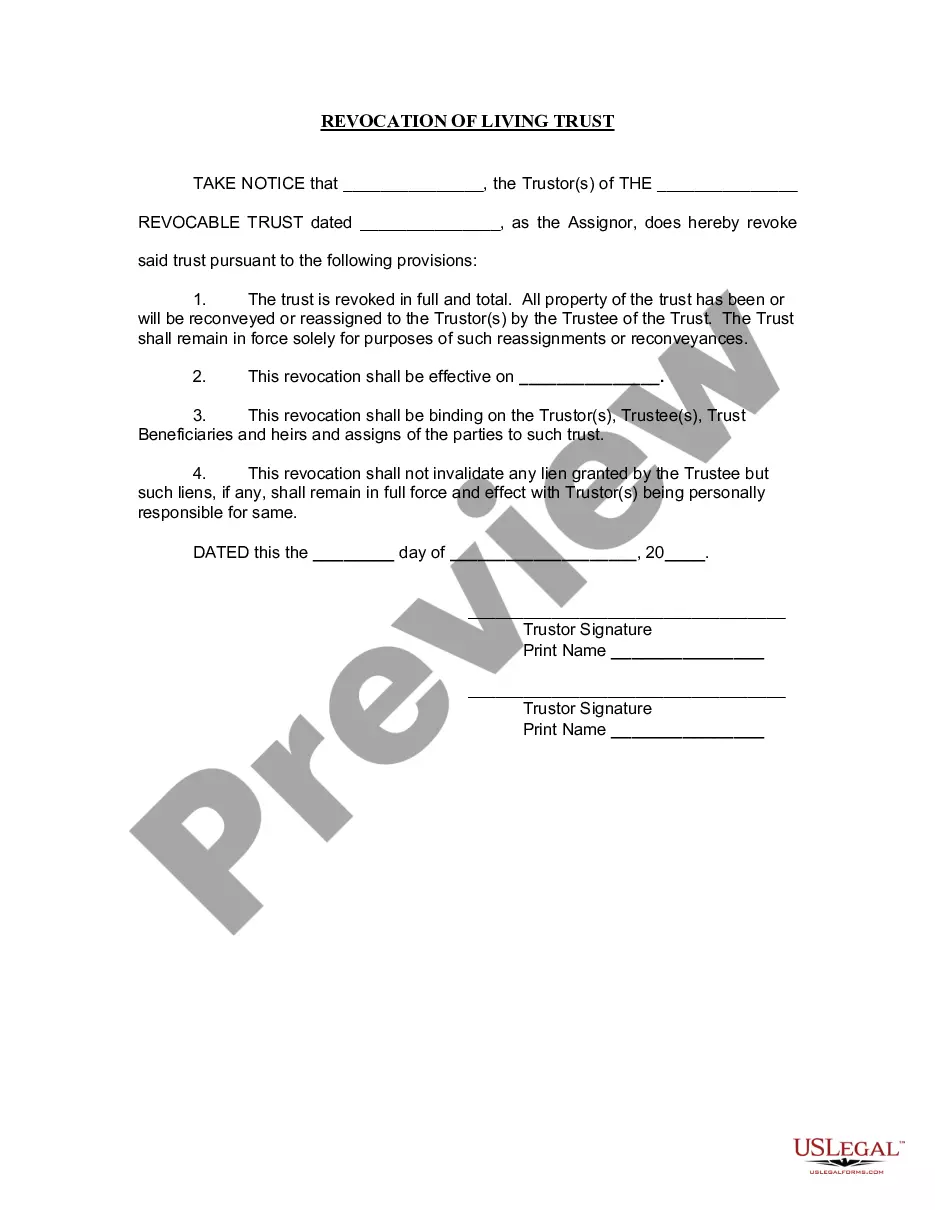
How to fill out North Dakota Revocation Of Living Trust?
- Log into your US Legal Forms account if you're an existing user and ensure your subscription is active. If not, renew your plan for continued access.
- For newcomers, start by browsing the platform. Utilize the Preview mode to review form descriptions and verify you’ve selected the correct legal document.
- Should you require a different template, simply use the Search tab to find alternatives that meet your specific needs.
- Once you’ve identified the appropriate form, click the Buy Now button and select your preferred subscription plan. Register for an account to unlock full access to all resources.
- Complete your purchase by entering your payment details using your credit card or PayPal.
- Finally, download your completed form. You can find and manage your documents anytime under the My Forms section in your profile.
By following these straightforward steps, you can efficiently create and manage your North Dakota trust while ensuring compliance with legal standards.
Start leveraging the resources available through US Legal Forms today to construct robust legal foundations. Join us now and empower your legal journey!
Form popularity
FAQ
Nonresidents who earn income from North Dakota sources must file a North Dakota nonresident tax return. This includes individuals with income from a North Dakota trust with the United States or other North Dakota property. Filing accurately is crucial to avoid unnecessary penalties and to ensure compliance with state tax regulations. For a seamless process and guidance on filing, consider leveraging resources like USLegalForms to assist you.
When establishing a North Dakota trust with the United States, the foundational principle is typically that a trust should be filed in the state where the trustee resides or where the trust assets are located. In many cases, individuals choose North Dakota due to its favorable trust laws and regulations. This choice can enhance asset protection and allow for better management of the trust. Always consider working with a legal expert to ensure compliance with the applicable laws and to maximize the benefits of a North Dakota trust.
A living trust, including a North Dakota trust with the United States, can have downsides you should think about. One concern is that living trusts might not cover all types of assets, which can lead to oversight. Additionally, there are setup and maintenance costs that may add up over time. It's wise to consult a professional to see if a living trust best fits your needs.
Driving on North Dakota trust land is generally permitted, but you should always check specific regulations. The management of trust land in North Dakota varies, and some areas may have restrictions. It's essential to respect local laws and guidelines to avoid any legal issues. For detailed information, consider accessing resources that outline these regulations.
A Schedule K-1 Form 38 in North Dakota is specifically designed for reporting income and deductions for partnerships and S corporations. This form plays a critical role in detailing how earnings and deductions flow to individual partners or shareholders from a North Dakota trust with the United States. Proper use of this form ensures that you accurately report taxable income and comply with state tax requirements.
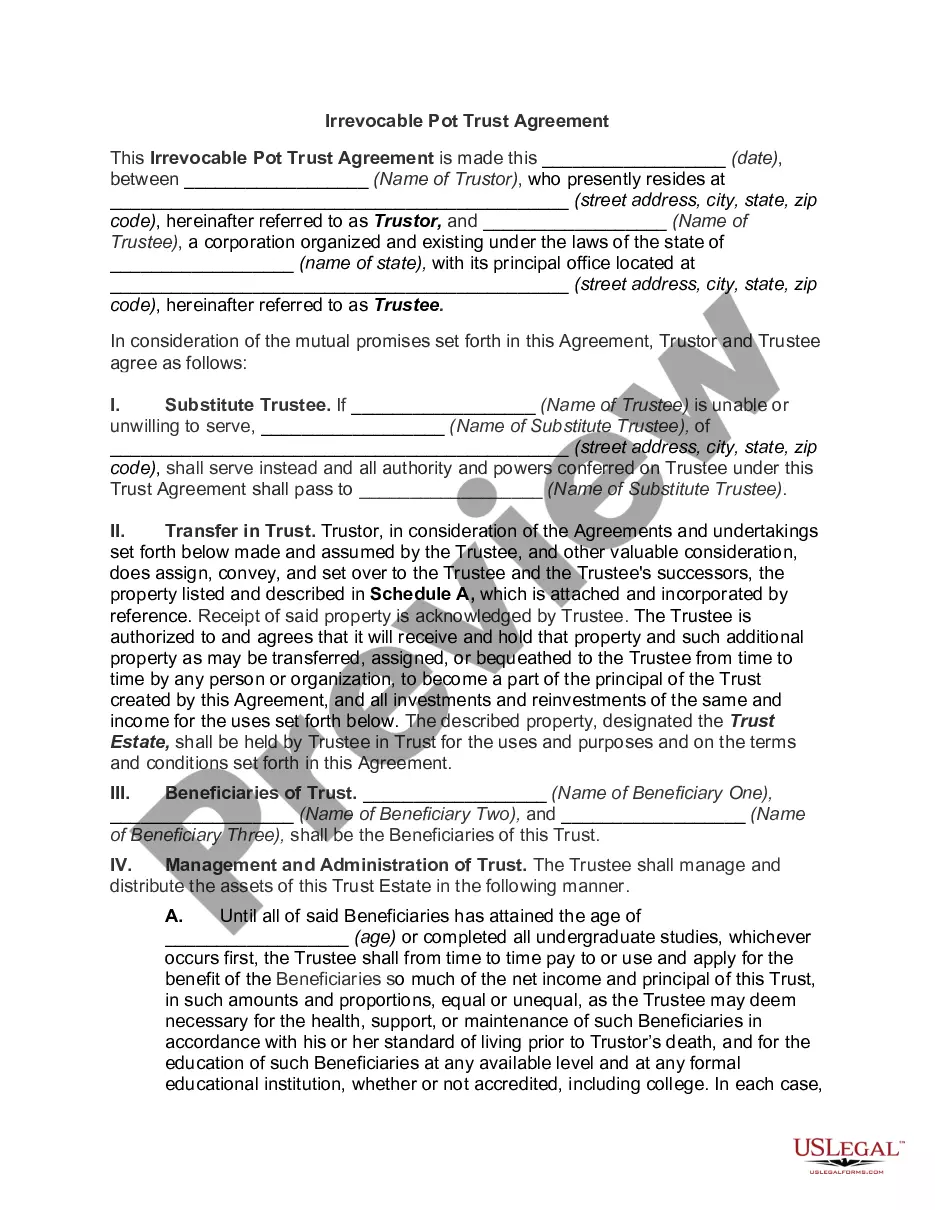
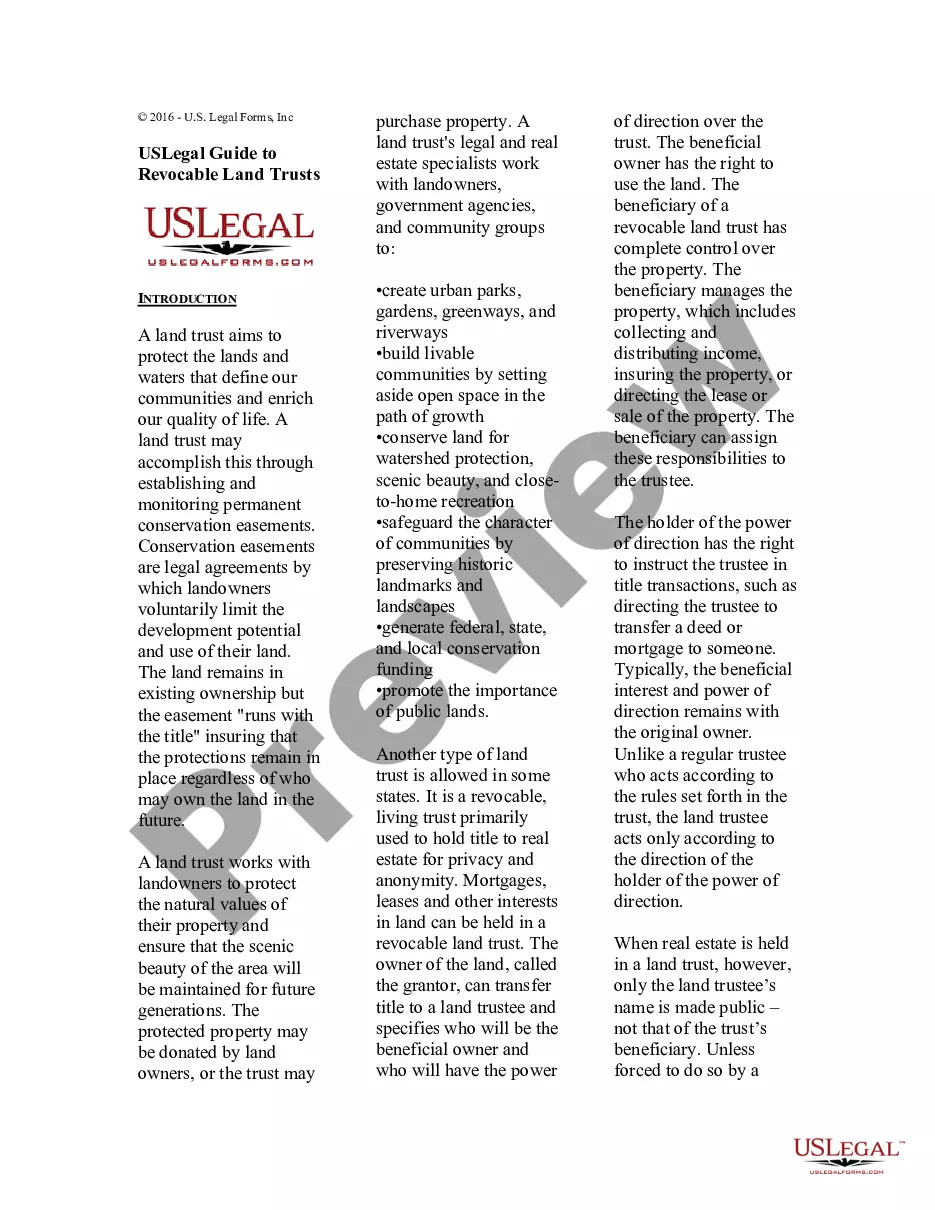
Setting up a trust in North Dakota involves drafting a trust agreement, naming a trustee, and specifying the beneficiaries. The document should comply with North Dakota laws, making it crucial to consider legal advice, especially if your trust interacts with the United States. For a streamlined experience in establishing a North Dakota trust with the United States, you can utilize resources available on the US Legal Forms platform.
Form 307 in North Dakota is used for filing a gross receipts tax return for businesses operating in the state. If you have a North Dakota trust with the United States that generates business income, this form may be required to report your receipts. Being aware of this obligation helps you remain compliant with state tax regulations.
The qualified dividend exclusion in North Dakota allows certain dividends to be excluded from income for tax purposes, which can lead to a lower overall tax liability. When investing through a North Dakota trust with the United States, understanding this exclusion is important for maximizing your investment returns. This exclusion helps you optimize your tax strategy while benefiting from your trust's income.
A Schedule K-1 tax form reports income, deductions, and credits from partnerships, S corporations, and trusts to the IRS and state tax authorities. When dealing with a North Dakota trust with the United States, this form provides a breakdown of earnings and distributions to individuals. Utilizing the information on this form supports effective tax filing and ensures you meet your tax responsibilities.
A beneficiary Schedule K-1 is a tax document that details a beneficiary's allocated share of income, expenses, and credits from an estate, trust, or partnership. This documentation is vital for individuals receiving distributions from a North Dakota trust with the United States, as it impacts personal income tax obligations. Understanding this form helps beneficiaries accurately report their income and remain compliant with tax laws.