Reply Absent Heard With A Meeting
Description
Get your form ready online
Our built-in tools help you complete, sign, share, and store your documents in one place.
Make edits, fill in missing information, and update formatting in US Legal Forms—just like you would in MS Word.
Download a copy, print it, send it by email, or mail it via USPS—whatever works best for your next step.
Sign and collect signatures with our SignNow integration. Send to multiple recipients, set reminders, and more. Go Premium to unlock E-Sign.
If this form requires notarization, complete it online through a secure video call—no need to meet a notary in person or wait for an appointment.
We protect your documents and personal data by following strict security and privacy standards.

Make edits, fill in missing information, and update formatting in US Legal Forms—just like you would in MS Word.

Download a copy, print it, send it by email, or mail it via USPS—whatever works best for your next step.

Sign and collect signatures with our SignNow integration. Send to multiple recipients, set reminders, and more. Go Premium to unlock E-Sign.

If this form requires notarization, complete it online through a secure video call—no need to meet a notary in person or wait for an appointment.

We protect your documents and personal data by following strict security and privacy standards.
Looking for another form?







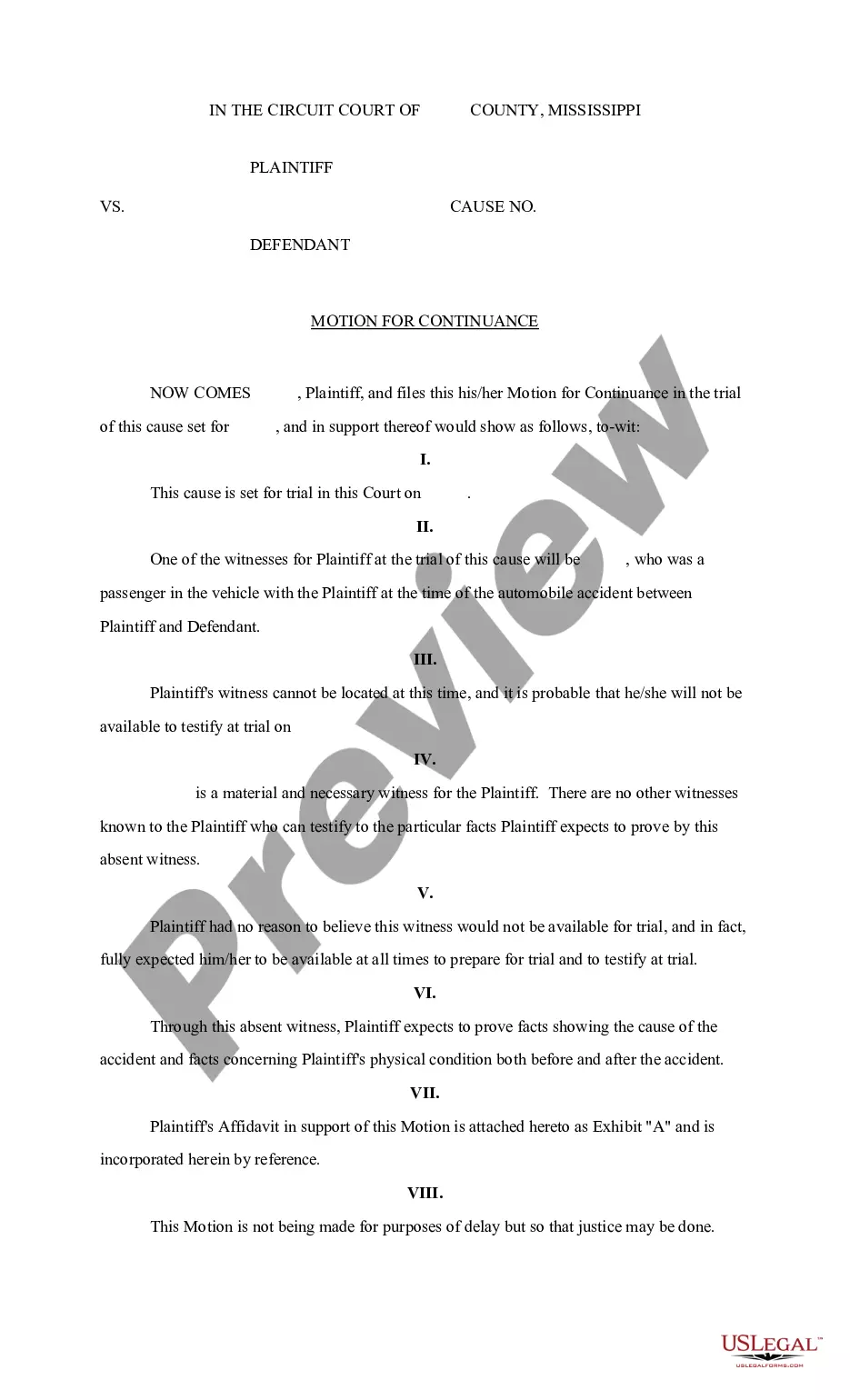
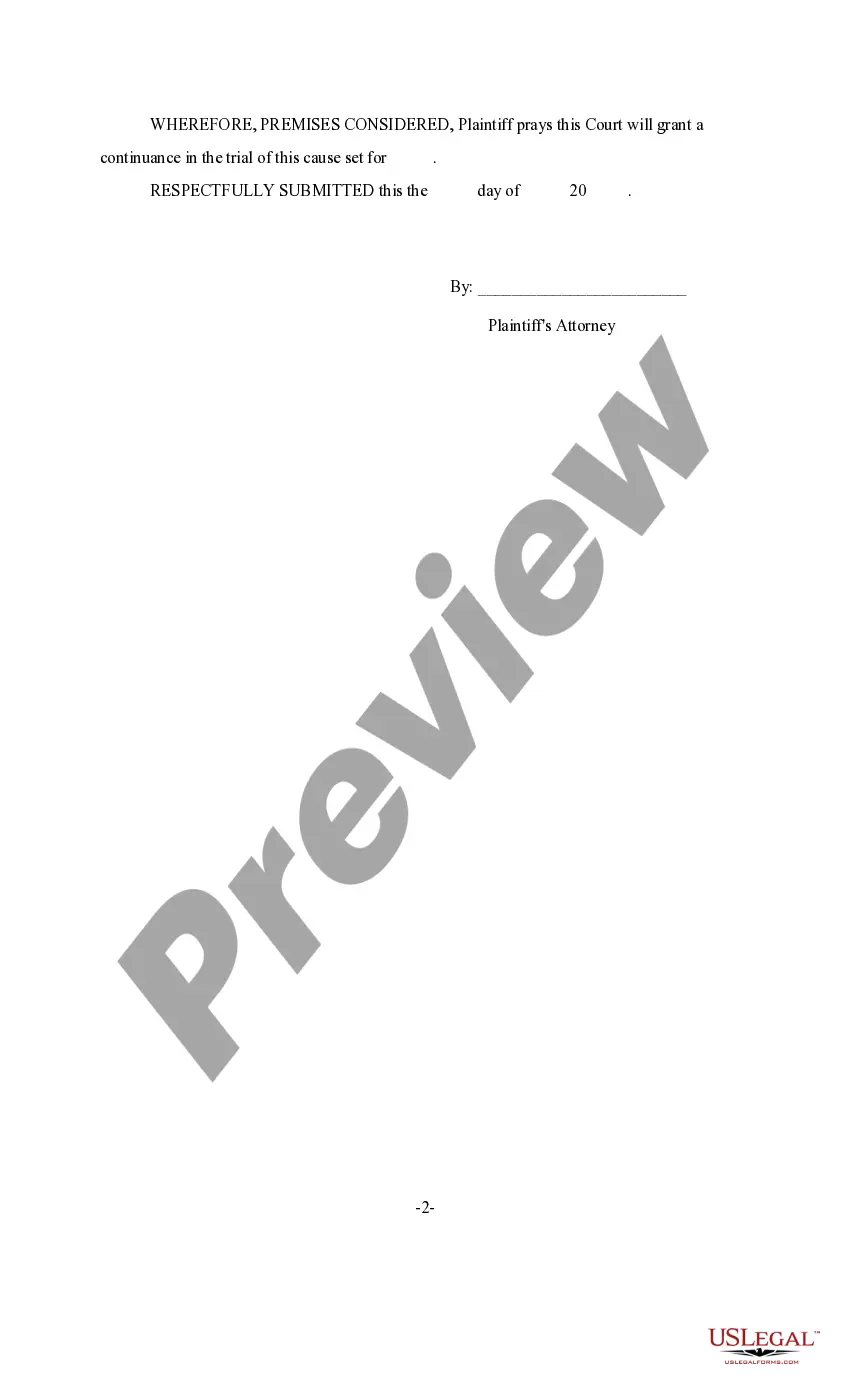
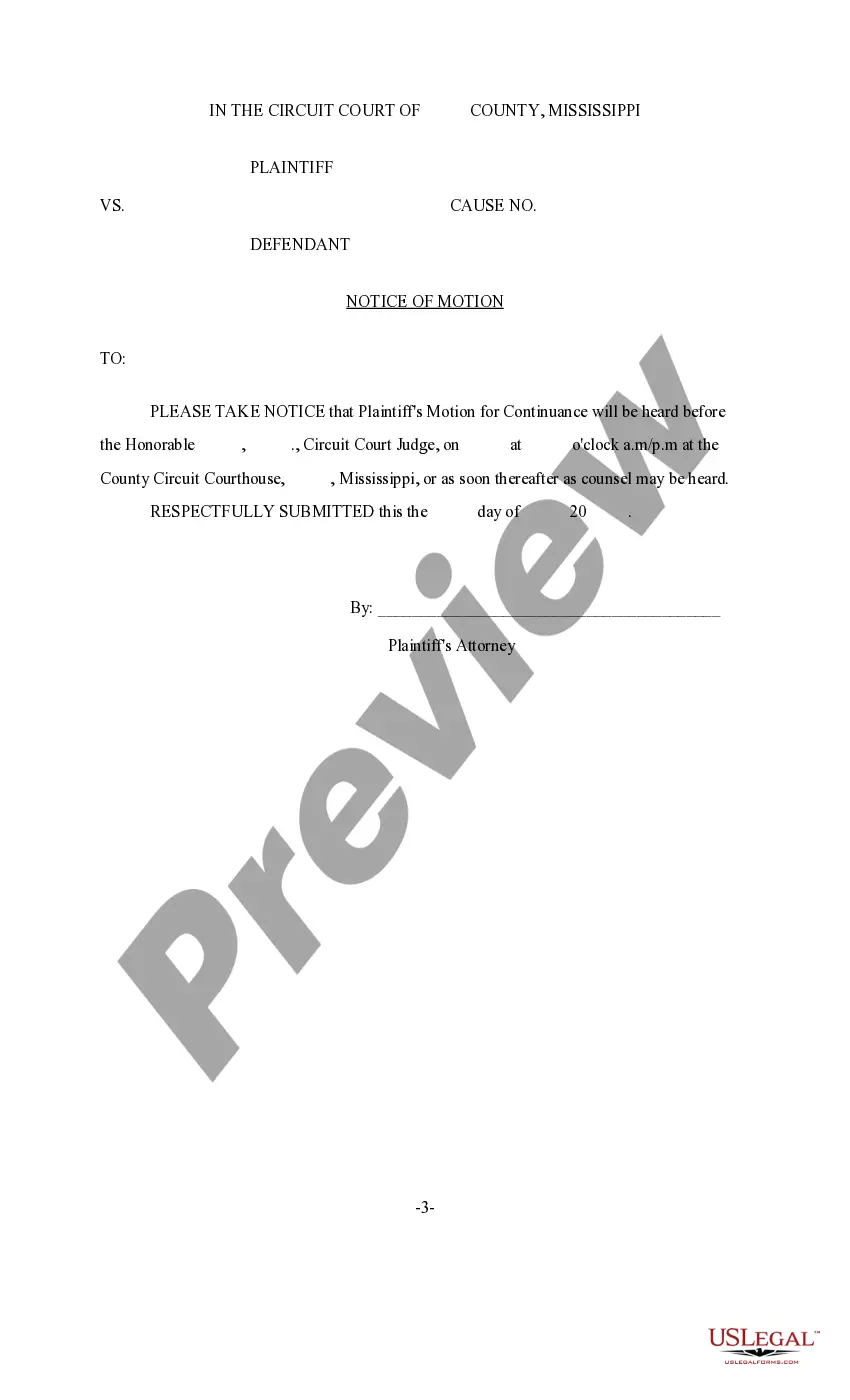
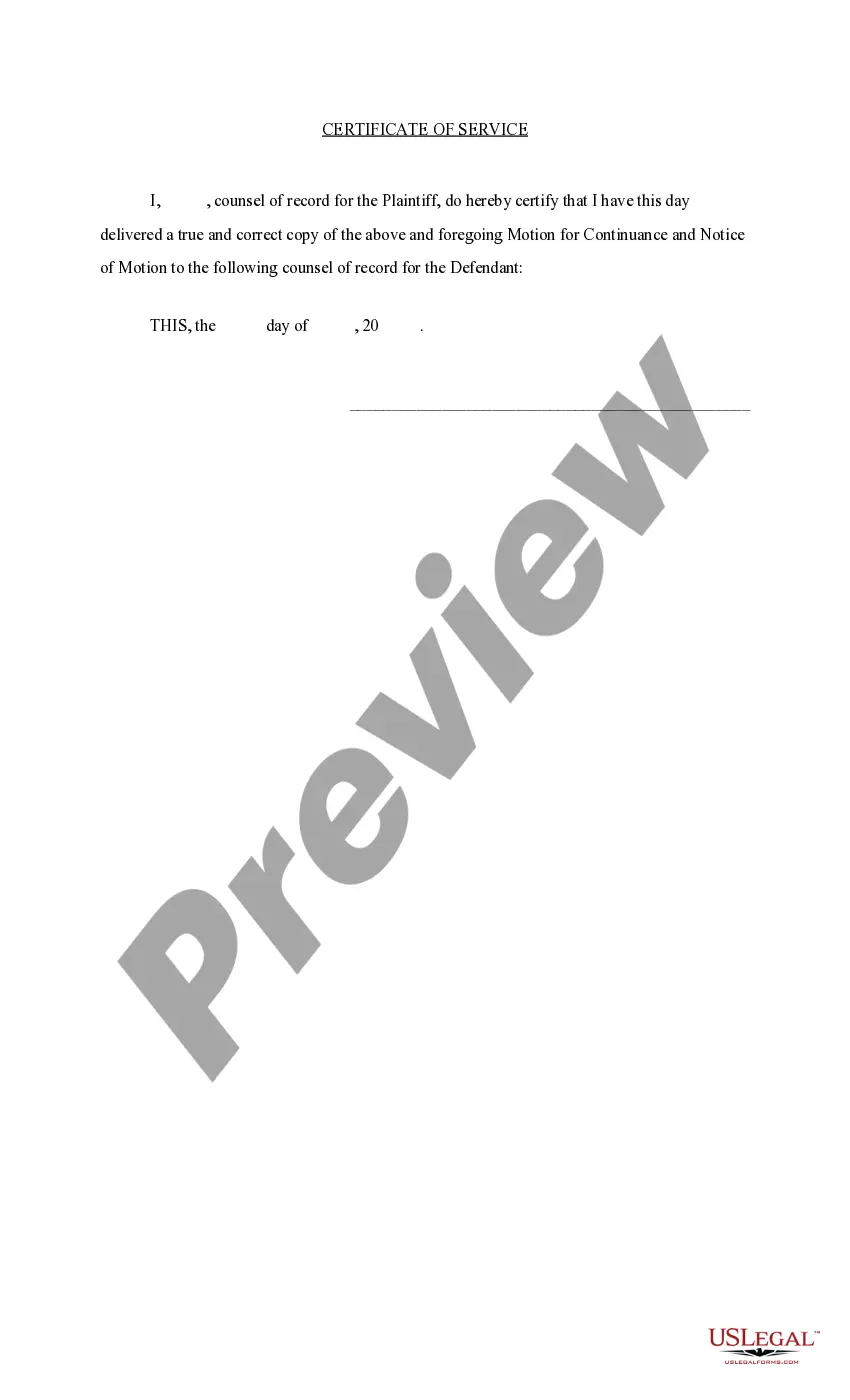
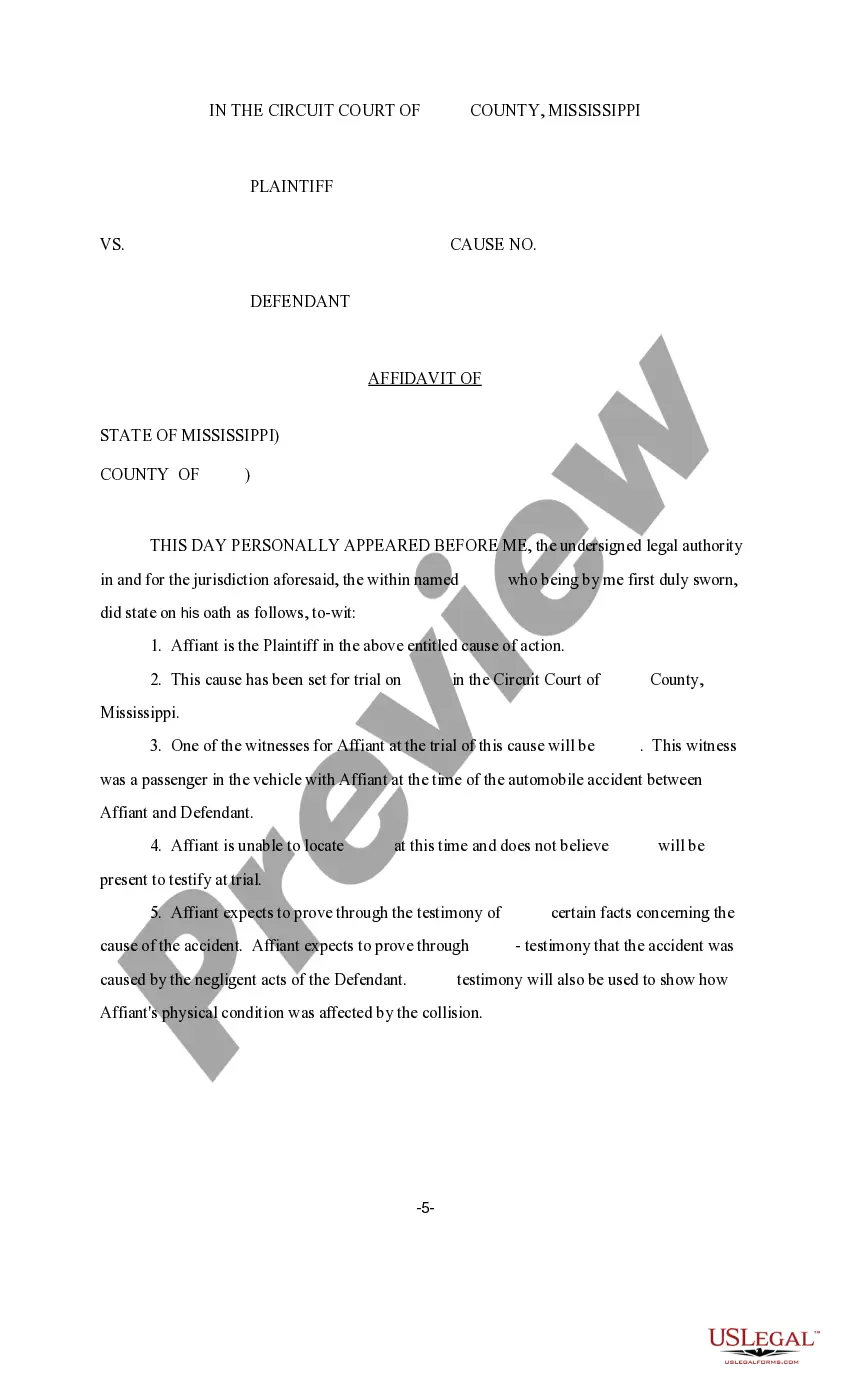
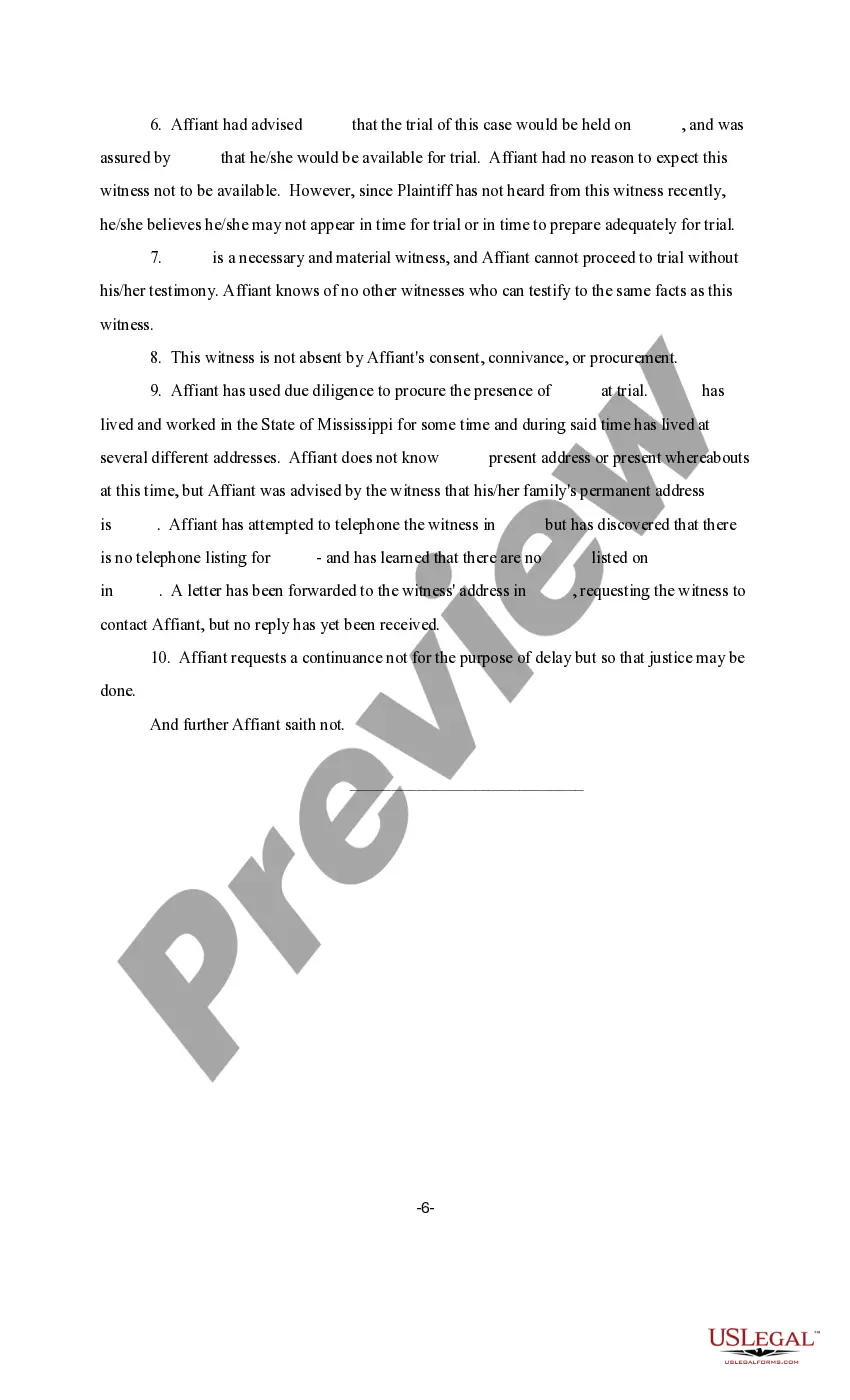
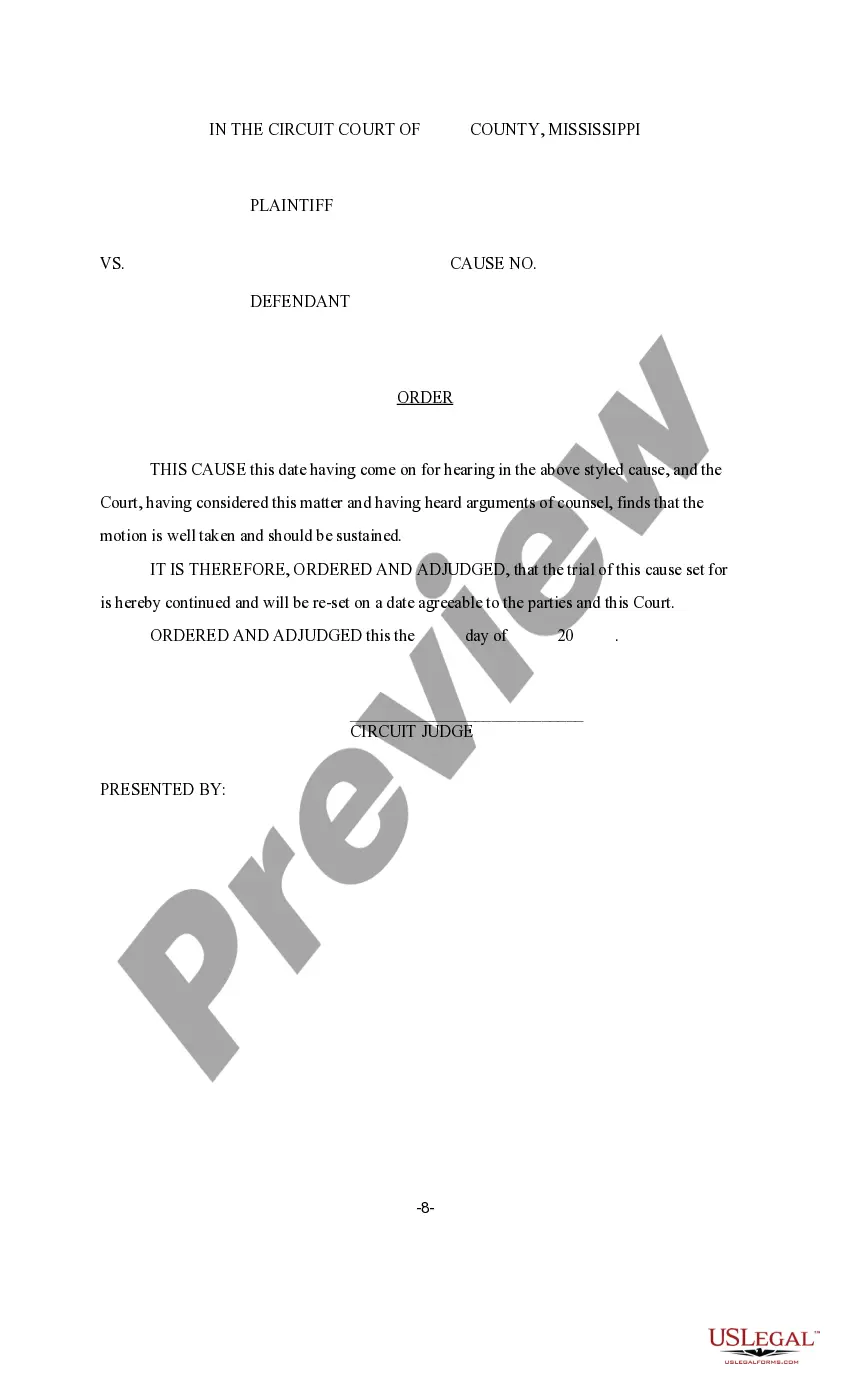
How to fill out Mississippi Motion For Continuance?
- If you are a returning user, log in to your account to quickly access and download your required form template by clicking the Download button. Verify that your subscription remains active; renew if necessary.
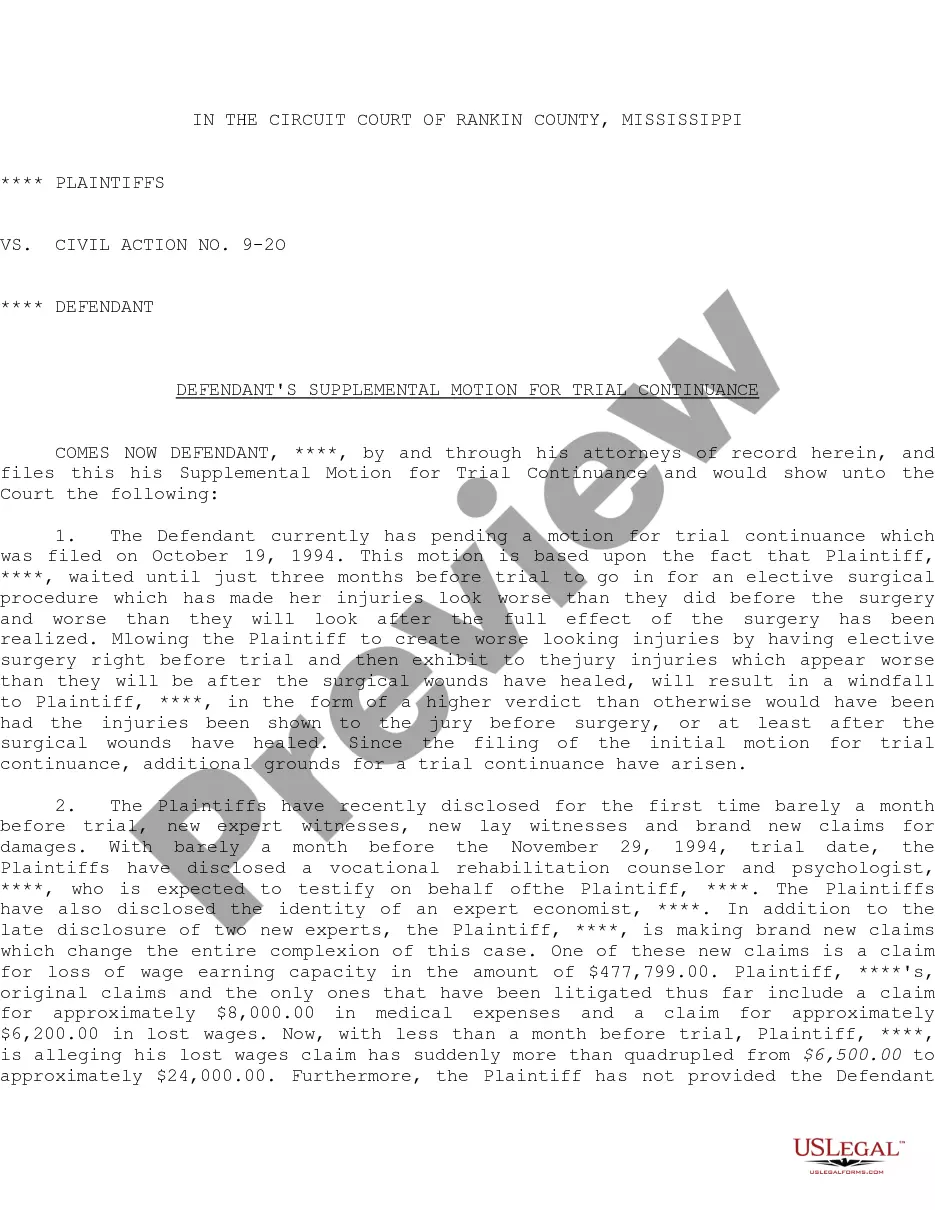
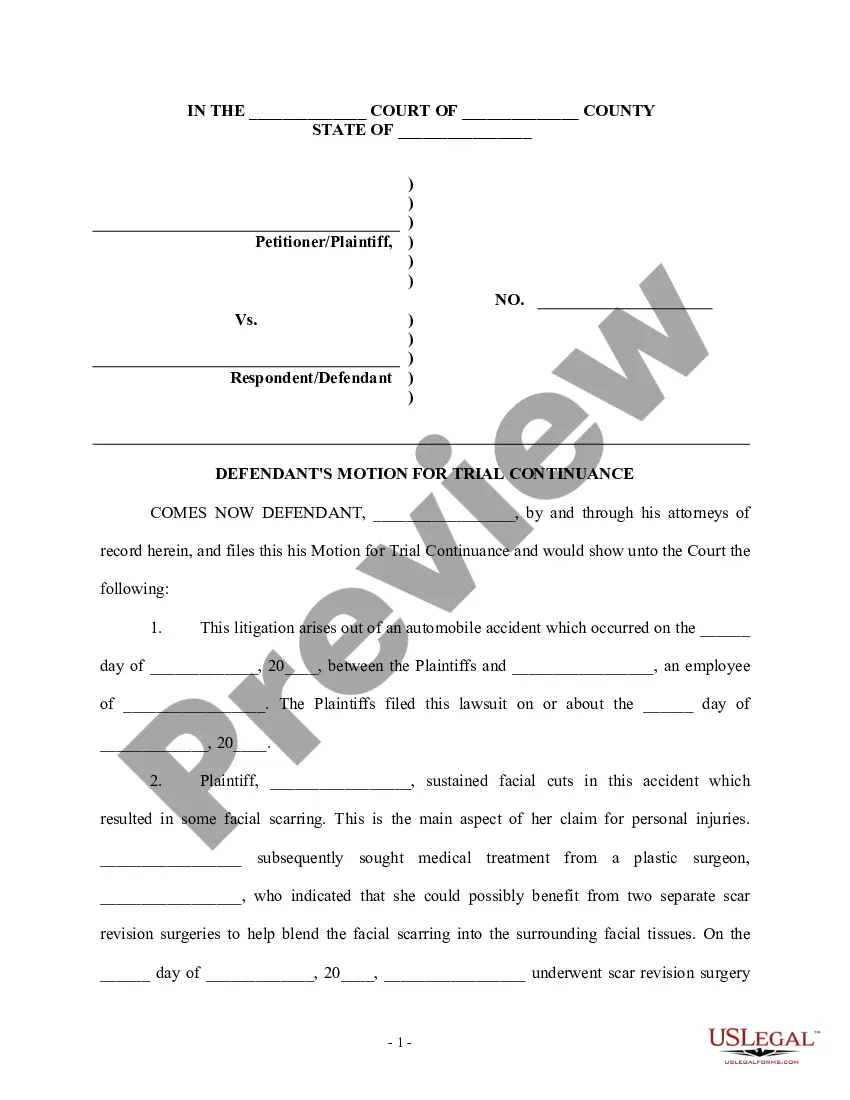
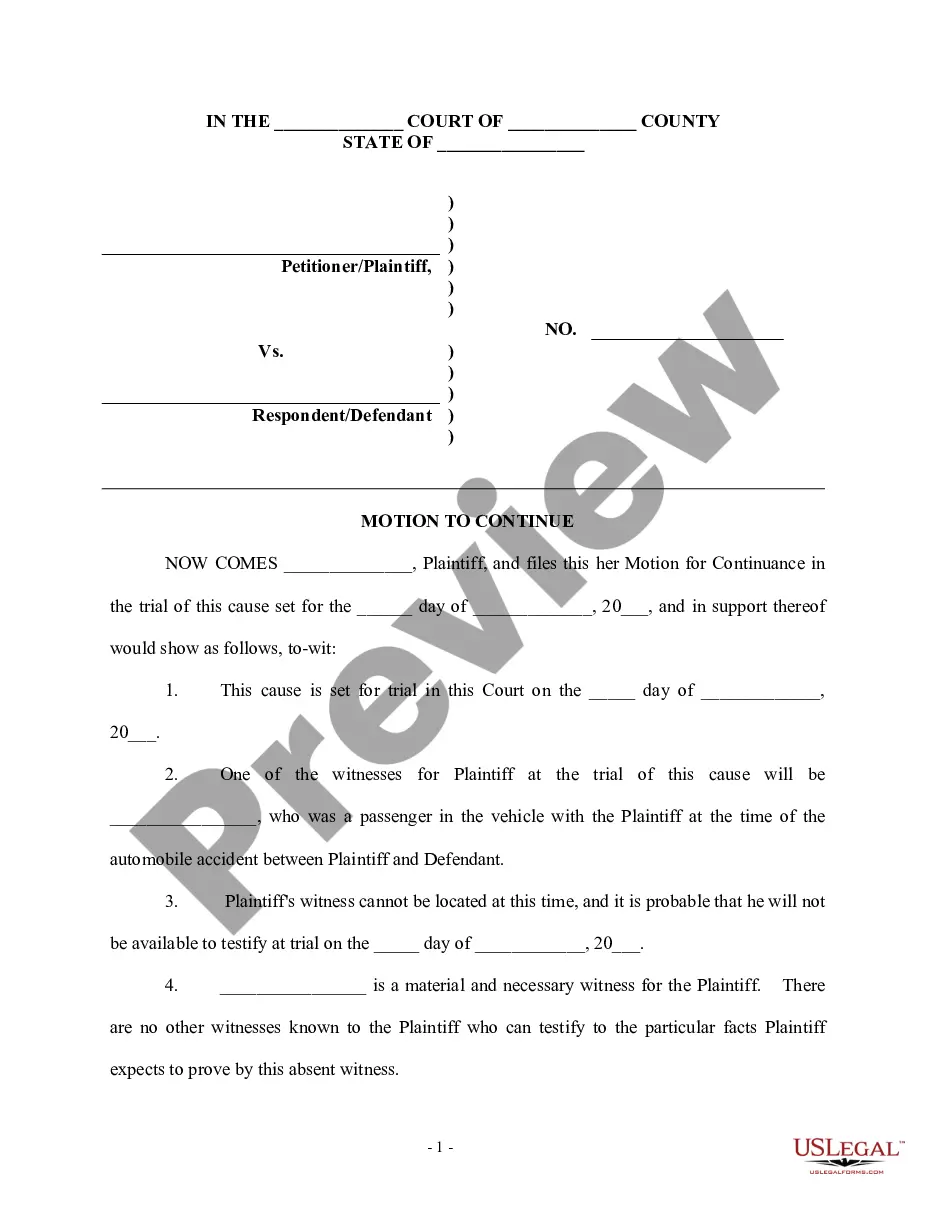
- For first-time users, start by checking the Preview mode and form description to confirm that the selected document aligns with your requirements and local jurisdiction.
- If necessary, use the Search tab to find additional templates that better fit your needs and proceed once you've found a suitable document.
- Proceed to purchase the chosen document by clicking the Buy Now button, selecting your preferred subscription plan, and registering an account for full access.
- Complete your purchase using your credit card or PayPal information, ensuring secure payment.
- Download the form to your device for immediate preparation, and remember you can access the document later in the My documents section of your profile.
US Legal Forms empowers users with a robust collection of over 85,000 legal documents, ensuring you can find precisely what you need. The platform is particularly beneficial for those seeking assistance from premium experts for accurate and compliant document completion.
Take the first step towards efficient legal communication today. Explore US Legal Forms and simplify your legal documentation process!
Form popularity
FAQ
When informing others that you will not attend a meeting, it's best to be direct and polite. You could say, 'I regret to inform you that I am unable to attend the upcoming meeting.' This approach is straightforward, maintains professionalism, and lets others know your absence is not out of disregard or disinterest.
To inform someone of your absence from a meeting, send a message that states your situation clearly. You might say, 'I'm writing to inform you that I will be absent from the meeting due to circumstances beyond my control.' Offer to catch up on what you missed, reinforcing your commitment to staying engaged.
A professional way to indicate your absence from a meeting is by stating, 'I will not be able to attend the meeting on date.' Including the reason can add context, such as an appointment or other obligation, making the message transparent. This method demonstrates your courtesy and respect for the planning involved in the meeting.
To reply when you cannot attend a meeting, convey your inability clearly and professionally. You might write, 'I am unable to attend the meeting due to a prior commitment, but I look forward to reviewing the meeting notes afterward.' This response shows respect for the meeting and your willingness to stay involved.
If you need to explain why you missed a meeting, clarity is key. You can say, 'I regret not being able to attend the meeting due to unforeseen circumstances.' Follow this up by offering to discuss the missed content, showing your commitment to staying updated despite your absence.
When replying to someone who didn't attend a meeting, consider acknowledging their absence while maintaining professionalism. You might say, 'I noticed you were absent from the meeting we scheduled and wanted to share the key points discussed.' This approach opens the door for them to catch up, ensuring they feel included despite their absence.
When responding to an invitation and stating you are unable to attend, be concise yet polite. Clearly express your regret for not being able to participate, and offer to catch up on what you missed after the meeting. You can also propose rescheduling the meeting if that fits better for everyone. This strategy preserves relationships and encourages ongoing communication.
If someone informs you they cannot attend a meeting, reply absent heard with a meeting by acknowledging their inability to participate. Reassure them that you will provide essential updates and insights afterward. You could also offer alternative ways for them to contribute, like sharing their thoughts in writing. This way, they remain involved despite their absence.
When replying to someone who missed a meeting, it’s important to be understanding. Inform them of the main topics covered and any key decisions made during the meeting. You might also suggest a follow-up call to discuss further and ensure they feel updated. This response demonstrates your willingness to maintain transparency and collaboration.
To reply absent heard with a meeting, first express understanding of their situation. Acknowledge their absence and offer to share key points from the meeting later. You can suggest rescheduling if necessary and make sure they feel included in the discussion. This approach shows respect for their time and keeps communication open.