Search For Court
Description
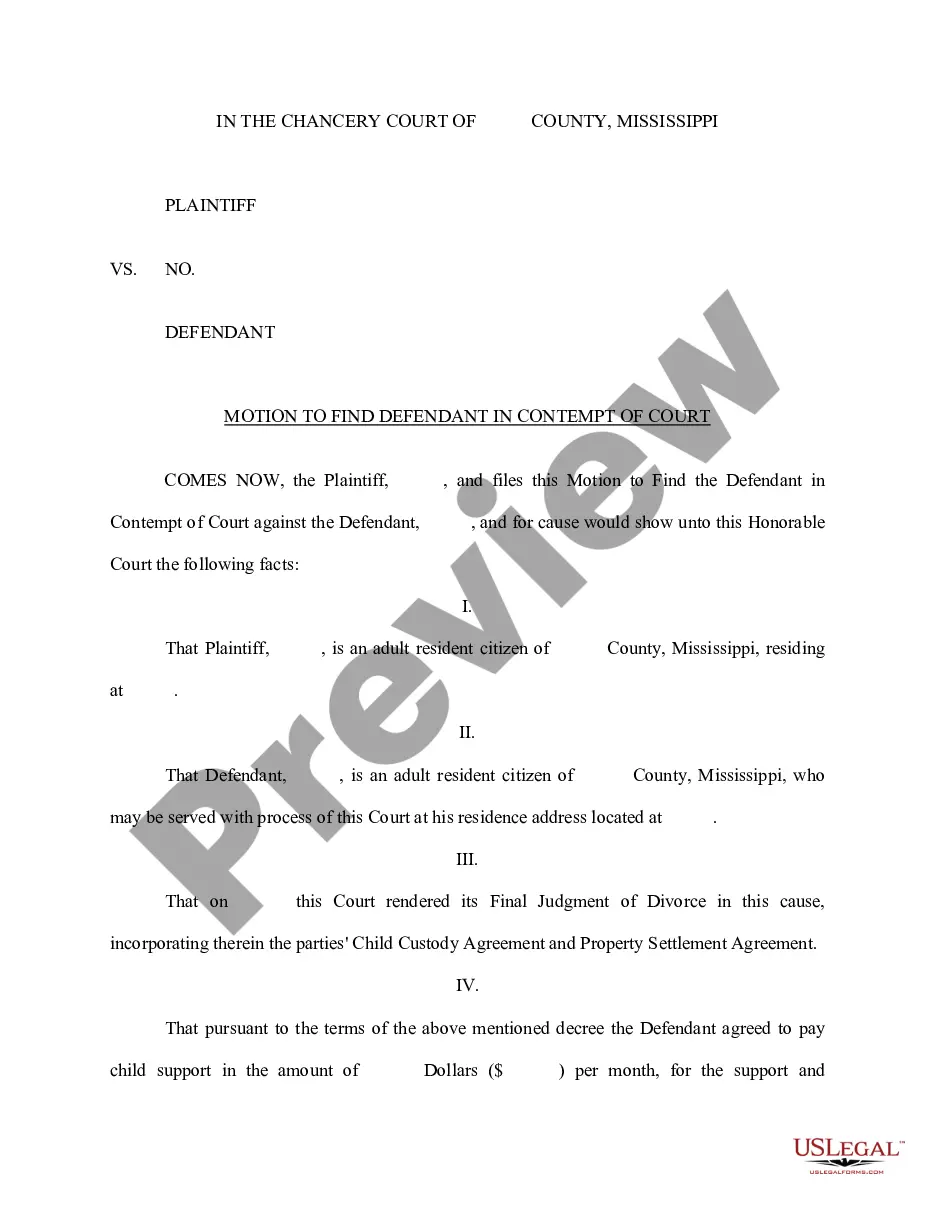
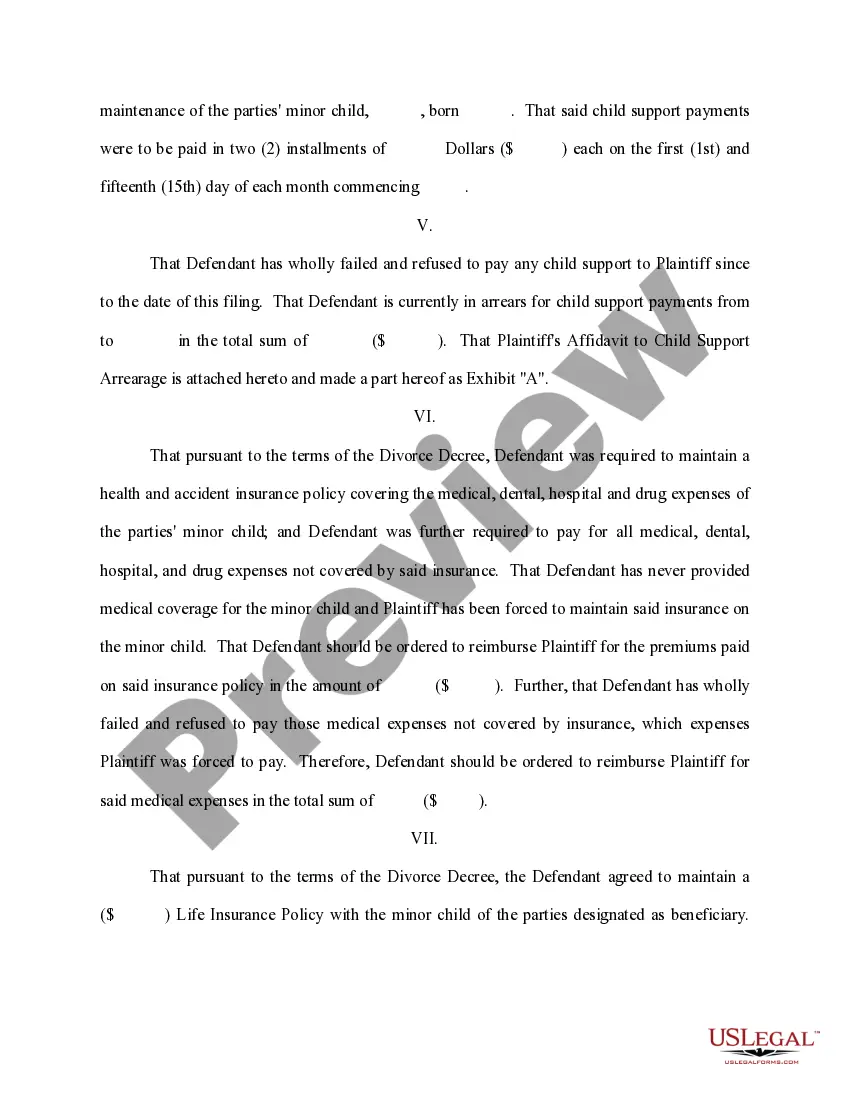
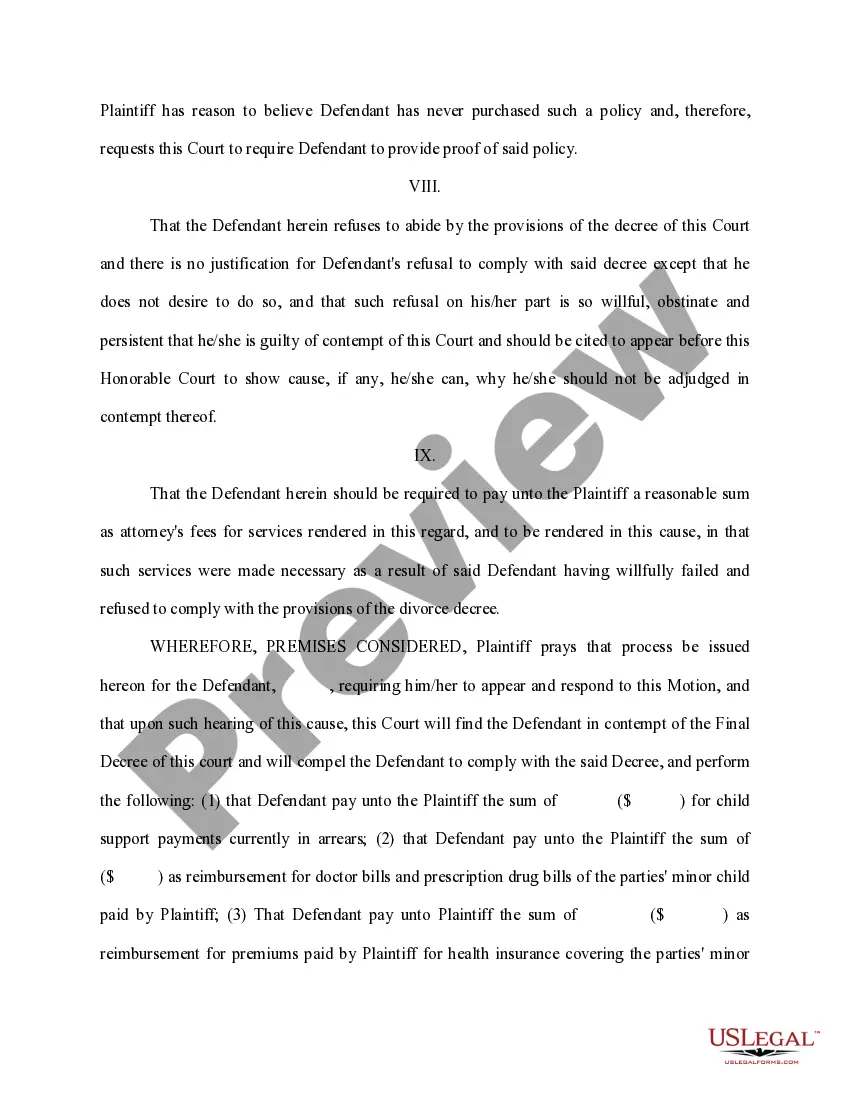
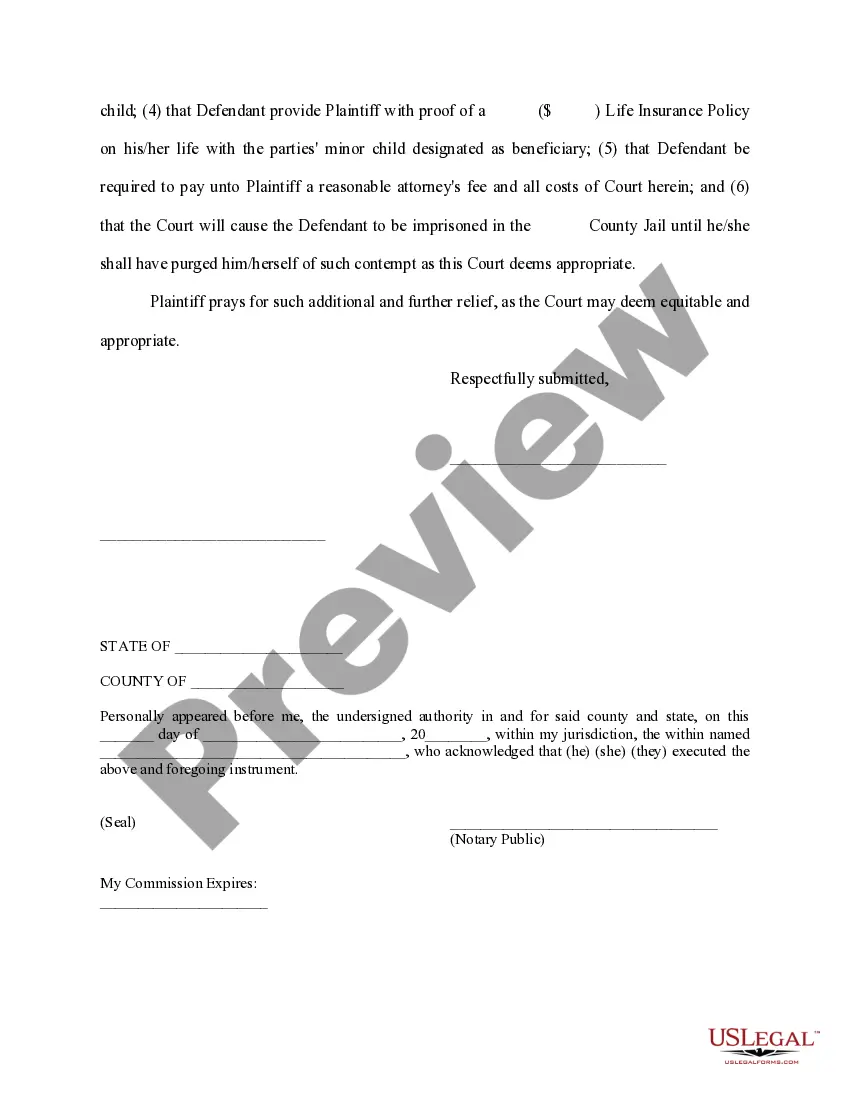
Get your form ready online
Our built-in tools help you complete, sign, share, and store your documents in one place.
Make edits, fill in missing information, and update formatting in US Legal Forms—just like you would in MS Word.
Download a copy, print it, send it by email, or mail it via USPS—whatever works best for your next step.
Sign and collect signatures with our SignNow integration. Send to multiple recipients, set reminders, and more. Go Premium to unlock E-Sign.
If this form requires notarization, complete it online through a secure video call—no need to meet a notary in person or wait for an appointment.
We protect your documents and personal data by following strict security and privacy standards.

Make edits, fill in missing information, and update formatting in US Legal Forms—just like you would in MS Word.

Download a copy, print it, send it by email, or mail it via USPS—whatever works best for your next step.

Sign and collect signatures with our SignNow integration. Send to multiple recipients, set reminders, and more. Go Premium to unlock E-Sign.

If this form requires notarization, complete it online through a secure video call—no need to meet a notary in person or wait for an appointment.

We protect your documents and personal data by following strict security and privacy standards.
Looking for another form?
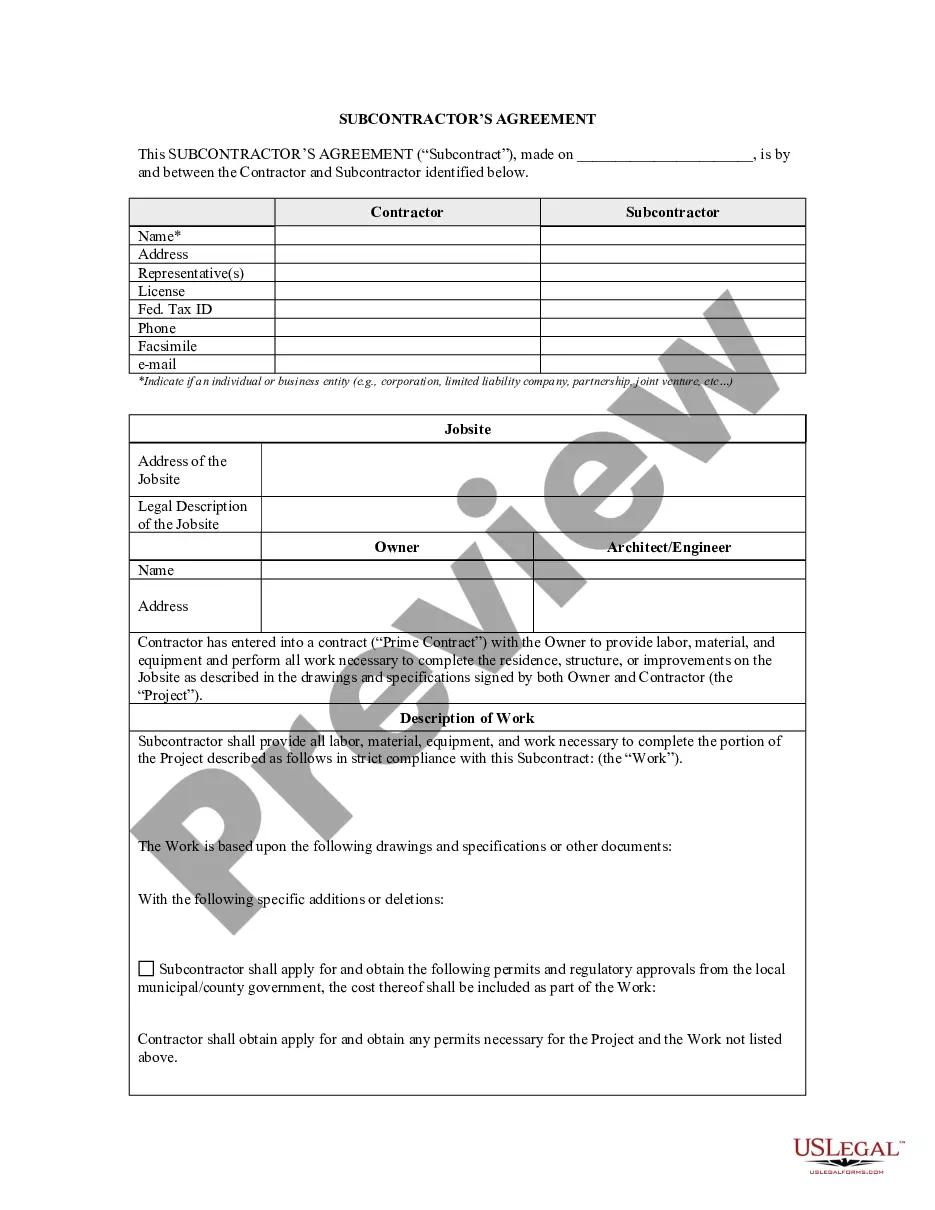


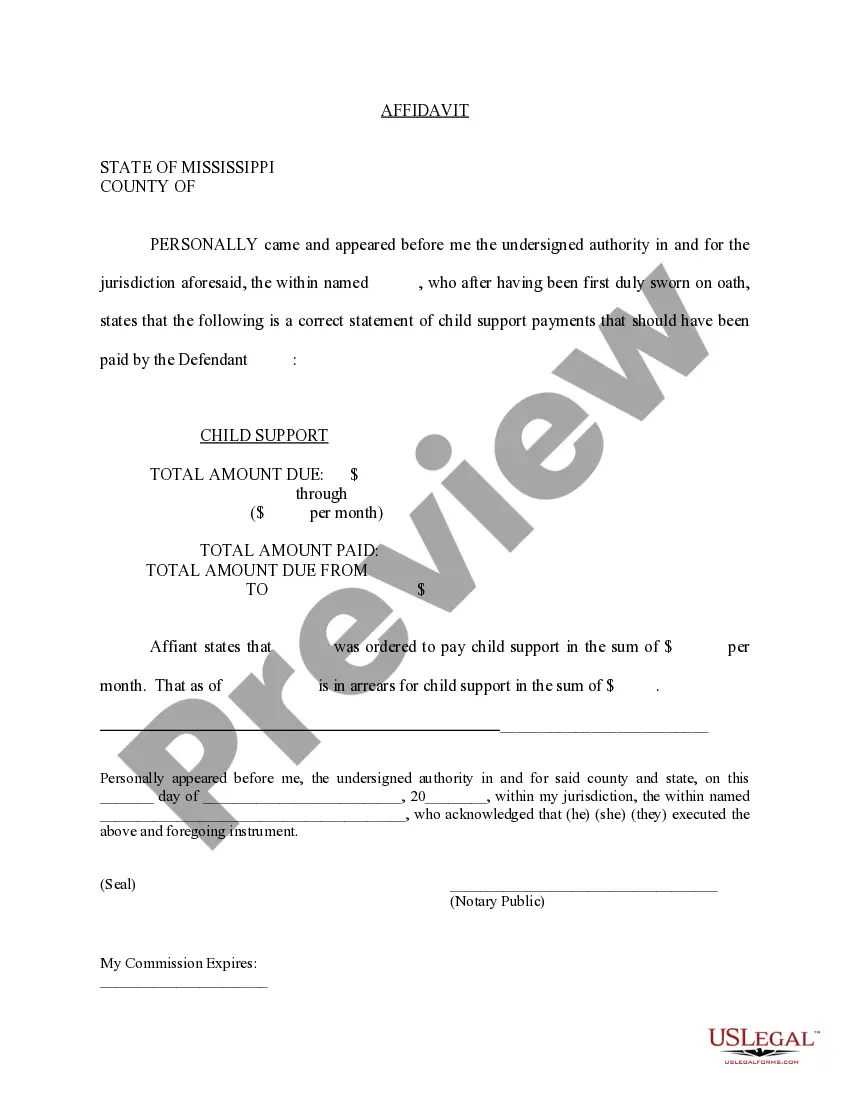
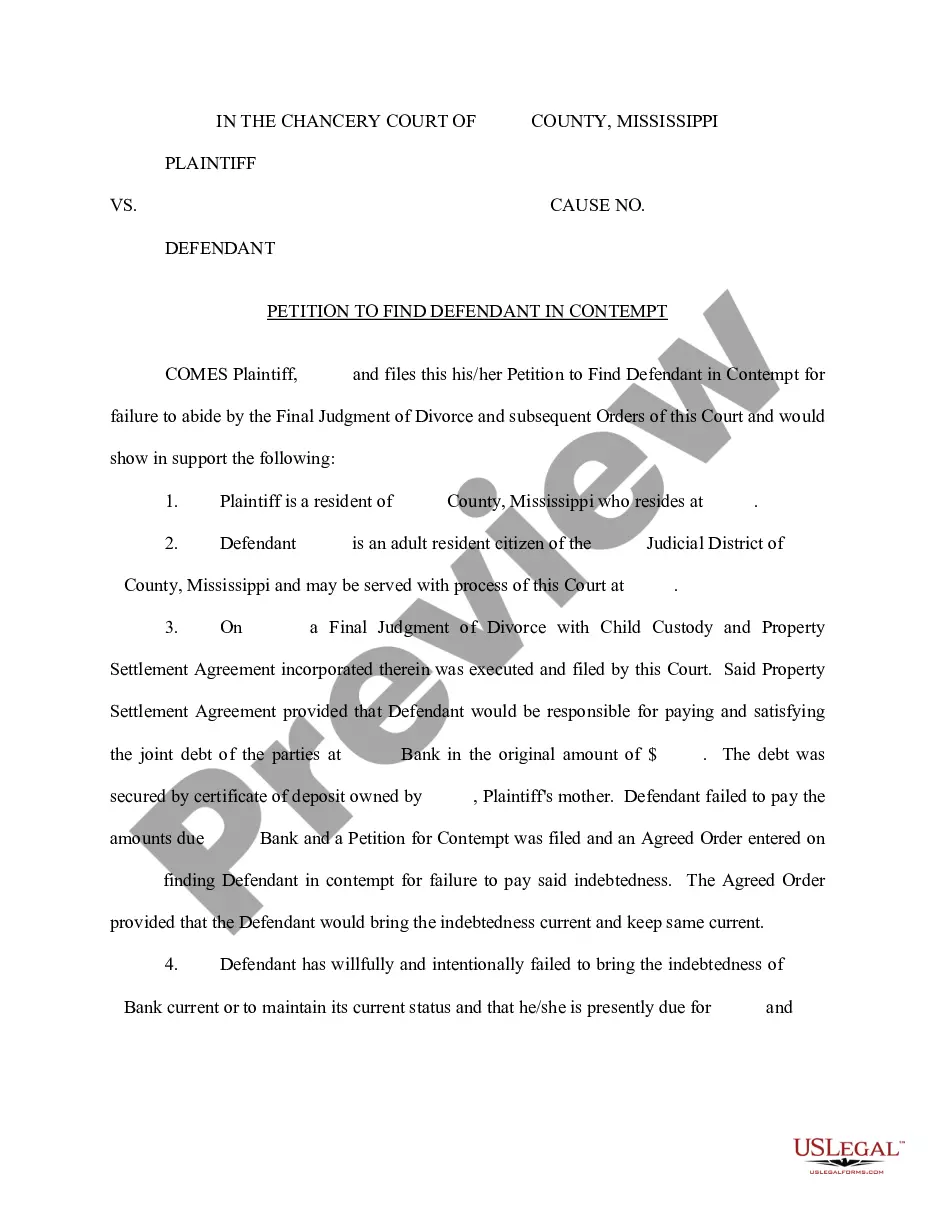
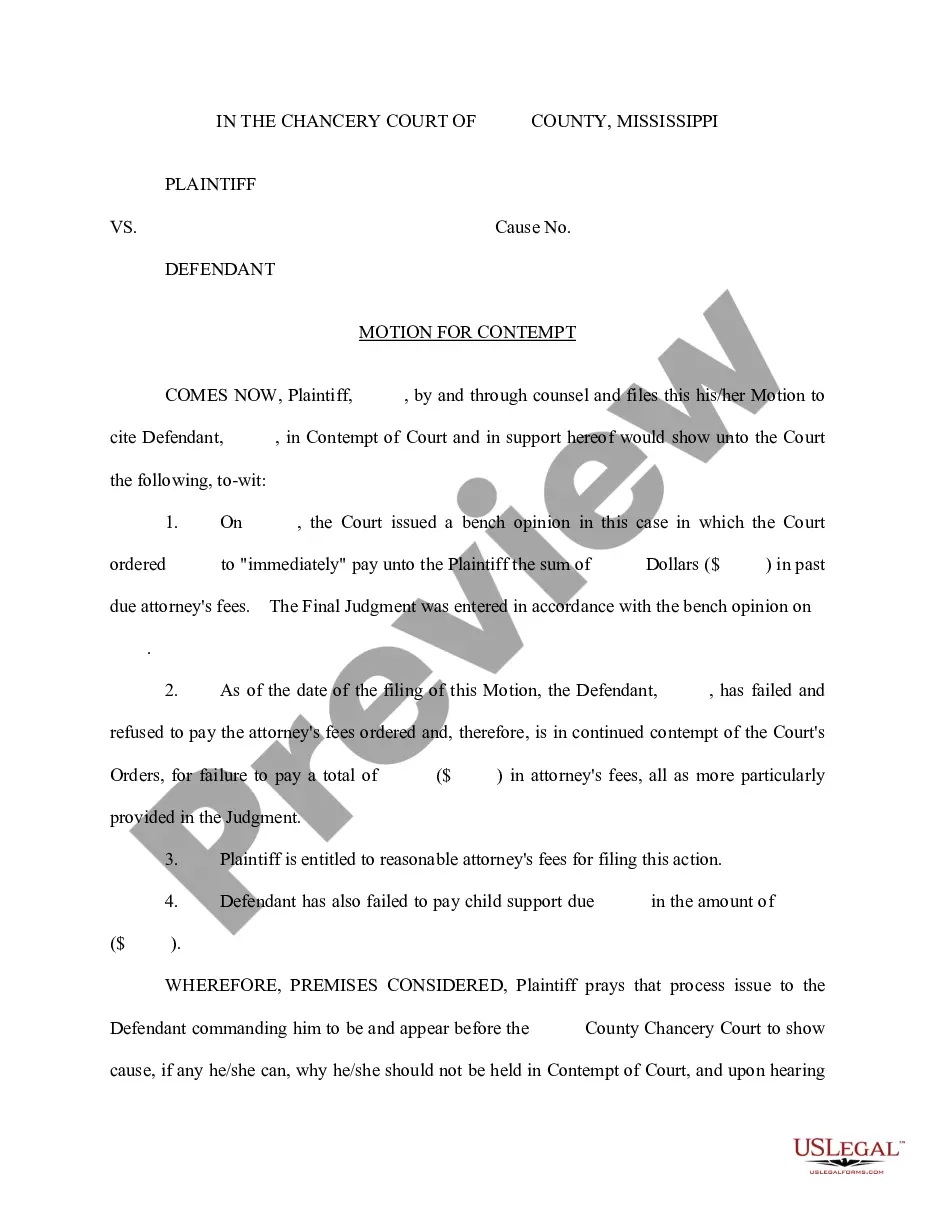
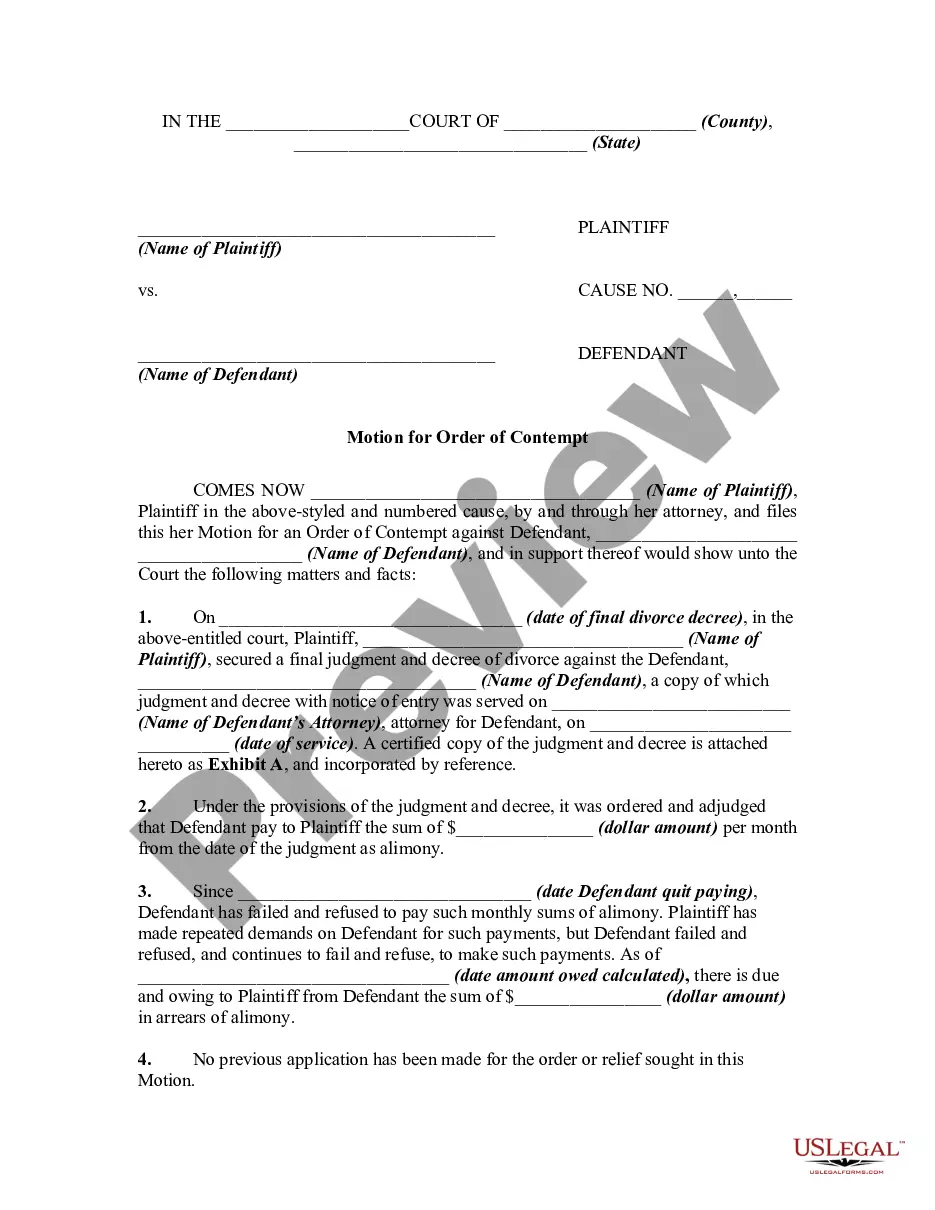
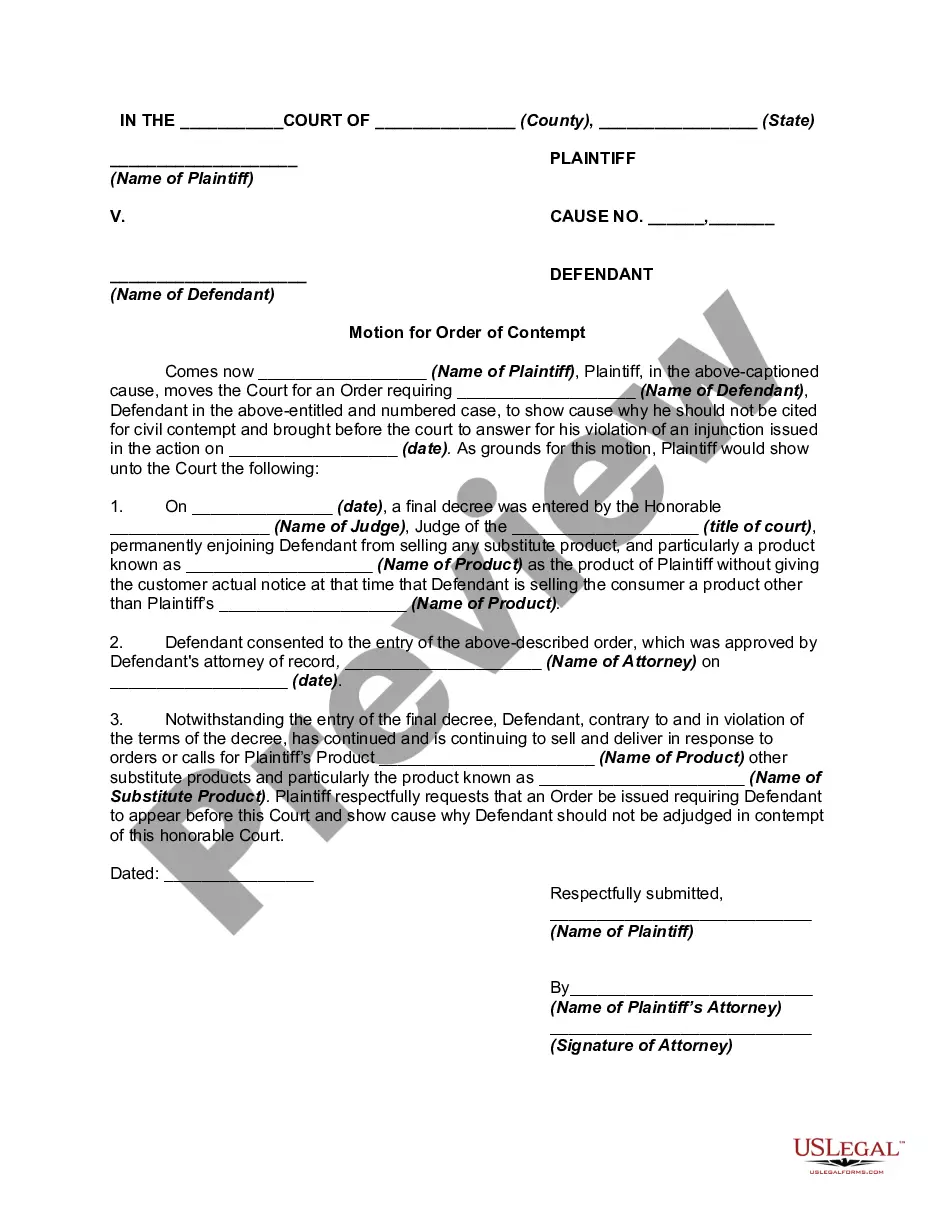
How to fill out Mississippi Motion To Find Defendant In Contempt Of Court?
Accessing legal document examples that comply with federal and state regulations is crucial, and the web provides numerous choices.
However, what is the use of spending time searching for the appropriate Search For Court example online when the US Legal Forms digital library already consolidates such templates in a single location.
US Legal Forms is the most extensive online legal directory with more than 85,000 editable templates created by attorneys for various business and personal situations. They are easy to navigate with all documents categorized by state and intended usage.
Utilize the search tool at the top of the page to find another sample if necessary. Once you've found the appropriate form, click Buy Now and select a subscription plan. Create an account or Log In to make a payment via PayPal or a credit card, choose the most suitable format for your Search For Court, and download it. All templates available through US Legal Forms are reusable. To re-download and complete previously saved forms, access the My documents tab in your account. Enjoy the most comprehensive and user-friendly legal documentation service!
- Our experts stay informed on legislative updates, ensuring that your documents remain current and compliant when acquiring a Search For Court from our site.
- Getting a Search For Court is straightforward and quick for both existing and new users.
- If you already have an account with an active subscription, Log In and store the document sample you need in your desired format.
- If you are new to our site, follow the steps below.
- Review the template using the Preview feature or the text description to verify it aligns with your needs.
Form popularity
FAQ
In the United States, you can Access Court Records Electronically through the US Courts website as part of the Public Access to Court Electronic Records (PACER) project. This website also informs you of whether or not a case is actively involved in litigation. PACER allows you to search for cases through all US courts.
If the case information is not available online, you can contact the court clerk or go to the court to ask for information about the case. A clerk may be able to tell you basic information over the phone, like when a court date is scheduled or if something has been filed.
There are three ways to look at court records: Go to the courthouse and ask to look at paper records. Go to the courthouse and look at electronic court records. If your court offers it, look at electronic records over the internet. This is called ?remote access.?
Examples of court documents would be dockets, pleadings, motions, memoranda, briefs, orders, and expert testimony.
Another way to access public records for free is through the federal government's website. USA.gov has a search bar where you can type in what kind of public record you're looking for and your state or county.