Transfer Death Beneficiary For Trust
Description

Get your form ready online
Our built-in tools help you complete, sign, share, and store your documents in one place.
Make edits, fill in missing information, and update formatting in US Legal Forms—just like you would in MS Word.
Download a copy, print it, send it by email, or mail it via USPS—whatever works best for your next step.
Sign and collect signatures with our SignNow integration. Send to multiple recipients, set reminders, and more. Go Premium to unlock E-Sign.
If this form requires notarization, complete it online through a secure video call—no need to meet a notary in person or wait for an appointment.
We protect your documents and personal data by following strict security and privacy standards.

Make edits, fill in missing information, and update formatting in US Legal Forms—just like you would in MS Word.

Download a copy, print it, send it by email, or mail it via USPS—whatever works best for your next step.

Sign and collect signatures with our SignNow integration. Send to multiple recipients, set reminders, and more. Go Premium to unlock E-Sign.

If this form requires notarization, complete it online through a secure video call—no need to meet a notary in person or wait for an appointment.

We protect your documents and personal data by following strict security and privacy standards.
Looking for another form?

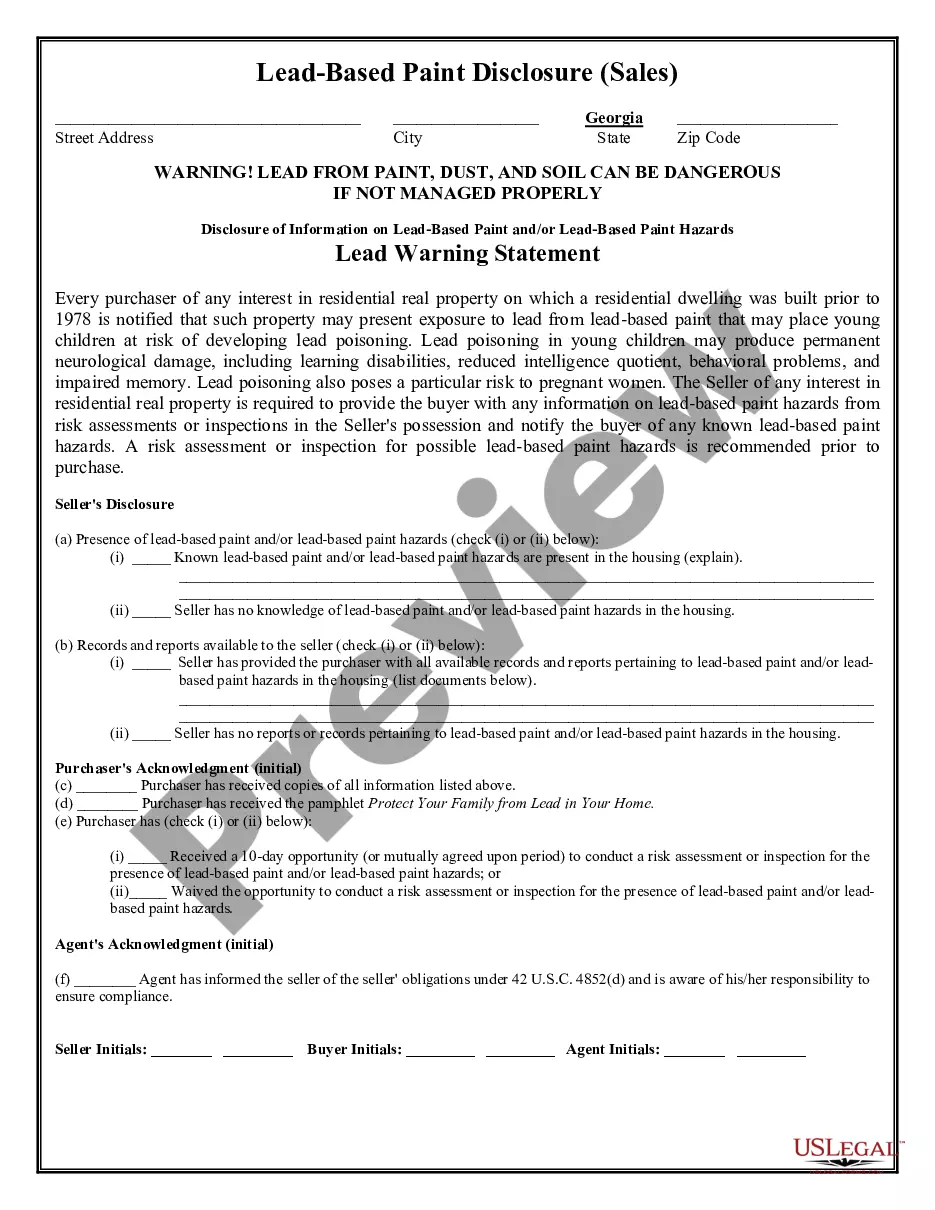







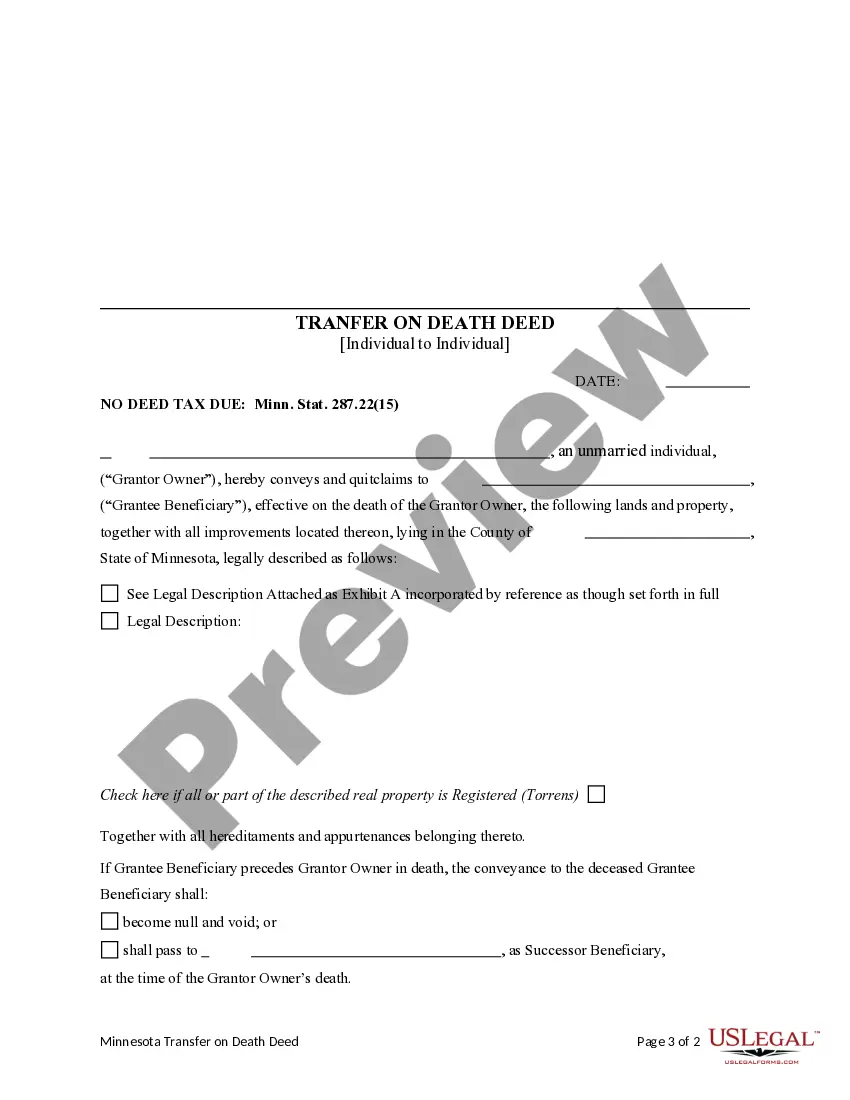
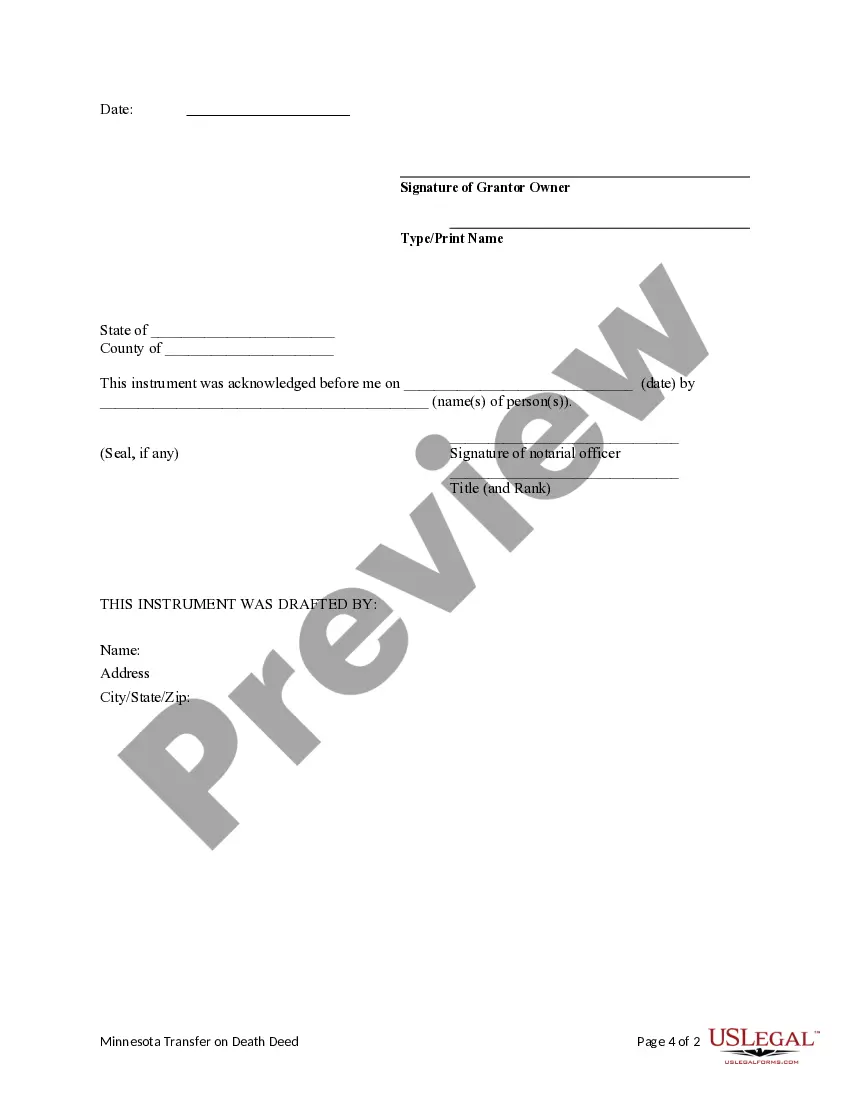
How to fill out Minnesota Transfer On Death Deed - Individual To Individual?
- If you're an existing user of US Legal Forms, log in to your account and download the necessary template by clicking the Download button. Ensure your subscription is active; if not, renew it as per your plan.
- For first-time users, start by checking the Preview mode and form description to confirm you have the right document that meets your local jurisdiction requirements.
- If you detect any discrepancies, use the Search tab to find the appropriate template. If it aligns with your needs, proceed to the next step.
- Purchase the document by selecting the Buy Now button and choosing your preferred subscription plan. An account registration is necessary to access the library.
- Complete the purchase by entering your payment information via credit card or PayPal.
- Finally, download your form and save it on your device. Access it anytime you need it through the My Forms section of your profile.
Concluding the transfer of a death beneficiary for a trust is essential for ensuring your estate is managed according to your wishes. With US Legal Forms, you benefit from an extensive collection of over 85,000 fillable legal documents designed for ease of use.
Start making your legal processes simpler today; visit US Legal Forms to find the perfect documents you need!
Form popularity
FAQ
A Transfer on Death (TOD) designation can simplify the transfer of assets. However, it may not provide the same protection and management options as transferring assets into a trust. Essential factors like creditor claims or disputes among heirs can complicate matters. To explore how a transfer death beneficiary for trust can offer enhanced security, consider using the services of uslegalforms.
Transferring assets to a trust typically does not trigger a taxable event. This process often allows you to retain control while removing assets from your personal estate. However, it's essential to understand that any income generated from trust assets may be subject to taxation. For specific guidance on transferring death beneficiary for trust, consider consulting a tax professional.
To add a Transfer on Death designation to your bank account, you will need to visit your bank and request the necessary paperwork. Fill out the form provided by your bank, where you will designate your chosen beneficiary. Once this is complete, your account will become a TOD account, allowing your assets to transfer automatically after your death, avoiding probate and ensuring a smooth transition.
TOD accounts are often considered a wise choice for many individuals looking to simplify the transfer of assets. They allow for a direct transfer to your named beneficiary without the delays and costs associated with probate. By establishing a TOD account, you effectively create a transfer death beneficiary for trust, providing peace of mind for you and your loved ones.
Setting up a Transfer on Death (TOD) account involves several simple steps. First, you need to visit your bank and discuss your intention to create a TOD account. They will require you to designate a beneficiary who will receive the assets upon your passing. This setup ensures that the transfer occurs seamlessly without going through probate, making it an ideal strategy for estate planning.
A transfer on death deed, or TOD, does not inherently avoid inheritance tax. Taxes depend on various factors, including your state laws and the size of your estate. While a transfer death beneficiary for trust can simplify the process of asset distribution, it is vital to consult with a tax professional to understand the tax implications. Proactive planning enables you to make well-informed decisions for your family's financial future.
While a transfer on death deed provides ease of transfer, it also has some disadvantages. For instance, it does not allow for any conditions or restrictions on asset transfers, which can lead to unintended consequences. Additionally, a transfer death beneficiary for trust does not provide benefits like probate avoidance for all assets, leaving some family members potentially without crucial benefits. Weigh these factors carefully when considering your options.
One of the biggest mistakes parents make is not clearly defining their intentions and beneficiaries when creating a trust. This lack of clarity can lead to confusion and disputes among heirs. Using a transfer death beneficiary for trust can simplify the process, but it’s essential to communicate openly with your family about your plans. Ensure that everyone understands their roles and expectations to avoid future issues.
Choosing between a transfer on death deed and a trust depends on your needs and goals. A transfer death beneficiary for trust offers a straightforward transfer process without the need for probate. However, establish your estate's management goals, as trusts provide more comprehensive control over the distribution of your assets. Assess your situation carefully to make the best decision.
Determining whether a trust or a transfer on death (TOD) designation is better depends largely on your unique circumstances and estate planning objectives. A trust often provides greater control and flexibility over asset management and distribution, while a TOD is straightforward and avoids probate. Carefully evaluating your needs and possibly consulting with experts at US Legal Forms can help you decide the most suitable approach to using a transfer death beneficiary for trust.