Transfer Death Beneficiary For 401k
Description

Get your form ready online
Our built-in tools help you complete, sign, share, and store your documents in one place.
Make edits, fill in missing information, and update formatting in US Legal Forms—just like you would in MS Word.
Download a copy, print it, send it by email, or mail it via USPS—whatever works best for your next step.
Sign and collect signatures with our SignNow integration. Send to multiple recipients, set reminders, and more. Go Premium to unlock E-Sign.
If this form requires notarization, complete it online through a secure video call—no need to meet a notary in person or wait for an appointment.
We protect your documents and personal data by following strict security and privacy standards.

Make edits, fill in missing information, and update formatting in US Legal Forms—just like you would in MS Word.

Download a copy, print it, send it by email, or mail it via USPS—whatever works best for your next step.

Sign and collect signatures with our SignNow integration. Send to multiple recipients, set reminders, and more. Go Premium to unlock E-Sign.

If this form requires notarization, complete it online through a secure video call—no need to meet a notary in person or wait for an appointment.

We protect your documents and personal data by following strict security and privacy standards.
Looking for another form?









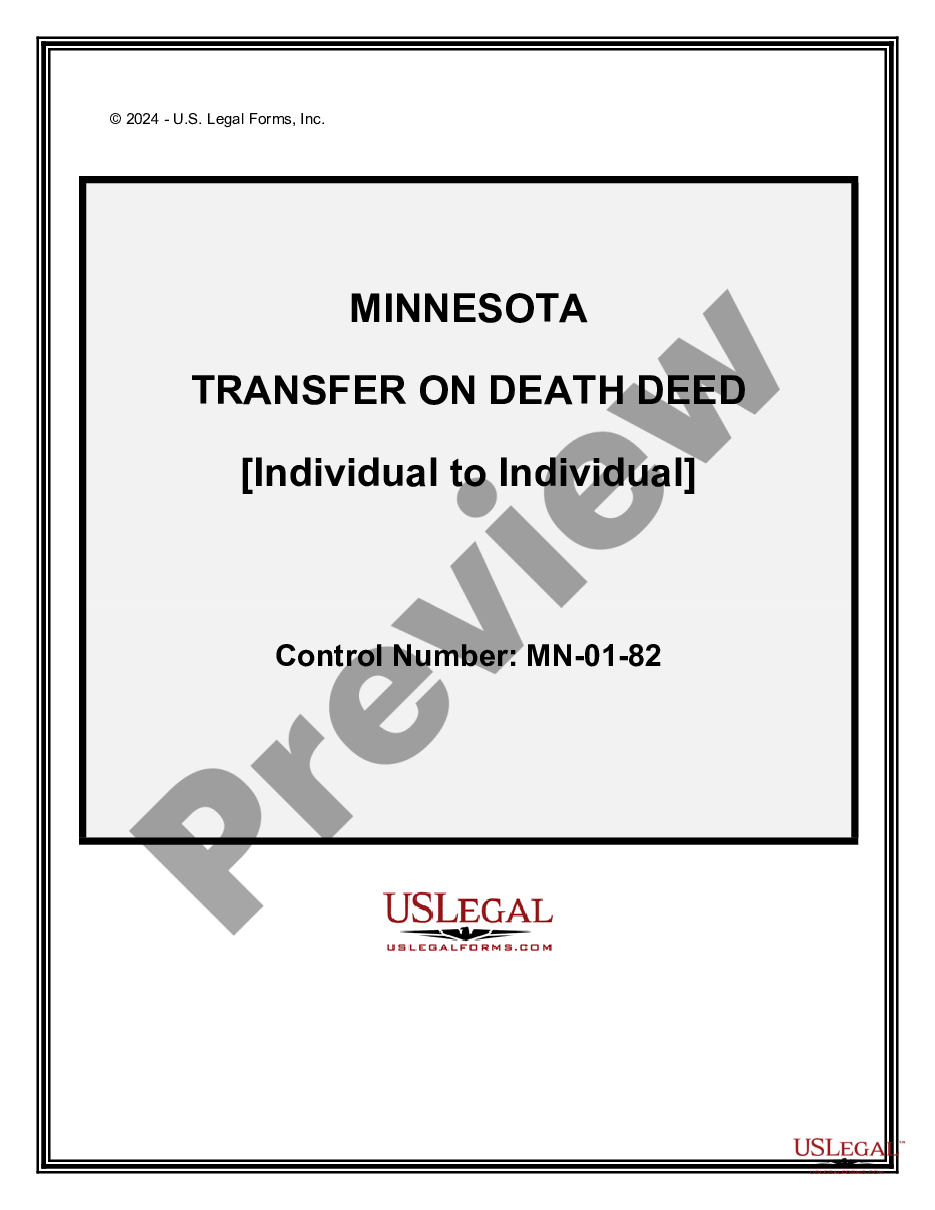
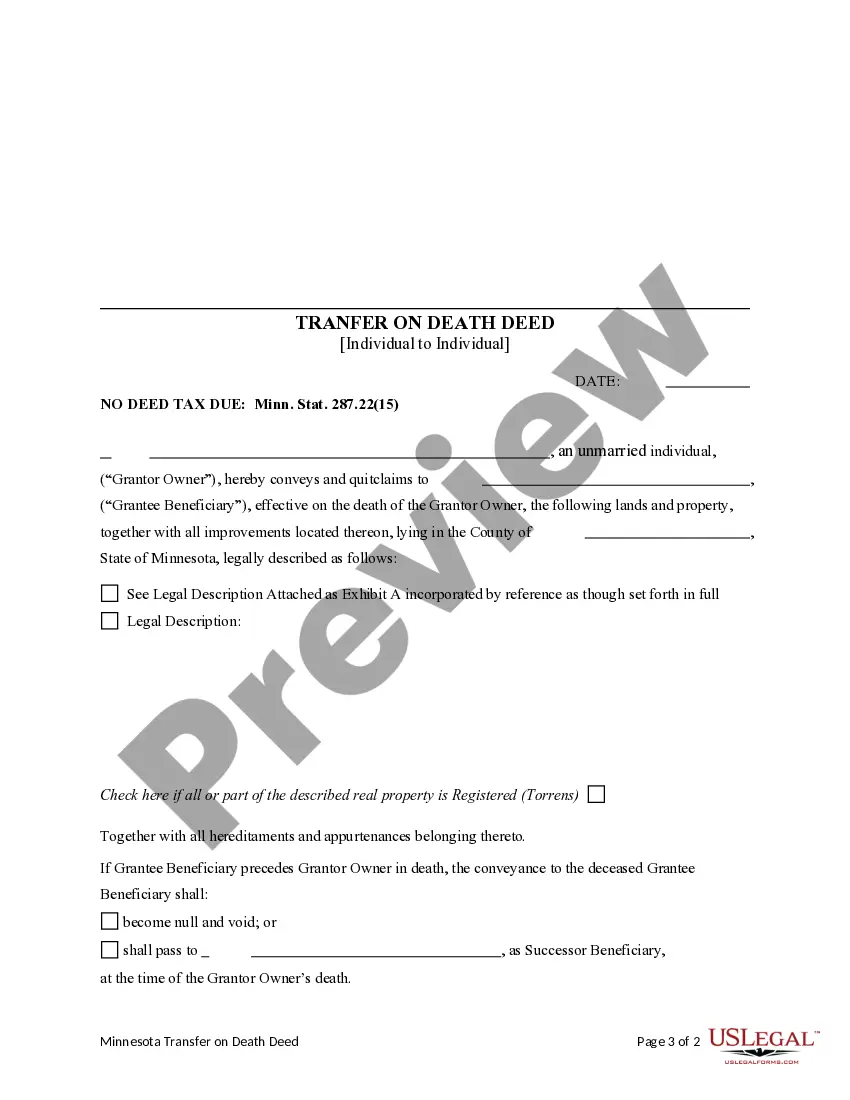
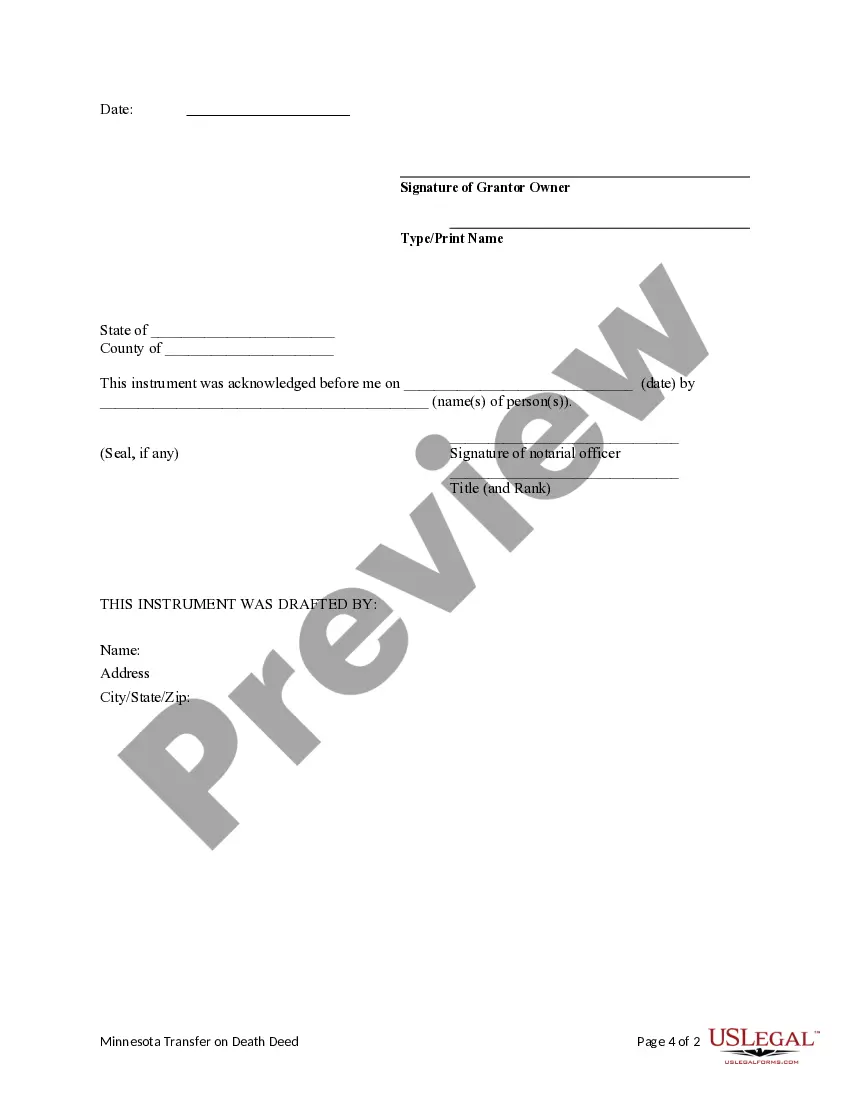
How to fill out Minnesota Transfer On Death Deed - Individual To Individual?
- If you're an existing member, log into your account and retrieve the required form by clicking the Download button. Ensure your subscription is active; if it's not, please renew it according to your payment preferences.
- For first-time users, begin by reviewing the Preview mode and form description to confirm you have selected the correct document that aligns with your local jurisdiction requirements.
- Should you find inconsistencies or need a different template, utilize the Search tab at the top to find the appropriate form.
- Once you locate the right document, click the Buy Now button and select your desired subscription plan. Registration is necessary to access our extensive library.
- Proceed with your payment by entering your credit card information or logging in through your PayPal account.
- Finally, download your selected form to your device for completion, and access it anytime through the My Forms section of your profile.
US Legal Forms empowers both individuals and legal professionals with a vast, easy-to-navigate library of legal resources. Enjoy access to over 85,000 customizable legal forms and packages.
Start your journey towards a seamless legal experience today—visit US Legal Forms and get your documents in order efficiently!
Form popularity
FAQ
The IRS may need a death certificate in specific situations, such as when filing tax returns for the deceased or addressing estate taxes. If the 401k was not transferred, the IRS might require this document for proper assessment. Having a death certificate on hand can make these processes easier and more efficient.
If a designated beneficiary of a 401k passes away, the account typically reverts to the estate unless a contingent beneficiary is named. This can complicate matters, as the assets may have to go through the probate process. To prevent confusion, consider naming alternative beneficiaries or a transfer death beneficiary for 401k to ensure smooth passing of assets.
Yes, to claim funds from a 401k after someone’s death, a death certificate is generally necessary. The document serves as proof of death for the financial institution to process the transfer. Having this certificate ready will streamline the claims process for the transfer death beneficiary for 401k.
Setting up a transfer on death (TOD) account involves approaching your financial institution and expressing your intent. You will designate a beneficiary and fill out the required paperwork. This kind of account ensures that your assets transfer seamlessly upon your passing, similar to naming a transfer death beneficiary for 401k.
To change your beneficiary on a 401k, you usually need to complete a form provided by your plan administrator. This process often requires you to specify the new transfer death beneficiary for 401k. It’s a straightforward process, but remember to keep your beneficiaries updated as your situation changes.
You often need a death certificate to settle financial matters, including accessing a 401k. Financial institutions, insurance companies, and courts typically require this document for verifying death. It’s crucial to have multiple certified copies, as each entity may request one.
When someone dies, their 401k typically transfers directly to their designated beneficiary. If you have named a transfer death beneficiary for 401k, the account passes outside of probate, allowing for quicker access to funds. However, if no beneficiary is named, the account may go through probate and be distributed according to the estate plan.
The most significant disadvantage of transfer on death (TOD) accounts is that they offer limited control over asset distribution. While they simplify the transfer process, they do not allow you to place conditions on how beneficiaries access the funds. This lack of control can be risky, especially if beneficiaries are not financially savvy. Consider this factor carefully when making your estate plans.
Transfer on death accounts may present specific challenges worth noting. One major issue is that they do not help manage the financial needs of beneficiaries, especially if they are unprepared for a sudden windfall. There might also be tax implications for your beneficiaries that could complicate matters. Evaluate these potential problems as part of your overall estate planning.
To claim your deceased parents' 401k, start by locating the account and contacting the plan administrator. You will likely need to provide a copy of the death certificate and any required identification. The administrator will guide you through the process, including any necessary paperwork. If you need more assistance, consider reaching out to a legal platform like USLegalForms for resources and templates.