Michigan Tenant Eviction Process
Description
Get your form ready online
Our built-in tools help you complete, sign, share, and store your documents in one place.
Make edits, fill in missing information, and update formatting in US Legal Forms—just like you would in MS Word.
Download a copy, print it, send it by email, or mail it via USPS—whatever works best for your next step.
Sign and collect signatures with our SignNow integration. Send to multiple recipients, set reminders, and more. Go Premium to unlock E-Sign.
If this form requires notarization, complete it online through a secure video call—no need to meet a notary in person or wait for an appointment.
We protect your documents and personal data by following strict security and privacy standards.

Make edits, fill in missing information, and update formatting in US Legal Forms—just like you would in MS Word.

Download a copy, print it, send it by email, or mail it via USPS—whatever works best for your next step.

Sign and collect signatures with our SignNow integration. Send to multiple recipients, set reminders, and more. Go Premium to unlock E-Sign.

If this form requires notarization, complete it online through a secure video call—no need to meet a notary in person or wait for an appointment.

We protect your documents and personal data by following strict security and privacy standards.
Looking for another form?


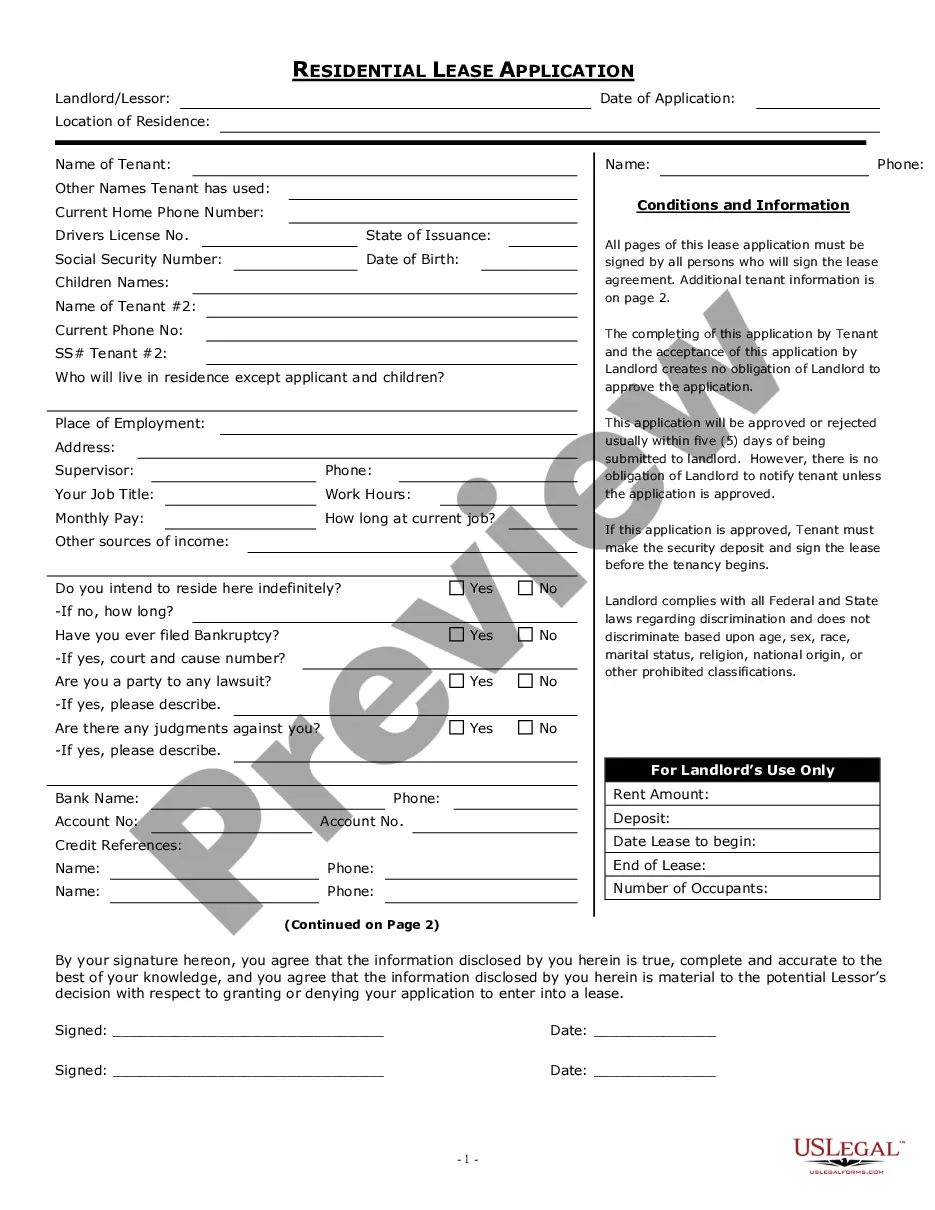





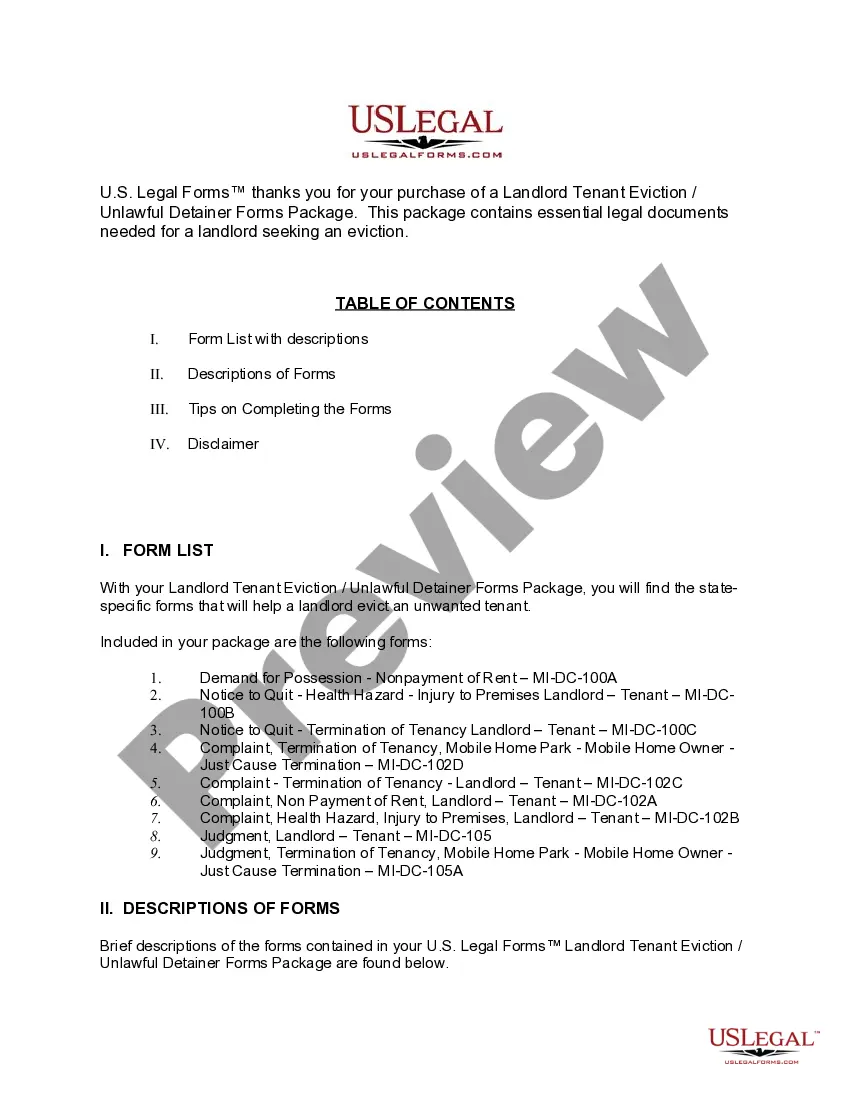
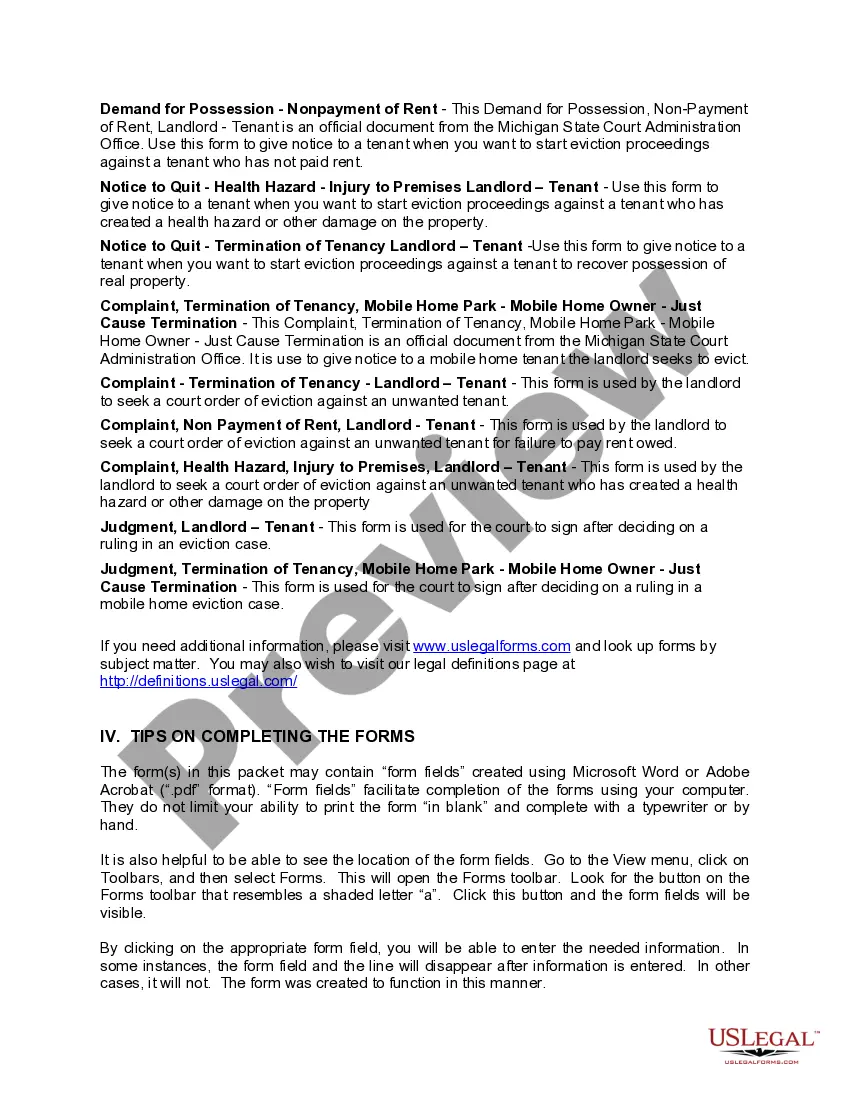
How to fill out Michigan Landlord Tenant Eviction / Unlawful Detainer Forms Package?
Managing legal documents and processes can be a lengthy addition to your day.
Michigan Tenant Eviction Procedure and forms similar to it usually require you to locate them and find the most efficient way to fill them out properly.
Thus, if you are addressing financial, legal, or personal issues, utilizing a comprehensive and user-friendly online directory of forms when necessary will greatly assist you.
US Legal Forms is the premier online source for legal templates, boasting over 85,000 state-specific forms and a range of resources to help you finalize your documents swiftly.
Is this your first experience with US Legal Forms? Sign up and create a free account in just a few minutes, and you'll gain entry to the form library and Michigan Tenant Eviction Procedure. Then, follow the steps below to fill out your form: Make sure you have the correct form using the Preview feature and reviewing the form details. Select Buy Now when ready, and choose the monthly subscription plan that suits your requirements. Click Download, then complete, sign, and print the form. US Legal Forms has twenty-five years of experience helping users manage their legal documentation. Obtain the form you need today and streamline any process effortlessly.
- Explore the collection of pertinent documents available with just a single click.
- US Legal Forms offers you state- and county-specific forms available for download at any time.
- Safeguard your document management processes by employing a high-quality service that enables you to compile any form in minutes without additional or hidden charges.
- Simply Log In to your account, find Michigan Tenant Eviction Procedure and download it directly from the My documents section.
- You can also access previously stored forms.
Form popularity
FAQ
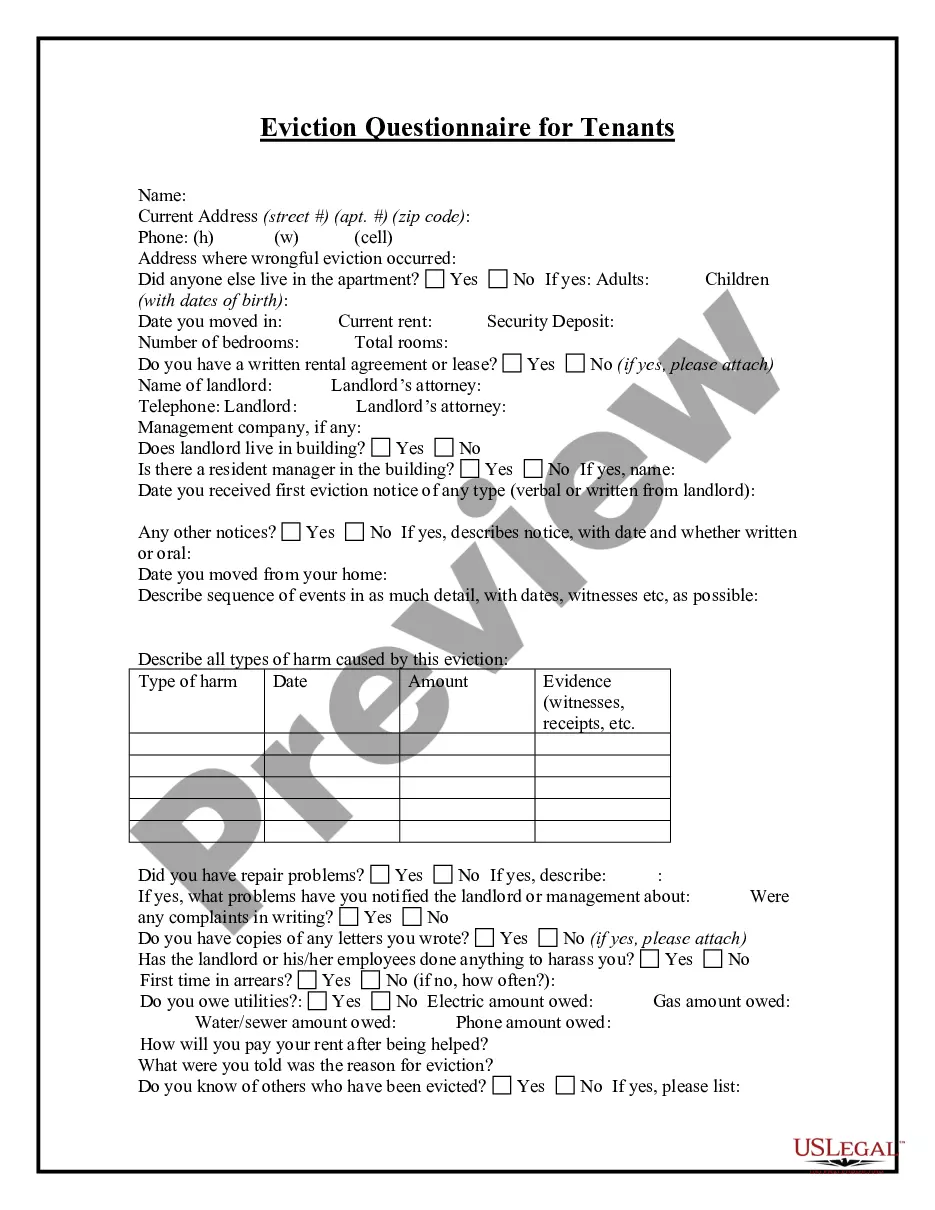
The steps in an eviction A landlord must provide notice to the tenant. If the tenant doesn't comply, a landlord can initiate the eviction process by filing a civil lawsuit in district court. The tenant will then receive asummons and complaint letting them know they are being sued and to show up for a hearing.
Michigan eviction laws vary from county to county, but they still follow the same general eviction process: Send a clear written notice. Fill out the forms. Serve the tenant. Attend the trial. Wait for judgment.
Michigan Notice to Quit - Why is it important? You can use the notice to quit form to end your Michigan Residential Lease if the tenant has failed to pay rent. The Michigan Notice to Quit Form should not be confused with the "Writ of Possession" (read more about Michigan eviction notice) which is issued by the courts.
If the judge enters a default, your landlord can then ask for a default judgment. A default judgment means that you lose because you did not show up. This means that a landlord can get a judgment saying you need to pay them money, or that you need to move out, or both.
The notice must be in writing and include the following: the tenant's name, address or description of the rental property, reason for eviction, amount of time for the renter to address any issues, date and the landlord's signature.