Form 1 For Real Estate
Description
Get your form ready online
Our built-in tools help you complete, sign, share, and store your documents in one place.
Make edits, fill in missing information, and update formatting in US Legal Forms—just like you would in MS Word.
Download a copy, print it, send it by email, or mail it via USPS—whatever works best for your next step.
Sign and collect signatures with our SignNow integration. Send to multiple recipients, set reminders, and more. Go Premium to unlock E-Sign.
If this form requires notarization, complete it online through a secure video call—no need to meet a notary in person or wait for an appointment.
We protect your documents and personal data by following strict security and privacy standards.

Make edits, fill in missing information, and update formatting in US Legal Forms—just like you would in MS Word.

Download a copy, print it, send it by email, or mail it via USPS—whatever works best for your next step.

Sign and collect signatures with our SignNow integration. Send to multiple recipients, set reminders, and more. Go Premium to unlock E-Sign.

If this form requires notarization, complete it online through a secure video call—no need to meet a notary in person or wait for an appointment.

We protect your documents and personal data by following strict security and privacy standards.
Looking for another form?




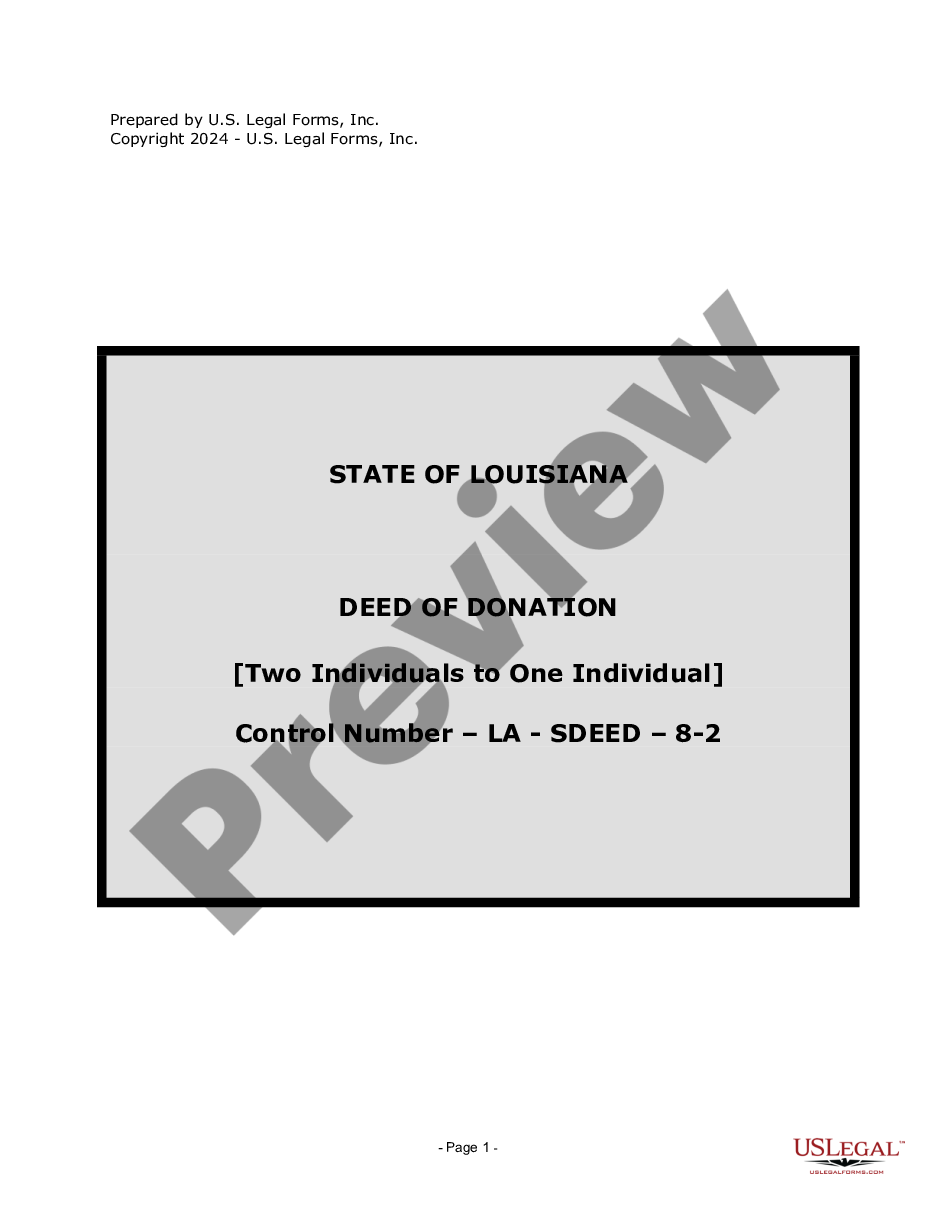





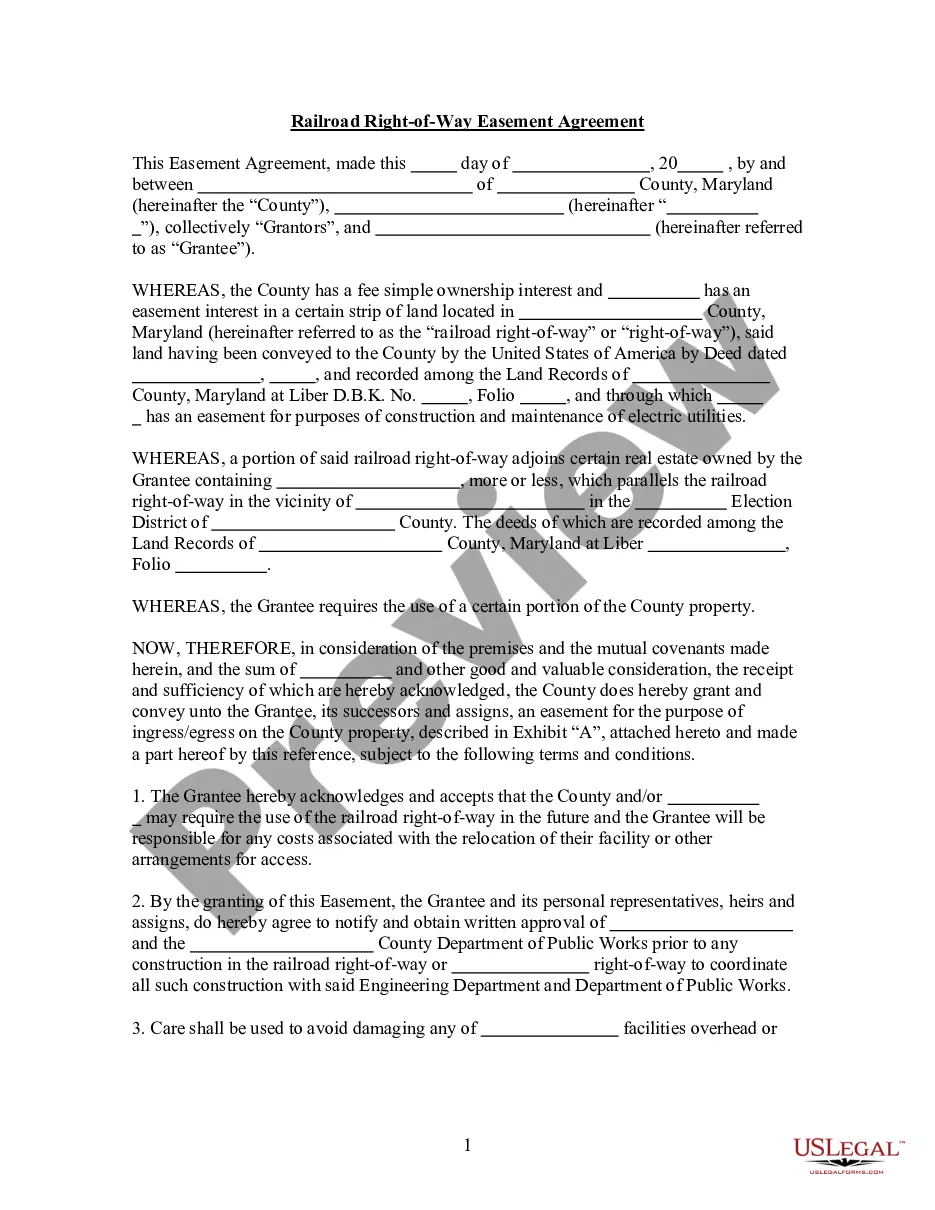
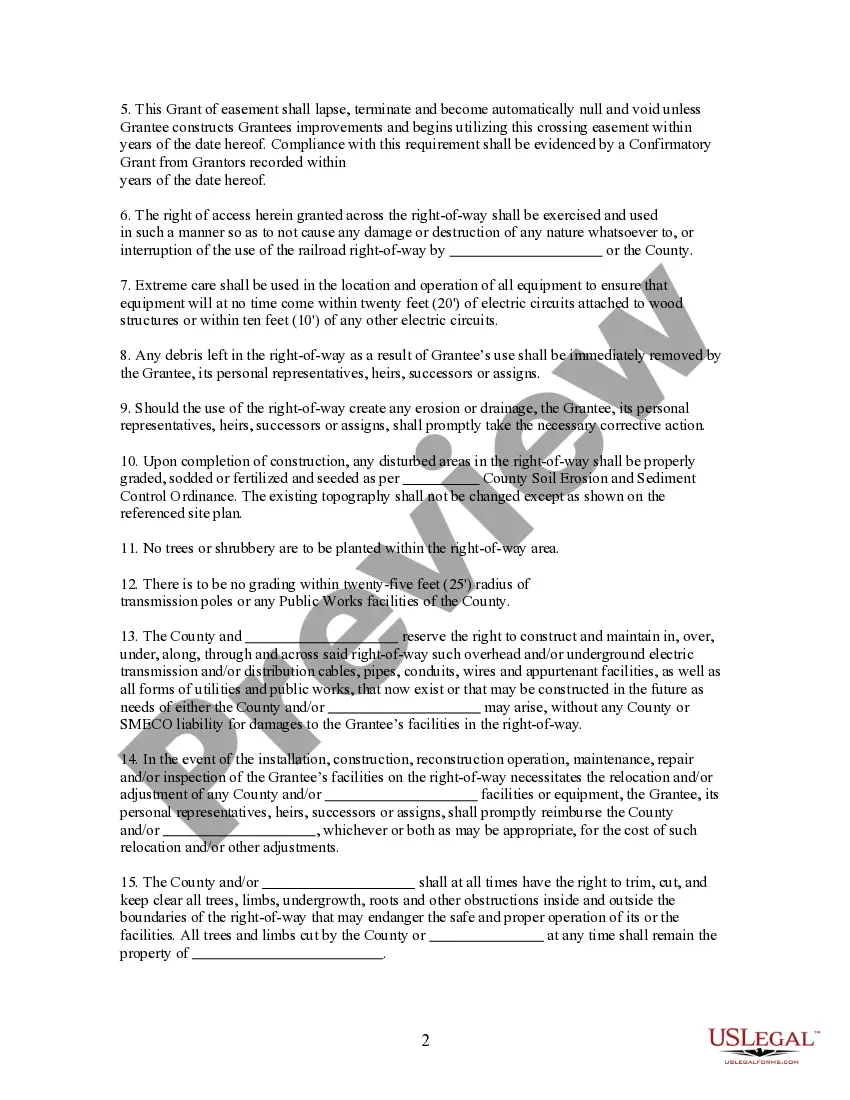
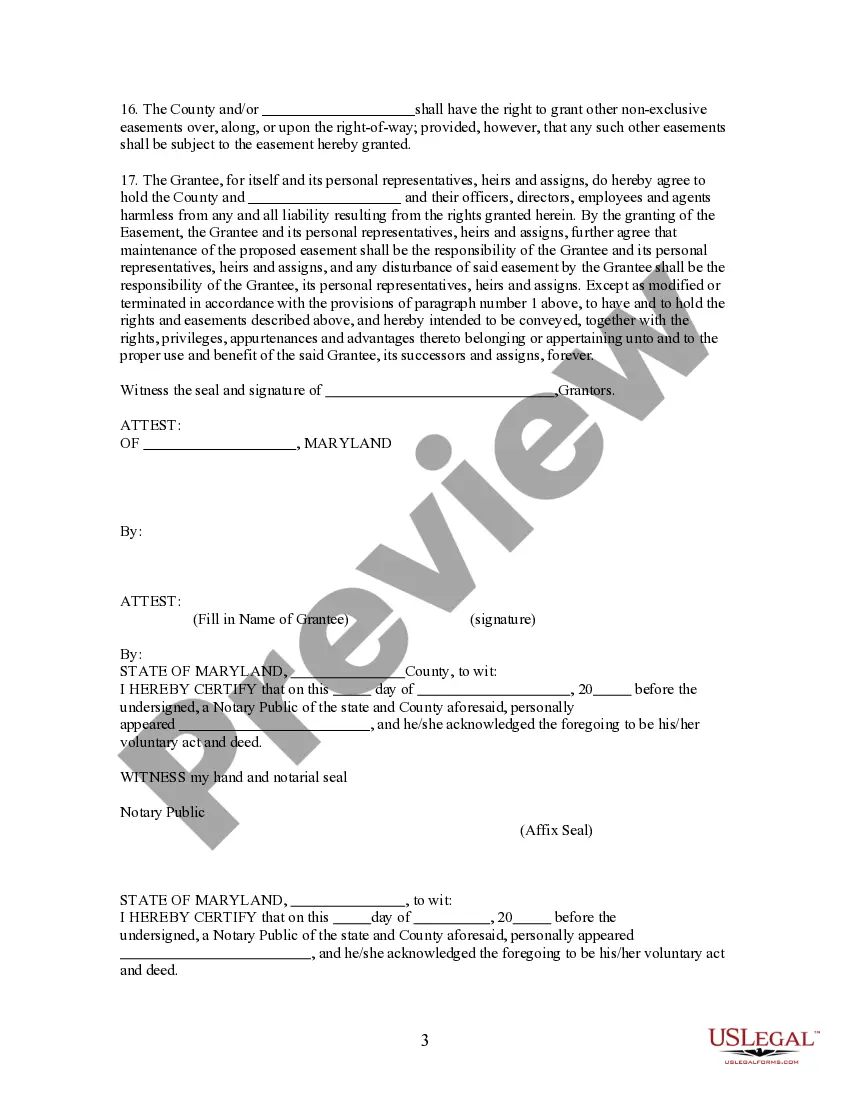
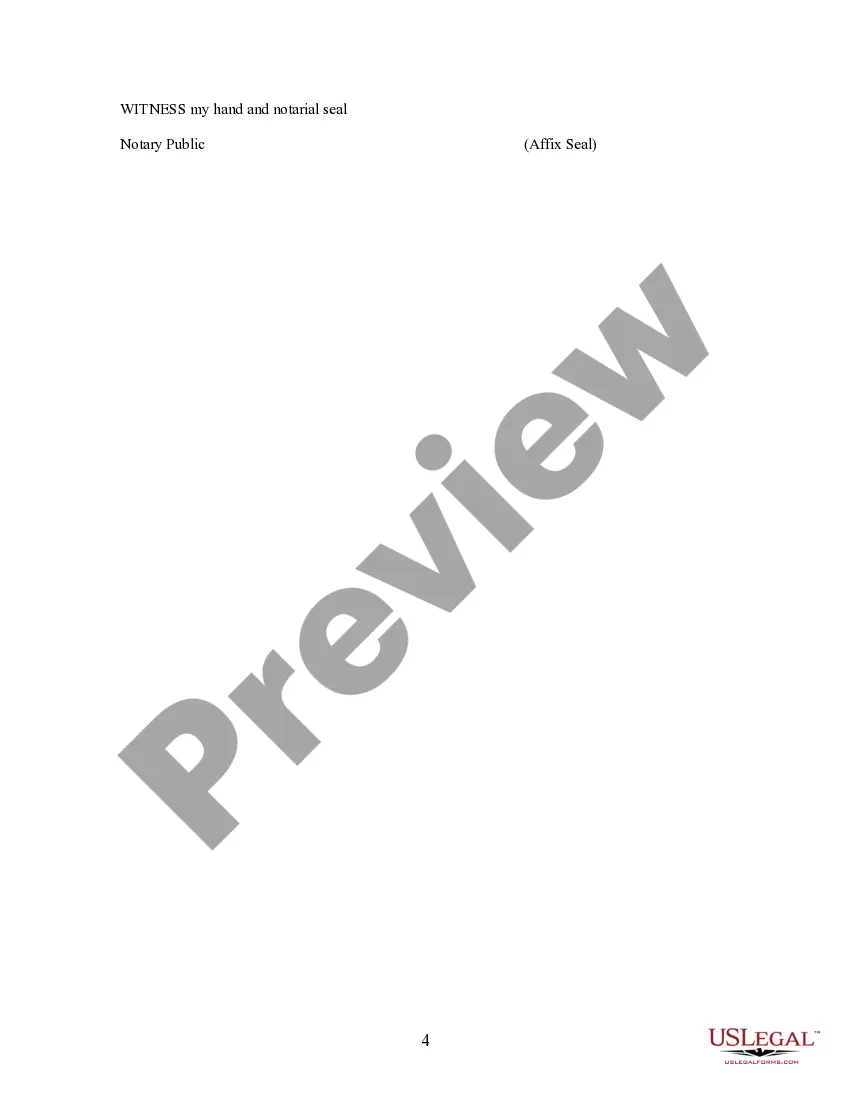
How to fill out Maryland Railroad Right Of Way Easement Agreement?
- Log in to your US Legal Forms account if you're a returning user, or create a new account to get started.
- Browse through the preview mode and read the form descriptions to ensure you select the correct Template tailored to your local regulations.
- If you cannot find the right document, utilize the Search tab at the top to explore our vast collection to match your requirements.
- Once you've identified the correct Template, click the 'Buy Now' button and choose the subscription plan that best fits your needs.
- Complete your purchase by entering payment details via credit card or using PayPal to finalize your subscription.
- After the purchase, download your Form 1 for real estate and save it to your device. You can also revisit your document anytime under the 'My Forms' section.
In conclusion, US Legal Forms makes it effortless to access the legal documents you need for real estate transactions. With over 85,000 forms available, you can ensure you have the correct document tailored to your jurisdiction.
Don't wait! Start your journey with US Legal Forms today and simplify your legal paperwork.
Form popularity
FAQ
Filing Form 1 late in Maryland can result in penalties that vary based on how late the filing is. Generally, late submissions incur fines, which can add up quickly, affecting your overall business finances. Additionally, a delay might jeopardize your business's standing with the state, complicating future transactions. To ensure you meet your deadlines and avoid these penalties, consider using the services offered by uslegalforms, which can guide you in submitting Form 1 for real estate on time.
In Maryland, every business that owns personal property must file a personal property return. This includes both corporations and LLCs, as well as any business with tangible assets. The deadline for this filing is typically April 15 each year, and timely submissions help avoid unnecessary penalties. If you are dealing with real estate assets, using Form 1 for real estate can assist you in accurately reporting your personal property to the state.
Yes, you must file an annual report for your LLC in Maryland to remain compliant with state regulations. Failing to do so can lead to penalties, including fines and loss of your LLC’s good standing. This report is crucial for providing the state with updated information about your business activities. Utilizing resources like Form 1 for real estate can simplify this process, ensuring you meet your filing requirements promptly.
If you fail to file your Annual Report in Maryland, your business may face penalties and potential dissolution. The state authorities rely on this report to maintain updated records of your business transactions and status. Without filing, you risk losing your good standing, which can impact your ability to conduct business legally. To avoid these complications, consider using Form 1 for real estate as a reliable tool to keep your filings on track.
HUD-1 stands for the 'Housing and Urban Development Settlement Statement.' This form is pivotal in real estate transactions, summarizing the costs associated with closing a mortgage. While it does not directly relate to Form 1 for real estate, being aware of both forms enhances your understanding of the real estate process. These documents collectively ensure transparency and protect the interests of all parties involved.
1 Dom refers to a 'first domicile' in real estate terminology, commonly indicating a primary residence. This term helps differentiate between various properties owned by an individual. Understanding 1 Dom is essential for accurate reporting, especially when filing Form 1 for real estate. It allows individuals to convey their living situations clearly and transparently.
Form 1 is a critical disclosure form that requires individuals to report certain financial interests in Florida. Specifically, it addresses potential conflicts of interest, especially in real estate dealings. Filing Form 1 for real estate can help individuals avoid legal pitfalls and clarify their financial position. Understanding how to complete this form correctly can ensure compliance and public trust.
In Florida, individuals in specified positions, such as elected officials and certain public employees, must file Form 1. This requirement ensures that those in power disclose their financial interests, particularly in real estate matters. By filing Form 1 for real estate, these officials promote transparency and public trust. It's essential to review the guidelines to confirm whether you are among those required to file.
In Florida, the Commission on Ethics requires several forms for transparency in public service. Among these forms, Form 1 for real estate plays a crucial role. This form discloses financial interests that may influence decision-making in real estate transactions. Utilizing Form 1 helps maintain accountability and trust in public officials.
In real estate, HUD stands for the Department of Housing and Urban Development. This U.S. government agency aims to promote affordable housing and ensure fair housing practices for all citizens. HUD's guidelines and regulations significantly influence real estate transactions, particularly concerning compliance and settlement practices. Staying updated on HUD rules can be beneficial for anyone engaged in real estate activities.