Living Trust Louisiana For House
Description
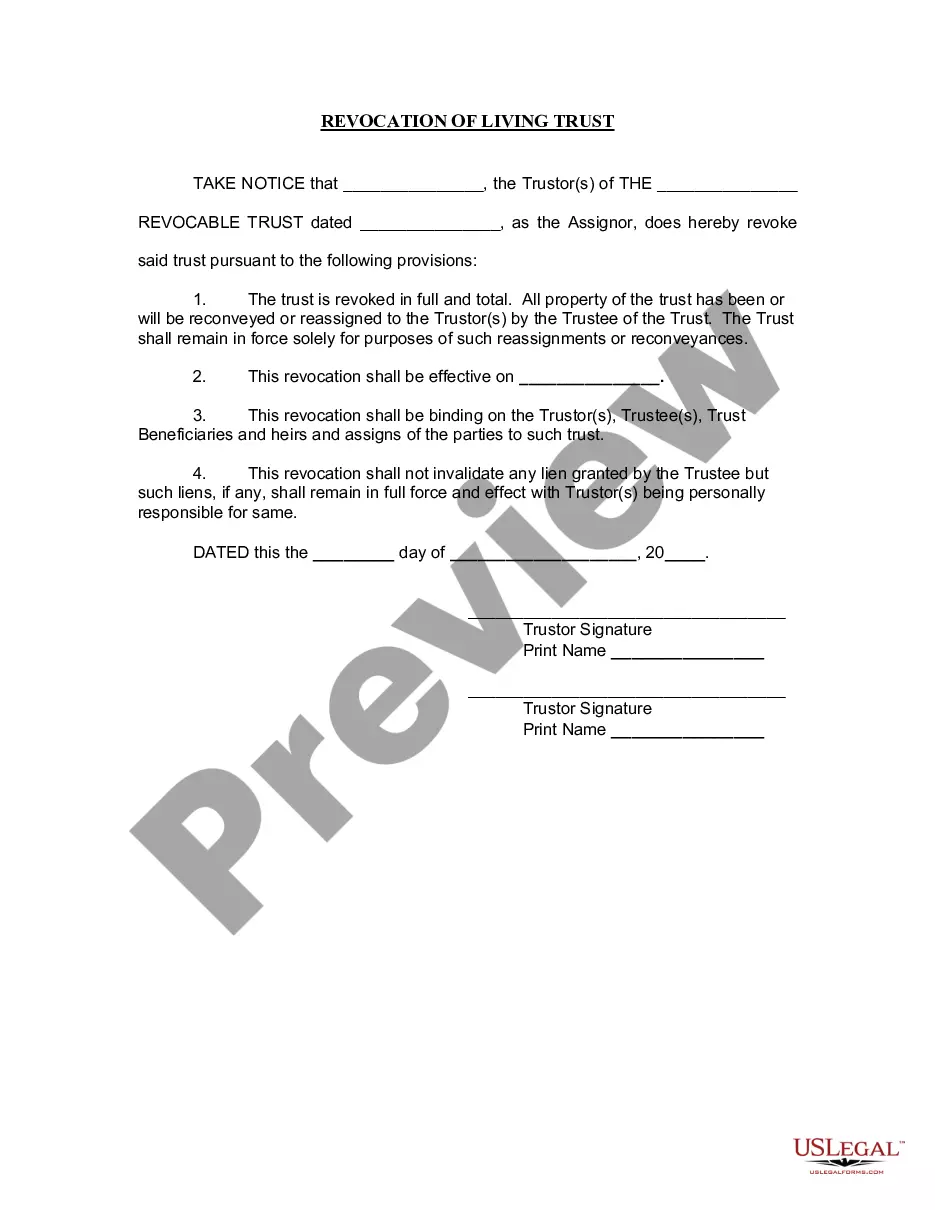
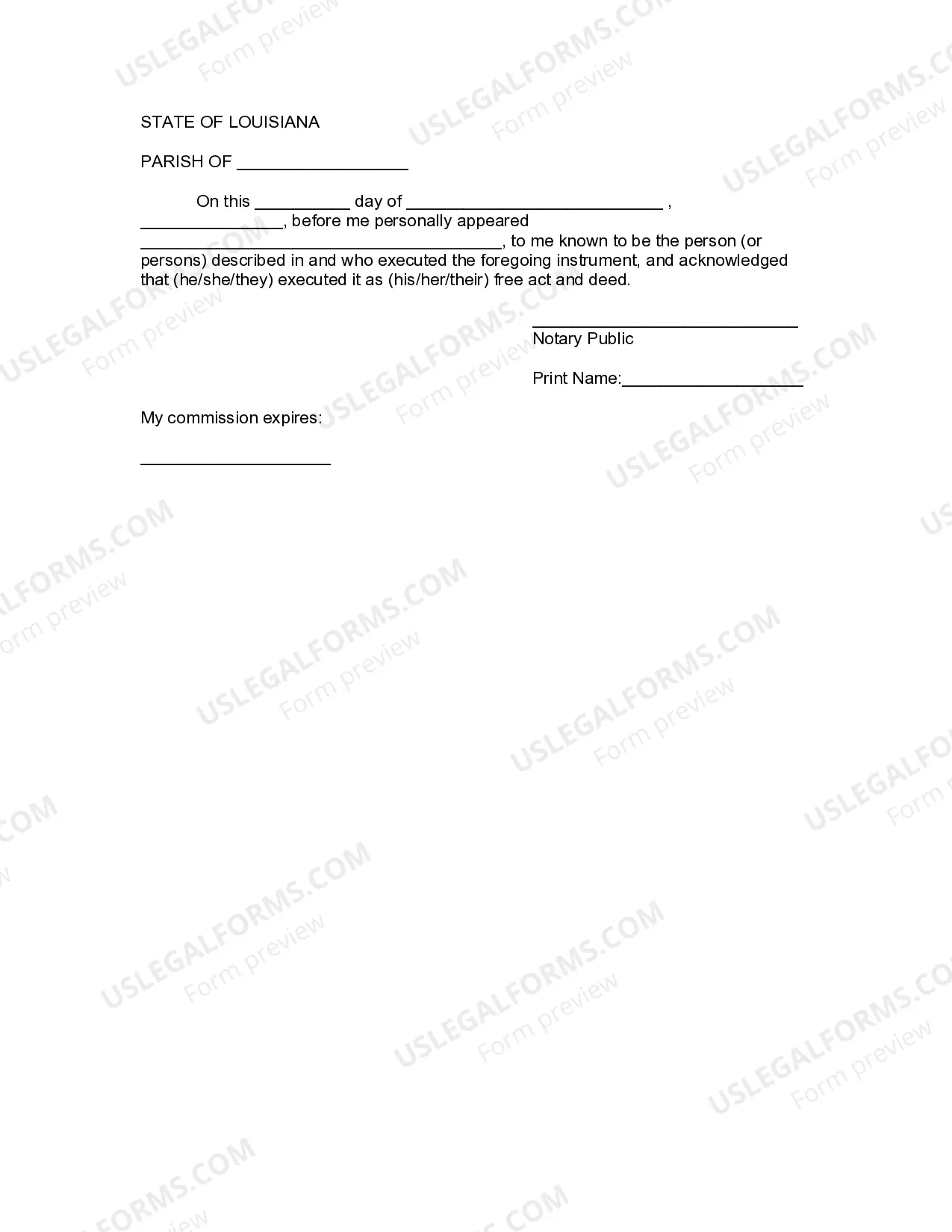
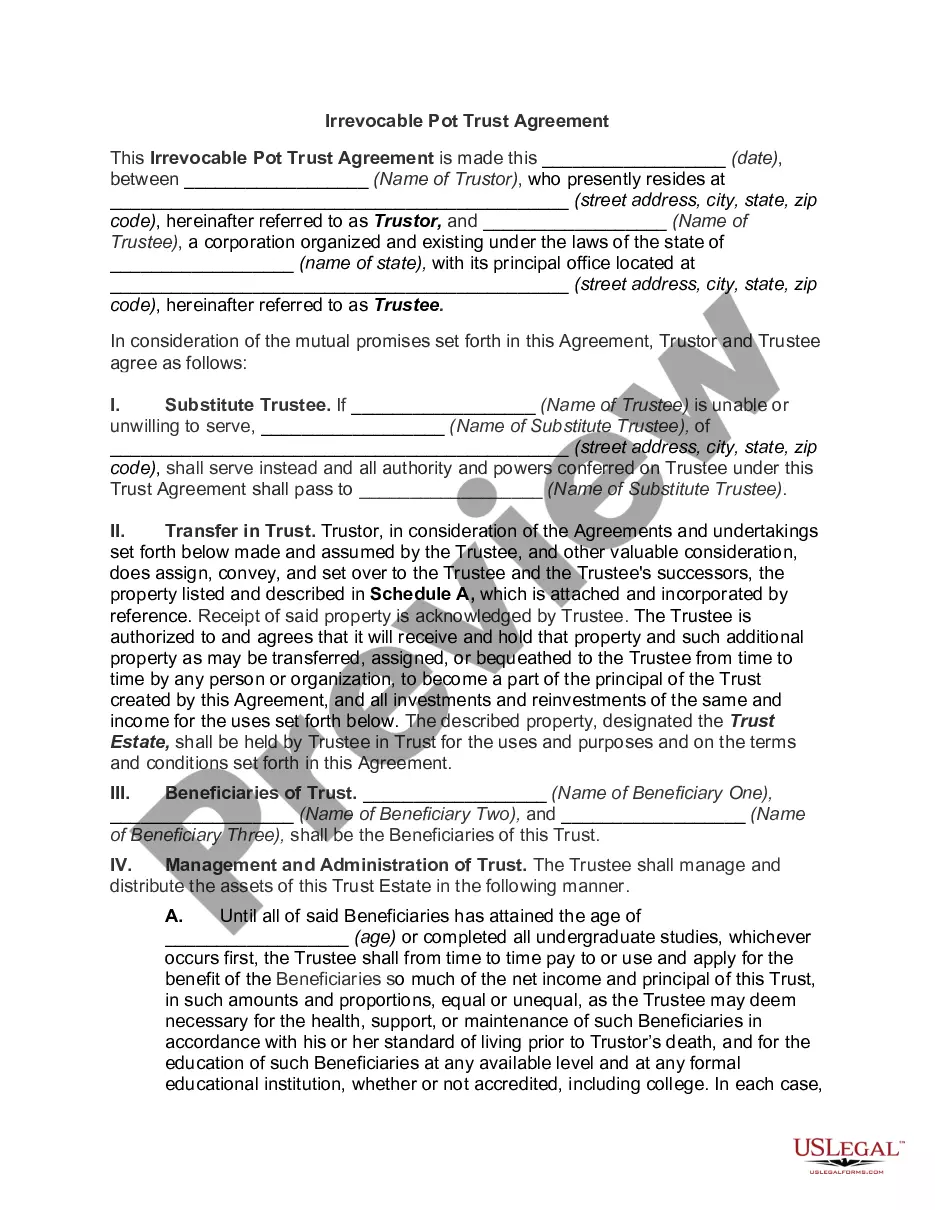

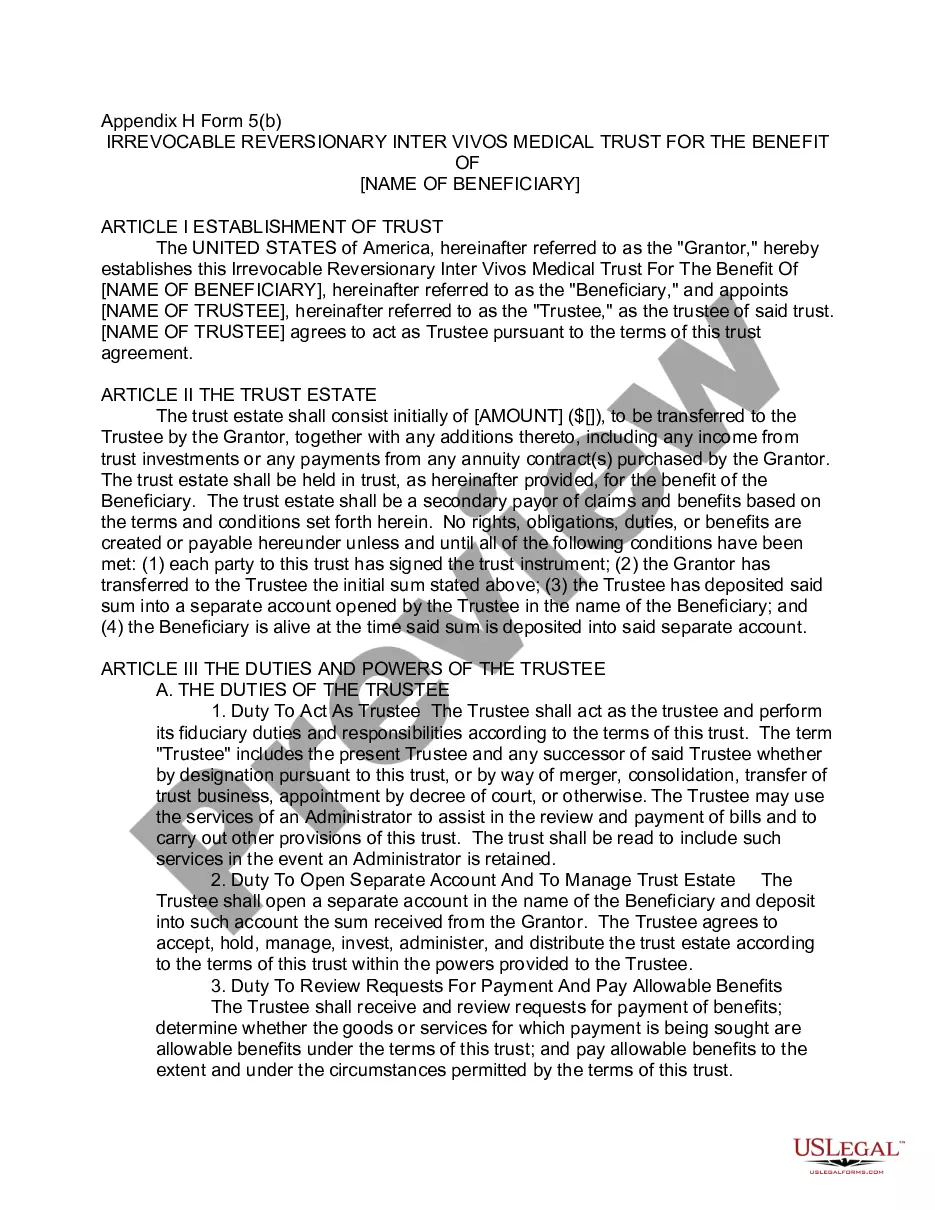
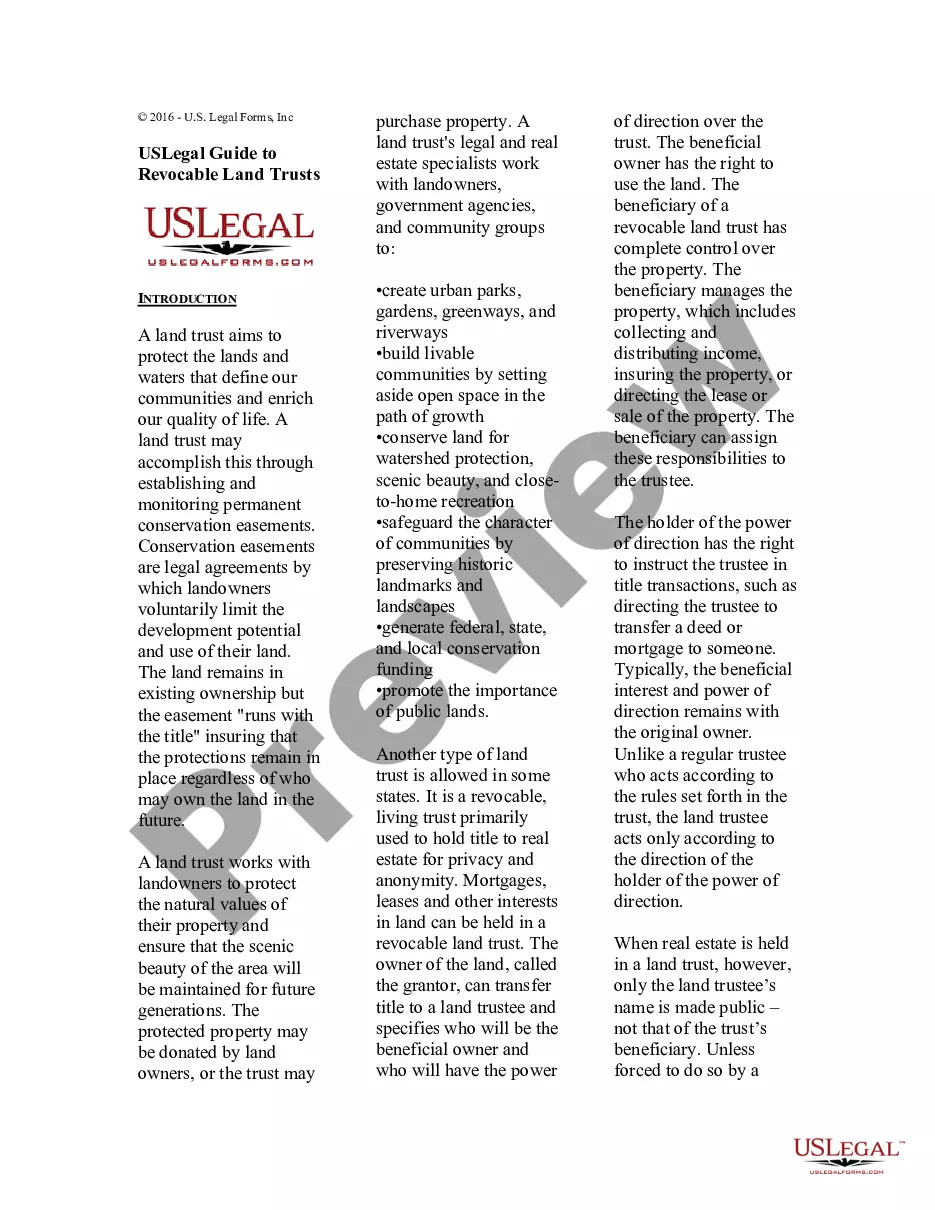
Get your form ready online
Our built-in tools help you complete, sign, share, and store your documents in one place.
Make edits, fill in missing information, and update formatting in US Legal Forms—just like you would in MS Word.
Download a copy, print it, send it by email, or mail it via USPS—whatever works best for your next step.
Sign and collect signatures with our SignNow integration. Send to multiple recipients, set reminders, and more. Go Premium to unlock E-Sign.
If this form requires notarization, complete it online through a secure video call—no need to meet a notary in person or wait for an appointment.
We protect your documents and personal data by following strict security and privacy standards.

Make edits, fill in missing information, and update formatting in US Legal Forms—just like you would in MS Word.

Download a copy, print it, send it by email, or mail it via USPS—whatever works best for your next step.

Sign and collect signatures with our SignNow integration. Send to multiple recipients, set reminders, and more. Go Premium to unlock E-Sign.

If this form requires notarization, complete it online through a secure video call—no need to meet a notary in person or wait for an appointment.

We protect your documents and personal data by following strict security and privacy standards.
Looking for another form?








Form popularity
FAQ
Establishing a trust fund, particularly a living trust Louisiana for house, comes with certain risks. One significant risk is that if the trust is not managed correctly, it may lead to disputes among beneficiaries. Furthermore, failing to update the trust with new assets or changes in family status can cause complications later. You should periodically review your trust to ensure it meets your needs.
While creating a living trust Louisiana for house may protect your assets, some downsides exist. For instance, you will need to transfer ownership of your assets into the trust, which may involve additional paperwork and fees. Moreover, a living trust does not provide benefits such as tax reductions, which could lead you to consider other options. Ensure that your financial goals align with your choice of trust.
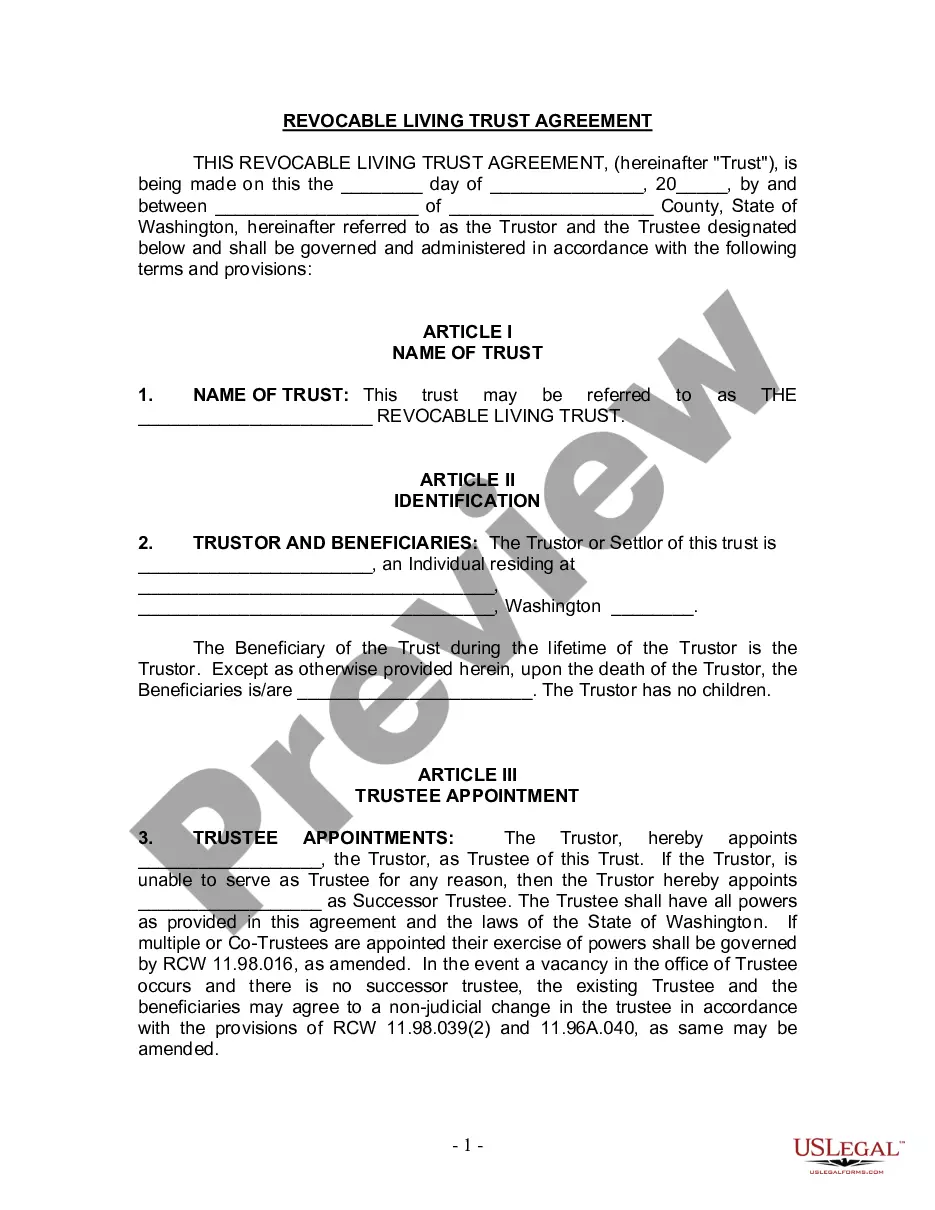
Filling out a living trust in Louisiana for your house requires a straightforward approach. Start by gathering essential information about your property, such as its legal description and current value. Next, use a reliable platform like US Legal Forms to access templates specifically designed for creating a living trust in Louisiana. After you've completed the necessary sections, remember to sign the document in front of a notary to ensure its validity.
Disadvantages of putting your house into a trust include the potential for higher upfront costs due to legal fees and the hassle of transferring property titles. Moreover, if not managed correctly, a living trust Louisiana for house can create complications that may hinder future property sales. Understanding these factors can help you make an informed decision.
A common mistake parents make when setting up a trust fund is failing to clearly communicate their intentions to their beneficiaries. It is crucial to discuss how the trust works, why it was created, and what it aims to accomplish. Additionally, neglecting regular updates to adjustments in circumstances can lead to confusion down the line.
Holding property in a living trust Louisiana for house offers several advantages, such as avoiding probate and providing clear management of your assets. However, there are also some downsides, such as the initial setup costs and ongoing administrative tasks. Weighing these pros and cons will help you determine if a trust is the right choice for your situation.
Gifting a house allows you to transfer your property immediately without having to manage it in a trust, but it can lead to tax implications for both you and the recipient. On the other hand, placing your house in a living trust Louisiana for house provides structured management of the property and may avoid probate after your passing. It's wise to consider your financial and estate planning goals when making this decision.
To transfer property to a trust in Louisiana, you need to draft a deed that specifies the trust as the new owner. After completing the deed, you must sign it and have it notarized. Finally, file the deed with your local clerk of court to officially complete the transfer of your house into the living trust Louisiana for house.
In Louisiana, a trust itself does not need to be recorded; however, the property titles should reflect the trust as the new owner. That means you must record the deed transferring your house into the living trust Louisiana for house to ensure the legal ownership is clear. Keeping your trust documents accessible is important, even if they are not filed with the state.
To put your house in a trust in Louisiana, you first need to create a living trust document. This document should specify the trust details, including the beneficiaries and trustee. Next, you legally transfer the ownership of your house to the trust by executing a new deed that names the trust as the owner. Finally, you’ll want to file this deed with your local clerk of court to finalize the process.
