Child Custody Issue
Description

Get your form ready online
Our built-in tools help you complete, sign, share, and store your documents in one place.
Make edits, fill in missing information, and update formatting in US Legal Forms—just like you would in MS Word.
Download a copy, print it, send it by email, or mail it via USPS—whatever works best for your next step.
Sign and collect signatures with our SignNow integration. Send to multiple recipients, set reminders, and more. Go Premium to unlock E-Sign.
If this form requires notarization, complete it online through a secure video call—no need to meet a notary in person or wait for an appointment.
We protect your documents and personal data by following strict security and privacy standards.

Make edits, fill in missing information, and update formatting in US Legal Forms—just like you would in MS Word.

Download a copy, print it, send it by email, or mail it via USPS—whatever works best for your next step.

Sign and collect signatures with our SignNow integration. Send to multiple recipients, set reminders, and more. Go Premium to unlock E-Sign.

If this form requires notarization, complete it online through a secure video call—no need to meet a notary in person or wait for an appointment.

We protect your documents and personal data by following strict security and privacy standards.
Looking for another form?






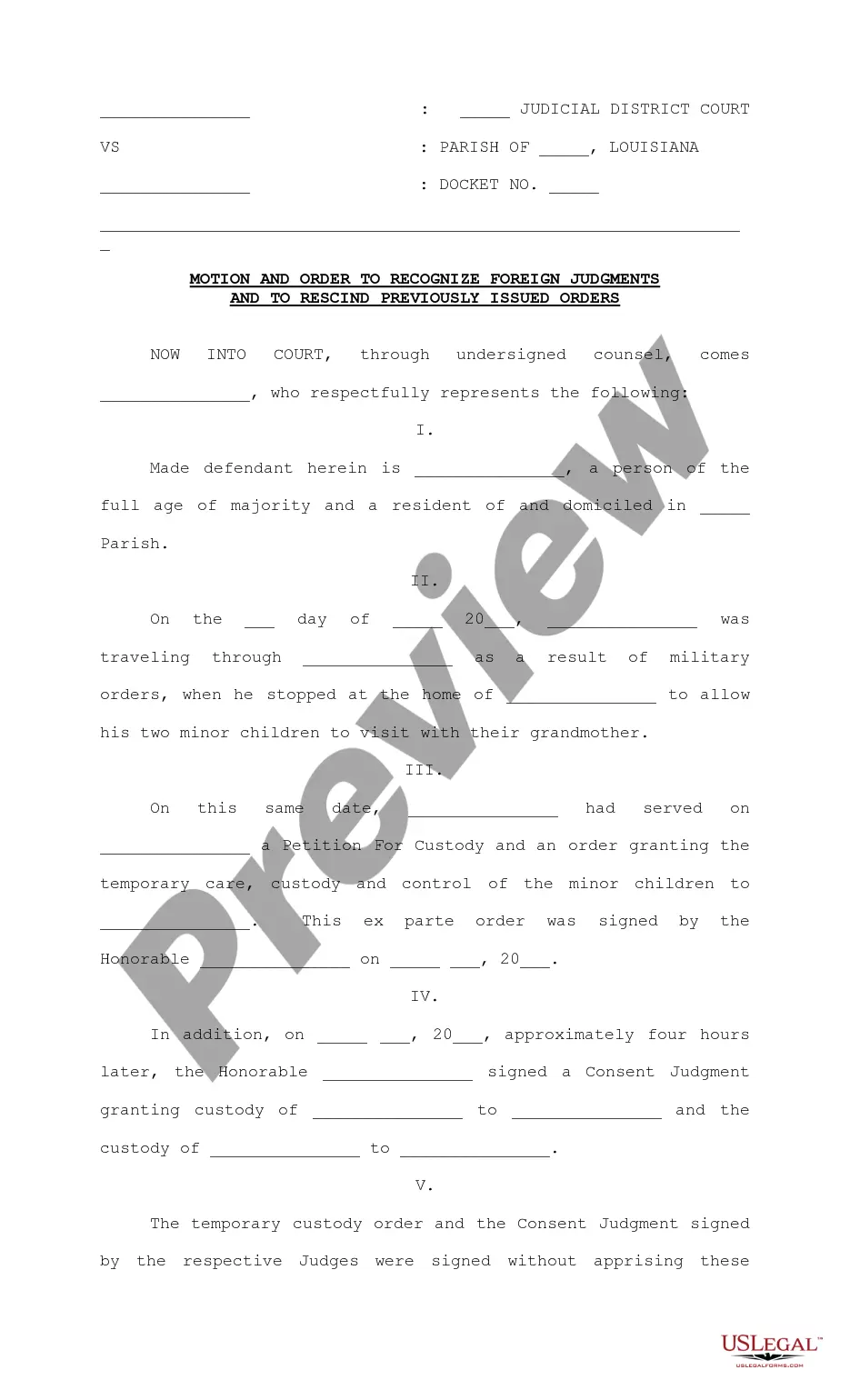
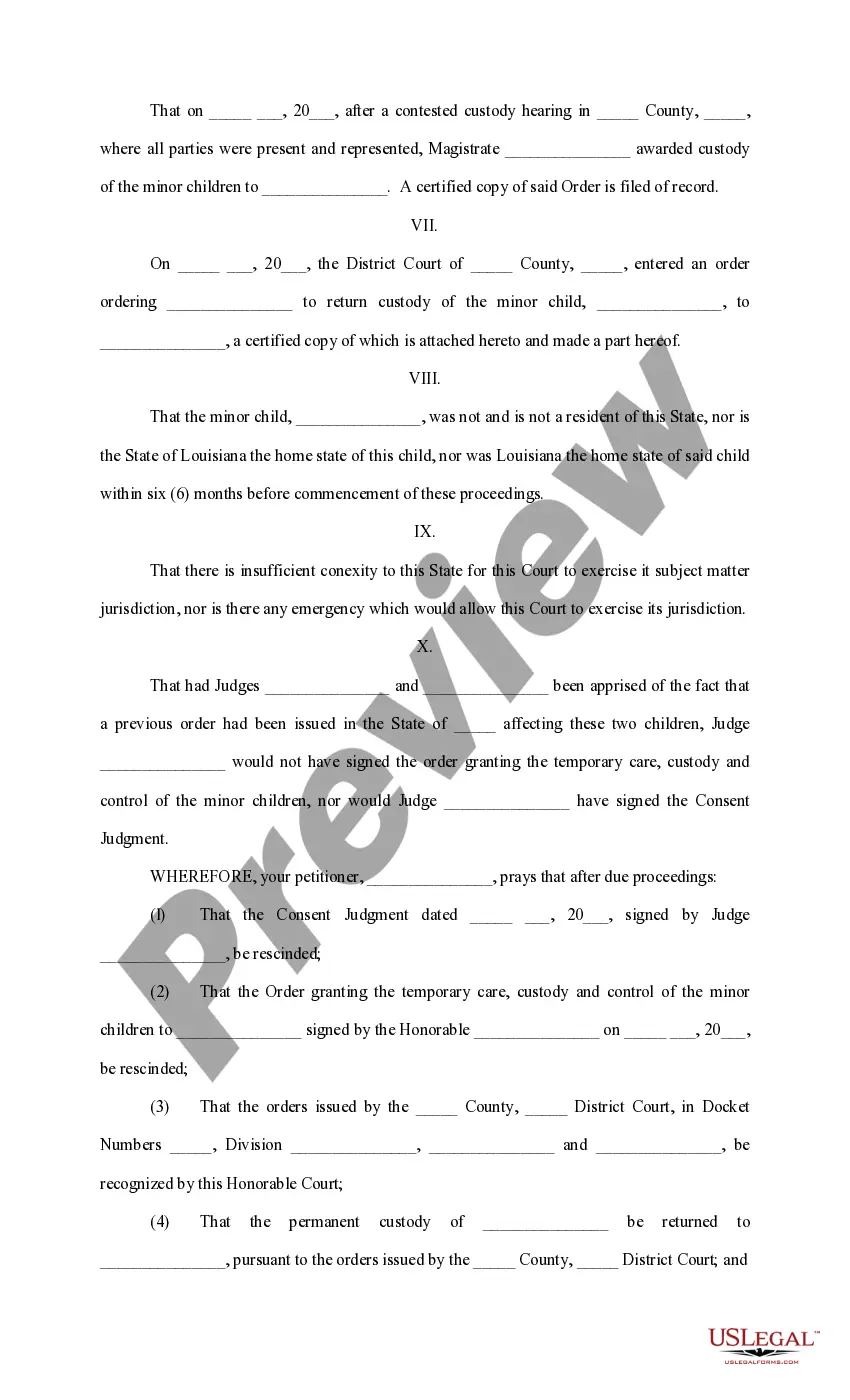
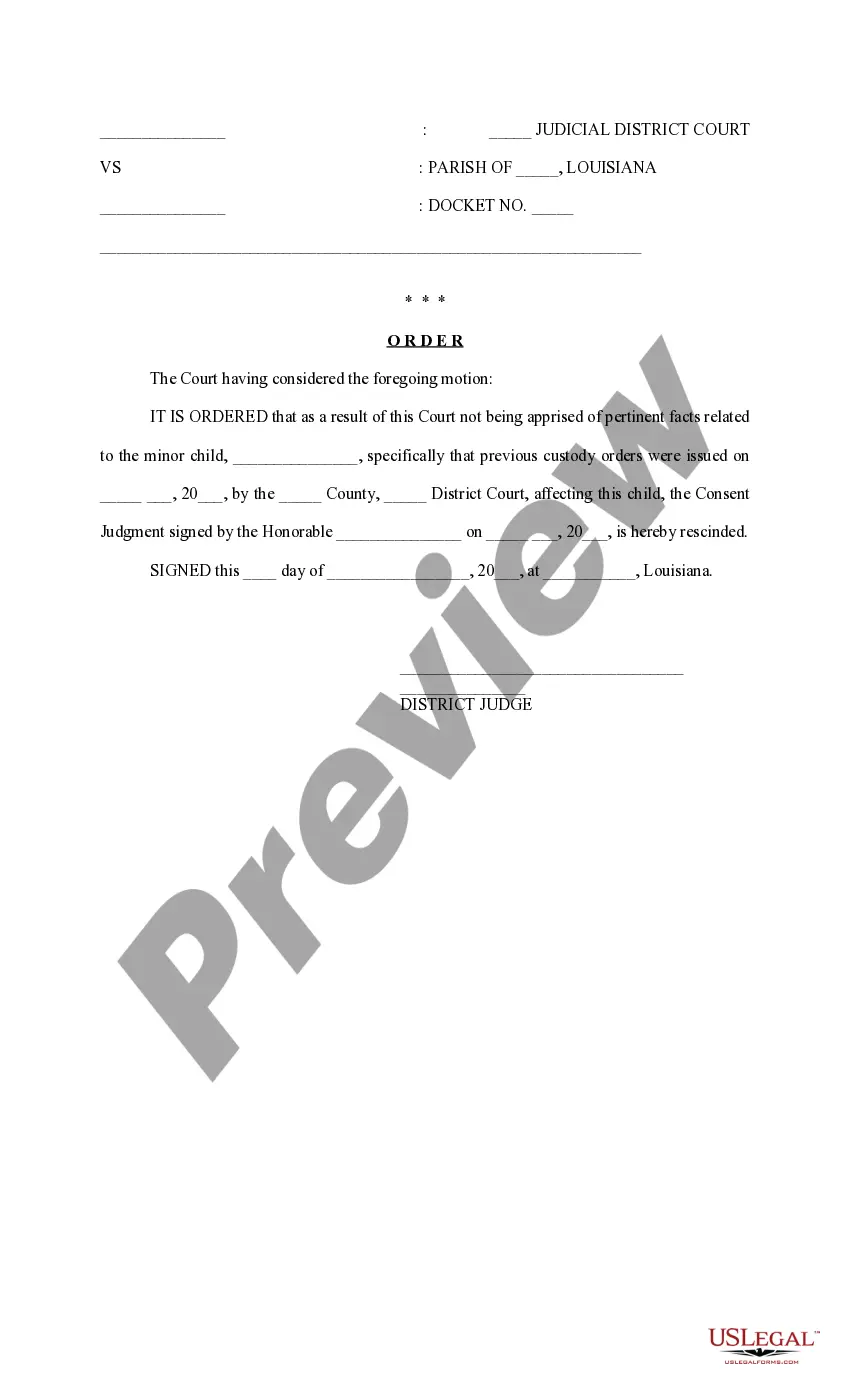
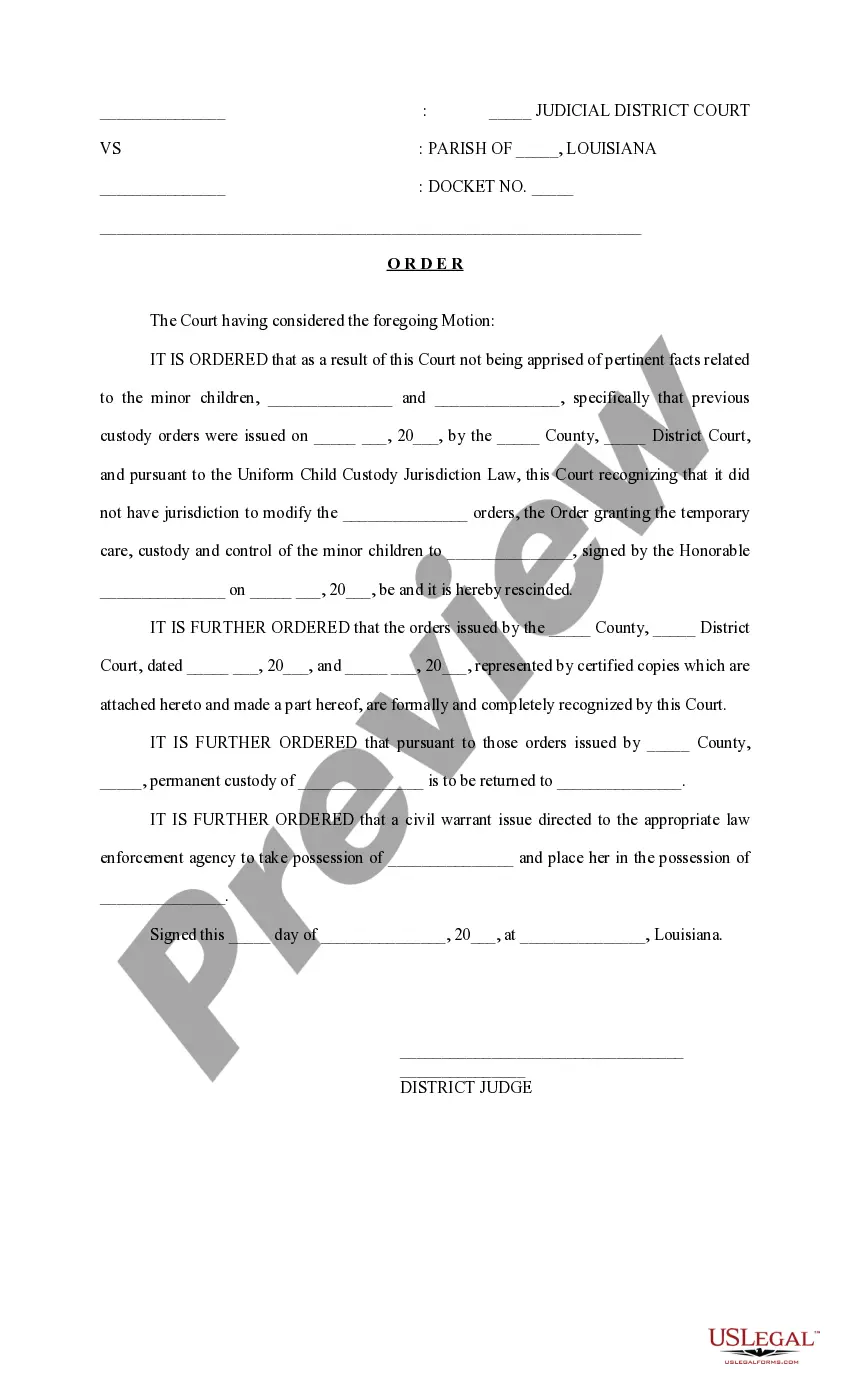
How to fill out Louisiana Motion And Order To Recognize Foreign Judgments And To Rescind Previously Issued Orders (Custody)?
- If you are a returning user, log in to your account and verify your subscription status. Ensure it is active to download the required forms.
- For new users, start by reviewing available forms. Use the Preview mode to examine form descriptions and confirm they meet your needs and local jurisdiction criteria.
- If you don't find the right form, utilize the Search feature to discover additional templates until you locate the suitable option.
- Once you identify the correct document, click the Buy Now button. Choose a subscription plan that aligns with your requirements and create an account for full access.
- Complete your purchase by entering your payment information through credit card or PayPal, finalizing your subscription purchase.
- Download the completed form to your device. You can always access your saved documents from the My Forms section in your profile.
In conclusion, utilizing US Legal Forms simplifies the often daunting process of acquiring legal documents for child custody issues. With an extensive library and expert assistance available, you can ensure your forms are completed accurately.
Take the first step towards securing your child's future by visiting US Legal Forms today!
Form popularity
FAQ
Building a strong child custody case requires gathering evidence that supports your claims as the best custodian. This may include documentation of your relationship with the child, records of involvement in their daily life, and a stable living environment. Utilizing platforms like uslegalforms can assist you in obtaining the necessary legal documents and resources for effectively presenting your case.
When addressing a judge, focus on expressing your love and commitment to your child. Discuss your understanding of their needs and how you can provide for them effectively. It’s crucial to highlight your involvement in their education, health, and overall development, as this will resonate positively in child custody issues.
Custody battles often lean in favor of the parent who can best demonstrate that they prioritize the child’s needs. Considerations include emotional bonds, parenting capabilities, and the living environment. Courts also carefully evaluate any history of abuse or neglect, which can significantly impact the outcome of custody issues.
Winning custody often depends on various factors, including each parent's living situation, financial stability, and overall commitment to the child’s well-being. Judges typically look for a consistent and loving relationship between the parent and child. Furthermore, any evidence showing the parent’s previous involvement in the child's life can be a decisive factor in custody issues.
In child custody issues, parents who demonstrate stability and a strong emotional connection with their child usually have an advantage in gaining full custody. Courts often consider the parent’s ability to provide a safe and nurturing environment. Additionally, a history of involvement in the child’s life, such as participation in schooling and extracurricular activities, can strengthen a parent's case.
In child custody issues, there is no definitive answer to who typically wins; outcomes often depend on the specifics of each case. Generally, courts prefer arrangements that reflect the child’s best interests and maintain stability in their lives. Factors like each parent’s involvement in the child's life and their ability to provide a nurturing environment are crucial. Engaging a reliable platform, like uslegalforms, can help you better prepare your case and understand your rights.
During a child custody issue, it's essential to avoid saying anything that could be perceived as derogatory towards your ex-partner. Negative comments can backfire and paint you in an unfavorable light. Moreover, refrain from making promises to your child that you might not keep, as this could undermine your credibility. Focus on constructive dialogue that represents your commitment to co-parenting and your child's best interests.
During a child custody issue, certain behaviors can negatively influence the court’s perception of you. For example, showing aggression, violating court orders, or failing to comply with visitation schedules can raise red flags. Additionally, an unstable living situation or the presence of inappropriate individuals in the child’s life may also damage your case. Always act in a manner that reflects your commitment to your child's well-being.
The biggest mistake in a child custody issue often involves failing to prioritize the child’s welfare. Many parents become so focused on winning that they forget to foster a cooperative environment. When parents argue or disrespect each other in front of their child, it creates long-term emotional harm. Ensuring a stable and nurturing environment is fundamental in achieving favorable custody outcomes.
In a child custody issue, various factors can be presented as evidence against you. For instance, any history of substance abuse, criminal activity, or neglect might significantly impact your case. Additionally, making negative remarks about the other parent in front of the child can also be detrimental. It’s crucial to maintain a positive image and focus on the child's best interests.